 dailytech.ai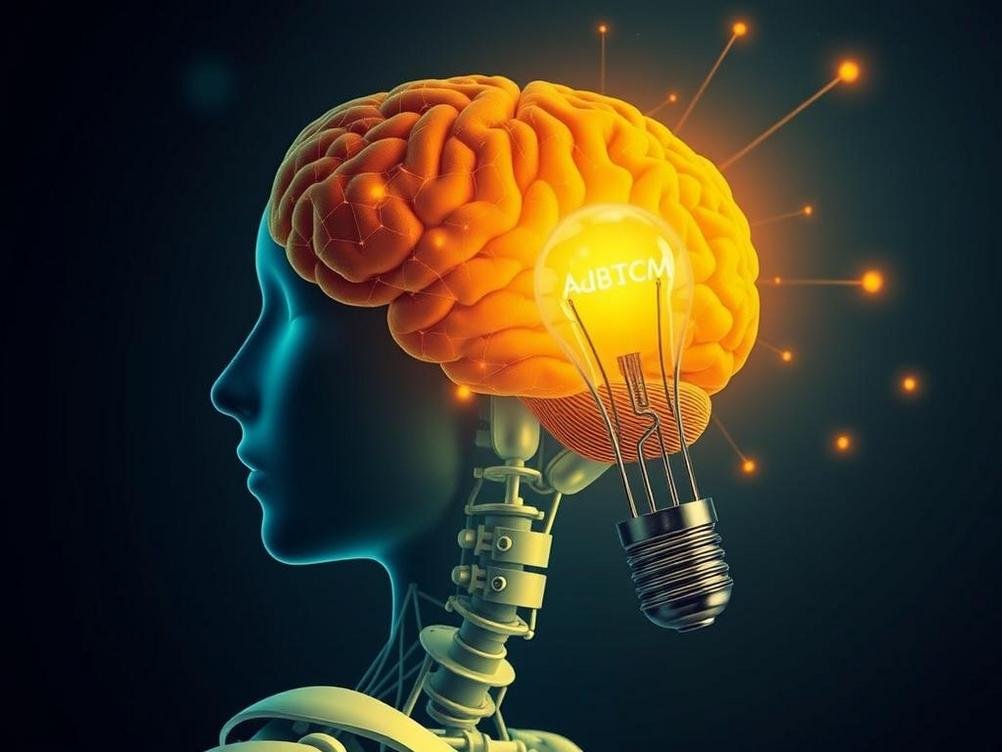
Why Stealing Ideas from Your Brain Could Make AI Way Smarter (And Funner!)
Ever caught yourself zoning out during a boring meeting, only to snap back with a brilliant idea? That’s your brain doing its thing—efficient, adaptive, and a bit chaotic. Now, imagine if we could bottle that magic and pour it into artificial intelligence. Sounds like science fiction, right? Well, it’s not. Scientists and tech whizzes are diving headfirst into mimicking the human brain to boost AI performance, and the results are pretty mind-blowing. From energy-sipping chips that think like neurons to algorithms that learn on the fly, this brain-AI mashup is shaking up everything from self-driving cars to your smartphone’s autocorrect. But why bother copying a squishy organ that’s prone to forgetting where you left your keys? Stick around as we unpack how neuroscience is giving AI a serious upgrade, with a dash of humor because, let’s face it, brains are weird. We’ll explore the nuts and bolts, the cool real-world wins, and why this could be the key to AI that doesn’t just compute but actually gets us. By the end, you might even appreciate your own noggin a little more.
What’s the Big Deal with Brain Mimicry in AI?
Okay, let’s start with the basics. Traditional AI runs on massive data centers that guzzle electricity like a teenager downs energy drinks. But the human brain? It operates on about 20 watts—less than your average lightbulb—and handles everything from recognizing faces to pondering life’s big questions. That’s efficiency we can all envy. By mimicking the brain’s structure, with its neurons and synapses, AI can process info more smartly, not just faster.
Think about it: your brain doesn’t crunch numbers in a straight line; it fires off connections in a web of possibilities. Neuromorphic computing, as the eggheads call it, copies this by creating hardware that acts like brain cells. Companies like IBM with their TrueNorth chip are leading the charge, making AI that learns from experience without needing a PhD in programming. It’s like teaching a dog new tricks, but the dog is a supercomputer.
And here’s a fun fact: did you know the brain uses something called spiking neural networks? These aren’t your grandma’s algorithms; they pulse signals just like real neurons, saving power and speeding up decisions. If AI adopts this, we could see robots that navigate crowded streets without draining batteries faster than your phone during a Netflix binge.
How Does the Brain Actually Inspire AI Designs?
Diving deeper, the brain’s secret sauce is its plasticity—the ability to rewire itself based on new info. AI folks are borrowing this with models that adapt in real-time. Take reinforcement learning; it’s like how you learn not to touch a hot stove after one painful try. AI systems mimic this to improve over time, getting better at tasks without constant human tweaks.
Then there’s the hierarchy of processing. Your visual cortex breaks down images layer by layer, from edges to full scenes. Deep neural networks copy this, stacking layers to recognize patterns. But brain-inspired versions go further, incorporating feedback loops that let AI double-check its work, reducing errors. It’s like having a built-in editor for your thoughts.
Don’t forget emotions—yeah, brains have ’em, and they’re useful for decision-making. Some AI researchers are even toying with affective computing, where machines gauge feelings to respond better. Imagine a virtual assistant that knows you’re frustrated and cracks a joke instead of repeating the same unhelpful answer. Hilarious and helpful!
Real-World Wins: Where Brain-Like AI is Already Shining
Let’s get concrete. In healthcare, brain-mimicking AI is revolutionizing diagnostics. Tools like those from PathAI use neural networks inspired by brain pattern recognition to spot cancer in scans with scary accuracy—often better than humans. It’s like giving doctors a super-smart sidekick that never gets tired.
Over in robotics, companies like Boston Dynamics are infusing their bots with brain-like learning. Their Spot robot doesn’t just follow commands; it adapts to slippery floors or unexpected obstacles, much like how you steady yourself on ice. This could mean safer factories or even household helpers that don’t knock over your coffee.
And for the gamers out there, AI in video games is getting a brain boost too. Procedural generation, powered by brain-inspired algorithms, creates endless worlds that feel alive and responsive. No more repetitive levels; it’s like the game is evolving with you, keeping things fresh and exciting.
The Challenges: Not All Brains Are Created Equal
Of course, it’s not all smooth sailing. Mimicking the brain is tough because, well, we don’t fully understand it yet. Neuroscientists are still scratching their heads over consciousness, so replicating that in silicon? Tricky. Plus, brain-like systems can be unpredictable—great for creativity, not so much for reliability in critical apps like autonomous driving.
There’s also the power paradox. While brain-inspired chips are energy-efficient, scaling them up for massive tasks like training large language models is a headache. It’s like trying to run a marathon on a diet of salad—efficient but maybe not enough oomph. Researchers are working on hybrids, blending traditional AI with neuromorphic elements to get the best of both worlds.
Ethically, we gotta talk about it. If AI starts thinking too much like us, do we risk creating something that feels? Or worse, biased brains? It’s a slippery slope, but addressing these early could prevent sci-fi nightmares from becoming reality.
Future Peeks: What’s Next for Brain-AI Mashups?
Looking ahead, the fusion of brains and AI is set to explode. Quantum computing might supercharge neuromorphic designs, making them faster than a caffeinated squirrel. We’re talking AI that predicts stock markets or climate changes with eerie precision, all while sipping minimal power.
In education, imagine personalized tutors that adapt to your learning style, just like a great teacher reads the room. Or in mental health, AI therapists that pick up on subtle emotional cues, offering support that’s almost human. It’s exciting, but we need guidelines to keep it from going off the rails.
And hey, for everyday folks, this could mean smarter homes. Your fridge ordering groceries based on your habits, or lights that dim when it senses you’re winding down— all powered by brain-like efficiency. The future’s looking bright, or at least intelligently lit.
Tips to Get Started with Brain-Inspired AI
If you’re itching to dip your toes in, start simple. Check out open-source tools like NEST or Brian simulators—they let you play with spiking neural networks without a lab coat. Websites like Neuromorphic Systems have great resources for beginners.
For the coders, dive into libraries like TensorFlow or PyTorch extensions for neuromorphic computing. Build a small project, like an AI that recognizes handwritten digits with brain-like efficiency. It’s a fun way to see the difference from standard methods.
- Read up on pioneers: Books by Jeff Hawkins, like ‘On Intelligence,’ break down brain basics without the jargon.
- Join communities: Reddit’s r/MachineLearning or forums on neuromorphic tech for tips and laughs from fellow enthusiasts.
- Experiment ethically: Always consider the impact—AI should help, not harm.
Conclusion
Whew, we’ve covered a lot—from the why’s and how’s of brain-mimicking AI to the cool stuff it’s already doing and the hurdles ahead. At its core, stealing ideas from the human brain isn’t just about making machines smarter; it’s about creating tech that’s more in tune with us squishy humans. It’s efficient, adaptive, and yeah, a little unpredictable—just like life. As we push forward, let’s keep the humor and humanity in the mix. Who knows? The next big AI breakthrough might come from pondering your own thoughts over coffee. So, next time you forget your keys, remember: that’s just your brain being brilliantly human, and it might inspires the AI of tomorrow. Keep exploring, stay curious, and maybe give your noggin a pat for all its hard work.









Leave a Reply