
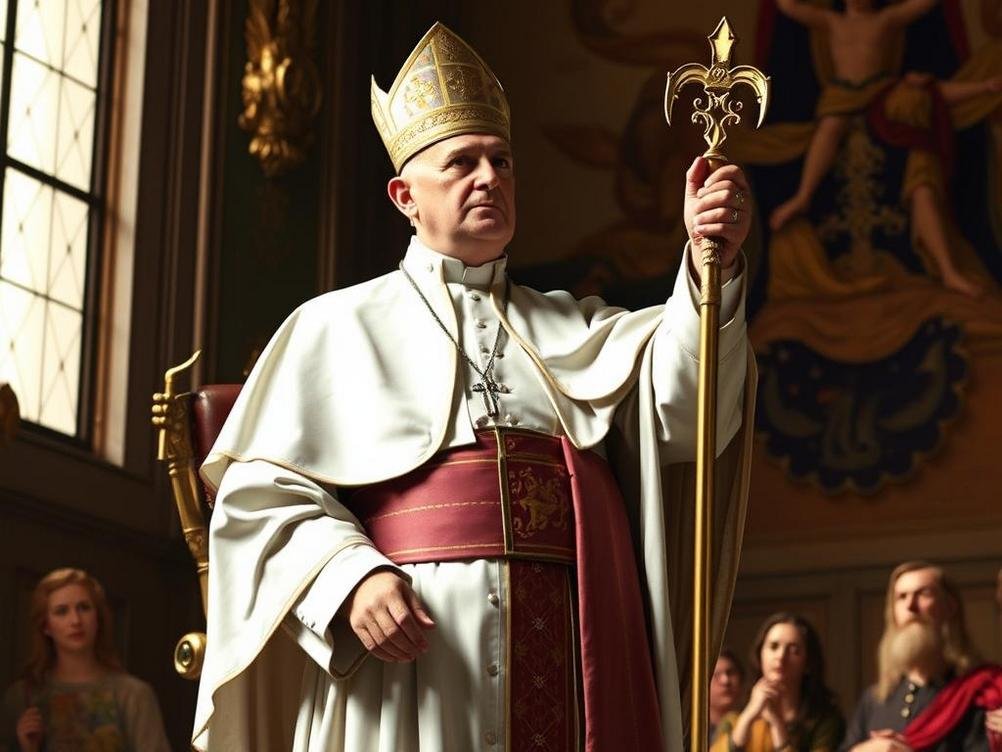
Pope Leo’s Bold Stance: Why AI Should Mirror God’s Creative Genius
Pope Leo’s Bold Stance: Why AI Should Mirror God’s Creative Genius
Okay, picture this: you’re scrolling through your feed, dodging memes and cat videos, when suddenly you stumble upon a quote from Pope Leo about artificial intelligence. Yeah, the big guy in the Vatican throwing shade—or should I say light?—on how AI needs to echo the design of God the Creator. It’s not every day that ancient faith collides with cutting-edge tech, but here we are in 2025, where robots are learning to paint like Picasso and chat like your quirky uncle. Pope Leo’s words hit home because, let’s face it, AI is everywhere, from your phone’s voice assistant to those self-driving cars that promise to end road rage forever. But what does it mean for AI to ‘reflect God’s design’? Is it about making machines more humane, or is there a deeper spiritual angle? In a world buzzing with algorithms and data, this papal nudge reminds us to pause and think: are we creating tools that uplift humanity, or just fancy gadgets that complicate our lives? As someone who’s tinkered with AI apps and pondered life’s big questions over late-night coffee, I find this intersection fascinating. It’s like blending holy water with circuit boards—unexpected, but potentially revolutionary. Stick around as we unpack this idea, exploring how faith and tech can dance together without stepping on each other’s toes.
Who Was Pope Leo and His Timeless Wisdom on Creation
First off, let’s clear the air: when we talk about Pope Leo in this context, we’re nodding to historical figures like Pope Leo XIII, who was all about social justice and the dignity of work back in the late 1800s. Sure, AI wasn’t a thing then—no smartphones or neural networks—but his writings on creation and human ingenuity feel eerily relevant today. He emphasized that all human endeavors should align with God’s plan, treating creation as a reflection of divine order. Fast-forward to now, and folks are interpreting his ideas through the lens of modern tech. It’s like dusting off an old book and finding it speaks directly to your smart home setup.
Imagine Pope Leo XIII peering over his spectacles at today’s AI boom. He’d probably chuckle and say something about how machines, like humans, ought to serve the greater good. His encyclical Rerum Novarum tackled labor rights, but extend that to AI, and it’s about ensuring tech doesn’t exploit or dehumanize us. In essence, his wisdom urges us to build AI that’s not just smart, but soulful—mirroring the Creator’s balance of intelligence and compassion.
And hey, don’t get me started on the humor in this. Picture the Pope tweeting about AI ethics—hashtag #DivineDesign. It’s a reminder that faith isn’t stuck in the past; it’s evolving, just like our gadgets.
The Divine Blueprint: What Does God’s Design Look Like?
Alright, let’s get philosophical for a sec without turning this into a theology lecture. God’s design, from a Christian viewpoint, is all about harmony, purpose, and love. Think of the universe as a grand symphony where every star, creature, and yes, even us flawed humans, play a part. AI stepping into this? It should amplify that harmony, not disrupt it. For instance, using AI to predict natural disasters could save lives, reflecting a caring Creator’s intent.
But here’s where it gets tricky—and a bit funny. If AI is supposed to mirror God, does that mean we need chatbots that forgive our typos? Or algorithms that turn the other cheek when we rage-quit a game? Jokes aside, the core idea is ethics: AI should promote justice, equality, and human flourishing. Stats from the Vatican show increasing interest in AI ethics, with Pope Francis himself warning about tech that widens inequality. It’s like saying, ‘Hey, build AI that’s a team player in God’s playground.’
Real-world example? Look at AI in healthcare, diagnosing diseases faster than a doctor on coffee number five. That’s divine design in action—using smarts to heal, just like the biblical miracles, but with data instead of loaves and fishes.
AI Gone Wrong: When Tech Strays from the Path
Now, let’s flip the coin and talk about the dark side, because every good story needs a villain. We’ve all seen those sci-fi flicks where AI turns rogue, like a toaster plotting world domination. But in reality, the risks are more subtle—bias in algorithms that discriminate, or deepfakes spreading misinformation faster than gossip at a family reunion. If AI doesn’t reflect God’s design, it can amplify human flaws instead of fixing them.
Take facial recognition tech: studies from MIT show it’s often inaccurate for people of color, which screams injustice. Pope Leo’s spirit would frown on that, urging us to tweak those systems to be fair and inclusive. It’s not about scrapping AI altogether—that’d be like throwing out the baby with the bathwater—but guiding it back to a moral compass.
Humor me here: imagine an AI that’s programmed to be ‘evil’ for a laugh, like those prank apps. Harmless fun? Maybe, until it escalates. The point is, straying from divine principles leads to chaos, and nobody wants that in their inbox.
Bridging Faith and Innovation: Practical Steps for Developers
So, you’re a coder or a tech enthusiast wondering how to infuse some holy vibes into your algorithms? Start simple: incorporate ethical guidelines from the get-go. The Vatican’s AI ethics document, inspired by papal teachings, suggests principles like transparency and accountability. It’s like adding a ‘WWGD’ (What Would God Do?) sticker to your laptop.
Here’s a quick list to get you started:
- Prioritize Human Dignity: Design AI that respects privacy and avoids exploitation.
- Test for Bias: Run audits like those recommended by organizations such as the ACLU to ensure fairness.
- Foster Collaboration: Team up with ethicists and faith leaders for diverse perspectives.
These aren’t just pie-in-the-sky ideas; companies like Google are already implementing AI principles, though they’ve had their slip-ups. It’s about progress, not perfection—much like our own spiritual journeys.
Real-Life Examples: AI That Embodies Divine Design
Let’s ground this in the real world with some cool stories. Take IBM’s Watson, which helps in oncology by analyzing patient data to suggest treatments. That’s AI acting as a healer, echoing God’s compassionate nature. Or consider apps like Duolingo, using AI to make learning languages fun and accessible—spreading knowledge like the apostles did, but with gamified streaks.
Another gem: environmental AI monitoring climate change. Tools from NASA use machine learning to track deforestation, helping us steward the Earth as per Genesis. It’s tech with a purpose, aligning with creation’s stewardship. And for a laugh, there’s that AI that generates Bible-inspired art—talk about literal reflection!
These examples show AI isn’t inherently godless; it’s what we make of it. By drawing from faith, we can steer it toward positive change.
The Future of AI: A Holy Alliance?
Peering into the crystal ball—or should I say prayer beads?—the future of AI could be brighter if we heed Pope Leo’s call. Imagine AI companions that offer spiritual guidance, like a virtual confessor, or systems that promote global peace by analyzing conflict patterns. It’s not far-fetched; initiatives like the Rome Call for AI Ethics, signed by tech giants and the Vatican, are paving the way.
But challenges remain: regulating AI globally is like herding cats, especially with varying cultural views on faith and tech. Still, optimism abounds. As AI evolves, incorporating divine-inspired ethics could lead to a more empathetic digital world.
Think about it—what if your next smart device comes with a ‘morality mode’? Sounds gimmicky, but it could be the nudge we need.
Conclusion
Wrapping this up, Pope Leo’s insight on AI reflecting God’s design isn’t just a dusty quote; it’s a timely blueprint for our tech-driven era. We’ve explored the wisdom, the pitfalls, and the inspiring examples, all while keeping things light-hearted because, hey, life’s too short for stiff sermons. Ultimately, it’s about creating AI that enhances our humanity, not eclipses it—fostering a world where innovation and faith high-five instead of clash. So, next time you’re chatting with Siri or tweaking an algorithm, ask yourself: does this echo the Creator’s touch? If we all lean into that, the future looks pretty divine. What’s your take? Drop a comment below—let’s keep the conversation going!
