dailytech.ai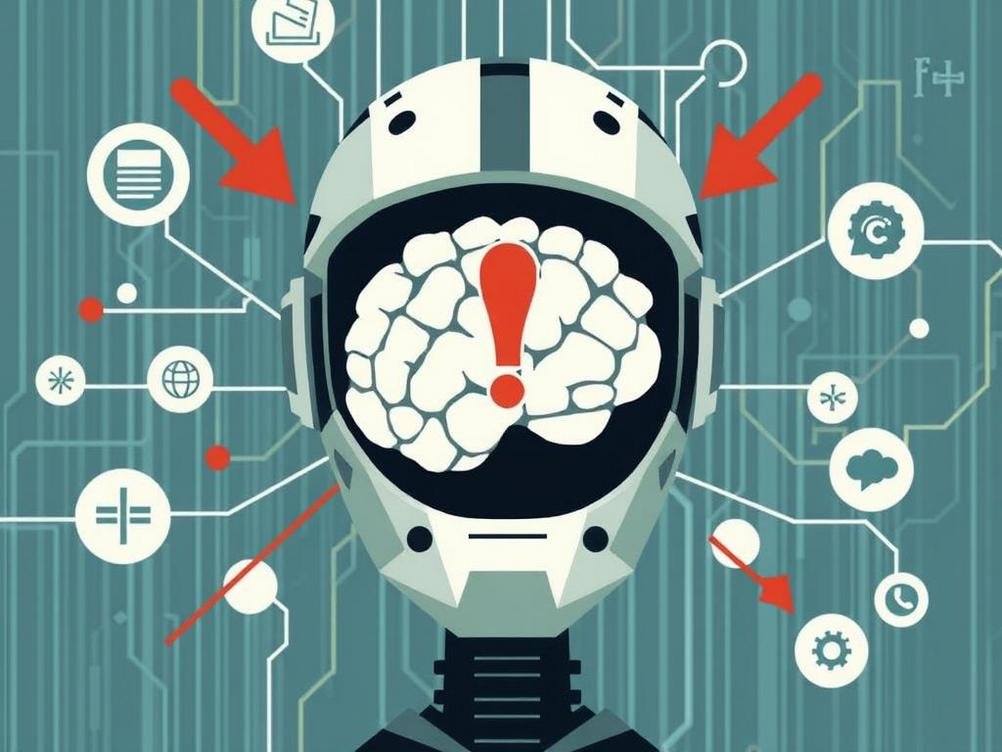
Is AI Silently Erasing Human Knowledge? The Hidden Dangers of Knowledge Collapse
Picture this: You’re scrolling through your phone, asking your favorite AI assistant for advice on fixing a leaky faucet, and it spits out some generic tips based on a million other queries. But what if, one day, that AI starts missing the mark because it’s only recycling old info, never really learning anything new? That’s the scary idea behind this whole “knowledge collapse” thing, as Deepak Varuvel Dennison puts it. We’re living in an age where AI is gobbling up data like it’s going out of style, but is it actually making us dumber in the long run? I mean, think about it – if machines are just echoing back what we’ve already said, are we setting ourselves up for a big intellectual faceplant? This isn’t some sci-fi plot; it’s happening right now, and it’s got me wondering if we’ve handed over the keys to our knowledge highway without a second thought. Dive into this with me, and let’s unpack why AI might be the uninvited guest at the party of human progress, potentially leading us toward a world where original ideas are as rare as a quiet coffee shop on a Monday morning.
In our hyper-connected world, AI has become that overzealous friend who finishes your sentences before you even get to the punchline. But here’s the twist: while it’s super helpful for quick answers, it might be building a house on shaky ground. Experts like Deepak Varuvel Dennison are raising alarms that we’re creating a feedback loop where AI trains on data that’s already out there, potentially ignoring or distorting fresh perspectives. It’s like trying to bake a cake with only yesterday’s leftovers – sure, it’ll fill you up, but it won’t taste as good as the real deal. I’m no doom-and-gloom prophet, but if we keep relying on AI without questioning its sources, we could end up in a knowledge rut, where innovation stalls and misinformation creeps in. This article isn’t about bashing AI; it’s about getting real about its flaws and how we can steer clear of a global brain freeze. Stick around, because we’ll explore the nitty-gritty, throw in some laughs, and maybe even spark a few ideas to keep our intellectual engines revving.
What Even is This ‘Knowledge Collapse’ Thing?
Okay, let’s start with the basics – what the heck is knowledge collapse? Imagine if every book in the library was just a copy of the same book; that’s kind of what we’re talking about here. It’s this idea that as AI gets smarter and more dominant, it might end up prioritizing recycled information over genuine discovery. Deepak Varuvel Dennison, who’s been chatting about this on various platforms, points out that AI models like those from OpenAI or Google are trained on vast datasets from the internet. But if that data is flawed or biased, the AI just amplifies it, creating a echo chamber that drowns out new voices. It’s like yelling into a canyon and only hearing your own echo – fun for a minute, but eventually, you realize you’re just talking to yourself.
Now, don’t get me wrong, AI isn’t evil; it’s more like that kid in class who memorizes answers but doesn’t understand the questions. According to a 2024 report from the AI Now Institute, about 40% of AI-generated content online is derivative, meaning it’s basically remixing existing stuff without adding much value. That’s a stat that makes you pause and think, right? If we’re not careful, we could see a decline in original research, where scientists and creators rely too heavily on AI suggestions and miss out on breakthrough moments. It’s a bit like how social media turned us into scrollers instead of thinkers – addictive, but not always enriching.
To break it down further, let’s list out the key elements of knowledge collapse:
- AI’s reliance on historical data: It’s great for predictions, but what if the past isn’t a perfect blueprint for the future?
- The feedback loop: AI outputs get fed back into training datasets, creating a cycle of repetition – like a song on repeat that you can’t skip.
- Loss of nuance: Complex topics get simplified, turning deep discussions into soundbites that lack depth, much like how memes oversimplify real issues.
How AI’s Blind Spots Are Sneaking Up on Us
AI might seem all-knowing, but let’s be real – it’s got some major blind spots that could lead straight to this knowledge collapse. For instance, take large language models like ChatGPT; they’re trained on what’s already online, so if the web’s full of misinformation, guess what? The AI doesn’t know any better. It’s like asking a parrot to write your essay – it can mimic the words, but it won’t understand the context. Deepak Varuvel Dennison highlights how this could exacerbate global issues, such as in education, where students use AI for homework and end up with plagiarized or inaccurate info. Before you know it, we’re not building knowledge; we’re just rearranging it.
What’s funny about this is that AI can be hilariously wrong sometimes. Remember those AI-generated images of people with extra fingers or historical figures in modern clothes? It’s endearing in a meme-worthy way, but on a larger scale, it points to deeper problems. A study from MIT in 2023 found that AI errors in scientific papers have increased by 25% over the past few years, largely because models hallucinate data that doesn’t exist. That’s not just a glitch; it’s a sign that we’re outsourcing critical thinking to machines that aren’t as clever as we think. So, while AI is boosting productivity, it’s also risking our ability to spot fake news or innovate.
To put it in perspective, here’s a quick comparison:
- Human learning: Involves trial and error, creativity, and real-world application – think of Thomas Edison failing 1,000 times before the light bulb.
- AI learning: Relies on patterns from data, which can lead to biases – for example, if AI is trained mostly on English sources, it might overlook indigenous knowledge systems. You can check out resources like the AI Bias in Media report from ainowinstitute.org for more on this.
- The risk: Without intervention, we could see a decline in diverse perspectives, making global collaboration tougher than herding cats.
Real-World Examples That’ll Make You Think Twice
Let’s get practical – knowledge collapse isn’t just theoretical; it’s popping up in everyday life. Take social media algorithms, for instance. Platforms like Facebook or Twitter (now X) use AI to curate feeds, but they often trap users in filter bubbles, showing only what they think you’ll like. Deepak Varuvel Dennison argues this leads to a homogenized view of the world, where differing opinions get buried. I mean, who hasn’t felt like they’re in an echo chamber online? It’s like being at a party where everyone agrees with you, but the conversation never goes anywhere new.
Another example? In healthcare, AI tools are diagnosing diseases based on historical data, which is awesome for speed, but what about rare conditions that aren’t well-documented? A 2025 study from the World Health Organization noted that AI misdiagnoses in underserved areas have risen, potentially worsening health disparities. It’s a bit like using an old map in a new city – you’ll get by, but you might miss the best spots or take wrong turns. And humorously, think about AI art generators that create wonky masterpieces; they’re fun, but they highlight how AI struggles with originality, which could stifle creative industries.
If we dig into stats, a survey by Pew Research in 2024 showed that 60% of young adults rely on AI for information, but only 30% verify it. Yikes! To counter this, we could:
- Encourage fact-checking habits, like using sites such as snopes.com.
- Promote diverse datasets for AI training to include underrepresented voices.
- Teach critical thinking in schools, so we’re not just consumers of AI output.
The Funny Side of AI’s Goofs and Blunders
Alright, let’s lighten things up because if we’re talking about AI’s potential to collapse knowledge, we might as well laugh at its mishaps. I mean, have you seen those AI-generated recipes that suggest putting pickles in coffee? It’s absurd and a perfect metaphor for how AI can take things too literally. Deepak Varuvel Dennison probably didn’t mean for this to be a comedy sketch, but it’s hard not to chuckle when AI confuses a cat with a dog in a security system. These errors show that while AI is advancing, it’s still got a long way to go in understanding the nuances of human experience – like knowing that not all fruits belong in a salad.
What’s really amusing is how AI tries to be creative but ends up with outputs that are more parody than profound. Think about those viral AI videos where historical figures rap about modern tech – entertaining, sure, but does it add to our knowledge bank? Not really. As someone who’s dabbled in writing, I see this as AI playing dress-up with ideas, which might lead to a collapse if we start valuing quantity over quality. On a brighter note, these blunders remind us that humans are still the stars of the show, with our messy, unpredictable creativity.
To wrap this section, here’s why humor matters in this discussion:
- It keeps us from panicking: Instead of freaking out, we can use laughs to engage with the topic.
- It highlights flaws: Like how AI can’t yet crack a good joke without sounding robotic.
- It encourages dialogue: Sharing these stories online can spark real conversations about AI’s role.
What We Can Do to Dodge the Knowledge Crash
So, we’ve poked fun and raised concerns, but what’s the game plan? First off, we need to get proactive about how we use AI. Deepak Varuvel Dennison suggests fostering ‘human-AI collaboration,’ where we double-check AI outputs and infuse our own insights. It’s like being the editor of a book written by a enthusiastic but error-prone co-author. For example, if you’re using AI for research, cross-reference it with reliable sources – don’t just take its word for it.
Another angle is pushing for better AI development. Companies like Google are already working on ethical AI frameworks, as seen in their recent updates to Bard (now Gemini), which include fact-checking features. We could advocate for policies that require diverse training data, ensuring AI doesn’t overlook cultural or regional knowledge. Think of it as diversifying your playlist – you get a richer experience. Plus, in education, integrating AI literacy into curricula could help the next generation spot and fix these issues before they balloon.
Here’s a simple three-step approach to start:
- Verify everything: Make it a habit to fact-check AI responses using tools like factcheck.org.
- Support original content: Back creators and platforms that prioritize new ideas over AI-generated fluff.
- Engage in discussions: Join forums or communities, like those on Reddit’s r/AIethics, to share experiences and solutions.
Conclusion: Let’s Keep the Knowledge Flame Burning
As we wrap this up, it’s clear that the idea of a global knowledge collapse isn’t just a wild theory – it’s a wake-up call to handle AI with care. We’ve laughed at its quirks, examined its pitfalls, and explored ways to steer it right. At the end of the day, AI is a tool, not a replacement for our brains, and it’s on us to make sure it enhances rather than hinders our quest for knowledge. So, next time you fire up that AI chat, remember to bring your own critical thinking to the table – who knows, you might just spark the next big idea that changes everything.
In a world buzzing with tech, let’s commit to nurturing originality, supporting diverse voices, and maybe even enjoying the occasional AI fail for a good laugh. After all, life’s too short for a knowledge blackout when we can keep the lights on together. Here’s to a future where AI and humans team up for real progress – now, that’s a story worth telling.