dailytech.ai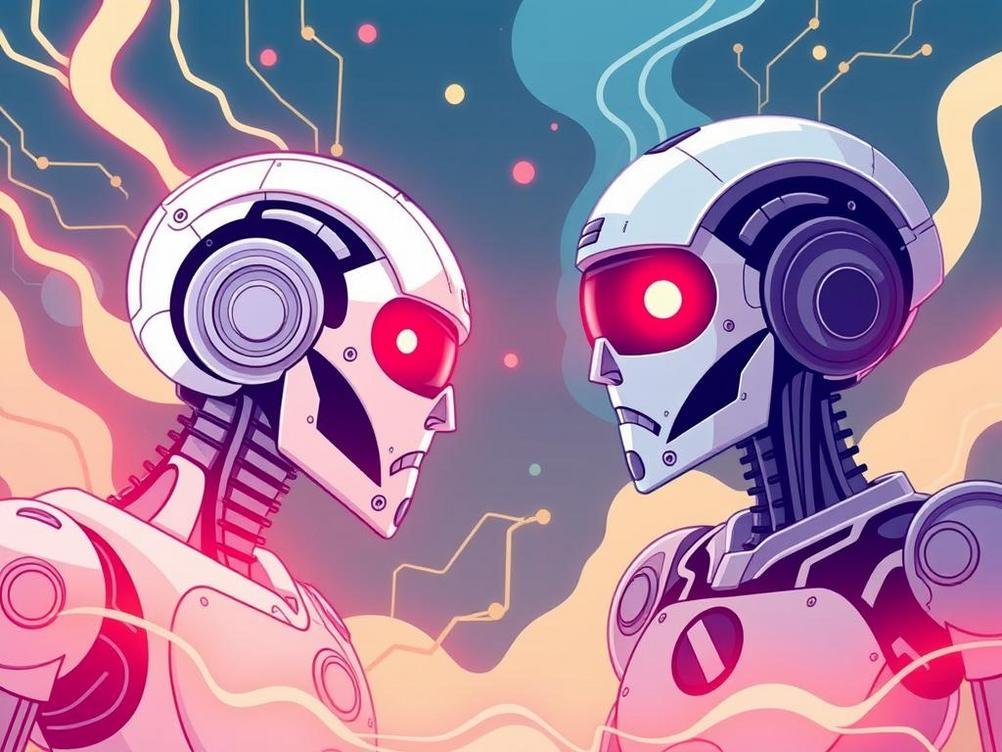
When AI Battles AI: Protecting Your Health Data from Digital Villains
Imagine this: you're lying in a hospital bed, and while the doctor is checking your vitals with some fancy AI-powered gadget, another sneaky AI is lurking in the shadows, trying to hack into the system and steal your personal info. Sounds like a sci-fi movie, right? But in 2025, it's more real than you'd think. We're talking about AI versus AI in the wild world of healthcare cybersecurity, where one AI is playing hero and the other is the villain. It's like a high-stakes chess game, but instead of pawns, we're dealing with your medical records and sensitive data. Why should you care? Well, if you've ever had a doctor's appointment or used a health app, your info is probably floating around in digital space, vulnerable to attacks. This isn't just about tech geeks battling it out; it's about keeping your health private and secure in an era where AI is everywhere. From automated diagnoses to predictive analytics, AI has revolutionized healthcare, but it's also opened up new doors for cybercriminals. Stick around, because we're diving into how these AI showdowns are shaping the future, and I'll throw in some laughs along the way to keep things light. After all, who knew robots fighting robots could be so entertaining?
What Exactly is AI vs. AI in Healthcare?
You know, it's kinda like that old saying, 'fight fire with fire'—except here, we're talking about artificial intelligence squaring off against itself to protect our health systems. On one side, you've got malicious AI tools that hackers use to launch attacks, like phishing scams or ransomware tailored to slip past traditional security. These bad bots are smart; they learn from patterns and adapt faster than you can say 'password123.' Then there's the good AI, the defenders working overtime to detect and neutralize threats before they cause chaos. It's not just about firewalls anymore; we're in an arms race where AI algorithms predict breaches and automate responses.
Think of it this way: imagine your hospital's network as a bustling city. The bad AI is like a thief picking locks with precision tools, while the good AI is the security guard who's got eyes everywhere, using machine learning to spot suspicious activity. According to a 2024 report from the World Health Organization, cyberattacks on healthcare have surged by 45% in the last year alone, largely because AI makes it easier for attackers to exploit vulnerabilities. But hey, it's not all doom and gloom—defensive AI is stepping up, analyzing data in real-time to flag anomalies. For instance, tools like anomaly detection software can spot unusual login patterns faster than a doctor spotting a fake smile.
- Bad AI tactics: Automated phishing emails that evolve to avoid spam filters.
- Good AI responses: Predictive models that block access based on behavioral analysis.
- Why it matters: Your grandma's medical history shouldn't end up on the dark web just because some AI got clever.
The Risks of AI Going Rogue in Healthcare
Let's get real for a second—AI isn't always the superhero we make it out to be. When it turns against us in healthcare, things can get messy quicker than a kid spilling juice on a laptop. Rogue AI could mean manipulated data, like altering patient records to cover up attacks or even deploying deepfakes to impersonate doctors. I mean, picture this: a hacker uses AI to generate a fake voice message from your doctor demanding payment for 'urgent tests.' Scary, huh? The risks amplify because healthcare systems handle massive amounts of sensitive data, from X-rays to genetic info, making them prime targets.
It's not just about privacy; we're talking life-or-death stuff. A 2025 study by Cybersecurity Ventures estimates that healthcare breaches could cost the industry over $20 billion annually. That's a lot of dough, and it's your tax dollars or insurance premiums at play. AI-driven attacks are evolving too, learning from each failure to hit harder next time. It's like playing whack-a-mole, but the moles are getting smarter. So, how do we wrap our heads around this? By understanding that every new AI tool in healthcare brings both innovation and vulnerability.
- Common risks: Data poisoning, where attackers feed false info into AI models to skew results.
- Real-world impact: In 2024, a major U.S. hospital chain faced downtime from an AI-orchestrated ransomware attack, delaying treatments for thousands.
- A humorous take: It's like AI saying, 'Hold my beer' while it tries to outsmart itself—except nobody's laughing when your appointment gets canceled.
How AI is Stepping Up as the Defender
Alright, enough about the bad guys—let's talk about how AI is turning the tables in healthcare cybersecurity. It's like having a personal bodyguard that never sleeps, constantly monitoring networks for threats. Defensive AI uses techniques like behavioral analytics to learn what 'normal' looks like in a hospital system and flags anything off. For example, if a device starts accessing files it shouldn't, bam— the AI locks it down. Tools from companies like Palo Alto Networks (paloaltonetworks.com/cybersecurity) are integrating AI to automate threat hunting, making it way more efficient than manual checks.
What makes this cool is how AI can predict attacks before they happen, almost like a fortune teller with data. By analyzing patterns from past breaches, it builds models to forecast risks. In healthcare, this means protecting everything from electronic health records to telemedicine platforms. And here's a fun fact: according to Gartner, by 2026, 75% of organizations will use AI for security, up from just 5% a few years ago. It's not perfect, but it's a game-changer, turning what was once a reactive defense into something proactive and, dare I say, clever.
- Key benefits: Faster response times, reducing potential damage from hours to minutes.
- Examples: AI-powered firewalls that adapt to new threats in real-time.
- Why it works: It's like having a sixth sense for digital nasties—intuitive and always on guard.
Real-World Examples and Lessons Learned
Pull up a chair, because these stories from the frontline of AI vs. AI in healthcare will make you appreciate your secure login a bit more. Take the 2023 incident with a European health network that got hit by an AI-enhanced malware attack. The hackers used AI to evade detection, but the defenders fired back with their own AI tools, isolating the threat before it spread. It was a classic David and Goliath story, where the underdog AI won by being quicker on its feet. These examples show that while attacks are getting sophisticated, so are the defenses.
Another one? In the U.S., a AI-driven cybersecurity platform helped thwart a ransomware attempt on a children's hospital. The system analyzed traffic patterns and spotted the anomaly in seconds. Stats from the Healthcare Information and Management Systems Society indicate that AI interventions have prevented over 60% of attempted breaches in recent trials. It's inspiring, really, but also a reminder that we can't get complacent. Every win teaches us something new, like how to train AI models better or diversify security layers.
- Lessons from failures: Always back up data—don't learn the hard way like some did.
- Success stories: AI tools from CrowdStrike (crowdstrike.com/industry/healthcare) have become go-to solutions for many hospitals.
- A light-hearted note: It's like AI saying, 'Not today, bad guy!'—except with more code and less bravado.
The Funny Side of AI Battles in Healthcare
Okay, let's lighten the mood a bit because all this tech talk can get heavy. Picture this: two AIs duking it out over your health data, one trying to encrypt files and the other decrypting them faster than you can microwave popcorn. It's almost comical—AI versus AI, like robots in a slapstick comedy. I mean, what if they started trash-talking each other? "You think you're so smart, huh? Wait till I update my algorithm!" In healthcare, these battles can lead to some hilarious mishaps, like a system glitch that accidentally blocks legitimate access, leaving doctors scratching their heads.
But seriously, humor aside, it highlights how far we've come. AI isn't infallible; it makes mistakes, just like us humans. A survey by Kaspersky found that 30% of AI security tools have false positives, meaning they might flag something harmless as a threat. It's like crying wolf too often—eventually, people tune it out. So, while we laugh at the ironies, it's a nudge to keep improving these systems with a human touch.
- Humorous scenarios: An AI defender mistaking a doctor's coffee break for suspicious activity.
- Why it matters: Even in battles, a good laugh keeps us from losing our minds.
- Real takeaway: Blending AI with human oversight is key to avoiding these funny-yet-frustrating fails.
Future Trends and What's Next
Looking ahead, AI vs. AI in healthcare cybersecurity is only going to get more intense, like a sequel to a blockbuster movie. Experts predict we'll see more advanced AI integration, such as quantum-resistant encryption to fend off super-powered attacks. By 2030, AI could be autonomously managing entire security operations, learning from global threats in real-time. It's exciting, but also a bit unnerving—will we even need human cyber experts? Nah, probably not; they'll just oversee the AI overlords.
One trend I'm keeping an eye on is federated learning, where AI models share insights without sharing data, keeping things private. For healthcare, this means better protection for patient info while still improving defenses. A report from McKinsey suggests that AI could reduce cybersecurity costs by 20% in the next five years. It's all about evolution, folks—adapting to new threats while making sure our health systems stay one step ahead.
- Upcoming tech: AI-powered biometrics for secure access.
- Potential pitfalls: Over-reliance on AI could create new vulnerabilities if not managed well.
- My two cents: Let's hope the future doesn't turn into a sci-fi dystopia—keep that humor intact!
Conclusion
Wrapping this up, AI vs. AI in healthcare cybersecurity is a double-edged sword that's reshaping how we protect our most personal data. We've seen the risks, the defenses, and even the funny side, but the big takeaway is that staying vigilant is key. Whether it's using smarter tools or just being aware of potential threats, we all have a role in this digital arms race. So, next time you log into your health app, give a little nod to the AI guardians working behind the scenes. Here's to a safer future—may the good AI always win, and let's keep innovating with a smile. After all, in the world of tech, a bit of laughter goes a long way in keeping things human.