dailytech.ai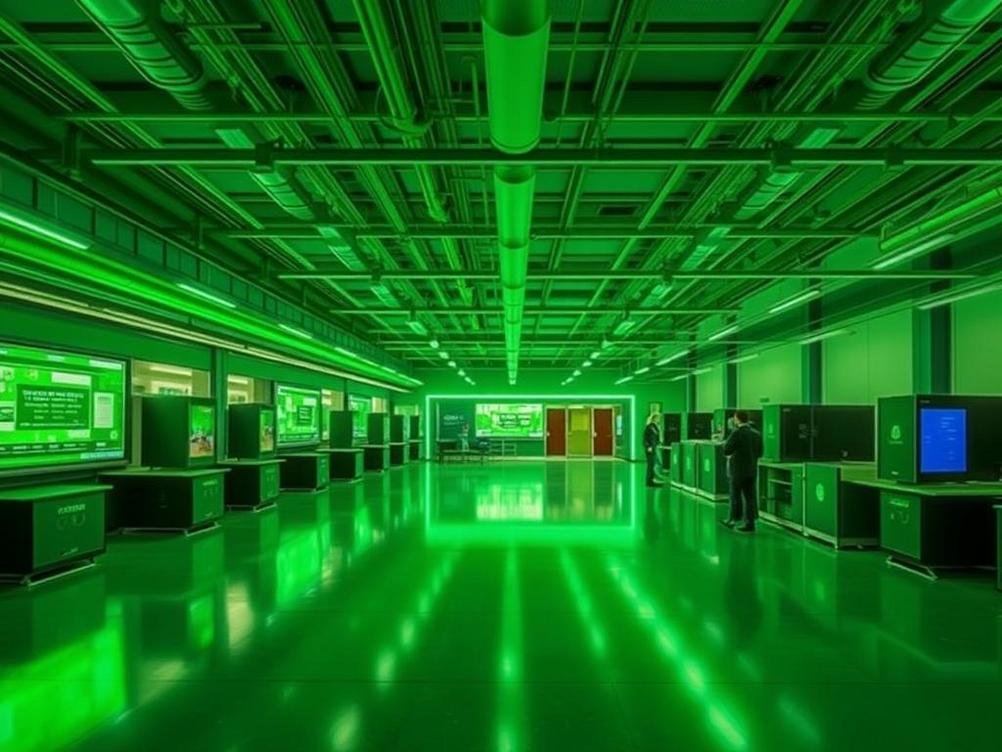
How Cal Poly’s New AI Factory is Shaping the Future of Learning with NVIDIA’s Cutting-Edge Tech
Imagine walking into a place where robots chat with you about the latest memes, or where you can design your own AI buddy that actually learns from your bad jokes—that’s kinda what popped into my head when I heard about Cal Poly’s new AI Factory. We’re talking about a university stepping up its game big time, teaming up with NVIDIA to build this massive hub for all things AI. It’s not just another lab; it’s like giving students a playground where they can tinker with tech that’s straight out of a sci-fi flick. Think about it: in a world where AI is everywhere—from your phone suggesting what to watch next to doctors using it to spot diseases—places like this are going to be game-changers for education. I mean, who wouldn’t get excited about hands-on learning that could land you a job at the next big tech company? But let’s dive deeper. This setup isn’t just about shiny gadgets; it’s about preparing the next generation for a future that’s already here, blending real-world problem-solving with some seriously cool tech. As someone who’s always geeked out over AI, I can’t help but chuckle at how far we’ve come from those clunky old computers—now we’re talking about AI factories that could make learning feel less like a chore and more like an adventure. So, buckle up, because we’re about to explore how this partnership between Cal Poly and NVIDIA is going to shake things up, and maybe even inspire you to think about your own AI journey.
What Exactly is Cal Poly’s AI Factory?
You know, when I first read about this, I thought, ‘Wait, an AI factory? Is that like a place where they mass-produce robots?’ Turns out, it’s way more intriguing than that. Cal Poly, that’s California Polytechnic State University for the uninitiated, is rolling out this advanced facility dedicated to AI research and development. It’s basically a high-tech space where students, professors, and even industry pros can collaborate on projects that push the boundaries of what’s possible with artificial intelligence. Picture rooms filled with supercomputers, VR setups, and tools that let you simulate everything from climate models to virtual art exhibits. It’s not just about coding; it’s about making AI accessible and fun, like turning a boring lecture into a interactive demo that has everyone laughing.
What’s really cool is how this ties into NVIDIA’s tech. NVIDIA, the company behind those powerhouse graphics cards that gamers drool over, is bringing their A-game with hardware and software that’s optimized for AI workloads. We’re talking about their GPUs that can handle massive data processing at lightning speed. For example, if you’re a student working on a project to predict traffic patterns in a busy city, this factory gives you the tools to run simulations that would take days on a regular laptop—but here, it’s done in minutes. And let’s not forget the humor in it; I can already see some student accidentally creating an AI that generates dad jokes on demand. It’s all about fostering innovation, and from what I’ve gathered from NVIDIA’s site (nvidia.com), this partnership is set to make Cal Poly a hotspot for AI education.
To break it down, here’s a quick list of what you might find in this AI Factory:
- State-of-the-art computing clusters powered by NVIDIA’s AI accelerators.
- Workspaces for collaborative projects, from machine learning to robotics.
- Training programs that mix theory with hands-on experiments, so you’re not just reading about AI—you’re building it.
The Magic of NVIDIA Technology in This Setup
Alright, let’s talk about NVIDIA—they’re like the wizards of the tech world, especially when it comes to AI. Their technology is the backbone of this AI Factory, making everything run smoother than a hot knife through butter. I mean, without NVIDIA’s GPUs and software frameworks, projects at Cal Poly might still be stuck in the Stone Age of computing. These tools aren’t just fast; they’re smart, designed to handle the kind of complex calculations that AI demands. It’s like giving a race car engine to a kid who’s just learning to drive—exciting, but with the potential to go places.
For instance, NVIDIA’s CUDA platform lets developers accelerate applications by harnessing the power of their graphics processors. In the AI Factory, that means students can train neural networks for things like image recognition or natural language processing without waiting hours for results. And here’s a funny thought: remember when we used to complain about our computers lagging during a video call? Well, with this tech, it’s like those days never existed. If you’re into stats, NVIDIA’s own reports show that their AI systems can process data up to 100 times faster than traditional CPUs, which is a game-changer for educational settings. Plus, it’s not all serious—imagine using this to create an AI that plays pranks, like changing your desktop background unexpectedly.
In a nutshell, the integration of NVIDIA tech means more efficient learning. Here’s how it plays out:
- It speeds up research, allowing for quicker iterations on projects.
- It opens doors to advanced topics, like deep learning, that were once out of reach for undergrads.
- It fosters partnerships with industry, so students get real-world experience right on campus.
Why This Matters for Students and Researchers
Look, education isn’t just about memorizing facts; it’s about getting your hands dirty, and that’s exactly what this AI Factory offers. For students at Cal Poly, it’s like winning the lottery—suddenly, you’ve got access to resources that could turn your wild ideas into reality. Whether you’re a comp sci major dreaming of building the next big app or a bio student using AI for environmental studies, this place is a boon. I remember back in my college days, we were lucky if we had a shared computer lab; now, kids are working with tech that feels straight out of a James Bond movie.
The real kicker is how it bridges the gap between theory and practice. Researchers can dive into cutting-edge projects, like developing AI for sustainable energy, and students get to tag along. According to some education stats from sources like the National Science Foundation, hands-on AI training can boost job prospects by up to 40%. That’s no joke—it’s like having a secret weapon in a job market that’s obsessed with tech skills. And let’s add a dash of humor: what if an AI experiment goes sideways and starts generating cat videos instead of serious data? Hey, at least it’ll keep things entertaining.
To put it in perspective, consider these benefits:
- Enhanced learning experiences that make complex topics feel approachable.
- Opportunities for internships and collaborations with companies like NVIDIA.
- A supportive environment that encourages experimentation without the fear of failure.
Real-World Applications and Cool Examples
Okay, so what’s all this AI fuss good for in the real world? At Cal Poly’s AI Factory, it’s not just about playing around with code; it’s about applying it to solve actual problems. For example, they might use NVIDIA’s tech to work on autonomous vehicles or predictive healthcare models. It’s like taking a superhero gadget and putting it to use—one day you’re simulating weather patterns to help farmers, and the next, you’re optimizing supply chains for businesses. I’ve seen similar setups in other universities, and let me tell you, the results are mind-blowing.
Take a metaphor: AI is like a Swiss Army knife—versatile and handy. In education, that means students could be developing apps that detect early signs of diseases, drawing from NVIDIA’s medical imaging tools. Or, on a lighter note, creating AI for entertainment, like generating personalized storylines for video games. Real-world insights show that AI in education has grown exponentially; a report from Gartner predicts that by 2026, over 50% of companies will use AI for training. And here’s a fun twist—what if students use this to make an AI comedian that roasts your study habits? Education with a side of laughs.
Some standout examples include:
- Using AI for environmental monitoring, like tracking wildlife with computer vision.
- Developing chatbots that assist in language learning, making it interactive and engaging.
- Exploring AI in creative fields, such as generating art or music on the fly.
Potential Challenges and the Lighter Side
Don’t get me wrong, this all sounds awesome, but let’s keep it real—there are bumps on the road. Setting up an AI Factory isn’t as easy as plugging in a toaster; you deal with things like high costs, the need for skilled staff, and keeping up with rapid tech changes. Cal Poly might face hurdles in getting everyone on board, especially if some folks are still wary of AI taking over jobs. It’s like trying to teach an old dog new tricks—feasible, but it takes patience and a good sense of humor.
On the flip side, these challenges can lead to some hilarious moments. Imagine an AI misinterpreting data and suggesting ridiculous solutions, like using virtual reality to teach history through dance-offs. According to tech analysts, about 20% of AI projects fail due to data issues, but that’s where the learning happens. It’s all part of the process, and at Cal Poly, they’ll probably turn these into teachable moments. After all, who doesn’t love a good story about tech gone wrong?
To navigate this, consider these tips:
- Start small with projects to build confidence and skills.
- Collaborate with experts to avoid common pitfalls.
- Keep things light-hearted to maintain morale during setbacks.
Looking Ahead: The Bigger Picture
As we wrap up this chat about Cal Poly’s AI Factory, it’s clear this is just the beginning of something huge. With NVIDIA’s tech in the mix, we’re looking at a future where AI education isn’t a luxury but a standard. It could inspire more schools to follow suit, creating a ripple effect that boosts innovation across the board. Who knows, maybe in a few years, every campus will have its own AI hub, making learning as addictive as scrolling through social media.
And think about the broader impacts—from advancing research in climate change to revolutionizing how we work and play. It’s exciting, but let’s not forget to add some humanity to it all. After all, AI is a tool, not a replacement, and places like this remind us that it’s about enhancing our lives, not complicating them. If you’re a student or just an AI enthusiast, keep an eye on developments; you might even get involved.
Conclusion
In the end, Cal Poly’s new AI Factory with NVIDIA technology is more than just a fancy lab—it’s a beacon for the future of education. We’ve covered how it’s set to transform learning, the tech behind it, and even the fun challenges along the way. As we move forward, let’s remember to embrace this tech with curiosity and a smile, because who knows what incredible things we’ll create next? Whether you’re a pro or just dipping your toes in, this is your sign to get excited about AI and what it means for all of us.