dailytech.ai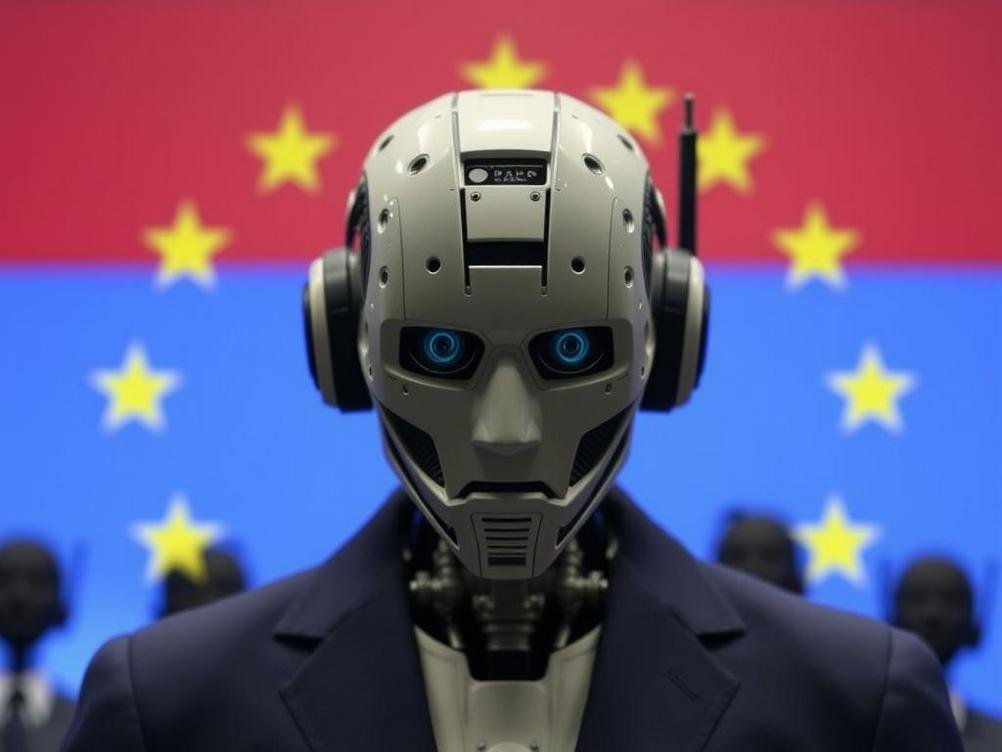
Why Europe Is Scratching Its Head Over AI: A Hilarious United Front of Uncertainty
Imagine you’re at a big family reunion, and everyone’s gathered around the table, but nobody can agree on what’s for dinner. That’s kind of how Europe feels right now with AI—everyone’s united in their confusion, staring at this shiny new tech like it’s a complicated recipe we can’t quite crack. We’ve got the EU pushing for regulations, countries like Germany and France throwing around ideas, but let’s face it, we’re all a bit lost in the sauce. Is AI going to revolutionize healthcare, boost economies, or just end up as another overhyped gadget that collects dust? This article dives into how Europe is grappling with AI’s promises and pitfalls, blending a bit of humor with some real talk on why we’re not as far along as we should be. Think about it: while Silicon Valley’s launching rockets to the moon, we’re still debating if we need a user manual for AI. By the end, you’ll get why Europe’s approach is both frustrating and fascinating, and maybe even pick up a few insights on what could change the game.
What’s really wild is that Europe’s not short on brainpower or ambition. We’ve got tech hubs in places like Berlin and Stockholm churning out innovative startups, and the EU’s AI Act is supposed to be this game-changer for ethical tech. But here’s the kicker—despite all that, we’re united more in our questions than our answers. Take a step back and you’ll see it’s not just about tech; it’s about jobs, privacy, and even cultural identity. Will AI steal our jobs or create new ones? How do we balance innovation with protecting data? These are the kinds of debates keeping policymakers up at night, and honestly, it’s relatable because who hasn’t felt overwhelmed by something as massive as AI? In this piece, we’ll unpack the mess, share some laughs, and explore real-world examples that show Europe’s on the edge of something big—if we can just get our act together. Stick around, and let’s navigate this AI maze together.
The AI Puzzle: Why Europe’s Scratching Its Collective Head
Picture this: Europe’s like that friend who’s great at planning parties but always forgets the snacks. When it comes to AI, we’ve got the plans—the EU’s regulatory framework is ambitious—but we’re missing the execution flair. The main issue? A lack of unified answers means every country is doing its own thing, leading to a patchwork of policies that confuse everyone. For instance, while the UK is post-Brexit and experimenting freely, the rest of the EU is tied up in red tape, debating ethics over innovation. It’s not all bad; this caution stems from Europe’s history with data scandals, like the Cambridge Analytica mess, which hit hard and made us super wary.
What’s funny is how this unity in uncertainty plays out in everyday tech. Take Germany’s approach—they’re all about protecting worker rights, fearing AI will automate jobs left and right. Statistics from the European Commission show that up to 14% of jobs in the EU could be automated in the next decade, which sounds alarming but also exciting if we pivot to reskilling. The point is, Europe’s not ignoring AI; we’re just overthinking it, like when you stare at a menu for ages before ordering the same old thing. To make it relatable, think of AI as that new app on your phone—you know it’s useful, but you’re not sure how to use it without messing up.
- One key factor is the diversity of EU nations; with 27 members, getting everyone on board is like herding cats.
- Another is the focus on ethics—Europe prioritizes things like fairness and transparency, which is noble but slows things down compared to the U.S., where speed often wins.
- Finally, funding gaps mean startups in Europe struggle for cash, unlike in China where government backing is plentiful.
A Quick History Lesson: How Europe Got Tangled in AI’s Web
If you’re into history, you’ll love this—Europe’s AI journey is like a soap opera with plot twists galore. It all kicked off in the 1950s with Alan Turing’s ideas, but fast-forward to today, and we’re still figuring out the sequel. The EU didn’t really jump in until the 2010s, with initiatives like Horizon Europe pouring billions into research. Yet, here’s the ironic part: while we’re united in funding AI, we’re divided on how to apply it. Remember when GDPR dropped in 2018? It was a bold move to protect privacy, but it’s also made companies think twice about AI projects that involve personal data, slowing innovation to a crawl.
Let’s not gloss over the positives; Europe’s historical emphasis on human rights has shaped AI in ways that could set global standards. For example, France’s INRIA is pumping out world-class AI research, collaborating with places like the U.S. But unity in lack of answers means we’re often playing catch-up. A metaphor to chew on: it’s like building a house without a blueprint—everyone agrees on the foundation, but when it comes to the roof, we’re all debating materials. According to a 2024 report by the OECD, Europe lags behind in AI patents, with only 20% of global filings compared to the U.S.’s 40%. That’s a wake-up call, right?
- First, the post-WWII era emphasized collaboration, leading to bodies like the EU that now oversee AI policy.
- Second, economic shifts in the 2000s pushed for digitalization, but bureaucratic hurdles kept us from leaping ahead.
- Lastly, global events like the pandemic highlighted AI’s potential, from contact tracing apps to vaccine development, yet Europe hesitated on scaling up.
Key Challenges: The Roadblocks Keeping Europe in the AI Slow Lane
Alright, let’s get real—Europe’s challenges with AI aren’t just minor speed bumps; they’re like those never-ending construction zones on the highway. First off, there’s the talent drain: bright minds are flocking to tech giants in the U.S. or Asia for better opportunities, leaving Europe short-handed. It’s hilarious in a sad way— we’ve got the ideas, but not enough folks to turn them into reality. Then there’s the regulatory nightmare; the AI Act, which aims to classify AI systems by risk, is a step forward, but it’s so detailed that it’s bogging down smaller companies. For instance, a startup in Amsterdam told me they’re spending more time on compliance than coding these days.
Another layer is the economic divide within the EU. Countries like Estonia are AI-savvy, with e-governance systems that make filing taxes feel like a breeze, but others are lagging. Data from Eurostat shows that only 56% of EU businesses use AI, compared to 72% in the U.S. It’s like we’re all in the same boat, but some have oars and others are paddling with spoons. To add a real-world insight, consider how AI could transform healthcare—Europe’s aging population needs it for things like predictive diagnostics—but we’re stuck debating ethics instead of implementing it. If we don’t address these, we’ll keep united in our confusion.
- Data privacy concerns, amplified by scandals, make companies wary of AI tools that process personal info.
- Funding inequalities mean that while big players like Siemens get support, smaller ventures struggle.
- Cultural resistance in some areas, where people fear AI will erode jobs, adds another barrier.
What the Rest of the World Is Doing: Lessons from AI Leaders
While Europe’s twiddling its thumbs, places like the U.S. and China are sprinting ahead, and it’s eye-opening to see why. In the U.S., companies like Google and OpenAI are throwing cash at AI, with projects that range from self-driving cars to chatbots that feel almost human. They’re not perfect—remember the lawsuits over biased algorithms?—but they’re moving fast, which makes Europe’s cautious approach look like we’re watching from the sidelines. China, on the other hand, is integrating AI into everything from surveillance to education, backed by government mandates. It’s like they’re playing offense while we’re still in defense mode.
From a humorous angle, imagine Europe as the wise old uncle at the family gathering, saying, ‘Let’s think this through,’ while the kids (U.S. and China) are already causing chaos with their toys. But there’s value in our method; for example, the U.S. has faced backlash for lax privacy, as seen in cases like facial recognition misuse by police. Europe could lead by example, blending speed with ethics. A 2025 World Economic Forum report highlights that collaborative AI frameworks, like those in the EU, could foster global standards— if we get past our internal debates.
Bright Spots and Innovations: Europe’s Hidden AI Gems
Don’t think Europe’s all doom and gloom; there are some sparkling gems in this AI story. Take the Netherlands, for instance—they’re pioneering AI in agriculture, using drones to optimize farming and cut down on waste. It’s practical stuff that could feed the world, and it’s a reminder that we’re not entirely clueless. Or look at the UK’s Alan Turing Institute, which is fostering research that’s influencing global AI ethics. These pockets of innovation show that when we unite, even in our uncertainties, we can produce real results. Plus, it’s kind of funny how Europe’s emphasis on ‘explainable AI’—making sure machines can justify their decisions—could prevent the sci-fi nightmares we’re all secretly worried about.
To keep it light, think of these innovations as Europe’s secret weapons: we’re like the underdog in a movie, underestimated but packing a punch. For example, the EU’s investment in AI for climate change, like predictive models for weather patterns, is gaining traction. Statistics from a 2024 EU report indicate a 25% increase in AI-related patents in the last year alone. If we build on this, who knows? We might just lead the charge in sustainable AI.
- AI in healthcare, such as the UK’s NHS trials for diagnostic tools, is saving lives and cutting costs.
- Education tech in Finland, using AI for personalized learning, is helping students thrive.
- Green initiatives, like Germany’s AI-driven energy grids, are tackling climate change head-on.
The Path Forward: Steps to Turn Confusion into Confidence
So, how do we snap out of this AI funk? Europe’s got to start by streamlining regulations—maybe simplify the AI Act so it’s not a barrier but a booster. Governments could invest more in education, training the next generation of AI experts right here at home to stem the talent exodus. It’s like finally deciding on that dinner menu and getting everyone excited about the meal. Partnerships with global leaders, such as the U.S.-EU Trade and Technology Council as outlined in their agreements, could share best practices and speed things up.
Humorous take: We’re united in our lack of answers, but let’s flip that script. Imagine if we turned our overthinking into a superpower, creating AI that’s not just smart but socially responsible. Real-world insight: Countries like Estonia are already showing the way with their digital ID systems, which use AI securely. If the rest of Europe follows suit, we could be the ones others look to for guidance.
Conclusion: Uniting for a Smarter AI Future
Wrapping this up, Europe’s united front on AI might feel like a comedy of errors right now, but it’s also a story of potential waiting to explode. We’ve seen the challenges, the bright spots, and the lessons from elsewhere, and it’s clear that with a bit more collaboration and less hesitation, we can turn our confusion into clear advantages. Whether it’s through better policies, investments, or just plain old teamwork, the future of AI in Europe looks promising—if we seize it.
In the end, let’s remember that AI isn’t just about gadgets and code; it’s about shaping a world that works for everyone. So, here’s to Europe getting its act together—may we laugh at our past missteps and march forward with confidence. Who knows, we might just become the AI heroes of tomorrow.