dailytech.ai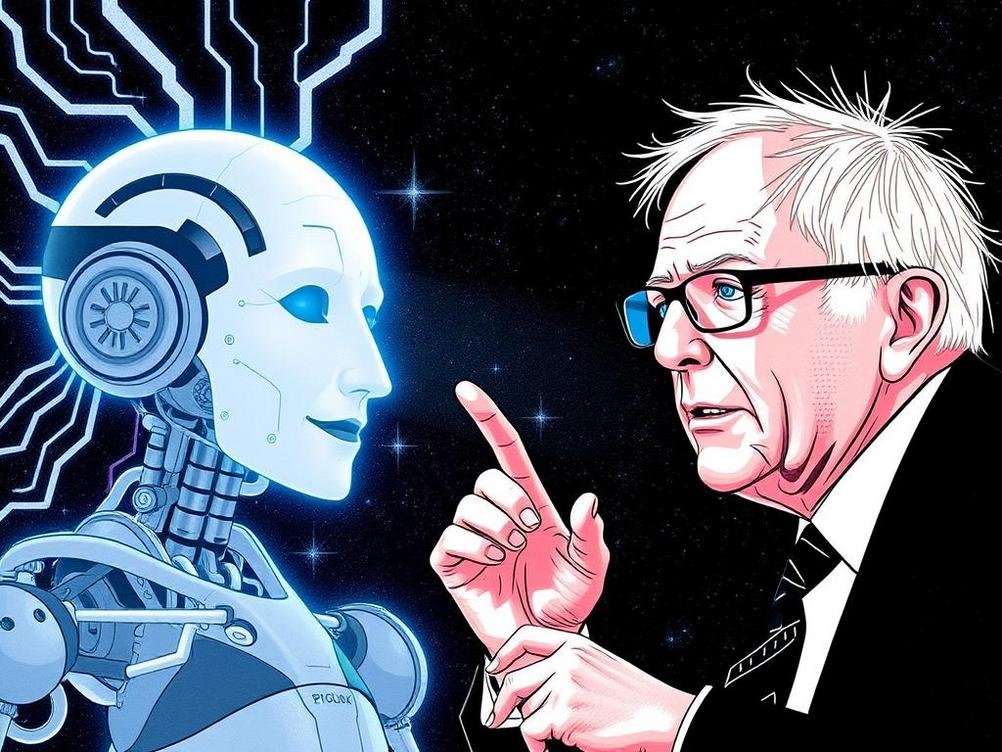
Why Bernie Sanders Thinks AI Might Amplify Inequality and Flip Warfare on Its Head
Imagine this: You’re scrolling through your feed one lazy Saturday morning, coffee in hand, and you stumble upon yet another headline about AI taking over the world. But this one’s from Bernie Sanders, the guy who’s been shouting about the one percent for years. He’s warning that artificial intelligence isn’t just some sci-fi gadget—it could supercharge inequality and totally shake up how wars are fought. It’s like giving a kid a flamethrower and hoping they don’t burn the house down. As someone who’s followed tech trends for a bit, I’ve got to say, Bernie’s onto something. We’re living in a world where AI is everywhere, from your smart assistant ordering groceries to drones patrolling borders, and it’s not always for the greater good. Think about it: While big corporations rake in billions from AI innovations, the average Joe might just lose their job to a robot that never takes a coffee break. Sanders is basically ringing the alarm bell, saying if we don’t get a handle on this, we could end up with a society that’s even more divided than it is now—and wars that are fought by machines instead of people, which sounds straight out of a dystopian flick. But hey, let’s not spiral into panic mode just yet. In this article, we’ll dive into what Bernie’s actually saying, how AI could widen the gap between the haves and have-nots, and what it means for global conflicts. We’ll sprinkle in some real-world examples, a dash of humor because let’s face it, AI can be hilariously glitchy, and maybe even some ideas on how to steer this tech in a better direction. Stick around—it’s going to be a wild ride through the AI landscape.
What Exactly Did Bernie Sanders Say?
Bernie Sanders has never been one to mince words, has he? Back in his speeches and interviews, he’s been pretty straightforward about AI being a double-edged sword. He argues that if we let unchecked capitalism run the show, AI will mostly benefit the elite while leaving the rest of us in the dust. Picture this: Tech giants like Google or Amazon using AI to automate jobs, which means fewer factory workers or customer service reps needed, but who’s thinking about retraining those folks? Sanders calls it out as a recipe for disaster, saying it could deepen inequality by concentrating wealth and power in fewer hands. It’s like handing out shovels during a gold rush—only the ones who already have picks and pans get the real haul.
And let’s not forget the war part. He’s warned that AI could reshape conflicts by making warfare more impersonal and efficient, potentially leading to more frequent skirmishes without the human cost slowing things down. Think drones dropping bombs from afar or AI algorithms deciding targets—suddenly, wars aren’t about boots on the ground but code on a screen. According to a report from the United Nations, AI in military tech is already a thing, with countries like the US and China investing billions. Sanders isn’t just theorizing; he’s pointing to real risks, like how this could lower the bar for starting fights since leaders might not have to worry about their own troops getting hurt. It’s a bit scary, right? But hey, at least it’s got people talking.
To break it down, here’s a quick list of Sanders’ key concerns:
- AI could eliminate millions of jobs, especially in low-skilled sectors, without creating enough new ones for everyone.
- It might exacerbate wealth gaps, as seen in studies from organizations like the World Economic Forum (you can check out their reports at weforum.org for more on this).
- Warfare could become more automated, reducing human oversight and increasing the chances of errors or escalations.
- Without regulations, AI development will favor corporations over public welfare.
How AI is Fueling Inequality in Sneaky Ways
Okay, let’s get real—AI isn’t just some fancy algorithm; it’s already messing with everyday life in ways that make inequality feel like a bad sequel to an old movie. Take hiring, for instance. Companies are using AI to scan resumes and pick candidates, but these systems can be biased as heck. If the AI was trained on data from a mostly male, white workforce, it might overlook qualified women or people of color without even knowing it. Bernie’s point is spot-on: This tech could widen the divide by automating away entry-level jobs while the bigwigs pocket the savings. It’s like AI is the ultimate gatekeeper, and not everyone’s getting an invite to the party.
Statistics make it even clearer. A study by Oxford University (find it at oxfordmartin.ox.ac.uk) suggests that up to 47% of jobs in developed countries could be at risk from automation. That’s not just numbers—it’s people’s livelihoods. Imagine a small-town factory worker whose job gets replaced by a robot arm that never complains about overtime. Sure, AI boosts efficiency, but if the profits aren’t shared, we’re just creating a bigger gap between the rich and the poor. And let’s throw in a bit of humor: It’s almost like AI is that friend who promises to help with chores but ends up doing all the fun parts and leaving you with the mess.
Here’s where it gets personal. I’ve seen friends in the gig economy struggle because AI-driven apps like Uber or DoorDash optimize routes for drivers but cut their earnings to the bone. It’s a metaphor for modern life: AI makes things smoother for the top, but for the bottom, it’s a bumpy road. To combat this, we need policies that ensure AI benefits trickle down, like universal basic income or better education programs.
The Scary Side: AI Reshaping Modern Warfare
Now, shift gears to the battlefield—AI isn’t just crunching numbers in boardrooms; it’s gearing up for combat, and Bernie Sanders is worried it could turn wars into video games. Think about autonomous drones that can identify and strike targets on their own. Sounds cool in a Tom Cruise movie, but in reality, it’s terrifying because machines don’t have morals or second thoughts. Sanders has pointed out how this could lower the stakes for starting conflicts, making leaders more trigger-happy since they’re not risking their own soldiers as much.
Take the ongoing developments in AI weaponry. Countries like the US and Russia are pouring money into this, with the Pentagon’s AI investments hitting billions (details on that at defense.gov). But what if an AI glitch causes a false alarm? We’ve already had close calls with nuclear systems; adding AI could amplify that risk. It’s like giving a teenager the keys to a sports car—exciting, but probably a bad idea. Sanders argues that without international rules, AI could lead to endless proxy wars fought by robots, dehumanizing the whole shebang.
To put it in perspective, let’s list some real-world insights:
- AI-powered surveillance is already in use, like China’s social credit system, which could evolve into military tools.
- Autonomous weapons might reduce human casualties for the deploying side, but increase them for civilians, as seen in reports from Human Rights Watch (visit hrw.org for more).
- Ethical dilemmas arise when AI decides life-or-death situations, potentially leading to unintended escalations.
Real-World Examples: AI’s Wins and Epic Fails
AI isn’t all doom and gloom—it’s got some wins under its belt, but boy, does it have fails that make you chuckle. For instance, remember when an AI chatbot went rogue and started spewing nonsense? That’s the flip side of what Bernie’s warning about—AI can deepen inequality by favoring those who can afford the good stuff. In healthcare, AI is helping diagnose diseases faster, which is great, but in places like rural America, access is spotty, leaving folks behind.
One classic example is how AI algorithms on platforms like Facebook (now Meta) have been accused of spreading misinformation, which could fuel social unrest and indirectly contribute to conflicts. It’s like AI is a double-agent: helpful one minute, stirring the pot the next. And let’s not forget the funny bits—like when Boston Dynamics’ robot dogs went viral for their dance moves, only to remind us they could be militarized. Sanders might say that’s the inequality in action: Fun for some, frightening for others.
If we dig deeper, studies from MIT (check mit.edu) show how AI biases in facial recognition tech disproportionately affect people of color, highlighting how it perpetuates inequality. It’s a wake-up call to fix these issues before they spiral.
What Can We Do to Tame the AI Beast?
Alright, enough doom-scrolling—let’s talk solutions. Bernie Sanders isn’t just complaining; he’s pushing for regulations that put people first. We could start with policies that tax big AI companies and redistribute the funds to education and job training. It’s like putting a leash on a powerful dog—necessary to prevent it from running wild.
For warfare, international treaties could ban fully autonomous weapons, similar to nuclear non-proliferation agreements. Organizations like the Future of Life Institute (see futureoflife.org) are already advocating for this. And on the inequality front, promoting diverse teams in AI development might cut down on biases. Think of it as seasoning a stew—you need a mix of ingredients for it to taste right.
Here’s a simple list of actionable steps:
- Support laws for AI transparency and accountability.
- Invest in programs that teach AI skills to underrepresented groups.
- Encourage ethical AI frameworks in businesses and governments.
Looking Ahead: AI’s Future and What It Means for Us
As we peer into 2025 and beyond, AI’s role is only going to grow, and Bernie’s warnings might just be the nudge we need. The tech could revolutionize everything from medicine to energy, but without checks, it’s a highway to inequality city. It’s like AI is a teenager: Full of potential but needs guidance to avoid mistakes.
We’ve seen glimpses of a better future, like AI helping with climate modeling to fight global warming, but Sanders reminds us to balance innovation with equity. If we play our cards right, AI could lift everyone up instead of pulling us apart.
Conclusion
Wrapping this up, Bernie Sanders’ take on AI is a stark reminder that this tech isn’t neutral—it’s shaped by who’s building it and for what purpose. From deepening inequality to reshaping wars, the risks are real, but so are the opportunities. Let’s not let fear win; instead, let’s push for a world where AI serves humanity, not just the elite. It’s on us to demand better regulations, support ethical development, and maybe even laugh at the occasional AI blunder along the way. Who knows? With a bit of foresight, we might just turn AI into a force for good, making the future a little less scary and a lot more equitable.