dailytech.ai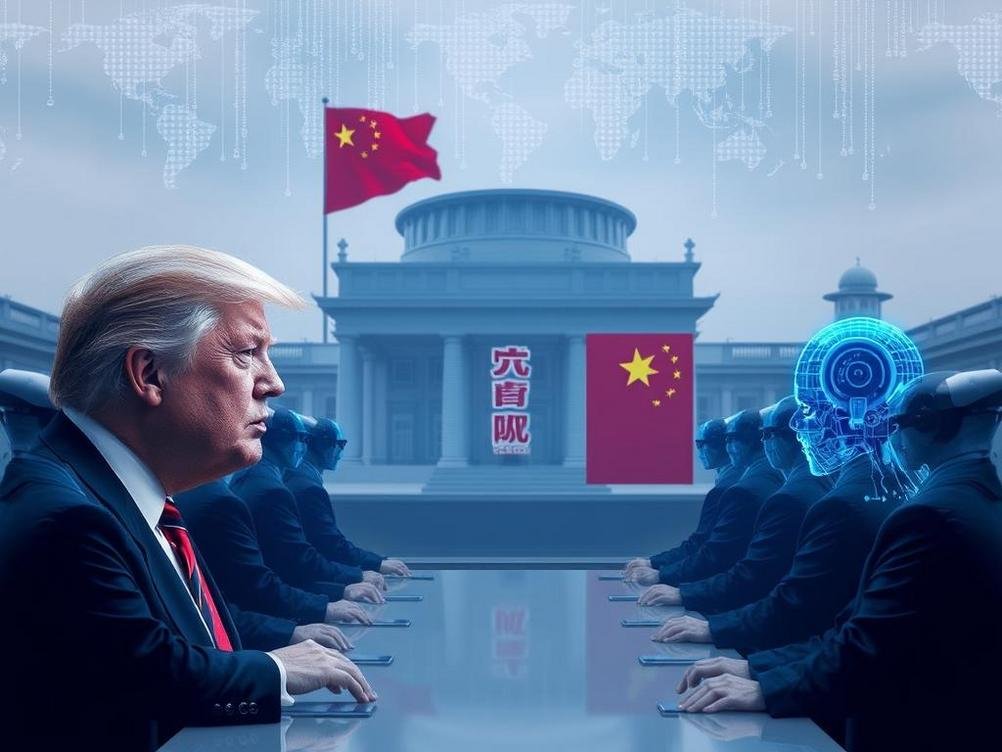
Why Trump’s AI Warning About China Is a Wake-Up Call We Can’t Ignore
Imagine this: You’re chilling on your couch, scrolling through your phone, when suddenly you hear about some bigwig politician dropping a bombshell on national TV. That’s exactly what happened when former President Donald Trump piped up about AI standards. He didn’t just say, ‘Hey, we should probably get our act together,’ he flat-out warned that if the US doesn’t step up its game, China could zoom past us faster than a kid on a sugar rush. It’s like that moment in a thriller movie where the hero realizes the villain’s got a secret weapon—except here, the weapon is artificial intelligence, and it’s not just fiction. We’re talking about real stuff that could shape everything from your job to global power dynamics. Trump’s call for federal AI standards isn’t just politics as usual; it’s a stark reminder that in the wild world of tech, sitting back and doing nothing could leave us eating dust. Think about it: AI is already everywhere, from the smart assistant on your phone to the algorithms deciding what Netflix shows you next. But if we’re not careful, we might wake up one day and find out China’s version of AI is calling the shots. This isn’t about picking sides in a debate; it’s about asking ourselves, ‘Are we ready for the AI arms race, or are we just going to wing it?’ Trump’s comments cut through the noise, highlighting how fragmented our current approach is and why a unified federal standard could be the key to keeping innovation alive while staying secure. It’s a topic that’s got me buzzing, and I’ll bet it will get you thinking too about what this means for the future—your future.
What Exactly Did Trump Say, and Why Should You Care?
You know how sometimes a celebrity or a leader says something that sounds like a headline from a sci-fi novel? Well, Trump’s recent remarks were straight out of that genre. He called for a federal AI standard, basically saying the government needs to lay down some ground rules for how AI is developed and used in the US. And he didn’t stop there—he warned that China is gunning to overtake us, claiming they’d ‘easily catch’ up if we don’t get serious. It’s like he’s shouting from the rooftops, ‘Hey, wake up before it’s too late!’ This isn’t just bluster; it’s rooted in the fact that AI is transforming industries at warp speed. For instance, China’s been pouring money into AI research, with reports showing they’ve invested over $100 billion in the sector since 2017. That’s no small potatoes—it’s enough to make any tech enthusiast do a double-take.
But why should you, the everyday person, give a hoot? Well, think about it this way: AI isn’t some distant lab experiment; it’s already messing with your daily life. From job automation to personalized ads, it’s everywhere. If China pulls ahead, we could see them dominating global tech markets, which might mean American companies lose out on innovation and jobs. Trump’s point is that without a federal framework, we’re like a ship without a rudder in stormy seas. We’ve got states doing their own thing—California has strict privacy laws, while others are more lax—which creates a messy patchwork. And let’s not forget the security risks; unregulated AI could lead to things like deepfakes or cyber attacks that make our elections look like child’s play. So, yeah, this is bigger than politics; it’s about protecting our edge in a tech-driven world.
- First off, Trump’s warning highlights the competitive edge: China has companies like Baidu and Tencent pushing boundaries, often with government backing.
- Secondly, it underscores the need for ethical guidelines, like ensuring AI doesn’t amplify biases or privacy breaches.
- Lastly, it reminds us that innovation without oversight could backfire, much like how social media algorithms have fueled misinformation in recent years.
The Real Need for Federal AI Standards in the US
Okay, let’s get real for a second—do we even need federal standards for AI? Trump’s pushing for it, but is it just hot air or something substantial? From what I see, yeah, it’s pretty essential. Right now, AI development is like a wild west show; everyone’s innovating, but there’s no sheriff in town to keep things in check. A federal standard could set baseline rules for safety, ethics, and data privacy, making sure that as AI evolves, it doesn’t trample over people’s rights. It’s like building guardrails on a highway—without them, you’re cruising at high speed with no protection. Trump’s not wrong when he says we need this to stay competitive; after all, Europe’s already got the GDPR for data protection, so why shouldn’t we have something similar for AI?
Take healthcare as an example. AI is revolutionizing diagnostics, with tools like IBM’s Watson helping doctors spot cancer early. But without standards, how do we ensure these systems are accurate and fair? If China’s AI gets there first with less red tape, they could flood the market with cheaper alternatives that might cut corners. Trump’s call is basically a nudge to say, ‘Let’s not let that happen.’ And let’s throw in some stats: According to a 2024 report by the Brookings Institution, the US leads in AI patents, but China’s closing the gap fast, filing nearly as many in the past year. That’s eye-opening, right? So, federal standards aren’t about stifling innovation; they’re about steering it in the right direction, ensuring we don’t sacrifice security for speed.
- A federal framework could standardize data usage, preventing scenarios where personal info gets misused—like those creepy targeted ads that know your every move.
- It might also promote collaboration between tech firms and the government, fostering advancements while keeping national security in mind.
- Plus, it could address workforce impacts, like retraining programs for jobs AI might displace, which is something Trump’s administration hinted at back in the day.
Why China’s AI Ambitions Are a Genuine Threat
Alright, let’s dive into the elephant in the room—China’s AI game. Trump’s warning that they’d ‘easily catch’ the US isn’t just saber-rattling; it’s backed by some serious evidence. China’s government has made AI a national priority, investing heavily in research and development. It’s like they’re playing chess while we’re still figuring out checkers. For instance, their ‘Made in China 2025’ initiative aims to dominate key technologies, including AI, and they’ve got the resources to make it happen. We’ve seen this with 5G networks, where Huawei became a global player despite US pushback. If AI follows suit, China could control everything from autonomous vehicles to military drones, giving them a massive geopolitical edge.
What’s scary is how this could play out in everyday life. Imagine China exporting AI-powered surveillance tech that’s super advanced—stuff that makes our current security cameras look like toys. Countries might flock to it for its affordability, but at what cost? We’re talking potential human rights issues, like the Uyghur surveillance in Xinjiang, which has drawn international criticism. Trump’s point is that if the US doesn’t unify its AI efforts, we could lose our influence. And let’s not forget the economic angle; a 2025 World Economic Forum report estimates AI could add $15.7 trillion to the global economy by 2030, with China poised to grab a huge slice. It’s a wake-up call that makes you think, ‘Do we really want to hand over the keys to the future?’
How Federal AI Standards Could Change the Game for Innovation
If Trump’s idea takes off, how might federal standards actually shake things up? Well, for starters, it could create a more level playing field for US companies. Right now, big tech giants like Google and Microsoft are leading the charge, but smaller startups often get bogged down by varying state regulations. A national standard would streamline that, letting innovators focus on building cool stuff instead of navigating legal mazes. It’s like turning a convoluted road trip into a straight highway—much less frustrating. Plus, it could encourage ethical AI development, ensuring algorithms don’t perpetuate biases, such as racial profiling in facial recognition tech.
Let’s look at a real-world example: In 2023, the EU rolled out its AI Act, which sets rules for high-risk AI applications. If the US followed suit, we could see similar benefits, like better consumer protection and more trust in AI systems. Trump’s warning about China adds urgency; if they’re advancing without these checks, we risk falling behind in both tech and morals. And humor me here—wouldn’t it be wild if a federal standard led to AI that actually helps solve climate change, like predictive models for weather disasters? That’s the kind of innovation we need, not just flashy gadgets.
- It could mandate transparency in AI decision-making, so users know why an algorithm suggested something.
- Standards might include testing protocols to prevent failures, like the 2024 incident where an AI trading bot caused a stock market glitch.
- Finally, it could boost international partnerships, helping the US collaborate with allies against China’s influence.
The Pros and Cons of Ramping Up AI Regulation
Now, before we all jump on the regulation bandwagon, let’s weigh the pros and cons. On the plus side, federal standards could prevent disasters, like AI being used for malicious purposes—think deepfake videos that could sway elections or spread misinformation. Trump’s push makes sense here; it’s about building a safety net in a tech landscape that’s evolving faster than we can keep up. But hey, it’s not all sunshine and rainbows. Overregulation could stifle creativity, making it harder for startups to experiment and innovate. It’s like putting a leash on a racehorse—sure, it might prevent accidents, but it could also slow it down.
The cons are real too. If we overdo it, we might drive talent and investment overseas, straight into China’s waiting arms. Remember, China’s less regulated environment has let them attract top AI researchers from around the world. On the flip side, pros include fostering public trust; people are already wary of AI after scandals like Cambridge Analytica. A balanced approach, as Trump suggests, could ensure we lead ethically. So, it’s a tricky balance, but getting it right could mean the US stays at the forefront.
- Pros: Enhanced security and ethical guidelines that protect users.
- Cons: Potential delays in deployment, as seen in the slow rollout of self-driving cars.
- Overall: It’s about finding that sweet spot to compete globally.
What the US Should Do Next to Stay Ahead
So, where do we go from here? Trump’s call is a starting point, but action is key. The US needs to invest in AI education and research, maybe through programs that fund universities and encourage STEM careers. It’s like planting seeds for the future—without them, we won’t have the next generation of innovators. Policymakers should also learn from global examples, such as Japan’s focus on AI for aging populations, to tailor our standards effectively.
And let’s not forget collaboration with the private sector. Companies like OpenAI (which has been in the news for its groundbreaking models) could partner with the government to shape regulations. Trump’s warning about China should spur us to act fast, perhaps by forming an AI task force that includes diverse voices. After all, if we’re serious about not letting China catch up, we need a multi-pronged strategy that combines regulation, investment, and diplomacy.
Conclusion
In wrapping this up, Trump’s remarks on federal AI standards and the China threat are more than just words—they’re a catalyst for change in a rapidly evolving world. We’ve explored how this could unify our approach, protect against risks, and keep us competitive. It’s easy to get caught up in the hype, but the real takeaway is that AI’s future is in our hands. Whether you’re a techie, a policymaker, or just someone scrolling through the news, think about how you can get involved—maybe by supporting AI education or staying informed. Let’s turn this wake-up call into action, ensuring the US doesn’t just survive the AI era but thrives in it. Who knows, with the right moves, we might even turn the tables on China and lead the way forward.