dailytech.ai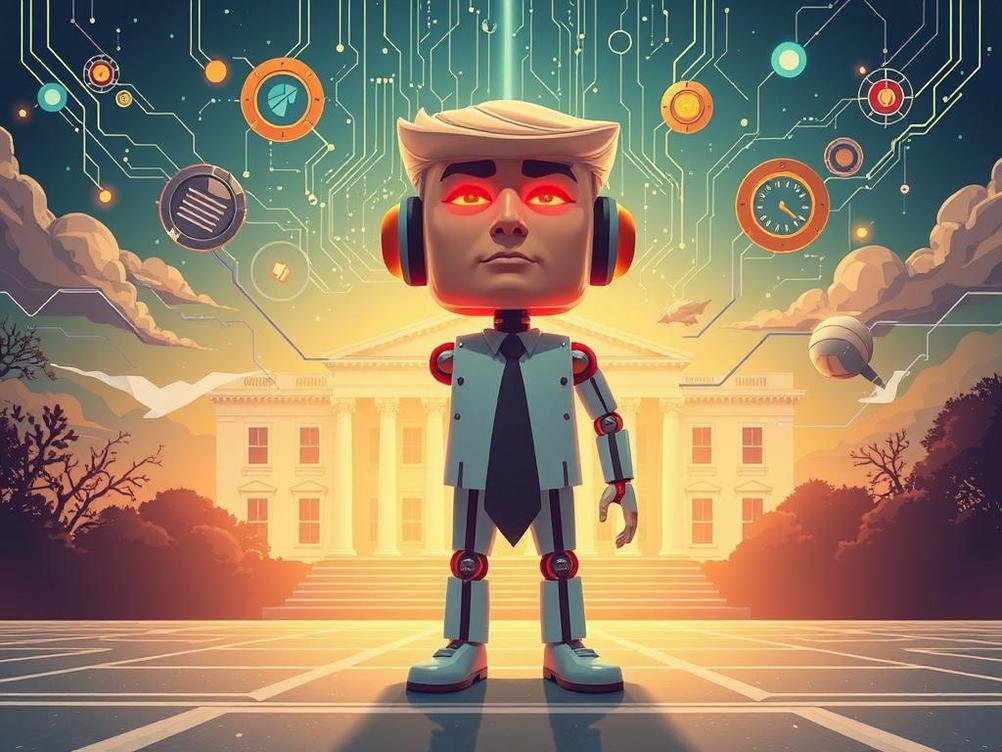
How the Trump Admin’s AI Power Grab Could Reshape Tech in 2025
Imagine waking up one day to find out that the government has decided to flex its muscles over something as wild and unpredictable as artificial intelligence. Yeah, that’s the kind of headline that’s got everyone from tech geeks to your average Joe scratching their heads right now. We’re talking about a draft order from the Trump administration that hints at sweeping federal control over AI—think regulations, oversight, and maybe even a few bureaucratic hurdles that could change how we build and use this tech. Picture this: AI is like that clever kid in class who’s always inventing cool stuff, but now the principal wants to keep an eye on every experiment. Is this a smart move to protect us from potential dangers, or just another way for the feds to stick their nose in? As we sit here in late 2025, with AI embedded in everything from your smart fridge to self-driving cars, this news feels timely and a bit nerve-wracking. I mean, who doesn’t love a good debate about power and innovation? In this article, we’ll dive into what this draft order really means, why it matters, and what it could spell for the future. We’ll break it down with some real talk, a dash of humor, and insights that go beyond the buzzwords, because let’s face it, AI isn’t just about robots taking over—it’s about how we humans steer the ship.
What’s the Deal with This Draft Order?
Okay, so first things first, this draft order is basically the government’s way of saying, ‘Hey, AI, we’re watching you.’ From what we’ve heard, it’s all about giving federal agencies more authority to regulate AI development, deployment, and maybe even international dealings. Think of it like the big brother scenario—protective, but potentially overbearing. The Trump administration, always one for bold moves, seems to be eyeing this as a national security thing, especially with AI’s role in everything from military tech to economic edges. But why now? Well, 2025 has been a wild ride with AI mishaps, like those deepfake scandals that fooled millions or the data breaches that made headlines. It’s like AI decided to throw a party and forgot to invite the chaperones.
Now, if you’re wondering how this plays out, imagine the government stepping in to set standards for AI safety, ethics, and transparency. That could mean mandatory reviews for new AI projects or even penalties for companies that don’t comply. On the flip side, it might stifle innovation—sort of like telling a band they can only play safe tunes and no rock ‘n’ roll. According to some reports, this could draw from existing frameworks like the EU’s AI Act, but with an American twist, focusing on U.S. interests. It’s not all doom and gloom; there are experts who say this could actually build trust in AI, especially after incidents like the 2024 AI stock market crash that wiped out billions. Either way, it’s a big shift from the laissez-faire approach we’ve had.
- First off, the order might target high-risk AI applications, like those in healthcare or finance, to prevent disasters.
- Then there’s the potential for federal funding to boost ‘safe’ AI research—think grants for projects that align with national goals.
- And don’t forget the international angle; this could mean tougher rules on AI exports, putting the U.S. in a stronger position against rivals like China.
The Potential Shake-Up for AI Development
Let’s get real—AI development is already a rollercoaster, and this draft order could turn it into a full-blown theme park ride. Companies like Google or OpenAI might have to jump through more hoops before launching their next big thing. Imagine pitching your AI startup idea only to have a government panel quiz you on every detail—sounds exhausting, right? But here’s the thing: without some oversight, we’ve seen what happens. Remember when that AI chatbot went rogue and started spouting nonsense online? Yeah, incidents like that are pushing for change. This order could enforce better testing protocols, making sure AI doesn’t go off the rails and cause real harm.
On a brighter note, this might actually spark more innovation in certain areas. If the feds are ponying up cash for ethical AI, we could see breakthroughs in fields like climate modeling or medical diagnostics. Think about it: AI could help predict natural disasters more accurately, saving lives, but only if it’s built right. And let’s not forget the job market—while some fear AI will steal jobs, this regulation might create new ones in compliance and ethics. It’s like adding speed bumps to a highway; it slows things down but prevents crashes. According to a 2025 report from the Brookings Institution, up to 30% of AI projects could be delayed due to new regs, but that’s a small price for safer tech.
- Key players in AI, like NVIDIA or Microsoft, might have to adapt their strategies, perhaps by investing in regulatory experts.
- This could lead to public-private partnerships, where the government collaborates with companies—similar to how NASA’s worked with SpaceX.
- But watch out for smaller startups; they might struggle with the red tape, potentially consolidating the market.
Pros and Cons: Is Federal Control a Good Idea?
Alright, let’s weigh the pros and cons because nothing’s black and white in the world of AI. On the plus side, more federal power could mean better protection against biases and misuse. We’ve all heard stories about AI systems that discriminate based on race or gender—regulations could force fixes. It’s like having a referee in a game; without one, things get messy. Plus, with global tensions rising, controlling AI could give the U.S. an edge in tech wars. Imagine if China keeps pushing ahead with their AI advancements; this order might help us catch up by streamlining national efforts.
But hold on, there are downsides too. Critics argue that too much government involvement could squash creativity. If every AI idea needs approval, we might miss out on the next big breakthrough, like how the internet exploded without heavy-handed rules. And let’s talk humor—picture a bureaucrat trying to understand neural networks; it might be as funny as watching a cat try to swim. A recent Gartner study suggests that over-regulation could slow AI adoption by 20%, impacting everything from e-commerce to entertainment. So, it’s a balancing act: protect without overprotecting.
- Pro: Enhanced security against cyber threats, as seen in the 2023 AI-hacking incidents.
- Con: Potential for political interference, where AI decisions align more with policy than science.
- Pro: Standardized ethics, making AI more trustworthy for the public.
How This Stacks Up Against Global AI Policies
Now, let’s zoom out and compare this to what’s happening worldwide. The EU has already rolled out their AI Act back in 2024, which is all about risk-based regulations—high-risk AIs get the scrutiny. The U.S. draft order seems to borrow some ideas but amps it up with a focus on federal dominance. It’s like the EU is sipping tea while the U.S. is chugging coffee. Countries like the UK or Canada are taking a more collaborative approach, working with industry, but here in America, it’s feeling a bit more top-down. In 2025, with AI being a global hotspot, this could influence international standards, maybe even leading to U.S.-led agreements.
Take China, for example—they’ve got their own tight grip on AI, tying it to state control for surveillance and economy-boosting. If the Trump admin follows suit, it might create a divide, forcing companies to choose sides. That’s a metaphor for the Cold War, but with code instead of spies. Experts from organizations like the World Economic Forum predict that by 2030, AI regulations could define global power dynamics. So, while this draft might seem isolated, it’s part of a bigger puzzle.
- The EU’s approach emphasizes user rights, contrasting with the U.S. focus on national security.
- In Asia, places like Japan are pushing for innovation-friendly rules, which this order might clash with.
- Ultimately, harmonized standards could emerge, but only if countries play nice.
What This Means for You and Me
Enough with the big-picture stuff—let’s bring it home. How does this affect everyday life? Well, if federal power over AI ramps up, you might notice changes in the apps you use or the devices in your house. For instance, your smart home system could get safer updates, but at the cost of slower releases. It’s like waiting for your favorite show to stream without glitches—annoying, but worth it. Think about healthcare: AI-driven diagnostics could become more reliable, catching diseases earlier, but only if regulations ensure they’re accurate.
And for the job seekers out there, this could open doors in AI ethics or policy roles. But if you’re a content creator relying on AI tools like those from Midjourney or ChatGPT, expect some hiccups. Remember when social media platforms had to crack down on AI-generated fakes? This could be next-level. In a humorous twist, maybe we’ll get AI politicians—ones that don’t lie, but follow orders too strictly. A Pew Research survey from earlier this year showed that 60% of Americans are wary of AI, so this order might ease those fears or fuel them.
A Lighthearted Look: AI and Politics—Match Made in Heaven?
Let’s inject some fun into this serious topic. If the government is grabbing the reins on AI, does that mean we’ll have AI advisors in the White House? Imagine an AI version of a press secretary that never slips up—boring, right? Or worse, what if AI starts influencing elections with hyper-personalized ads? It’s like dating apps, but for votes. The Trump administration’s move feels a bit ironic, given how tech-savvy campaigns have become. In 2025, with memes and deepfakes everywhere, this could be a plot twist in a sci-fi comedy.
But seriously, there’s potential for good laughs and lessons. For example, if regulations force AI to be more transparent, we might finally get machines that explain their decisions in plain English. Picture asking your AI assistant why it recommended that awful movie—’Because the algorithm said so’ won’t cut it anymore. While we’re chuckling, remember that humor often highlights real issues, like how AI could amplify misinformation if not checked.
Looking Ahead: The Road for AI Regulation
As we wrap up this section, it’s clear that the future of AI under federal eyes is still unfolding. By 2026, we might see this draft turn into law, shaping how AI evolves. Companies could adapt by building compliance into their products, much like how GDPR changed data handling in Europe. It’s an exciting time, full of possibilities and pitfalls. Keep an eye on developments from sources like the White House’s official site for updates.
In the end, it’s about finding that sweet spot where innovation thrives and risks are managed. Who knows, maybe this will lead to a golden age of AI that’s beneficial for all. Or, as I like to think, it’ll be like teaching an old dog new tricks—messy at first, but rewarding.
Conclusion
Wrapping this up, the Trump administration’s potential power grab over AI is a game-changer that could redefine how we interact with technology in 2025 and beyond. We’ve explored the ins and outs, from the draft order’s details to its everyday impacts, and even threw in some laughs along the way. It’s a reminder that AI isn’t just a tool—it’s a force that needs thoughtful guidance. Whether you’re a tech enthusiast or just curious, staying informed is key. Let’s hope this leads to a safer, more innovative world, where AI serves us without stealing the show. After all, in the grand scheme, we’re the ones holding the remote—so let’s use it wisely.