
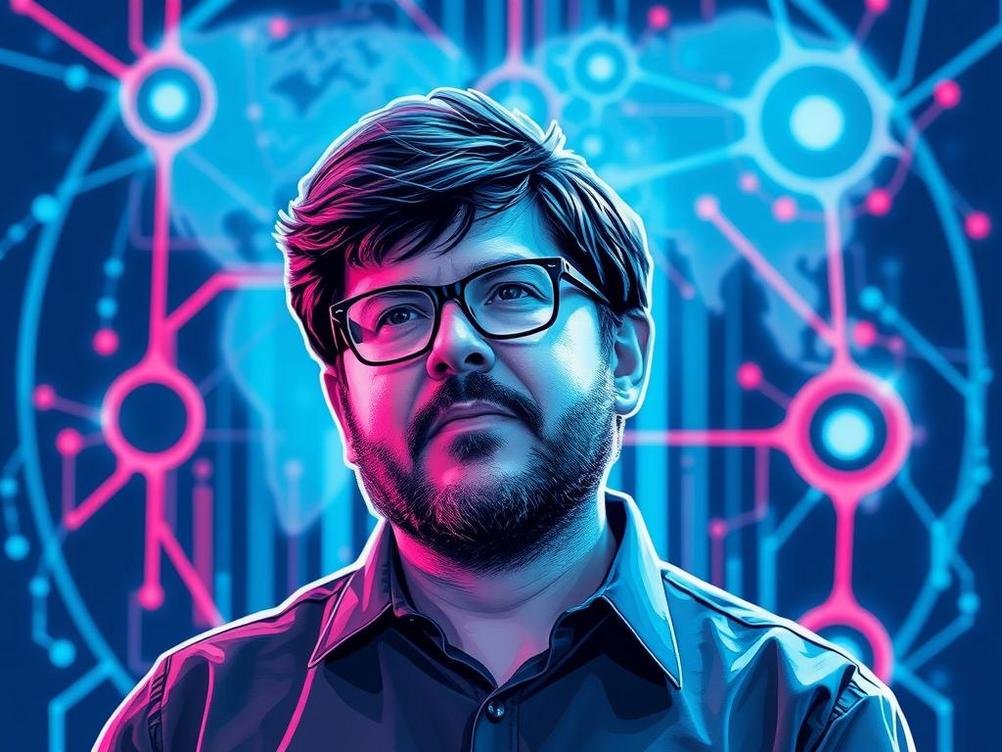
Yann LeCun Ditching Meta for His Own AI Adventure – What’s Next for the Godfather of AI?
Yann LeCun Ditching Meta for His Own AI Adventure – What’s Next for the Godfather of AI?
Imagine this: one of the biggest brains in AI, the guy who helped pioneer deep learning and won a Turing Award, suddenly decides he’s had enough of the corporate grind and wants to strike out on his own. That’s exactly what Yann LeCun is up to these days. If you’re not already geeking out over AI, you might know him as the “Godfather” – not the mob kind, but the tech kind who’s been shaping the future of machines that think like us. Picture him as that wise old wizard from a fantasy novel, waving his digital wand at neural networks and making them do tricks we didn’t even know were possible. But now, he’s packing his bags and leaving Meta (formerly Facebook) to start his own firm. Why? Well, who wouldn’t want to break free and chase their wildest ideas without a big company’s red tape holding them back?
It’s 2025, and the AI world is buzzing faster than a coffee-fueled hacker at a midnight codeathon. LeCun’s move isn’t just a job switch; it’s like watching a rockstar leave their band to go solo. He’s been at Meta since 2013, leading their AI research charge, but lately, there’s been talk of frustrations with the pace of innovation in big tech bubbles. Maybe he’s itching to dive deeper into uncharted waters, like making AI safer, more ethical, or even funnier – because let’s face it, who doesn’t want an AI that can crack a good joke without sounding like a robot from a bad sci-fi flick? This shakeup could ripple through the industry, inspiring a wave of new startups and shaking up how we think about AI’s role in everyday life. If you’re an AI enthusiast, a curious newbie, or just someone who wonders if machines will ever outsmart us, stick around. We’re diving into the nitty-gritty of LeCun’s legacy, his exit, and what it all means for the future. Trust me, it’s more exciting than binge-watching your favorite tech docuseries.
Who is Yann LeCun and Why Should We Care?
You know, if AI had a hall of fame, Yann LeCun would be front and center with a shiny plaque. Born in France, this computer science whiz has been tinkering with neural networks since the 1980s, way before AI was scrolling through your social feeds or suggesting what to watch next. He’s the mastermind behind convolutional neural networks (CNNs), which are basically the backbone of image recognition tech – think about how your phone unlocks with your face or how apps identify your cat in photos. It’s wild to think that without his work, we might still be squinting at blurry pics on our screens.
What makes LeCun stand out is his no-nonsense approach mixed with a bit of academic flair. He’s not just buried in code; he’s out there debating ethics, teaching at NYU, and even dropping truth bombs on Twitter (or X, whatever it is these days). According to a 2024 report from Stanford’s AI Index, breakthroughs in deep learning have powered everything from self-driving cars to medical diagnostics, and LeCun’s contributions are a big part of that. If you’re into stats, AI adoption grew by over 30% in businesses last year alone, largely thanks to pioneers like him. So, why care? Because his ideas don’t just stay in labs – they end up in your pocket, making life easier, weirder, and sometimes a tad scary.
Let’s break it down with a quick list of his top hits:
- Convolutional Neural Networks (CNNs): Revolutionized computer vision; it’s like teaching a computer to “see” the world, which is pretty much everywhere from Instagram filters to security cameras.
- Turing Award Winner: In 2018, he shared this with Geoffrey Hinton and Yoshua Bengio – the Oscars of computer science, if you will.
- Open-Source Advocate: He’s all about sharing knowledge, like that friend who posts free tutorials online. Check out his work on resources from OpenAI and other platforms for more on how he’s influenced the field.
The Big Exit: What Prompted LeCun to Leave Meta?
Alright, let’s get to the juicy part – why on earth is Yann ditching Meta after over a decade? From what I’ve pieced together from industry chatter and LeCun’s own posts, it’s a mix of wanting more freedom and maybe a few frustrations with the big tech machine. Meta’s been pouring billions into AI, but as companies grow, they can get bogged down in bureaucracy. Imagine being a creative genius stuck in endless meetings about quarterly reports instead of playing with the latest AI models. No wonder he’s ready to bolt.
Rumors suggest LeCun’s new firm might focus on stuff Meta couldn’t prioritize, like advanced AI safety or even merging AI with robotics for real-world applications. Think about it: we’ve all seen those viral videos of robots doing backflips or AI beating humans at games, but LeCun wants to take it further. A 2025 Gartner report highlights that 40% of AI projects fail due to ethical issues or lack of innovation speed, which might have been a thorn in his side. It’s like he’s saying, “Hey, I’ve got ideas that could change the game, and I don’t want to wait for approval from the higher-ups.”
To put it in perspective, leaving a giant like Meta is no small potatoes. It’s akin to a star quarterback leaving their team mid-season – exciting for fans of the underdog but risky. Here’s a quick rundown of potential reasons:
- Creative Freedom: Starting his own shop means he can pursue passion projects without corporate constraints.
- Industry Shifts: With AI regulations heating up, like the EU’s AI Act, he might want to lead the charge independently.
- Personal Growth: At this stage in his career, it’s about legacy – building something that outlasts him.
What This Means for AI at Meta and the Bigger Picture
So, LeCun’s departure is like pulling a key puzzle piece out of Meta’s AI strategy. The company has been all-in on metaverses and AI assistants, but without their chief scientist, they might have to rethink things. Will they scramble to fill his shoes, or double down on internal talent? It’s a question that’s got the tech world gossiping more than a neighborhood watch group.
From a broader view, this could spark a talent exodus in AI, where top minds decide to go solo or join nimbler startups. Remember how Elon Musk left OpenAI to start xAI? Similar vibes here. According to a recent McKinsey study, the AI talent gap is widening, with demand up 25% in the last year. LeCun’s move might encourage more innovation outside the tech giants, leading to a boom in diverse AI applications – from healthcare to entertainment.
- Meta’s Response: They’ll probably lean on their FAIR (Fundamental AI Research) team, but it’s a blow to morale and expertise.
- Market Impact: Stocks dipped a bit on the news, showing how one person can sway investor confidence.
- Opportunities for Others: This opens doors for collaborations, like with Google’s DeepMind or independent researchers.
LeCun’s New Venture: Wild Speculations and Real Excitement
Nobody knows exactly what LeCun’s firm will look like yet, but my money’s on something groundbreaking. Maybe he’ll tackle AI that’s more human-like, with better common sense and less of that “glitchy robot” feel. It’s like he’s gearing up to be the Indiana Jones of AI, exploring uncharted territories while dodging regulatory booby traps.
Speculating here, but if his past work is any indicator, we could see advancements in energy-efficient AI or even AI for social good. I mean, who wouldn’t want an AI that helps solve climate change or personalizes education without creepy data tracking? A Forbes article from earlier this year noted that AI startups raised over $50 billion in funding, so LeCun’s got plenty of backing if he plays his cards right.
Let’s not forget the fun side – imagine an AI firm that experiments with humor or art. Could be a game-changer, right? For example, tools like DALL-E or Midjourney owe a nod to his foundations, and he might take that to the next level.
The Impact on the AI Community: Ripples or Tsunamis?
This move is going to stir the pot in the AI community, no doubt. For students and researchers, it’s like a beacon saying, “Go your own way!” It might lead to more open-source collaborations or even a shift in how AI ethics are discussed globally.
Take a look at real-world examples: after similar exits, we’ve seen explosions in innovation, like with OpenAI’s ChatGPT. LeCun could inspire a new wave of ethical AI frameworks, especially with concerns about bias and privacy. And hey, if you’re an aspiring AI pro, this is a reminder that loyalty to a company isn’t everything – it’s about following your passion.
Lessons from LeCun’s Career for Aspiring AI Innovators
If there’s one thing we can learn from Yann LeCun, it’s that persistence pays off. He didn’t become an AI legend overnight; it took decades of trial and error, failures included. So, if you’re dreaming of building the next big thing, remember: don’t get discouraged by roadblocks.
For instance, think about how he balanced academia and industry – a true juggling act. And with AI education booming, platforms like Coursera offer courses inspired by his work. It’s a nudge to keep learning and networking, because you never know when your big break will come.
Here’s a quick list of takeaways:
- Stay Curious: Always experiment, even if it means stepping outside your comfort zone.
- Collaborate: Share ideas, as LeCun has done throughout his career.
- Think Ethically: AI isn’t just about tech; it’s about impact.
Conclusion: What’s Next in the AI Saga?
As we wrap this up, Yann LeCun’s leap from Meta to his own firm feels like a pivotal chapter in the AI story. It’s a reminder that innovation thrives when brilliant minds aren’t tied down, and who knows what amazing things he’ll uncover next? Whether it’s safer AI, bolder research, or just more fun tech gadgets, his journey inspires us all to think bigger.
In a world that’s changing faster than we can keep up, let’s cheer on trailblazers like LeCun. If you’re reading this, maybe it’s time to dive into AI yourself – who knows, you could be the next big name. Here’s to the future, one neural network at a time.
