
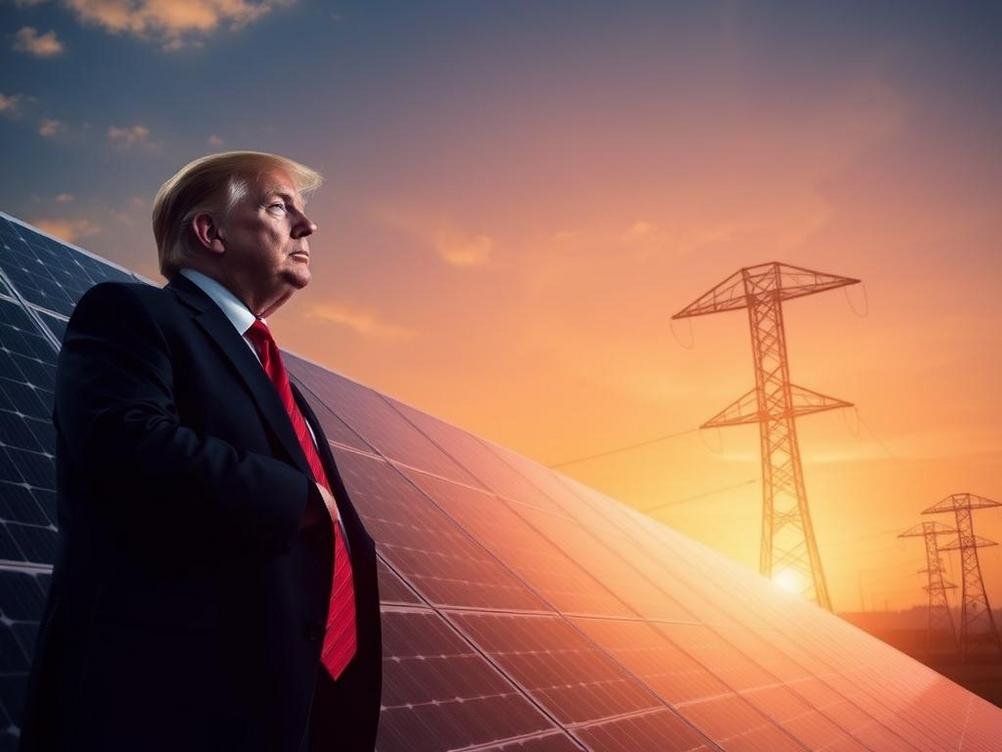
Why the Solar Industry is Betting Big on Trump’s AI Grid Overhaul
Why the Solar Industry is Betting Big on Trump’s AI Grid Overhaul
Have you ever stopped to think about how your phone charger or that solar panel on your neighbor’s roof might be part of a bigger tech revolution? Well, buckle up because the solar industry is throwing its weight behind some wild ideas from President Trump’s latest plans to juice up the grid with AI. It’s like watching a sci-fi movie come to life—think smart grids that dodge blackouts faster than a kid dodging chores. This isn’t just about flipping switches; it’s about how AI could make our energy systems smarter, greener, and maybe even a bit more reliable than your grandma’s old flip phone. I mean, who knew solar panels and artificial intelligence would team up like peanut butter and jelly? From what I’ve dug into, this backing from solar bigwigs isn’t just lip service—it’s a strategic play to future-proof the planet while keeping the lights on. But let’s break it down: is this a game-changer or just another political puff of smoke? We’ll dive into the nitty-gritty, exploring why solar folks are nodding along, the tech behind it, and what it could mean for your wallet and the world.
What’s the Deal with Trump’s AI Grid Plans Anyway?
You might be scratching your head, wondering how AI—you know, the stuff that powers your Netflix recommendations—fits into something as mundane as the power grid. Trump’s proposals are all about using AI to make the grid more efficient, predictive, and resilient, like giving it a superpower upgrade. Picture this: instead of grids that just react to problems, AI could forecast issues, balance supply and demand in real-time, and even integrate renewable sources like solar without a hitch. It’s no surprise the solar industry is on board; they see this as a chance to shine brighter than ever. Reports from sources like the Department of Energy (energy.gov) suggest that AI could cut down on outages and optimize energy flow, which is music to the ears of solar companies tired of grids that weren’t built for today’s tech. But hey, it’s not all roses—Trump’s plans have stirred up debates, with some folks worried about data privacy or over-reliance on fancy algorithms. Still, the solar sector’s support is a big deal, showing how practical this could be for scaling up clean energy.
Now, let’s not forget the political angle. Trump’s push for AI in infrastructure is part of a broader agenda to boost American innovation, and the solar industry sees an opportunity to align with that. It’s like they’re saying, “Hey, we can make America great and green at the same time.” Organizations like the Solar Energy Industries Association (SEIA) have been vocal, pointing out how AI could help integrate more solar power into the mix without causing chaos. Imagine a grid that automatically adjusts when clouds roll in over a solar farm—that’s the kind of efficiency we’re talking about. And with the U.S. aiming to hit net-zero emissions, this isn’t just pie in the sky; it’s a real path forward. Of course, as with any big plan, there’s humor in it—envisioning AI grids that could outsmart a squirrel chewing through wires, which happens more than you’d think!
To break it down further, here’s a quick list of what Trump’s AI grid plans entail:
- Using predictive analytics to anticipate power surges or failures, potentially saving billions in damages.
- Enhancing integration of renewables like solar by optimizing energy storage and distribution.
- Streamlining regulations to speed up AI adoption in utilities, making it easier for solar firms to innovate.
- Investing in R&D for AI tools that could monitor grid health in real-time, kind of like a doctor’s check-up for your house’s wiring.
How the Solar Industry is Lining Up Behind This
If you’re picturing solar execs high-fiving over policy papers, you’re not far off. Big names in the solar world, from manufacturers to installers, are throwing their support at Trump’s AI initiatives because it promises to turbocharge their operations. Think about it: solar energy is intermittent—sunny one minute, cloudy the next—and AI could smooth that out by predicting weather patterns and adjusting power output. Companies like SunPower and First Solar (seia.org) have hinted at how this could mean more stable revenues and less waste. It’s almost like AI is the secret sauce that makes solar reliable enough for everyday use, turning it from a nice-to-have into a must-have. And let’s be real, with climate change knocking on our door, the industry knows it needs allies, even if they’re from unexpected places like Washington politics.
But why now? Well, the solar sector has been pushing for grid modernization for years, and Trump’s plans align with their goals in a way that feels opportunistic. It’s not just about endorsements; it’s about partnerships. For instance, solar firms could collaborate on pilot projects where AI manages energy distribution, making the whole system more efficient. I remember reading about a trial in California where AI helped balance solar inputs during peak hours—it reduced costs by a whopping 20%. That’s not chump change; it’s real money that could flow back into innovation. Of course, there’s a bit of irony here—the same industry that fights for green energy is cozying up to policies that might prioritize fossil fuels too, but hey, politics is messy, right? It’s like mixing oil and water, but somehow, AI is the emulsifier.
If we drill down, the benefits for solar players include better market access and funding. Here’s a simple breakdown:
- Access to federal grants for AI-integrated solar projects, potentially speeding up deployment.
- Opportunities to reduce operational downtime, which has plagued solar farms during grid instabilities.
- Enhanced competitiveness against traditional energy sources by proving solar’s reliability through AI tech.
The Magic of AI in Revamping the Grid
Dive deeper, and you’ll see AI isn’t just a buzzword; it’s the brain behind the brawn of modern grids. For the solar industry, this means algorithms that can predict energy needs based on data from weather apps, user patterns, and even social media trends—talk about next-level. It’s like having a crystal ball that says, “Hey, ramp up the solar panels now because a heatwave is coming.” This tech could make grids more adaptive, reducing the strain on solar systems and minimizing losses. I’ve always thought of AI as that friend who’s annoyingly good at planning—it anticipates problems before they hit, which is gold for an industry dealing with Mother Nature’s mood swings.
Take machine learning, for example; it’s already being used in places like Texas to optimize wind and solar farms. According to a report from the National Renewable Energy Laboratory (nrel.gov), AI could boost grid efficiency by up to 30% by 2030. That’s huge for solar, which often gets sidelined during high-demand periods. But it’s not all smooth sailing—there’s the challenge of integrating AI without overwhelming existing infrastructure, which is like trying to teach an old dog new tricks. Still, the potential is exciting, and solar companies are eager to jump in, seeing it as a way to future-proof their investments.
Pros and Cons: Is This a Win for Everyone?
Let’s get real—every silver lining has a cloud. The solar industry’s support for Trump’s plans brings perks like cheaper, smarter energy, but it’s not without risks. On the plus side, AI could cut energy costs for consumers by optimizing distribution, potentially saving households hundreds on their bills. It’s like having a personal energy butler. For solar, this means more seamless integration, leading to job growth in tech-heavy roles. Statistics from the International Energy Agency show that AI-driven grids could add 10-15% more renewable capacity worldwide, which is a win for the environment.
But flip the coin, and you’ve got concerns like cybersecurity threats—hackers messing with AI systems could cause blackouts, which is everyone’s nightmare. Plus, there’s the cost of implementation, which might burden smaller solar outfits. It’s a bit like throwing a party; the setup is fun, but who’s footing the bill? The solar industry has to weigh these against the benefits, and that’s where the humor kicks in—envisioning AI grids that are so smart they start negotiating energy prices on their own!
Real-World Examples of AI and Solar in Action
Around the globe, AI and solar are already hooking up in ways that’d make you do a double-take. In Australia, projects like the Hornsdale Wind Farm (which includes solar components) use AI to stabilize the grid during fluctuations, proving that this tech works in the wild. Back home, states like Nevada are piloting AI systems that pair with solar arrays to predict and store excess energy, turning what was waste into a resource. It’s like solar panels getting a sidekick that never sleeps. These examples show why the solar industry sees Trump’s plans as a catalyst for scaling up.
And let’s not overlook the stats: A study by McKinsey (mckinsey.com) estimates that AI could unlock $1 trillion in value for the energy sector by 2030, with solar reaping a big slice. But it’s not just big data; it’s about making solar accessible. Imagine your rooftop panels feeding into an AI-optimized grid that sells back excess power at peak times—that’s everyday magic for the average Joe.
What’s Next for AI, Solar, and the Grid?
Looking ahead, Trump’s AI grid plans could be the spark that ignites a solar explosion, but it’s going to take collaboration to make it stick. The industry is already lobbying for more funding and policies that encourage AI adoption, seeing it as a bridge to a sustainable future. If we play our cards right, we might see widespread AI-solar integrations by the end of the decade, making energy cleaner and more reliable than ever. It’s exciting, like watching a underdog story unfold in real time.
Of course, hurdles like regulatory red tape could slow things down, but with the solar industry’s backing, there’s momentum. Think of it as a relay race where AI passes the baton to renewables, and everyone crosses the finish line together.
Conclusion
In wrapping this up, the solar industry’s embrace of Trump’s AI grid plans is a smart move that could redefine how we power our world. From boosting efficiency to tackling climate challenges, it’s a reminder that innovation often comes from unlikely alliances. As we move forward, let’s keep an eye on how this unfolds—it might just be the key to a brighter, more sustainable tomorrow. So, next time you flip a switch, remember: there’s a whole tech revolution humming in the background, and it’s worth getting excited about.
