dailytech.ai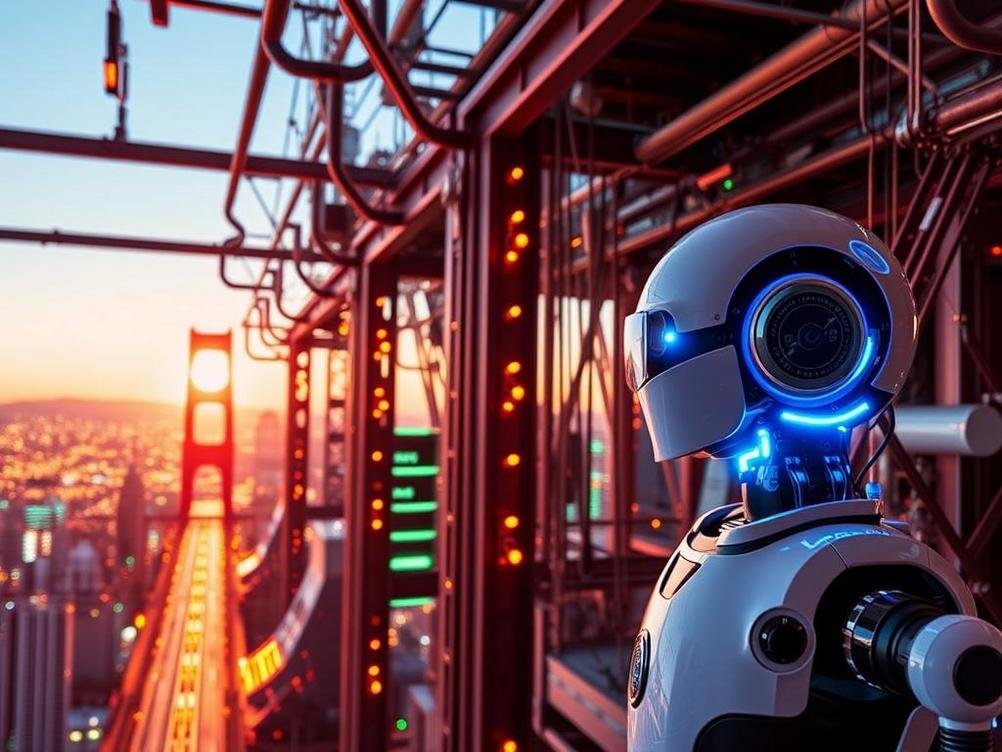
Inside Silicon Valley’s AI Powerhouse: How It’s Driving the Global Tech Race
Ever wondered what it feels like to be at the epicenter of the world’s most hyped tech revolution? Picture this: You’re strolling through the sun-soaked streets of Silicon Valley, where coffee shops buzz with coders scribbling algorithms on napkins, and every other conversation is about the next AI breakthrough that could change everything from how we drive to how we date. It’s like being in a real-life sci-fi movie, but with more venture capital and fewer laser guns. This place, often called the ‘AI factory,’ isn’t just a cluster of tech giants; it’s the beating heart of the global tech race, churning out innovations that make headlines faster than you can say ‘artificial intelligence.’ And let me tell you, as someone who’s followed this scene for years, it’s equal parts exciting and overwhelming. Think about it—AI is everywhere now, from your smart home devices predicting when you need coffee to those creepy recommendation algorithms on streaming services that know your tastes better than your best friend. But what really makes Silicon Valley tick in this AI arms race? We’re talking about massive investments, groundbreaking research, and a culture that celebrates failure as much as success. In this article, we’ll dive deep into why Silicon Valley is the undisputed king of AI, exploring its history, key players, and what it all means for the future. By the end, you’ll see why keeping an eye on this tech hub isn’t just smart—it’s essential if you’re into the wild world of innovation.
What Makes Silicon Valley the AI Epicenter?
You know, Silicon Valley didn’t just wake up one day as the AI capital of the world; it’s built on a foundation of curiosity, cash, and a bit of good old American hustle. Back in the 1970s, this area was already buzzing with tech pioneers like Steve Jobs and Bill Gates, but AI really kicked into high gear in the 2010s with things like deep learning and neural networks. It’s like the Valley became a magnet for brainy folks from all over, drawing in talent from universities and labs worldwide. What’s crazy is how this ecosystem thrives on collaboration—companies share ideas, poach talent, and even compete in ways that push everyone forward. For instance, places like Stanford University, right in the thick of it, pump out graduates who go on to lead AI projects at giants like Google and Facebook.
But let’s not forget the money. Venture capital flows here like water, with firms pouring billions into AI startups every year. According to a report from PitchBook, Silicon Valley snagged over 40% of global AI funding in 2024 alone. That’s not just impressive; it’s a gold rush! And the government’s in on it too, with initiatives like the National Science Foundation funding research that keeps the innovation pipeline full. Imagine a place where failure is just a stepping stone—think of those viral stories about AI experiments gone wrong, like when a chatbot accidentally spewed nonsense, only for the team to learn and iterate. It’s this blend of resources, talent, and a ‘why not?’ attitude that makes Silicon Valley the ultimate AI factory.
To break it down, here’s a quick list of factors that keep the Valley ahead:
- The concentration of top-tier universities and research centers, fostering a steady stream of ideas and experts.
- A network of accelerators and incubators that help turn wild ideas into viable products overnight.
- Easy access to investors who aren’t afraid to bet big on the next big thing, like AI-driven healthcare or autonomous vehicles.
The Key Players Shaping This AI Boom
If Silicon Valley is the AI factory, then the big names are the assembly line workers making it all happen. Companies like Google, Apple, and Meta aren’t just household names; they’re the ones cranking out AI tools that we use every day. Take Google, for example—it’s like they’ve got a secret lab where they dream up stuff like their AI-powered search updates or the folks behind DeepMind, which has been tackling everything from protein folding to beating humans at Go. These giants don’t just innovate; they acquire talent and startups left and right, building an empire that’s hard to compete with.
Then there are the up-and-comers, like OpenAI and Anthropic, which are shaking things up with their own AI models. It’s funny how these companies started as underdogs but quickly became darlings of the tech world. Remember when OpenAI’s ChatGPT went viral? It was like the internet exploded overnight, with everyone from students to marketers suddenly hooked. But it’s not all smooth sailing—there’s plenty of drama, like lawsuits over data scraping or ethical debates about AI biases. Still, these players drive the tech race by pushing boundaries and, occasionally, stepping on each other’s toes in the process.
Here’s a simple rundown of some major players and their contributions:
- Google: Leading in machine learning with projects that improve everything from voice assistants to self-driving cars.
- Apple: Focusing on privacy-first AI, like in their Siri upgrades, making tech feel more personal and less creepy.
- OpenAI: Pioneering generative AI, which is great for creative tasks but also sparks worries about job automation.
How AI is Fueling the Global Tech Race
Alright, let’s get to the juicy part: Why does Silicon Valley’s AI dominance matter in the bigger picture? It’s like a high-stakes game of chess where countries and companies are vying for control, and AI is the queen piece. From China to Europe, everyone’s trying to catch up, but the Valley’s head start gives it an edge. Think about how AI is transforming industries—it’s not just about smarter phones; it’s about revolutionizing healthcare, finance, and even agriculture. For instance, AI algorithms are helping farmers predict crop yields with pinpoint accuracy, which could feed millions more people worldwide.
The tech race isn’t without its rivalries, though. We’ve got the U.S. versus China, with both nations investing heavily in AI research to gain strategic advantages. A study by McKinsey shows that AI could add up to $13 trillion to the global economy by 2030, so it’s no wonder everyone’s scrambling. In Silicon Valley, this means faster innovation cycles, where a new AI tool might launch and iterate in months rather than years. It’s exhilarating, but it also raises questions—like, are we moving too fast? I mean, who hasn’t heard about those AI glitches that go viral, turning a simple bot into a meme machine?
To put it in perspective, consider how AI is impacting everyday life through these examples:
- Autonomous vehicles from companies like Waymo, which are already testing on Valley roads and could cut down traffic accidents dramatically.
- AI in finance, where tools from firms like Plaid help detect fraud in real-time, saving businesses millions.
- Environmental applications, such as AI models predicting climate patterns, which are crucial as we face 2025’s extreme weather events.
The Hilarious Hiccups and Real Challenges in AI Development
Let’s be real for a second—AI isn’t all sunshine and unicorns; there are plenty of bumps along the road that make for some entertaining stories. Take those early AI chatbots that misunderstood questions and gave wildly wrong answers, like suggesting you eat rocks for dinner. It’s almost comical how these ‘intelligent’ systems can still mess up in hilariously human ways. In Silicon Valley, where the pressure to innovate is intense, developers are constantly dealing with issues like data privacy and algorithmic biases, which can lead to real-world problems if not handled right.
For example, we’ve seen cases where facial recognition tech, developed in the Valley, has struggled with accuracy for diverse skin tones, highlighting ethical concerns. It’s like AI is a toddler learning to walk—full of potential but prone to tripping. According to a 2024 report from the AI Now Institute, over 60% of AI systems have biases baked in from their training data. That’s why regulations are starting to pop up, with the EU’s AI Act trying to keep things in check. In the Valley, this means companies are racing to fix these flaws while still pushing forward, turning challenges into opportunities for growth.
If you’re curious about navigating these issues, here’s a list of tips for staying informed:
- Follow reputable sources like Wired for the latest on AI ethics and failures.
- Engage with open-source projects on GitHub to see how everyday developers are tackling biases.
- Support initiatives that promote diverse teams in AI, because, let’s face it, a room full of similar minds doesn’t innovate as well.
The Future Outlook: What’s Next for Silicon Valley’s AI?
Looking ahead, Silicon Valley’s AI factory shows no signs of slowing down, and it’s kinda exciting to think about what’s on the horizon. By 2030, experts predict AI will be integrated into nearly every aspect of life, from personalized education to advanced robotics. In the Valley, they’re already experimenting with quantum AI, which could solve problems we can’t even touch today. It’s like upgrading from a flip phone to a supercomputer in your pocket—mind-blowing stuff.
Of course, with great power comes great responsibility, as the saying goes. We’re talking about potential job displacements, where AI might automate roles in manufacturing and customer service, but also create new ones in AI oversight and ethics. A Forrester report from 2025 estimates that AI will create 97 million new jobs globally, balancing out the losses. In Silicon Valley, this means a focus on reskilling programs, like those offered by Google Career Certificates, to help people adapt.
To wrap your head around the possibilities, consider these upcoming trends:
- AI in edge computing, making devices smarter without relying on massive data centers.
- Integration with biotech for things like personalized medicine, potentially curing diseases faster than ever.
- Sustainable AI practices to reduce the environmental footprint of all that computing power.
Why You Should Pay Attention to This AI Revolution
At the end of the day, the AI buzz from Silicon Valley isn’t just for tech nerds—it’s something that affects all of us. Whether you’re a business owner looking to streamline operations or just a curious cat wondering about the future, understanding this AI factory can give you an edge. It’s about staying ahead in a world that’s changing at warp speed, where ignoring tech trends might leave you playing catch-up.
Think of it this way: AI is like that friend who’s always got the latest gadget and shows you how it makes life easier. From boosting productivity to sparking creativity, the innovations coming out of the Valley could shape your career, your hobbies, and even your social life. So, dive in, learn a bit, and maybe even experiment with some AI tools yourself—it’s fun and empowering.
Conclusion
In wrapping up our journey through Silicon Valley’s AI powerhouse, it’s clear that this tech haven is more than just a hotspot—it’s a catalyst for global change. We’ve explored the people, the challenges, and the endless possibilities, and it’s evident that AI isn’t just a fleeting trend; it’s the future we’re all barreling toward. Whether you’re excited about the breakthroughs or wary of the risks, one thing’s for sure: keeping an eye on Silicon Valley will help you navigate what’s next. So, let’s embrace this tech race with a mix of curiosity and caution—after all, in the world of AI, the only constant is change, and that’s something we can all learn from and build upon.