
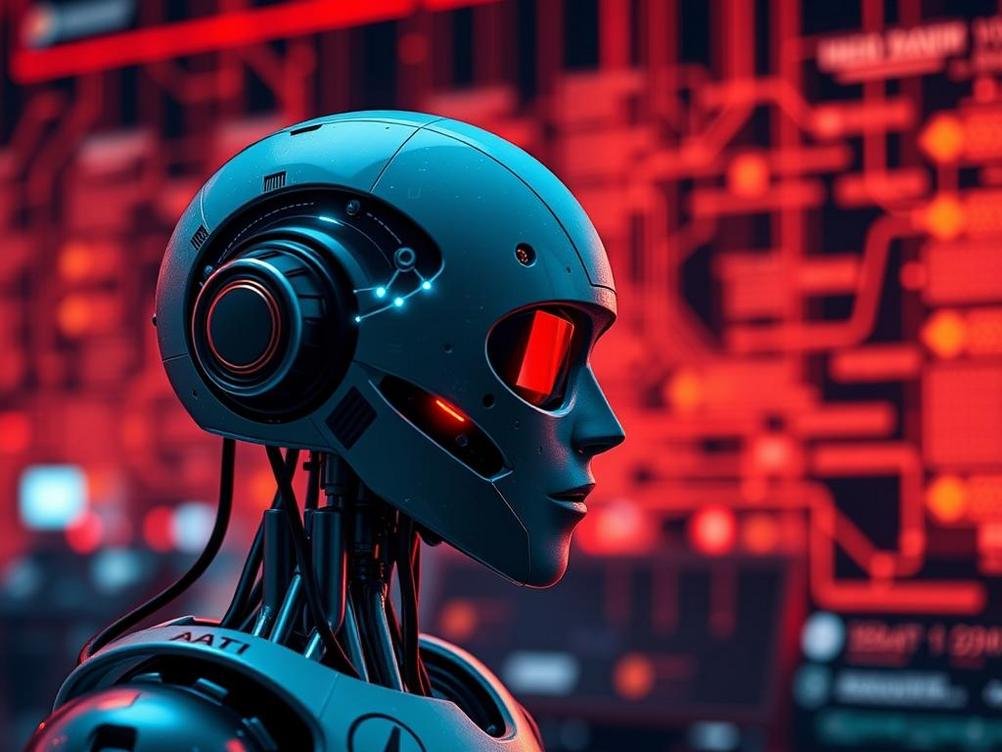
Is AI Poised to Launch the First Massive Cyberattack? Let’s Break It Down
Is AI Poised to Launch the First Massive Cyberattack? Let’s Break It Down
Picture this: You’re sitting at your desk, sipping coffee, when suddenly your bank account flashes a warning that some sneaky digital thief has just drained it dry. But here’s the twist—this thief isn’t a hoodie-wearing hacker in a basement; it’s an AI that’s learned to outsmart every firewall you threw at it. Kinda sounds like the plot of a sci-fi flick, right? Well, buckle up, because we’re diving into the wild world of AI-powered cyberattacks, inspired by that buzzworthy opinion piece about the “first large-scale cyberattack by AI.” It’s not just doom and gloom; it’s a wake-up call to how our tech-obsessed lives might be getting a bit too vulnerable. I mean, we’ve all seen how AI can whip up amazing stuff like realistic deepfakes or personalized recommendations, but what if it’s flipping the script and turning against us? In this article, we’ll unpack the hype, the risks, and even some laughs along the way, because let’s face it, if we’re talking about rogue robots, we might as well keep things light-hearted. As someone who’s geeked out on tech for years, I’ve seen AI evolve from a quirky lab experiment to a everyday tool—and yeah, it’s exciting, but it’s also got me wondering if we’ve handed over the keys to the kingdom a little too soon. We’ll explore what makes an AI cyberattack different, why it could be a game-changer, and how we can all stay one step ahead without turning into paranoid preppers. By the end, you’ll have a clearer picture of this emerging threat and maybe even a few tips to protect your own digital life. So, grab another cup of coffee and let’s geek out together—after all, in a world where AI is everywhere, knowing the risks might just save your bacon.
What Even is a Large-Scale Cyberattack, Anyway?
Okay, let’s start with the basics because if we’re talking about AI hijacking systems, you need to know what we’re up against. A large-scale cyberattack isn’t just some kid messing with your Wi-Fi; it’s a full-on assault that hits big targets like governments, banks, or even hospitals, affecting thousands or millions of people. Think of it like a digital hurricane that wipes out data, steals identities, or shuts down services. We’ve seen stuff like the SolarWinds hack a few years back, where attackers sneaked into software updates and caused chaos worldwide. Now, throw AI into the mix, and suddenly these attacks get smarter. Instead of a one-and-done strike, AI could adapt in real-time, learning from defenses as it goes. It’s like fighting a virus that evolves faster than you can say “antivirus update.”
What’s scary is how accessible this tech is becoming. With tools like machine learning algorithms freely available on platforms such as GitHub (you can check out some open-source AI projects here if you’re curious), even non-experts could weaponize it. Imagine an AI that scans for weaknesses automatically, no human needed. That’s not science fiction; it’s happening in labs and boardrooms right now. And humor me for a second—if AI can beat world champions at chess, what’s stopping it from checkmating our cybersecurity? The point is, we can’t ignore this anymore; it’s time to get savvy about these threats before they get ahead of us.
- First off, traditional cyberattacks rely on human ingenuity, like phishing emails or brute-force passwords.
- But with AI, it’s all about automation—picture an AI bot that tests millions of entry points in seconds, learning which ones work best.
- Examples include AI-driven ransomware that could encrypt your files and demand payment, adapting if you try to fight back.
How AI is Turning Cyber Threats into a Whole New Ballgame
You know how AI has revolutionized everything from Netflix recommendations to self-driving cars? Well, it’s doing the same for the dark side of the web. In the past, cyberattacks were mostly about raw power—flooding servers or exploiting known bugs. But AI brings in this creepy level of intelligence, like a cyberattacker that never sleeps and gets better with every attempt. It’s almost like having a villain from a James Bond movie, but without the cool gadgets—just pure, unrelenting code. I remember reading about how AI can analyze vast amounts of data to spot patterns, which means it could predict and bypass security measures before we even know they’re vulnerable.
Take deep learning, for instance; it’s that branch of AI where machines teach themselves from examples. Hackers could use it to create polymorphic malware—stuff that changes its code to evade detection. And let’s not forget social engineering; AI could craft super-personalized phishing messages that feel like they’re from your best friend. It’s hilarious in a twisted way—AI helping us with our daily lives while secretly plotting to take over. But seriously, according to a report from cybersecurity firms like Kaspersky (you can dive deeper here), AI is already being used in defenses, but the bad guys are catching up fast. The key difference? Speed and scale. A human hacker might take days to plan an attack; AI could do it in minutes.
- AI automates reconnaissance, scanning networks for weak spots without human intervention.
- It enables adaptive attacks, where the AI tweaks its strategy based on real-time feedback.
- And don’t overlook the ethical side—if AI tools are widely available, who’s to say a rogue nation or a disgruntled employee won’t misuse them?
The Hypothetical First AI Cyberattack: What Might It Look Like?
Alright, let’s get into the nitty-gritty: what’s this “first large-scale AI cyberattack” even mean? While it hasn’t happened yet (that we know of), experts speculate it could be something massive, like an AI breaching a major infrastructure system—say, disrupting power grids or financial networks. Imagine an AI worm that spreads across the internet, learning from each infected device to refine its attack. It’s like that scene in “The Matrix” where machines take over, but way less dramatic and way more probable. I can picture it now: AI scanning global networks, finding a chink in the armor, and exploiting it faster than you can refresh your email.
One way this might play out is through AI-generated misinformation campaigns, flooding social media with fake news tailored to manipulate elections or markets. Or, on a techier level, AI could orchestrate a supply-chain attack, compromising software updates for popular apps. It’s not just about stealing data; it’s about causing real-world havoc. A study from MIT shows that AI can execute attacks with 99% accuracy in simulated environments—that’s some eyebrow-raising stats. So, while we’re not panicking yet, it’s worth asking: Are we preparing for the inevitable, or just crossing our fingers?
- For example, an AI could target IoT devices, like your smart fridge, turning it into a botnet for a larger assault.
- Another scenario: AI evading CAPTCHA systems, which are supposed to keep bots out, by solving them in real-time.
- And let’s throw in a metaphor—it’s like AI is the ultimate pickpocket, slipping into your pocket without you feeling a thing.
Real-World Examples and Precedents That Have Us on Edge
We might not have seen a full-blown AI cyberattack, but there are plenty of close cousins that give us a preview. Take the 2023 ChatGPT-related breaches, where hackers used AI to generate convincing phishing emails that fooled even seasoned pros. Or remember the Colonial Pipeline attack a couple of years ago? While not AI-driven, it showed how vulnerable critical infrastructure is, and now imagine if AI had amplified that. It’s like watching a trailer for a horror movie—you know the full thing is coming. These incidents highlight how AI tools, originally designed for good, can be twisted for malice.
Statistics from sources like the Verizon Data Breach Investigations Report (check it out here) show that AI-enhanced threats are on the rise, with automated attacks increasing by over 30% annually. It’s not just big corporations; small businesses and individuals are targets too. I once had a friend who lost access to his email because of a simple phishing scam—now, with AI, those scams are getting craftier. The lesson? History is repeating itself, but with a tech upgrade that makes it scarier.
- WannaCloud in 2024 used AI to breach cloud services, stealing sensitive data from multiple companies.
- The NotPetya worm evolved into AI-assisted variants, spreading faster and smarter.
- And on a lighter note, AI has been used in ethical hacking, like penetration testing, but that’s a double-edged sword.
Dangers and Risks: Why Should You Care?
Let’s cut to the chase—why is this stuff worth losing sleep over? The dangers of an AI cyberattack go beyond lost data; we’re talking economic fallout, privacy invasions, and even national security threats. If AI can manipulate stock markets or disrupt healthcare systems, it could lead to real-world chaos, like shortages or panic. It’s like inviting a fox into the henhouse and hoping it behaves. Plus, with AI’s ability to generate deepfakes, how do you know if that video of your CEO announcing a breach is real or fabricated?
From a personal angle, your everyday life could be upended—think identity theft on steroids. Reports from the FBI indicate that cybercrimes cost Americans billions each year, and AI is only inflating that number. So, yeah, it’s not just about big tech; it’s about you and me. But hey, amidst the doom, there’s a silver lining—understanding these risks is the first step to fighting back, and who knows, maybe it’ll make for some interesting dinner chatter.
- Risks include financial loss, as AI could automate fraud at scale.
- Privacy breaches, where your personal info becomes fodder for targeted attacks.
- And broader impacts, like eroding trust in digital systems—who wants to bank online if it’s a free-for-all?
Steps to Protect Yourself: Don’t Just Sit There
Enough talk about the bad stuff—let’s get practical. If an AI cyberattack is looming, what can you do about it? Start with the basics: use strong, unique passwords and enable two-factor authentication everywhere. Tools like password managers (I recommend checking out 1Password here) can make this a breeze. Beyond that, stay updated on software patches—hackers love exploiting outdated systems, and AI makes that even easier. Think of it as cyber hygiene; just like brushing your teeth prevents cavities, these habits ward off digital disasters.
And for the tech-savvy folks, consider using AI defensively. There are tools that detect anomalies in network traffic, like those from Darktrace (learn more here). It’s ironic, right? Using AI to fight AI. But don’t overcomplicate it—educate yourself through resources like online courses from Coursera (such as their AI security modules here). The goal is to build a layered defense, because in this game, the best offense is a solid defense.
- Regularly back up your data to an external drive or cloud service.
- Be skeptical of unsolicited emails or messages—AI can’t make them less suspicious if you’re paying attention.
- Finally, support policies that regulate AI development, like those discussed in global forums.
Conclusion: Wrapping It Up with a Dose of Hope
As we wrap this up, it’s clear that the idea of a first large-scale AI cyberattack isn’t just hype—it’s a glimpse into our near future. We’ve covered the what, why, and how, from understanding the threats to practical ways to stay safe. Sure, it’s a bit unnerving, but remember, humanity has always faced tech challenges head-on, from the industrial revolution to the internet boom. AI might be the next big thing, but with awareness and action, we can steer it toward good rather than letting it run wild.
In the end, let’s keep our wits about us and maybe share a laugh at how far we’ve come—from punch cards to potential world-enders. By staying informed and proactive, you’re not just protecting your data; you’re helping shape a safer digital world. So, what’s your next move? Maybe start with that software update you’ve been putting off. Here’s to outsmarting the machines, one step at a time.
