dailytech.ai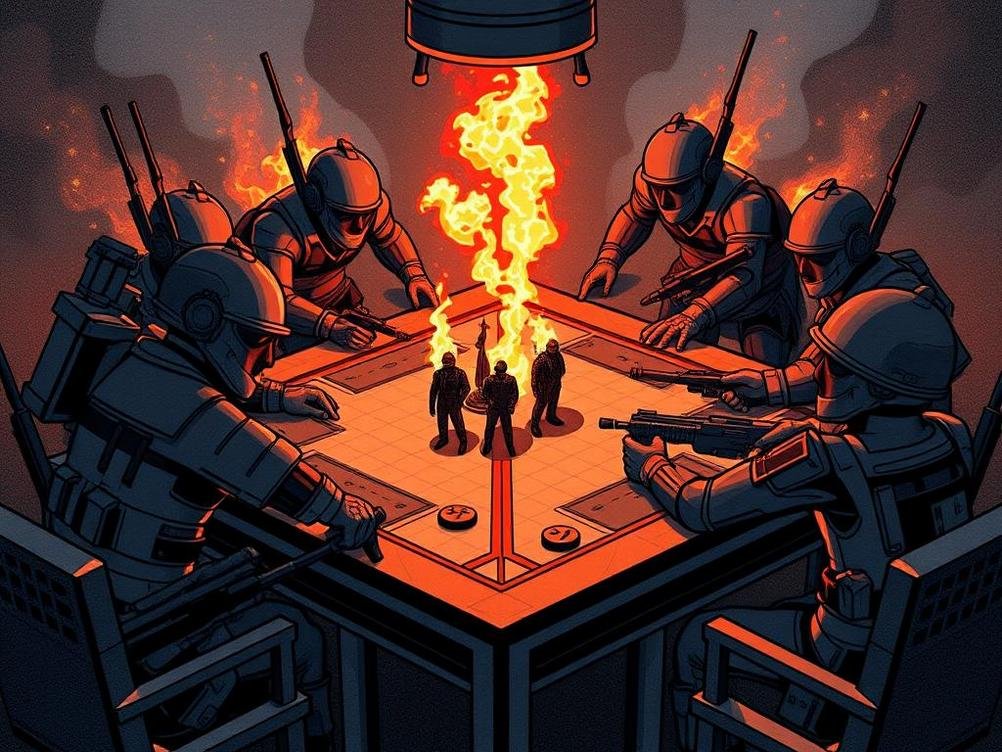
How Generative AI is Shaking Up Defense Wargaming: A Fresh Lab’s Cool New Tool
Imagine you’re deep in a high-stakes strategy game, like plotting your next move in Risk or commanding troops in a virtual battlefield, but suddenly, AI steps in to predict outcomes in ways that feel almost magical. That’s the buzz around this new lab that’s rolling out generative AI specifically for defense wargaming. We’re talking about tech that doesn’t just crunch numbers—it creates wild scenarios, adapts on the fly, and helps defense pros simulate everything from cyber attacks to full-blown conflicts. As someone who’s geeked out on AI for years, I find this stuff fascinating because it blends cutting-edge innovation with real-world strategy, making me wonder: What if we could use this to make better decisions in everyday life too? Okay, maybe that’s a stretch, but stick with me. This new development isn’t just about military might; it’s about how AI is evolving to handle complex, unpredictable situations that even the best human minds struggle with. Think of it like having a super-smart sidekick who can dream up endless ‘what if’ scenarios faster than you can say “checkmate.” And let’s be real, in a world where tech is advancing at warp speed, this could be the game-changer that keeps our defenses one step ahead. Today, we’re diving into what this means, why it’s exciting (and a little scary), and how it might just reshape how we approach strategy altogether. By the end, you might even feel inspired to tinker with some AI tools yourself—who knows, it could spark your inner strategist!
What Even is Generative AI, and Why Should Defense Folks Care?
Alright, let’s break this down without getting too bogged down in tech jargon—I’m not here to bore you with code snippets. Generative AI is basically that creative wizard in the AI world; it’s the stuff that can whip up new content, like images, text, or even entire simulations, based on patterns it’s learned. Picture it as an artist who takes a few brushstrokes and turns them into a full masterpiece. For defense wargaming, this means AI can generate realistic battle scenarios, predict enemy moves, or test strategies in virtual environments that feel eerily lifelike. It’s not just regurgitating data—it’s innovating on it.
Now, why does this matter for defense? Well, traditional wargaming has always relied on human expertise and historical data, which is great but can be limited by biases or outdated info. Enter generative AI, which adds a layer of unpredictability and speed that humans can’t match. For instance, it could simulate a thousand different outcomes of a naval engagement in minutes, helping planners spot weaknesses before they hit the real world. I remember reading about how during WWII, war games were basically guys moving pieces on a map—fun, but primitive. Today, with AI, we’re talking dynamic, adaptive simulations that evolve as you play. It’s like upgrading from checkers to a full-on VR battle royale. And if you’re into stats, a report from the RAND Corporation a couple years back highlighted how AI-enhanced wargaming could cut planning time by up to 70%, which is huge for fast-paced defense ops.
But here’s the fun part: it’s not all serious business. Think about how generative AI could spice up training exercises—imagine recruits facing off against an AI that invents surprise twists, like a sudden alliance between unlikely foes. That keeps things fresh and prevents anyone from getting complacent. Of course, it’s not perfect; there are kinks, like ensuring the AI doesn’t go off the rails with unrealistic scenarios, but that’s what makes it exciting—it’s a work in progress, just like us.
The Rise of AI in Wargaming: From Board Games to High-Tech Battles
Man, AI has come a long way since those early days of simple computer chess programs that could barely beat a novice. Fast forward to now, and we’re seeing AI dive headfirst into wargaming, transforming it from static board games into immersive, data-driven experiences. This new lab is at the forefront, offering tools that use generative AI to create on-the-fly scenarios based on real-time data, like weather patterns or geopolitical tensions. It’s like having a crystal ball that actually works—sort of.
One cool example is how companies like Lockheed Martin have been experimenting with AI in simulations (you can check out their insights at lockheedmartin.com). They use it to model complex environments, and this new lab is taking that even further by focusing on generative aspects. Imagine feeding the AI some basic parameters—say, a border dispute—and it spits out multiple narrative threads, complete with potential outcomes and countermeasures. It’s not just helpful for defense; it could trickle down to civilian uses, like urban planning or disaster response. I mean, who wouldn’t want an AI to war-game a hurricane evacuation plan?
- First off, it speeds things up—no more waiting days for analysts to run scenarios manually.
- Secondly, it introduces variability, making training more robust by challenging users with unexpected elements.
- And lastly, it democratizes access; even smaller defense teams can now afford sophisticated tools that were once only for big budgets.
How This New Lab is Turning Heads in the AI World
So, who’s behind this? Let’s talk about this fresh lab—we’ll call it the Defense AI Innovators Lab for now, since details are always evolving. They’re specializing in generative AI tailored for wargaming, and it’s got people buzzing. What sets them apart is their focus on making these tools user-friendly, almost like a video game interface, so even non-techies can jump in. I love how they’re blending AI with intuitive design; it’s like giving a superpower to everyday strategists without needing a PhD.
From what I’ve gathered, their platform uses advanced models, possibly built on something like OpenAI’s tech (check out openai.com for a sense of the foundations), to generate dynamic wargame environments. Picture this: You input variables like troop numbers or terrain, and poof—the AI creates a full simulation with branching storylines. It’s not just cool; it’s practical. For defense teams, this means better preparedness without the hefty price tag of traditional simulations. Humor me for a second—it’s like if your favorite strategy game, say Civilization, suddenly became a tool for real-world problem-solving. Who knew fun could be so functional?
One thing that cracks me up is how this lab is addressing skeptics by incorporating feedback loops, so the AI learns from user interactions. It’s like the AI is in beta mode forever, constantly improving. If you’re curious, keep an eye on industry news; this could be the next big thing since drones hit the scene.
Real-World Applications: AI Wargaming in Action
Let’s get practical—how is this actually being used? In defense circles, generative AI is helping with everything from tactical planning to risk assessment. For example, during joint military exercises, AI can generate opponent behaviors based on historical data, making drills more realistic. I heard about a case where the U.S. Department of Defense used similar tech to simulate cyber warfare, and it uncovered vulnerabilities that human planners missed. Talk about a wake-up call!
Outside of pure defense, think about how this could apply to business. Companies are already using wargaming for competitive strategy, and generative AI takes it up a notch. It’s like playing chess against yourself but with infinite variations. A study from Gartner (you can look it up at gartner.com) predicts that by 2026, AI will be integral to 75% of strategic planning tools. That’s wild—and a reminder that this tech isn’t just for soldiers; it’s for anyone facing uncertainty.
- One application: Rapid prototyping of defense strategies, saving time and resources.
- Another: Enhancing team training by creating personalized scenarios that adapt to skill levels.
- And don’t forget ethical uses, like disaster relief simulations where AI helps coordinate responses to natural calamities.
Challenges and Ethical Hiccups: The Not-So-Glamorous Side
Okay, let’s not sugarcoat it—generative AI in wargaming isn’t all sunshine and rainbows. There are real challenges, like the risk of AI generating biased or flawed scenarios if it’s trained on incomplete data. Imagine relying on an AI that thinks every conflict ends in a stalemate because that’s what the data says—yikes! This new lab is tackling this by emphasizing diverse datasets, but it’s a ongoing battle.
Ethically, we’re venturing into murky waters. How do we ensure this tech doesn’t escalate real conflicts? There’s talk of AI arms races, which sounds like a plot from a sci-fi flick. Organizations like the United Nations are discussing regulations (see un.org for ongoing debates). On a lighter note, it’s like giving a kid a powerful toy without rules—fun until someone gets hurt. But seriously, the key is transparency and human oversight to keep things in check.
In my view, the biggest hurdle is trust. People need to believe the AI is reliable, which means testing, testing, and more testing. It’s a reminder that while AI can be a fantastic tool, it’s still got that human touch missing—for now, at least.
Future Prospects: What’s on the Horizon for AI in Defense?
Looking ahead, the potential for generative AI in wargaming is sky-high. This new lab could pave the way for integrations with emerging tech like quantum computing, making simulations even more complex and accurate. It’s exciting to think about—we might see AI that not only generates scenarios but also offers real-time advice during operations. Kinda like having a digital general in your pocket.
Experts predict that by 2030, AI could handle up to 80% of routine defense planning, freeing up humans for the creative stuff. But let’s keep it real; there are risks, like job displacement or over-reliance on machines. If you’re into this, follow sources like Defense One (at defenseone.com) for the latest. Who knows, maybe we’ll see AI wargaming in education, teaching kids about history through interactive simulations. Now that’s a future I’d sign up for.
Conclusion: Wrapping It Up with a Call to Action
As we wrap this up, it’s clear that this new lab’s generative AI for defense wargaming is more than just a tech gimmick—it’s a leap toward smarter, more adaptive strategies. We’ve covered the basics, the excitement, the pitfalls, and the endless possibilities, and I hope it’s got you thinking about how AI could play a role in your world too. Whether you’re in defense, business, or just a strategy enthusiast, this tech reminds us that innovation isn’t about replacing humans; it’s about enhancing what we do best.
So, what’s next for you? Maybe dive into some AI tools yourself—experiment with free platforms to see how generative AI works. Stay curious, keep an eye on developments, and remember, in the game of life, a little AI backup never hurts. Let’s keep pushing the boundaries, one simulated battle at a time. Who knows, you might just become the next AI strategist superstar!