
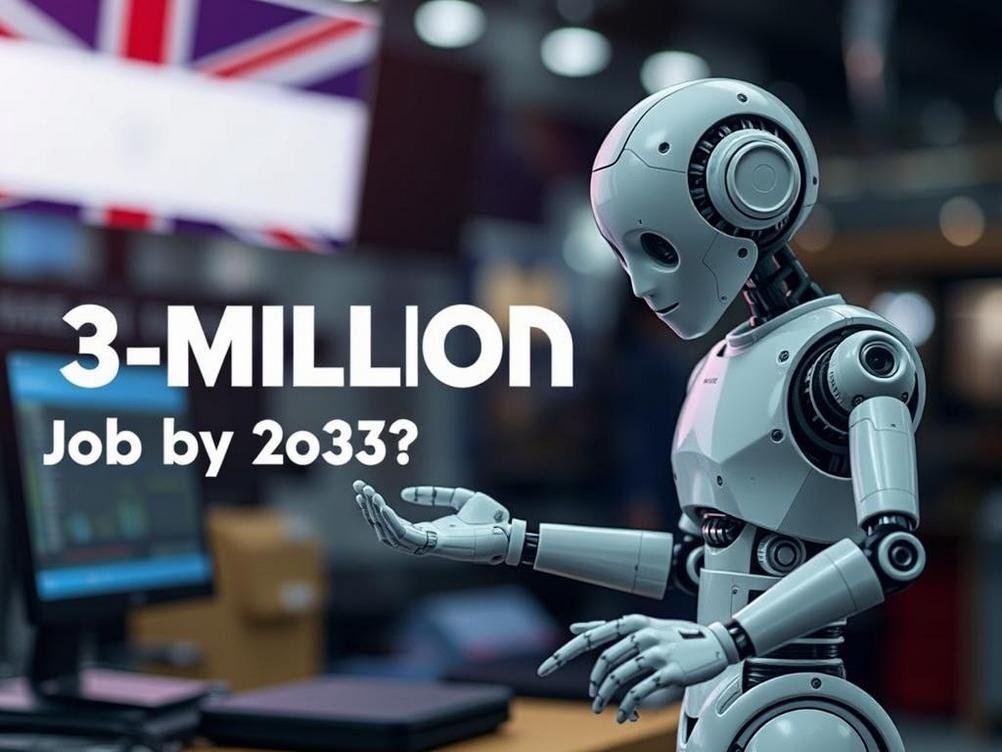
Will AI Really Snatch 3 Million Low-Skilled Jobs in the UK by 2035? Here’s the Scoop
Will AI Really Snatch 3 Million Low-Skilled Jobs in the UK by 2035? Here’s the Scoop
Imagine waking up one morning in 2035 and realizing your daily grind at the warehouse or call center has been taken over by a robot that’s faster, cheaper, and never calls in sick. Sounds like a sci-fi plot, right? But according to some eye-opening research, AI isn’t just a futuristic fantasy anymore—it’s barreling toward us like a high-speed train. We’re talking about potentially 3 million low-skilled jobs in the UK vanishing into the digital ether by that year. That’s a lot of people who might need to rethink their career paths, and it’s got me wondering: Are we all doomed to become AI’s understudies, or is there a silver lining in this tech takeover?
Let’s break this down a bit. The study, which I’ll link to here for the curious minds (from the Oxford Martin School), paints a picture of AI evolving from a helpful tool to a job-stealing juggernaut, especially for roles that involve repetitive tasks. Think about it: If a machine can sort packages or answer customer queries with pinpoint accuracy 24/7, why would companies keep paying humans? It’s not all gloom and doom, though. This could push us toward more creative, fulfilling work—if we play our cards right. I’ve got friends in the tech world who swear by this stuff, saying it’s like upgrading from a flip phone to a smartphone; yeah, it disrupts, but man, does it open doors. In this article, we’ll dive into the nitty-gritty of the research, explore which jobs are on the line, and chat about how to dodge the bullet or even turn it into an opportunity. Stick around, because by the end, you might just feel empowered instead of panicked.
The Research That’s Got Everyone Talking
Okay, so where did this whole ‘3 million jobs at risk’ thing come from? It’s based on a bunch of studies and reports that have been crunching numbers on AI’s impact, particularly in the UK. Researchers from places like the University of Oxford and think tanks have been feeding data into models that predict how automation will play out over the next decade. Their findings? By 2035, AI could automate a chunk of low-skilled work, potentially affecting sectors like retail, manufacturing, and admin. It’s not just idle speculation; these folks are using real economic data and trends to back it up.
What’s funny is that this isn’t the first time we’ve heard about tech eating jobs. Remember the industrial revolution? All those hand-weavers got replaced by machines, and look at us now—more jobs than ever, just different ones. The key here is understanding the scale. The report estimates that about 10-15% of the UK’s workforce could be impacted, which translates to those 3 million figures. And let’s not forget, this research isn’t set in stone; it’s more like a weather forecast—probable, but you can still pack an umbrella. If you’re into the details, check out the full report; it’s got charts and everything to make your head spin in the best way.
One thing that makes this research relatable is how it ties into everyday life. For instance, if you’ve ever used a self-checkout at the supermarket, you’re already seeing AI in action. It’s creeping in slowly, but these studies suggest it’ll accelerate. So, yeah, it’s worth paying attention to, especially if your job involves routines a computer could mimic.
Which Jobs Are Most at Risk? Let’s Name Names
If you’re wondering whether your gig is safe, let’s get specific. Low-skilled jobs, like those in warehousing, fast food, or basic customer service, are topping the vulnerability list. Think truck drivers who might get outmaneuvered by self-driving vehicles, or retail workers handling stock that robots can manage with eerie precision. The research highlights that tasks which are predictable and rule-based are prime targets for AI takeover. It’s like AI has a hit list, and it’s starting with the easy stuff.
To put it in perspective, here’s a quick list of the jobs most likely to be affected:
- Assembly line workers in factories—those repetitive motions are AI’s bread and butter.
- Call center reps handling routine inquiries—chatbots are already stepping in, and they’re way less sassy.
- Delivery drivers—as autonomous vehicles hit the roads, your daily commute might become their domain.
- Administrative assistants doing data entry—spreadsheets don’t need coffee breaks.
- Cashiers and retail staff—self-service kiosks are popping up everywhere, making lines shorter but jobs scarcer.
It’s not that these jobs are going extinct overnight; it’s more like evolution. My uncle used to work in a print shop before digital printing took over—same vibe, different era.
But here’s a metaphor for you: Imagine AI as that overly efficient roommate who does all the chores but leaves you feeling useless. The point is, while these roles are at risk, it’s often the ones that don’t require complex decision-making or emotional intelligence. Still, if you’re in one of these fields, it’s time to start thinking about upskilling before the robots knock on your door.
The Bright Side: How AI Could Create New Opportunities
Alright, enough with the doom-mongering—let’s flip the script. Every time tech disrupts jobs, it also spawns new ones. The same research that warns about 3 million losses also hints at AI creating roles we haven’t even dreamed of yet. Think AI trainers, ethicists, or maintenance specialists. It’s like planting a garden; you pull out the weeds, but you make room for better flowers. In the UK, this could mean a boom in tech-related jobs, especially as companies need humans to oversee AI systems.
For example, sectors like healthcare and education might see a surge. AI could handle the grunt work, freeing up nurses or teachers for more meaningful interactions. And let’s not forget the gig economy—freelancers could thrive by offering services that AI can’t replicate, like creative writing or personalized consulting. According to some stats from the World Economic Forum, for every job AI displaces, about 1.5 new ones could emerge by 2030. That’s not bad odds if you’re willing to adapt.
To keep it light, picture this: In 2035, instead of flipping burgers, you might be programming the burger-flipping robots. It’s a weird world, but hey, who wouldn’t want to boss around a machine? The key is reskilling programs; governments and companies in the UK are already rolling them out, like apprenticeships in coding or digital literacy courses. If you’re proactive, this could be your ticket to a cooler career.
How This Shakes Up Everyday Life in the UK
Zooming in on the UK specifically, this AI wave isn’t just numbers on a page—it’s going to ripple through communities. Places like Manchester or Birmingham, with their heavy manufacturing bases, could feel the pinch hardest. Imagine factories that once buzzed with workers now humming with automated arms; it’s efficient, but it might leave folks scrambling for new income sources. The research points to potential economic shifts, like higher demand for social services to support those affected.
On a personal level, it’s about inequality. Lower-skilled workers, often from underrepresented groups, might bear the brunt, widening the gap between the haves and have-nots. But here’s where it gets interesting: Initiatives like the UK’s National Retraining Scheme are stepping up, offering free courses to help people pivot. It’s like a plot twist in a movie—things look dire, but then the hero fights back. Statistics show that regions investing in tech education are bouncing back faster, so there’s hope if we get organized.
And let’s add some real-world flavor. I read about a warehouse in London that’s piloting AI robots alongside human staff, and it’s creating hybrid roles that pay better. It’s not all loss; it’s transformation. If you’re in the UK, keep an eye on local job markets—they’re evolving quicker than you think.
Steps to Future-Proof Your Career: Don’t Just Sit There
So, you’re probably thinking, ‘Great, now what?’ Well, panicking won’t help, but planning sure will. Start by assessing your skills—do they involve creativity, problem-solving, or people skills? Those are AI’s weak spots. The research emphasizes lifelong learning as the ultimate defense. Enroll in online courses or workshops; platforms like Coursera or FutureLearn (which has some UK-specific content) are goldmines for this.
Here’s a simple list to get you started:
- Learn basic coding or AI literacy—it’s not as scary as it sounds, and it could open doors.
- Network like crazy; join industry groups or LinkedIn communities to stay ahead of trends.
- Seek out roles that blend human touch with tech, like AI-assisted design.
- Stay informed with updates from sources like the BBC’s tech section or the government’s skills portal.
- Don’t forget soft skills—communication and adaptability are your secret weapons against the bots.
Humor me here: Think of it as training for a video game; level up your abilities before the boss fight arrives.
The beauty is, this isn’t rocket science. Even if you’re not a tech whiz, starting small can make a big difference. I’ve seen friends switch from retail to tech support just by picking up a few certifications. It’s about being adaptable in a world that’s changing faster than my phone’s battery life.
A Global Peek: Is the UK Alone in This?
The UK isn’t the only one facing this AI job shuffle; it’s a global party. Countries like the US and Germany are dealing with similar predictions, with studies showing even larger numbers at risk. But the UK’s got its own flavor, thanks to its mix of industries and regulatory environment. For instance, while the EU is pushing for AI ethics laws, the UK might focus more on innovation to offset losses.
What’s insightful is how different nations are responding. In the US, there’s a push for AI in education to prepare the workforce, and in Asia, countries like Japan are integrating robots into daily life without much fuss. For the UK, this means potential collaborations, like partnerships with global tech firms. It’s like a team sport; no one’s playing alone, and sharing strategies could soften the blow.
If you’re keeping score, global reports from organizations like the IMF suggest that while AI might disrupt 40% of jobs worldwide, proactive policies could mitigate that. So, for us in the UK, it’s about learning from others and maybe even leading the charge with our own AI innovations.
Conclusion: Wrapping It Up with a Dose of Optimism
In the end, the idea of AI replacing 3 million low-skilled jobs in the UK by 2035 is a wake-up call, not a death sentence. We’ve been through tech revolutions before, and each time, humanity has adapted and thrived. Sure, it’s unsettling to think about robots muscling in on our turf, but it also pushes us to evolve, learn, and maybe even laugh at the absurdity of it all—like imagining a chatbot trying to handle a irate customer. The research gives us a roadmap, but it’s up to us to steer the car.
What I hope you take away is that while AI might change the job landscape, it’s also creating a world of possibilities. Whether it’s reskilling for a new role or advocating for better support systems, you’re not just a passive player in this game. So, grab the reins, stay curious, and who knows—by 2035, you might be the one programming the future. Let’s make it a bright one.
