dailytech.ai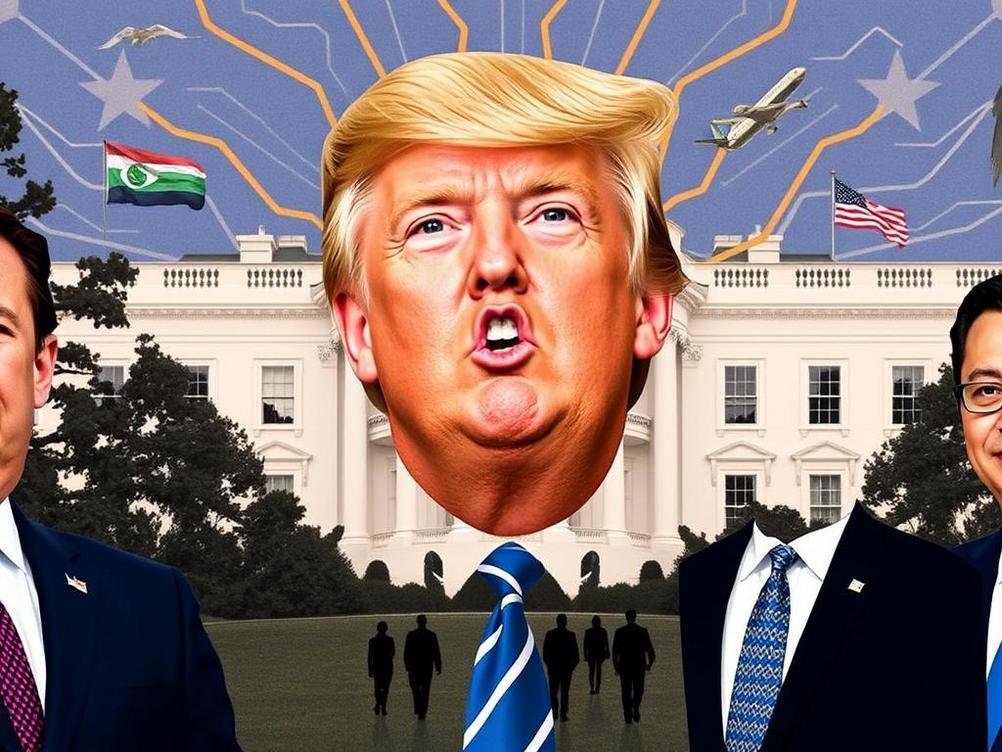
How Trump’s Bold AI Executive Order Teams Up Tech Giants, Brainy Academics, and Government Wizards
Picture this: You’re sipping coffee one morning, scrolling through the news, and bam—there’s a headline about former President Trump rolling out an executive order that basically throws Big Tech, top-notch academics, and the feds into a massive AI brainstorming session. It’s like watching your favorite superheroes team up, but instead of fighting villains, they’re tackling the wild world of artificial intelligence. This isn’t just another policy flip-flop; it’s a game-changer that could redefine how we innovate, collaborate, and maybe even mess up (in a good way) the future of tech. I mean, who knew politics and AI could mix like peanut butter and jelly? But here we are, in 2025, where Trump’s move is sparking conversations about bridging gaps between private powerhouses like Google and Meta, ivory-tower researchers, and the suits in Washington. It’s got me thinking: Is this the spark that finally gets us all rowing in the same direction on AI, or just another bureaucratic boat ride? Either way, it’s a fascinating peek into how government meddling—er, involvement—could accelerate discoveries that touch everything from healthcare to everyday gadgets. Let’s dive in, because if you’re into tech, policy, or just plain curiosity, this story is packed with twists, turns, and a dash of humor to keep things real.
What Exactly Is This Executive Order All About?
You know how movies have plot twists that pull everyone together for a big finale? Well, Trump’s executive order is like that for AI. Issued recently, it aims to create a unified front for AI research by bringing in the big guns: tech companies, universities, and federal agencies. Think of it as a mandatory playdate for these groups, forcing them to share toys—aka data, resources, and brainpower—to push AI forward. The order sets up frameworks for collaboration, like joint funding initiatives and shared research labs, all while keeping an eye on ethical stuff, such as avoiding biases in AI algorithms. It’s not just talk; it’s about making sure America’s AI edge stays sharp in a world where countries like China are sprinting ahead.
What’s cool is how it breaks down silos. For years, Big Tech has been hoarding their AI secrets like misers with gold, while academics twiddle with theories in labs, and the government plods along with regulations. This order flips the script, mandating partnerships that could lead to faster breakthroughs. Imagine Elon Musk and a MIT professor hashing out ideas over Zoom—okay, maybe not that cozy, but you get the point. And let’s not forget the government’s role; they’re ponying up cash and oversight to ensure things don’t go sideways, like when AI experiments accidentally spill user data. It’s a bold step, and if you’re betting on the future, this could be the catalyst for some seriously innovative stuff.
To break it down simply, here’s a quick list of what the order covers:
- Joint research projects between companies like Apple and universities to tackle AI in areas like climate modeling.
- Government grants for ethical AI development, ensuring tools aren’t just smart but also fair and transparent.
- Regular summits and working groups to align goals—think of it as AI’s version of the UN, but with less arguing.
Why Should We Care About This AI Power Play?
Alright, so Trump’s executive order isn’t just bureaucratic fluff—it’s like tossing a match into a powder keg of potential. In a world where AI is already everywhere, from your smartphone’s voice assistant to self-driving cars, this collaboration could supercharge progress. Why? Because when Big Tech, academics, and the government team up, you’re combining deep pockets, cutting-edge ideas, and regulatory muscle. It’s like having a band where one plays guitar, another handles the drums, and the third keeps the beat legal. For everyday folks, that means faster fixes to real problems, like using AI to predict natural disasters or personalize education. But let’s be real, it’s also a bit scary—think about the power dynamics at play.
From what I’ve read, experts are buzzing about how this could boost economic growth. A report from the Brookings Institution suggests that widespread AI adoption could add trillions to the global economy by 2030. That’s not pie-in-the-sky talk; it’s based on trends we’re seeing now. For instance, if Big Tech shares their data with academics, we might get AI that detects diseases earlier, saving lives and money. On the flip side, it’s got me wondering: What if this leads to more surveillance or job losses? It’s a double-edged sword, and that’s why understanding the bigger picture is key. If you’re into tech news, this order is a wake-up call to pay attention to how policy shapes innovation.
And for a bit of humor, imagine a government official trying to explain machine learning to a room full of tech bros—”So, it’s like training a dog, but the dog is a computer?” Yeah, awkward moments ahead, but that’s what makes this exciting. Here’s a simple pros and cons list to chew on:
- Pros: Accelerated innovation and ethical guidelines that could prevent AI mishaps.
- Cons: Potential for overregulation, stifling creativity like a bad committee meeting.
- Overall: A step toward balance, but only if everyone plays fair.
The Big Tech Angle: Are They the Heroes or the Villains?
Let’s talk about Big Tech—those giants like Amazon and Microsoft who’ve been calling the shots in AI for years. Trump’s executive order drags them into the spotlight, requiring them to collaborate rather than just dominate. It’s like telling the school bully to join the study group; messy at first, but could lead to some epic results. Companies are being asked to open up their proprietary tech for joint projects, which might mean sharing algorithms that power everything from recommendation engines to facial recognition. The idea is to democratize AI knowledge, so it’s not just a few elites hoarding the goodies.
Take Google, for example; they’re already involved in AI ethics through projects like their AI Principles (you can check it out at ai.google/responsibilities/). With this order, they might have to team up with government labs, leading to advancements in areas like cybersecurity. But here’s the funny part: Big Tech might grumble about red tape, yet they’re probably eyeing the perks, like tax breaks or faster patent approvals. In real terms, this could mean better AI tools for businesses, boosting productivity—stats from McKinsey show AI could automate 45% of daily activities by 2030. So, are they heroes? Not always, but this order might just turn them into reluctant sidekicks.
Don’t forget the human element. As someone who’s followed tech trends, I see this as a chance for Big Tech to redeem their image after privacy scandals. If they play ball, we could see more inclusive AI that benefits underrepresented groups, like using it for language translation in global aid efforts.
Academics in the Mix: The Unsung Heroes of AI Innovation
Academics often get the short end of the stick in AI discussions, buried in labs while the world obsesses over flashy apps. But Trump’s executive order puts them front and center, pairing their brainy research with Big Tech’s resources and government’s funding. It’s like giving the nerds a VIP pass to the cool kids’ party—finally! Universities will get access to real-world data sets, allowing them to test theories that could revolutionize fields like medicine or climate science. Without this, we’d be stuck with theoretical papers gathering dust.
For a real-world example, think about how Stanford’s AI lab has been working on neural networks for years. Now, with this order, they might collaborate with the Department of Energy on projects like predictive weather models. That’s huge, especially since climate change is no joke—according to the UN, extreme weather events have increased by 50% in the last decade. The order ensures academics aren’t just theorizing; they’re applying their smarts to solve problems. And hey, it’s a win for students too, opening doors to internships and jobs in AI.
Of course, there are hurdles. Academics might roll their eyes at corporate red tape, but as I see it, this is a golden opportunity. Imagine professors influencing policy—talk about power! To keep it light, it’s like academics saying, “Finally, someone noticed my late-night coding sessions.”
The Government’s Role: Keeper of the Keys or Roadblock?
Government in AI? It sounds like a oxymoron, right? But Trump’s executive order positions them as the referees in this high-stakes game, ensuring collaborations don’t turn into free-for-alls. They’re dishing out grants, setting standards, and monitoring for risks like deepfakes or biased algorithms. It’s their way of saying, “We might not invent the tech, but we’ll make sure it’s used responsibly.” In a nutshell, they’re the grown-ups in the room, preventing the AI party from getting too wild.
Look at how the National AI Initiative Office is getting a boost from this; they’re coordinating efforts across agencies, much like how the FDA regulates drugs. For instance, if Big Tech develops an AI for healthcare, the government steps in to ensure it’s safe and effective. Stats from the World Economic Forum indicate that unregulated AI could lead to $600 billion in economic losses from cyber threats alone. So, while some might see them as buzzkills, their involvement could save us from headaches down the line. Personally, I think it’s smart—after all, who wants AI making decisions without oversight?
And for a metaphor, it’s like the government is the designated driver: not the most fun, but essential to get everyone home safe. If you’re skeptical, remember how regulations helped clean up the internet after the early chaos of the 90s.
Potential Pitfalls and Perks: The Yin and Yang of AI Collaboration
Every great idea has its bumps, and this executive order is no exception. On the upside, we’re talking about perks like faster innovation and global competitiveness—America could leapfrog rivals in AI supremacy. But let’s not sugarcoat it; there are pitfalls, like privacy concerns or companies gaming the system for profits. It’s a bit like a blind date: exciting at first, but what if it turns messy?
For example, a study by Pew Research shows that 56% of Americans worry about AI’s impact on jobs, and this order might accelerate that. Yet, the perks are undeniable—collaborations could lead to AI that automates mundane tasks, giving us more time for, say, Netflix binges. Humorously, imagine AI robots taking over paperwork so bureaucrats can finally take a nap. Balancing act? Absolutely, but with the right tweaks, this could be a net win.
To wrap this section, here’s a quick list of what to watch:
- Benefits: New jobs in AI ethics and research.
- Challenges: Ensuring data privacy, as seen in past breaches like those at Facebook.
- Opportunities: Cross-sector ideas that could spark the next big breakthrough.
Conclusion: What’s Next for AI’s Big Team-Up?
As we wrap this up, Trump’s executive order feels like a pivotal moment in AI’s evolution—a messy, exciting blend of ambition and caution. We’ve seen how it brings together diverse players to tackle challenges that no one group could handle alone, potentially leading to innovations that make our lives easier, safer, and a heck of a lot more interesting. From ethical AI to economic boosts, the possibilities are endless, but so are the risks if we don’t stay vigilant.
Looking ahead, I encourage you to keep an eye on how this unfolds. Maybe it’ll inspire you to dive into AI yourself, whether that’s learning to code or just chatting about it with friends. After all, in a world that’s increasingly powered by machines, understanding the human side is what’ll keep us grounded. So, here’s to collaboration—may it lead us to a future that’s smart, fun, and full of surprises.