
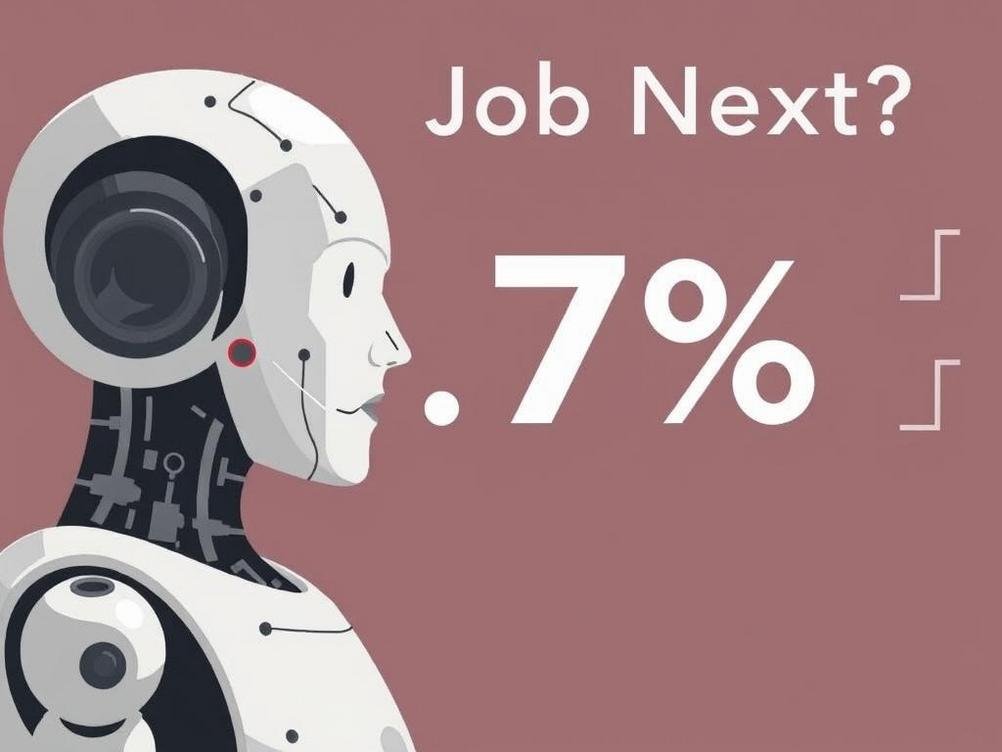
Is Your Job Next? The Shocking Truth from MIT on AI Taking Over 11.7% of US Jobs
Is Your Job Next? The Shocking Truth from MIT on AI Taking Over 11.7% of US Jobs
Imagine waking up one morning to find that your job—yeah, the one you’ve been grinding at for years—could be handled by a bunch of algorithms and robots. Sounds like something out of a sci-fi flick, right? Well, buckle up, because a recent study from MIT is dropping some serious truth bombs. They crunched the numbers and found that AI is already poised to replace about 11.7% of the U.S. workforce. That’s not just a random stat; it’s a wake-up call for anyone who’s ever wondered if their daily grind is future-proof. Think about it: from truck drivers to call center reps, AI’s getting smarter by the day, learning to do tasks we thought were uniquely human. But here’s the thing—it’s not all doom and gloom. This study opens up a ton of questions about what the future of work really looks like, how we can adapt, and maybe even how we can thrive in this AI-driven world. I’ve been diving into this stuff for a while now, and let me tell you, it’s equal parts exciting and a little terrifying. We’re talking real implications for your career, the economy, and even how we live our lives. So, grab a coffee (or let an AI make it for you), and let’s unpack what this MIT research means for all of us.
What the MIT Study Actually Uncovered
You know how studies can sometimes feel like they’re buried in jargon? This one from MIT is surprisingly straightforward, but it packs a punch. Researchers analyzed a massive dataset of jobs across the U.S., looking at how well AI could step in and handle routine tasks. They zeroed in on stuff like data entry, customer service, and even some creative gigs, concluding that 11.7% of workers could be automated right now with existing tech. It’s not just guesswork; they used economic models and real-world data to back it up. What blows my mind is how this number could vary by industry—manufacturing and transportation are hit hard, while sectors like healthcare or education might see less immediate impact.
But let’s not get too carried away. The study isn’t saying AI will wipe out jobs overnight. Instead, it’s highlighting the potential for displacement if we don’t adapt. I remember reading about how similar tech shifts, like the rise of ATMs in the 90s, didn’t kill banking jobs; they just changed them. This MIT report feels like a modern echo of that, reminding us that AI isn’t some evil overlord—it’s a tool. If you’re curious, you can check out the full study here for all the nitty-gritty details. Either way, it’s a nudge for businesses to rethink training and for workers to upskill before it’s too late.
To break it down further, here’s a quick list of key findings from the report:
- AI could affect low- and middle-skill jobs the most, with routine tasks like assembly line work or basic coding being prime targets.
- The 11.7% figure is based on current AI capabilities, but that could climb as tech evolves—think of it as the tip of the iceberg.
- Regions with high concentrations of at-risk jobs, like the Rust Belt, might face economic ripples, potentially leading to regional inequality.
The Jobs Most Vulnerable to AI Takeover
Okay, let’s get real—who’s on the chopping block here? According to the MIT folks, it’s not the brain surgeons or the artists painting masterpieces; it’s the everyday roles that involve repetitive tasks. We’re talking about truck drivers, warehouse workers, and even paralegals who spend hours sifting through documents. AI tools like autonomous vehicles from companies such as Tesla or Waymo are already testing the waters, and it’s no joke—imagine a fleet of self-driving trucks hauling goods across the country without a nap break. That 11.7% isn’t abstract; it translates to millions of jobs potentially up for grabs.
Here’s a fun analogy: Think of AI as that over-enthusiastic intern who never sleeps and learns from every mistake. For jobs in data processing or customer support, it’s like having a bot that can handle queries 24/7 without complaining about overtime. But don’t panic just yet—roles that require human touch, like nursing or teaching, are safer for now. Still, if you’re in a field that’s heavy on routines, it’s time to start thinking about pivoting. I mean, who wants to be the one telling their kids, “Yeah, I used to drive trucks until robots took over”?
To put numbers to it, the Bureau of Labor Statistics estimates there are over 1.5 million truck driving jobs in the US alone, and if AI ramps up, a chunk of those could vanish. For a clearer picture, consider these examples:
- Customer service reps: Chatbots like those from Zendesk are already handling basic inquiries, freeing up humans for more complex issues.
- Administrative assistants: Tools like Microsoft Copilot can automate scheduling and emails, making some tasks obsolete.
- Manufacturing operators: Factories with robotic arms, such as those at Ford plants, are reducing the need for human oversight.
How AI is Reshaping the Entire Workforce
It’s not just about which jobs are going poof; it’s about how AI is flipping the script on work as we know it. This MIT study shows that AI isn’t just replacing; it’s transforming industries from the ground up. Take retail, for instance—stores are using AI for inventory management and personalized recommendations, which means fewer folks needed on the floor but more demand for tech-savvy roles. It’s like watching a magic trick where one thing disappears and another pops up in its place. The big question is, are we ready for this shift?
From what I’ve seen, companies are starting to invest in AI training programs, but it’s patchy. Some big names like Google offer courses through their Career Certificates program, which is a step in the right direction. The study points out that without proper reskilling, we could see wage gaps widen and unemployment spikes. Humor me for a second: It’s like trying to teach an old dog new tricks, but in this case, the dog is the workforce, and the tricks are coding and AI literacy. If we don’t adapt, we’re in for a bumpy ride.
Let’s not forget the global angle. The US isn’t alone in this; countries like China are automating factories at breakneck speed, which could affect international trade. Here’s a simple breakdown of how this reshapes things:
- Increased productivity: AI can boost efficiency, leading to economic growth, as seen in reports from the World Economic Forum.
- Job evolution: Many roles will hybridize, blending human creativity with AI tools for better outcomes.
- Ethical considerations: We need to talk about fair wages for remaining jobs and how to support those displaced.
The Unexpected Upsides: Opportunities in the AI Boom
Alright, enough with the scary stuff—let’s flip the coin. That 11.7% figure might sound alarming, but it’s also a gateway to new opportunities. The MIT study hints at how AI could create jobs in fields like AI development, ethics, and maintenance. It’s like planting a garden; yeah, some plants get crowded out, but new ones sprout up. For example, as AI takes over mundane tasks, people can focus on innovative stuff, like designing the next big app or solving real-world problems.
I remember chatting with a friend who’s in tech—he switched from a routine IT job to AI consulting and doubled his salary. Programs like Coursera’s AI courses, which partner with universities, are making it easier for anyone to jump in. The key is to see this as a chance to level up. Statistics from LinkedIn show that AI-related job postings have surged by over 50% in the last year alone. So, if you’re feeling stuck, this could be your sign to dive into learning.
To make it actionable, here’s what you could do:
- Enroll in online courses: Platforms like edX offer MIT’s own AI classes for free or low cost.
- Network smarter: Join communities on Reddit or LinkedIn to connect with AI pros and get insider tips.
- Start small: Experiment with tools like ChatGPT to see how AI can enhance your current role.
What This Means for Your Career and Daily Life
So, how does this MIT bombshell affect you personally? If you’re in a vulnerable job, it’s time to play defense. The study suggests that workers in at-risk sectors might need to resketch their career paths, maybe by picking up skills in data analysis or machine learning. It’s like preparing for a road trip—you wouldn’t head out without checking the map, right? With AI advancing, staying relevant means being proactive, not reactive.
Think about it: My cousin was a graphic designer who felt the pinch from AI tools like DALL-E, but he pivoted to overseeing AI-generated content, and now he’s busier than ever. Real-world insights from sources like the Pew Research Center show that adaptable workers fare better in tech shifts. The bottom line? Don’t wait for the pink slip; start building your AI toolkit today. It’s not about fearing the future; it’s about owning it.
For a practical list, consider these steps to future-proof your gig:
- Assess your skills: Use tools like LinkedIn’s skill assessments to see where you stand.
- Seek mentorship: Find a mentor through platforms like MentorCruise who can guide you in AI fields.
- Stay informed: Follow updates from sites like MIT Technology Review for the latest trends.
Looking Ahead: The Long-Term Impact on Society
As we wrap our heads around this 11.7% figure, it’s worth pondering the bigger picture. The MIT study isn’t just about jobs; it’s about how AI could reshape society. We’re talking potential boosts to productivity, but also risks like inequality if not everyone gets a slice of the pie. Imagine a world where AI handles the grunt work, giving us more time for family, hobbies, or even that novel you’ve been meaning to write. But, of course, that’s only if we handle this transition smartly.
Experts predict that by 2030, AI could influence up to 85 million jobs globally, according to the World Economic Forum, but it could also generate new ones. The key is policy—governments need to step up with things like universal basic income or education reforms. It’s a bit like that old saying, “Don’t put all your eggs in one basket”; we can’t rely on the status quo when tech is evolving so fast.
To keep it relatable, here’s how this might play out:
- Economic growth: AI-driven efficiency could lead to higher GDPs, as seen in recent OECD reports.
- Social changes: More leisure time might spark a creativity boom, but only if we address the gaps.
- Global collaboration: Countries could work together, like through the EU’s AI Act, to ensure ethical AI development.
Conclusion: Embracing the AI Wave
In the end, the MIT study’s 11.7% warning is a call to action, not a death sentence for jobs. It’s a reminder that while AI might shake things up, it’s also full of potential for growth, innovation, and a better way of working. We’ve been through tech revolutions before, from the industrial age to the internet boom, and we’ve come out stronger each time. So, whether you’re a worker, a boss, or just someone curious about the future, it’s on us to adapt, learn, and maybe even laugh at the absurdity of it all—like how AI could one day write better blog posts than me.
Let’s use this as a springboard to build a world where AI complements our lives, not competes with them. If there’s one thing to take away, it’s that your job might change, but with the right mindset, you can ride the wave instead of getting wiped out. Here’s to staying curious and keeping that human spark alive in an increasingly digital world.
