dailytech.ai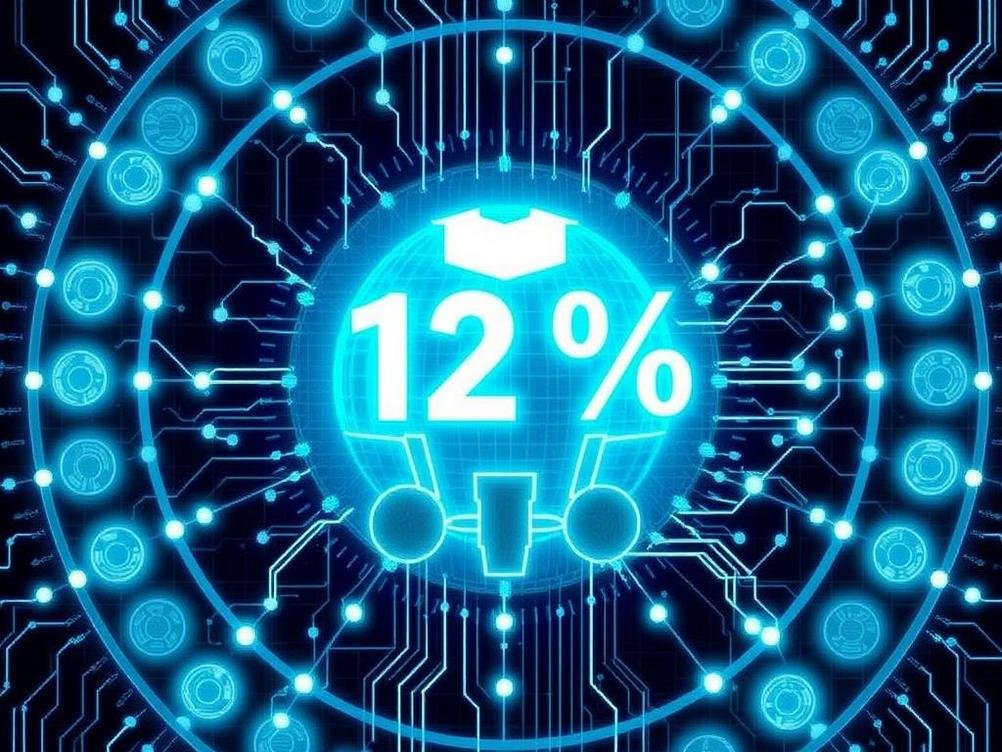
How AI is Already Shaking Up 12% of US Jobs: What MIT’s Latest Findings Mean for Your Career
Ever had that moment when you stare at your computer screen and wonder if it’s plotting to take over your job? Well, turns out, it might be. Picture this: you’re scrolling through your feed, sipping coffee, and you stumble upon a headline from MIT researchers saying AI can already handle the work of 12% of America’s workforce. That’s not some sci-fi flick; it’s real, and it’s happening right now in 2025. Think about it—AI isn’t just that robot vacuum bumping into your furniture anymore. It’s crunching numbers, writing code, and even diagnosing patients faster than we can say “beam me up, Scotty.” This study from MIT has folks buzzing because it highlights how artificial intelligence is creeping into everyday jobs, potentially leaving millions of us wondering what’s next. But hey, before you panic and start applying for that isolated cabin in the woods, let’s dive into what this all means. From transportation drivers to administrative assistants, AI’s influence is growing, and it’s a mix of thrilling and terrifying. In this article, we’ll unpack the MIT findings, explore the ripple effects on industries, and chat about how you can stay ahead in this wild AI-driven world. Stick around; you might just find some practical tips to future-proof your career without losing your sense of humor along the way.
What Exactly Did MIT Researchers Discover?
You know how MIT is basically the brainy headquarters for all things tech? Well, their latest study dropped a bombshell: AI technologies available today could potentially automate tasks done by about 12% of the US workforce. That’s roughly 16 million jobs, based on current labor stats. The researchers analyzed a ton of data, looking at everything from routine office tasks to more specialized roles, and found that AI’s smarts in areas like machine learning and natural language processing are already matching or beating human performance in these areas. It’s like AI graduated from being a helpful sidekick to a full-on coworker who’s gunning for your chair.
What’s cool (and a bit scary) is how they measured this. They didn’t just throw darts at a board; they used detailed job data from sources like the US Bureau of Labor Statistics and fed it into AI models. For instance, jobs in data entry, customer service, and even some paralegal work scored high on the automation scale because they’re repetitive and rule-based. Imagine telling your AI assistant to handle your emails, and it does it better than you ever could—without needing coffee breaks. But here’s the humorous twist: while AI might be efficient, it still can’t tell a good joke or navigate office politics, so maybe we’re safe for now.
To break it down further, let’s list out some key job categories that MIT flagged as vulnerable:
- Administrative and support roles, like secretaries or file clerks, where AI can handle scheduling and data organization effortlessly.
- Transportation and logistics jobs, such as truck drivers, thanks to advancements in self-driving tech from companies like Tesla and Waymo (which you can check out at Tesla’s Autopilot page for a glimpse).
- Food preparation and service positions, where AI-powered robots are flipping burgers faster than a short-order cook on a busy night.
Which Industries Are Feeling the AI Heat the Most?
Alright, let’s get real—AI isn’t crashing the party everywhere at once, but it’s definitely turning up the volume in certain sectors. Manufacturing and retail are taking the biggest hits, according to the MIT study. Think about factories where robots have been welding parts for years; now, AI is optimizing the whole process, potentially sidelining human operators. It’s like AI is the overachieving intern who shows up early and stays late, making the rest of us look bad. On the flip side, retail jobs involving stock management or basic customer queries are prime for AI takeover, with chatbots handling inquiries 24/7 without getting sassy.
Then there’s healthcare and finance, where AI’s precision is a game-changer. For example, in healthcare, AI algorithms can analyze medical images way faster than a doctor scanning an X-ray, freeing up pros for more complex cases. And in finance, tools like algorithmic trading are already managing investments that once required armies of analysts. If you’re in one of these fields, it’s not all doom and gloom—it’s more like a wake-up call. As the study points out, about 30% of tasks in these industries could be automated, based on 2025 projections from economic reports.
Here’s a quick rundown of industries and their exposure:
- Manufacturing: High risk, with AI optimizing assembly lines and predictive maintenance, as seen in factories using tech from Siemens (visit Siemens’ site for examples).
- Retail: Moderate risk, especially for inventory and customer service, where AI chatbots like those from ChatGPT integrations are becoming standard.
- Healthcare: Growing risk for routine tasks, but opportunities for AI to assist in diagnostics, potentially saving lives—like how Google’s DeepMind is tackling medical imaging.
Why Is AI Suddenly So Good at Stealing Jobs?
Okay, let’s not say “stealing”—more like borrowing without asking. But seriously, what’s the deal? AI has gotten smarter because of massive leaps in tech, like improved data processing and better algorithms. The MIT team attributes this to things like generative AI models that can learn from vast datasets, making them eerily good at pattern recognition. It’s almost like AI has been hitting the gym, bulking up on data from the internet to outpace humans in speed and accuracy. For instance, if you’ve ever used a voice assistant like Siri, you know it’s evolved from misunderstanding your accents to practically reading your mind.
Humor me for a second: Imagine AI as that friend who’s always one step ahead, remembering every detail while you’re still fumbling for your notes. The study highlights how advancements in natural language processing mean AI can now handle writing reports or answering queries that used to require a human touch. Plus, with cheaper computing power, businesses are jumping on the bandwagon, integrating AI to cut costs. Statistically, the World Economic Forum estimates that by 2026, AI could displace 85 million jobs globally, but create 97 million new ones—talk about a plot twist.
To put it in perspective, consider real-world examples. Take the rise of automated customer service in banking; tools from companies like JPMorgan’s COIN AI are reviewing legal documents faster than a team of lawyers. Or, in education, AI tutors are personalizing learning, which might leave some teachers wondering if they’re next. It’s a brave new world, folks.
What Opportunities Are Hiding in This AI Revolution?
Don’t worry, it’s not all about job losses—there’s a silver lining, or should I say, a golden AI opportunity? The MIT study hints that while 12% of jobs might be automated, it could open doors to new roles that demand creativity and oversight. Think of it as AI being the grunt worker, freeing you up for the fun stuff, like innovating or problem-solving. For example, if AI handles data analysis, humans can focus on interpreting those insights and making strategic decisions. It’s like having a super-smart assistant who does the boring bits so you can shine.
From what I’ve seen in 2025, companies are already adapting. Tech giants like Google are investing in AI ethics and reskilling programs, creating jobs in AI development and maintenance. And hey, if you’re into that, platforms like Coursera offer courses on AI (check out their AI engineering specialization). The key is to pivot; maybe that accounting job evolves into managing AI-driven financial tools. With the right mindset, this could be your chance to level up.
- Emerging fields like AI ethics and governance, where experts ensure tech is used responsibly.
- Roles in AI-human collaboration, such as training models or overseeing outputs.
- Creative industries, where AI assists but humans still rule with originality.
How Can Workers Actually Prepare for This Shift?
So, you’re thinking, ‘Great, AI’s coming for my job—now what?’ Well, first off, take a deep breath. The MIT findings emphasize that upskilling is your best defense. In a world where AI is evolving faster than TikTok trends, learning to work alongside it is crucial. Start by brushing up on digital literacy; things like coding basics or understanding machine learning aren’t as intimidating as they sound. It’s like teaching an old dog new tricks—possible, and kinda fun if you approach it right.
For real, governments and companies are stepping up with training programs. In the US, initiatives from the Department of Labor aim to retrain workers in AI-related skills, potentially affecting millions. And personally, I’ve dabbled in online courses myself; it’s empowering. If you’re in a vulnerable job, consider shifting to roles that require emotional intelligence or complex decision-making—areas where AI still lags. Remember, AI might crunch numbers, but it can’t schmooze clients or lead a team with empathy.
- Enroll in free resources like Khan Academy’s AI modules (visit their site to start).
- Network with AI pros on LinkedIn to get insider tips on transitioning careers.
- Experiment with AI tools in your daily work to build familiarity without waiting for the axe to fall.
What’s the Bigger Picture for AI and the Future of Work?
Zooming out, the MIT study is just one piece of a larger puzzle. By 2025, we’re seeing AI not as a job killer, but as a transformer of the economy. It could lead to more efficiency, higher productivity, and even shorter workweeks if we play our cards right. Think about it: with AI handling the mundane, humans might finally get that universal basic income dream we’ve been chatting about. But it’s not all rosy; inequality could widen if not managed well, leaving lower-skilled workers in the dust.
Experts predict that by 2030, AI could contribute to a $15.7 trillion boost in global GDP, according to McKinsey reports. Yet, it’s up to policymakers to ensure equitable distribution. In the US, discussions around AI regulations are heating up, aiming to balance innovation with worker protection. So, while it’s exciting, keep an eye on how this unfolds—it’s like watching a blockbuster movie where the plot twists keep coming.
Conclusion
In wrapping this up, the MIT study’s revelation that AI can tackle 12% of US jobs is a wake-up call, but it’s also an invitation to adapt and thrive. We’ve explored how this tech is reshaping industries, why it’s gaining ground, and what steps you can take to stay relevant. Sure, it’s a bit unnerving to think about AI as a competitor, but remember, humans bring the creativity, empathy, and humor that machines can’t replicate just yet. As we move forward in 2025 and beyond, let’s embrace this change with optimism—after all, who knows, AI might even help us discover new ways to enjoy life outside of work. So, dust off that resume, dive into some learning, and let’s make the future of work one that’s exciting for everyone.