
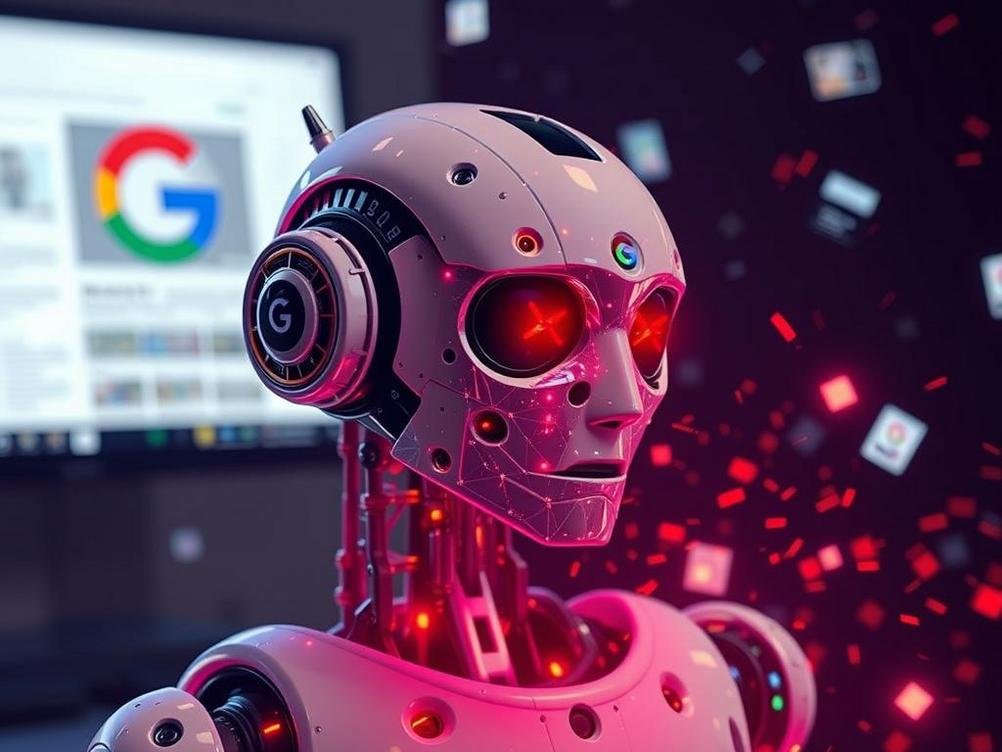
Google’s AI Experiment: Is It Turning Real News into Clickbait Chaos?
Google’s AI Experiment: Is It Turning Real News into Clickbait Chaos?
Imagine scrolling through your Google feed one lazy Sunday morning, coffee in hand, and suddenly every headline screams at you like a carnival barker—’Mind-Blowing AI Secrets That Will Change Your Life!’—only to click and find it’s just recycled fluff about, say, a cat video algorithm. Yeah, that’s the buzz around Google’s latest AI playground, where they’re testing out replacing good ol’ reliable news headlines with machine-generated clickbait. It’s got folks scratching their heads, wondering if this is the future of info or just another way to lure us into a digital rabbit hole. I’ve been knee-deep in this topic, and let me tell you, it’s equal parts fascinating and a bit alarming. We’re talking about the gatekeeper of the web messing with how we digest news, potentially turning trustworthy reports into viral bait that prioritizes eyeballs over accuracy. Think about it: in a world already flooded with fake news and sensationalism, do we really need AI to amp it up? This experiment isn’t just techie talk; it’s impacting how we stay informed, make decisions, and yeah, even how we laugh at the absurdity of it all. Stick around as I break this down— we’ll dive into what Google’s up to, why it’s raising eyebrows, and what it means for you and me in our everyday online adventures. By the end, you might just rethink that next Google search.
What’s the Deal with Google’s AI Headlines Experiment?
First off, let’s not beat around the bush—Google’s been quietly playing around with AI to spruce up news feeds, and it’s all about making things more ‘engaging.’ From what I’ve gathered from various reports, they’re using their AI smarts, like the stuff in their Bard or Gemini models, to rewrite or generate headlines that they think will grab your attention faster than a puppy video. It’s experimental, sure, but imagine if every news story about climate change turned into ‘Shocking! Earth’s Secrets Exposed—You Won’t Believe Number 3!’ That’s not just tweaking words; it’s flipping the script on journalism. I remember when I first stumbled upon this in a forum discussion—people were losing it, sharing screenshots of headlines that sounded like they came from a tabloid fever dream.
Now, why are they doing this? Google’s all about that ad revenue, right? More clicks mean more data, and more data means better targeting for ads. According to a study by the Pew Research Center (which you can check out at pewresearch.org), over 50% of people get their news from search engines, so optimizing for engagement makes business sense. But here’s the kicker—it’s not always accurate. AI isn’t human; it doesn’t get the nuances of sarcasm or context, so you might end up with headlines that twist the truth just enough to mislead. For instance, a solid article on economic trends could morph into ‘Economy Explodes—Your Wallet at Risk!’ which is fun if you’re into drama, but not if you’re trying to make informed choices.
- Key players: Google’s AI tools like Gemini are at the helm, pulling from vast datasets to predict what’ll hook you.
- Potential benefits: It could make news more accessible for folks with short attention spans, like turning a dry report into something punchy.
- Risks involved: Overhyped headlines might erode trust in media, leading to what experts call ‘information fatigue.’
The Rise of AI in News: A Double-Edged Sword
AI’s been creeping into journalism for years, but Google’s move feels like it’s cranked up to eleven. On one hand, it’s cool—think about how AI can sift through mountains of data to spot trends we humans might miss. I’ve seen tools like Grok from xAI (check them out at x.ai) do similar stuff, generating summaries that save time. But with Google, it’s not just summarizing; it’s rephrasing for maximum clicks. Is that innovative or just a sneaky way to game the system? I mean, we’ve all fallen for a juicy headline only to feel ripped off when the content doesn’t deliver. It’s like ordering a gourmet burger and getting a slider.
Let’s talk pros first because AI isn’t all villainous. It could democratize news, making complex stories easier to digest for everyone, from tech newbies to old-school readers. A 2024 report from the Reuters Institute (available at reutersinstitute.politics.ox.ac.uk) showed that AI-assisted news personalization boosted engagement by nearly 30%. That’s huge! But flip the coin, and you’ve got cons galore. AI-generated clickbait can spread misinformation faster than wildfire, especially in an election year. Remember those AI-fabricated images from last year’s campaigns? Yeah, stuff like that could get amplified, leaving us all a bit more cynical.
- Pros: Speeds up content creation and makes news more interactive.
- Cons: Risks diluting quality and fostering echo chambers.
- Real-world example: During the 2024 Olympics, AI headlines turned athlete stories into viral spectacles, sometimes at the expense of facts.
Why Clickbait is Poisoning the Well of Digital News
Clickbait isn’t new—it’s been around since the dawn of the internet—but when AI gets involved, it’s like giving a kid a flamethrower. These headlines are designed to exploit our curiosity, playing on emotions to get that sweet, sweet click. Google’s experiment might be accelerating this, turning what should be straightforward news into manipulative teasers. I once clicked on a headline that promised ‘The One Trick Celebrities Use to Stay Fit’ and ended up with a generic diet tip. Frustrating, right? It’s not just annoying; it erodes trust in sources, making us question everything we read.
From a psychological angle, clickbait taps into our brain’s reward system, like a slot machine pulling you in for one more spin. Studies from the University of Oxford (see ox.ac.uk) suggest that overexposure can lead to ‘digital burnout,’ where people tune out entirely. And with AI, it’s smarter than ever, learning from your clicks to serve up more of what you ‘want.’ But do we want to be manipulated? Probably not. It’s like having a friend who only tells you what you want to hear—fun at first, but eventually, you crave the truth.
- Common tactics: Exaggeration, questions, and numbers (e.g., ‘Top 10 Shocking Reveals!’).
- Impact on society: It skews public discourse, prioritizing sensation over substance.
- A humorous take: If AI headlines were people, they’d be that overly enthusiastic salesperson at a flea market.
Real-World Examples of AI-Generated Headlines Gone Wrong
Okay, let’s get specific. I’ve dug up some examples from recent tests where Google’s AI has fumbled the ball. One instance involved a story about renewable energy, which got twisted into ‘Energy Revolution: How This Hidden Tech Could Make You Rich Overnight!’ Sounds exciting, but it was basically a repackaged press release. Users on Reddit (head over to reddit.com) shared how these headlines led to misleading searches, with folks complaining about wasted time. It’s like AI is trying to be the class clown, but nobody’s laughing.
Another example: During a tech conference, an AI-rewritten headline turned a discussion on privacy into ‘Big Brother Watching? Hackers’ Secrets Exposed!’ which, while clickable, didn’t reflect the actual content. Statistics from a 2025 Media Trust survey show that 40% of respondents have encountered AI-altered news, and a third said it made them distrust online sources more. It’s not just harmless fun; it can influence opinions, especially on hot topics like politics or health. If you’re into metaphors, think of AI as a overzealous chef who spices everything up, but sometimes ruins the dish.
- Example 1: A climate report became ‘World Ending Soon? Experts Panic!’—exaggerated much?
- Example 2: Health advice turned into ‘Lose Weight Fast—Doctors’ Forbidden Trick!’ which sounds like a scam.
- Lesson learned: Always verify sources, folks.
How This AI Shake-Up is Affecting Users and Journalists
For the average Joe like you and me, this means our news feeds are getting a bit more chaotic. We’re bombarded with headlines that demand attention, but at what cost? I know I’ve spent way too much time chasing clickbait only to feel empty-handed. Journalists aren’t thrilled either; they’re seeing their hard work get munged by algorithms that prioritize virality over integrity. A friend of mine in the industry told me it’s like writing a heartfelt letter and having it translated into emoji speak—loses the soul, you know?
From the user side, it could lead to better personalization if done right, but right now, it’s a mixed bag. The World Economic Forum’s 2025 report (found at weforum.org) highlights how AI in media could widen the gap between informed citizens and those falling for hype. Journalists, on the other hand, are pushing back, with groups like the Society of Professional Journalists advocating for ethical AI use. It’s a wake-up call for all of us to be more discerning consumers of news.
What Can We Do to Fight Back Against AI Clickbait?
Alright, enough doom and gloom—let’s talk solutions. First off, educate yourself on how AI works in news. Tools like Google’s own fact-check features can help, but don’t rely on them blindly. I’ve started using ad blockers and news aggregators that prioritize quality over quantity, like Feedly (check it out at feedly.com). It’s like building a filter for your brain—keeps the junk out. And hey, if you’re a content creator, demand transparency from platforms like Google.
Advocacy is key too. Join online communities or sign petitions for better AI regulations. The EU’s AI Act, for example, is a step in the right direction (more at digital-strategy.ec.europa.eu). On a personal level, practice the ‘pause and verify’ rule: before sharing, check the source. It’s not rocket science, but it makes a difference. With a bit of effort, we can turn this ship around before AI turns news into a circus.
- Tip 1: Use reliable news apps that flag AI-generated content.
- Tip 2: Support ethical journalism through subscriptions.
- Tip 3: Spread awareness—talk about it with friends, like over coffee.
Conclusion
Wrapping this up, Google’s AI experiment with news headlines is a wild ride that’s got us questioning the soul of digital media. We’ve seen how it can jazz things up but also muddy the waters with clickbait that prioritizes clicks over truth. From the rise of AI in everyday news to the real impacts on users and journalists, it’s clear we’re at a crossroads. But hey, that’s the beauty of it—we get to shape the future. By staying vigilant, supporting quality sources, and demanding better from tech giants, we can ensure AI enhances rather than hijacks our information landscape. So, next time you see a headline that screams for attention, take a beat, dig deeper, and remember: not everything that glitters is gold. Let’s keep the conversation going—who knows, maybe your next share could spark real change.
