dailytech.ai
Is AI All Hype? Why Companies Are Still Betting Big
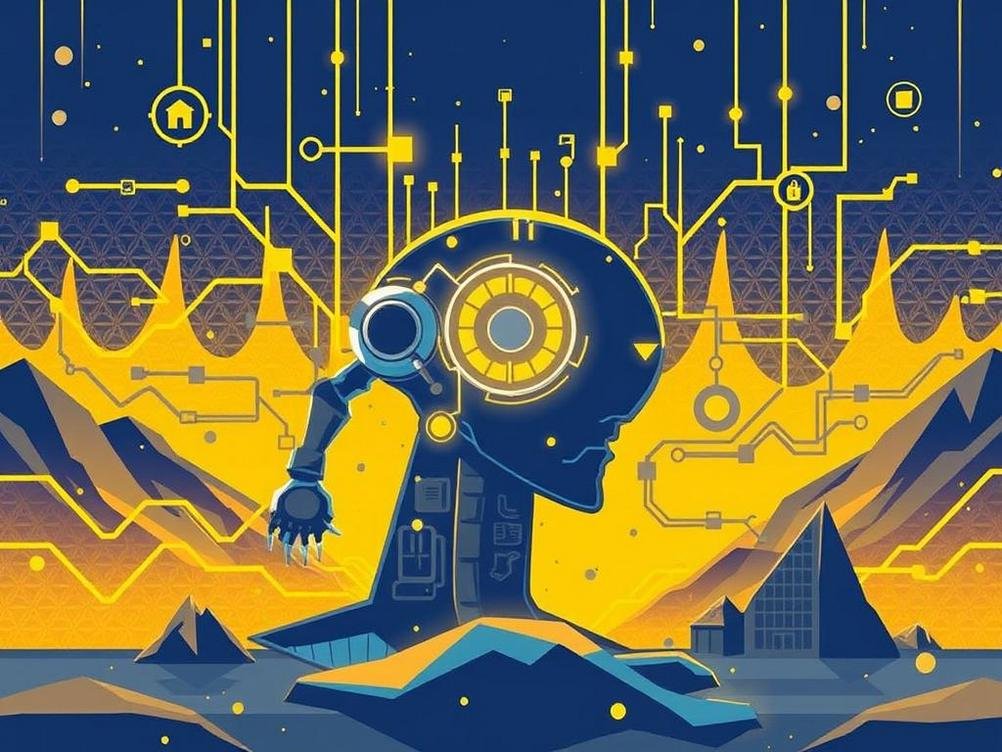
Okay, let’s be real for a second—remember when AI was supposed to be the next big thing that would solve all our problems? I’m talking about those wild predictions from a few years back, where everyone was saying AI would make us all billionaires or turn our jobs into relics of the past. But fast forward to now, and it feels like AI has been more of a flashy promise than a game-changer. I mean, sure, it’s cool that your phone can generate artsy images or chat with you like a mildly helpful friend, but has it really lived up to the hype? That’s the question on everyone’s mind, especially as companies keep pouring money into it despite the underwhelming results. Think about it: we’ve seen AI tools flop in real-world scenarios, from autonomous cars that still need human babysitters to chatbots that give hilariously wrong advice. Yet, businesses aren’t throwing in the towel. Why? Well, in this article, we’ll dive into the messy reality of AI’s hype cycle, explore why companies are doubling down, and maybe even laugh a bit at the absurdities along the way. It’s not all doom and gloom—there’s real potential here, but we’ve got to separate the marketing fluff from the actual tech magic. So, if you’re an AI enthusiast, a skeptic, or just someone who’s tired of overhyped gadgets, stick around. By the end, you might see why persistence could be the key to unlocking AI’s true power, even if it’s taken a few detours.
The Hype Around AI: What Went Wrong?
You know, it’s easy to get swept up in the excitement when something like AI hits the scene. Back in the early 2010s, tech giants were throwing around terms like ‘singularity’ and ‘AI revolution,’ making it sound like we were on the brink of a sci-fi movie. But fast forward to 2025, and things haven’t quite panned out. A lot of the hype came from overpromising features that sounded amazing on paper—AI curing diseases overnight or predicting stock markets with pinpoint accuracy—but in practice, it’s been more like a high-school science project gone wrong. Take, for instance, how AI was supposed to transform healthcare with tools like IBM’s Watson for oncology. It was hailed as a breakthrough, yet it struggled with real-world data complexities and ended up underperforming. That’s not to say AI is useless; it’s just that the gap between hype and reality is wider than we thought.
Part of what went wrong is good old human expectation. We tend to build up these technologies in our minds, thanks to movies and TED Talks, only to be disappointed when they don’t deliver. According to a 2024 report from Gartner, about 60% of AI projects fail to make it past the proof-of-concept stage, often because of data quality issues or integration challenges. It’s like ordering a gourmet meal and getting fast food instead—tasty, but not what you signed up for. And let’s not forget the humor in it all; I mean, who else remembers those AI-generated news articles that spewed nonsense? One viral example was when an AI chatbot confidently claimed the moon is made of cheese. Hilarious, right? But it highlights how overhyped expectations can lead to real setbacks.
- Overpromising in marketing campaigns that set unrealistic goals.
- Poor data management, which is like trying to bake a cake without measuring the ingredients.
- Ethical concerns, such as bias in algorithms, that nobody fully addressed upfront.
Why Companies Aren’t Giving Up on AI
Here’s the thing—despite all the facepalms and failed launches, companies are still all in on AI, and it’s not just stubbornness. They see the long game, like planting a garden and waiting for the fruits to grow. Sure, the initial hype might have fizzled, but think about how AI has quietly woven itself into everyday tools. From Netflix recommending your next binge-watch to Google’s search algorithms making life easier, AI is already paying off in subtle ways. Companies like Amazon and Microsoft aren’t backing down because they’ve crunched the numbers—the potential ROI is massive. A study by McKinsey from last year estimated that AI could add up to $13 trillion to the global economy by 2030. That’s a boatload of motivation, even if the path there is bumpy.
What keeps them going is the idea of iterative improvement. It’s like learning to ride a bike; you fall a few times, but you don’t quit because you know it’ll click eventually. Take Tesla, for example—they’ve had their share of AI mishaps with self-driving tech, but they’re constantly refining it through over-the-air updates. And honestly, it’s kind of admirable. If we gave up on every tech that didn’t work perfectly at first, we’d still be using rotary phones. Companies aren’t blind to the hype backlash; they’re just pivoting, focusing on practical applications rather than world-domination dreams. As one exec from OpenAI put it in a recent interview, “AI is a marathon, not a sprint.” You can check out their progress on openai.com if you’re curious.
- Key drivers like cost savings and efficiency gains that make AI irresistible.
- Competitive pressure—nobody wants to be left behind if a rival nails it first.
- Real successes in niche areas, such as fraud detection in banking, which prove AI’s worth.
Real-World Examples of AI Successes and Failures
Let’s get into the nitty-gritty with some stories that show AI’s Jekyll and Hyde nature. On the success side, AI has been a star in fields like agriculture. Farmers are using AI-powered drones to spot crop diseases early, which has boosted yields by up to 20% in some regions, according to the World Economic Forum. It’s like having a super-smart sidekick that never sleeps. But flip the coin, and you’ve got failures that make you chuckle or cringe. Remember when Zillow’s AI-driven housing predictions went haywire during the 2022 market crash? It overestimated values so badly that the company had to halt operations. Ouch. These examples remind us that AI isn’t magic; it’s only as good as the data and humans behind it.
To keep it balanced, let’s talk metaphors. AI is like a talented but unpredictable teenager—full of potential but prone to mistakes. For instance, Google’s DeepMind created AlphaFold, which revolutionized protein folding in biology and won them accolades. You can dive deeper into that on deepmind.google.com. On the flip side, facial recognition tech has faced backlash for accuracy issues, especially with diverse skin tones, leading to wrongful arrests in a few high-profile cases. The lesson? AI needs guardrails, and we’re still figuring that out.
- Success: AI in customer service chatbots that handle routine queries, freeing up human agents.
- Failure: Early AI stock trading bots that lost millions during volatile markets.
- Mixed bag: Autonomous vehicles, which are safer than human drivers in tests but still not ready for prime time.
The Future of AI: What’s Next?
Alright, enough dwelling on the past—let’s look ahead. By 2025, AI is evolving in ways that could make the hype feel justified eventually. We’re seeing advancements in ethical AI, like frameworks for transparency and fairness, which address some of the biggest criticisms. Imagine AI that not only predicts trends but does so without perpetuating biases—kinda like upgrading from a flip phone to a smartphone. Companies are investing in quantum AI and edge computing to handle more complex tasks, and it’s exciting. A report from Statista projects that the AI market will hit $1 trillion by 2030, driven by these innovations. But, as always, there’s a catch; we have to navigate regulations and public trust issues.
From my perspective, the future hinges on collaboration. It’s not just tech bros in Silicon Valley calling the shots—governments and everyday users need a say. Think about how the EU’s AI Act is pushing for safer implementations; you can read more about it on the EU’s digital strategy site. Will AI live up to its hype? Who knows, but if we keep pushing forward with a sense of humor and realism, it might just surprise us.
How to Approach AI in Your Business
If you’re running a business, you might be wondering how to dip your toes into AI without getting burned. First off, don’t go all in based on hype—start small and smart. Maybe use AI for something straightforward, like automating email responses or analyzing customer data. I’ve seen small businesses thrive by integrating tools like ChatGPT for content creation, which saves time without replacing the human touch. It’s like hiring a virtual assistant who’s always on call, but remember to double-check their work because, let’s face it, they can be wrong.
A good strategy involves testing and learning. Set clear goals, measure results, and be ready to pivot. For example, if you’re in retail, AI inventory management can cut waste by predicting demand accurately. According to a Deloitte study, businesses that adopt AI see a 15-20% increase in efficiency. But don’t forget the fun side—experimenting with AI can lead to unexpected perks, like that time a marketing team used an AI generator for ad ideas and ended up with a campaign that went viral. The key is balance; treat AI as a tool, not a cure-all.
- Assess your needs: What problems can AI actually solve for you?
- Invest in training: Your team needs to know how to use these tools effectively.
- Monitor ethics: Ensure your AI practices are fair and transparent to avoid backlash.
Common Myths About AI and Why They Persist
There’s no shortage of myths floating around AI, and they’re part of why the hype got out of hand. One big one is that AI will steal all our jobs—sure, it might automate repetitive tasks, but it also creates new roles, like AI ethicists or data trainers. It’s like the industrial revolution; machines changed work, but people adapted. Another myth? That AI is infallible. We’ve all seen those funny Twitter threads where AI hallucinations turn simple questions into wild tales. These stories persist because media loves a good headline, but in reality, AI is more like a clever apprentice than a genius overlord.
Debunking these can help us move forward. For instance, while AI can process data faster than humans, it lacks intuition and creativity without guidance. A 2025 survey by Pew Research found that 70% of people overestimate AI’s capabilities based on pop culture. So, next time you hear someone say AI will take over the world, just laugh and point them to resources like pewresearch.org for a reality check.
Conclusion
In wrapping this up, AI might not have lived up to the blockbuster hype just yet, but that doesn’t mean it’s a lost cause. Companies are sticking with it because they see the spark of something transformative, even if it’s taken longer than expected. From the successes in everyday applications to the lessons from high-profile flops, we’re learning to temper our expectations and focus on what works. It’s a reminder that innovation is rarely a straight line—it’s full of twists, turns, and the occasional comedic error.
So, what’s next for you? Whether you’re a business leader, a tech hobbyist, or just curious, I encourage you to explore AI with an open mind and a healthy dose of skepticism. Who knows, you might find ways to make it work for you, turning the hype into real, tangible benefits. After all, in the grand scheme of things, persistence often leads to breakthroughs, and AI’s story is far from over.