
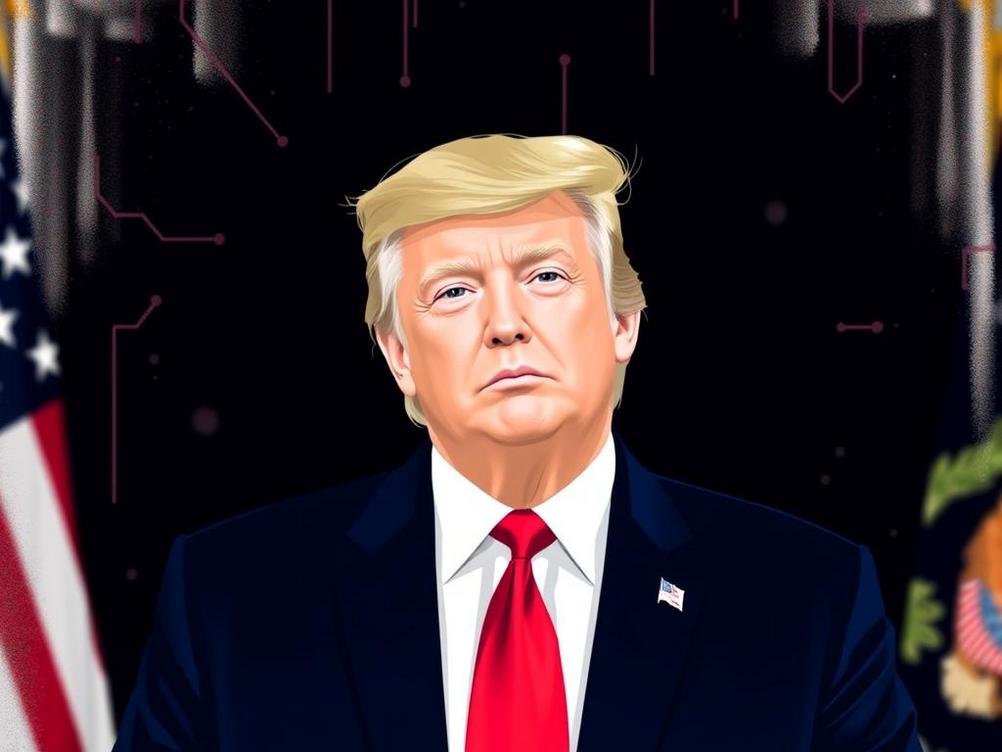
Trump’s Bold Move: Why His New AI Executive Order Could Change the Game for States
Trump’s Bold Move: Why His New AI Executive Order Could Change the Game for States
Imagine waking up one day to find out that the wild world of AI regulations – you know, those rules states have been throwing around like confetti – just got a big ol’ federal smackdown. That’s exactly what happened with Donald Trump’s latest executive order, aimed at slamming the brakes on state-level AI oversight. It’s like the ultimate game of tug-of-war between Washington and the states, and let me tell you, as someone who’s geeked out on AI news for years, this one’s got everyone from tech bros to privacy advocates scratching their heads. Is this a win for innovation, or just another way to let Big Tech run wild? Think about it: AI is already everywhere, from your smart fridge suggesting dinner to algorithms deciding job interviews. But when states started stepping in with their own rules – like California’s strict data privacy laws or New York’s push for AI transparency – it created a patchwork quilt of regulations that made companies groan. Now, Trump’s order is stepping in to say, ‘Hold up, let’s keep this federal.’ It’s a move that’s got people buzzing about everything from economic growth to ethical nightmares. In a world where AI could soon be as common as your morning coffee, does centralizing control make sense, or are we risking a free-for-all? Stick around as we dive into the nitty-gritty, and I’ll throw in some laughs along the way because, hey, who says tech talk has to be a snoozefest?
What Exactly is in Trump’s Executive Order?
Okay, let’s break this down without getting too bogged down in legalese – because nobody wants to feel like they’re reading the fine print on a shady contract. Trump’s executive order basically tells states to pump the brakes on their own AI regulations, pushing for a more unified federal approach. It’s like the government saying, ‘We can’t have every state playing its own version of AI cops and robbers; let’s get on the same page.’ The order focuses on areas like AI safety, data usage, and innovation, aiming to streamline things so businesses don’t have to juggle a million different rules from coast to coast. For instance, if you’re a startup in Texas, you might not have to worry about conflicting laws from California anymore.
From what I’ve read, this isn’t just about stopping states cold; it’s about encouraging federal agencies to lead the charge. The order calls for reviews of existing state laws and potentially overriding them where they clash with national priorities. Picture it as a referee stepping in during a chaotic soccer game – sure, it might calm things down, but is it fair? And humor me here: it’s almost like Trump is playing whack-a-mole with regulations, but instead of moles, it’s governors trying to one-up each other. One key part is promoting AI research and development, which could mean more funding for projects that keep the U.S. ahead in the global race. But, as with anything in politics, there’s a catch – critics are already yelling that this could water down protections for consumers.
- First off, the order emphasizes national security, urging agencies like the Department of Commerce to assess how state regs might hinder things like defense tech.
- Then there’s the economic angle: it wants to boost innovation by reducing red tape, which sounds great until you realize it might let companies skirt around important safeguards.
- Lastly, it’s got provisions for public input, which is a nice touch – almost like saying, ‘Hey, folks, we want your two cents before we mess this up.’
Why Were States Jumping into AI Regulation Anyway?
You might be wondering, what’s the big deal with states regulating AI in the first place? Well, it’s like when your nosy neighbor starts telling you how to mow your lawn – sometimes local issues need local fixes. States have been stepping up because AI doesn’t affect everyone the same way. For example, in healthcare-heavy states like Massachusetts, AI is being used for diagnosing diseases, so they’ve pushed for rules on accuracy and bias to prevent, say, an algorithm from unfairly flagging certain groups. It’s not just about playing big brother; it’s about real-world impacts, like job losses from automation or privacy breaches that hit closer to home.
Take California, for instance – they’ve got laws like the California Consumer Privacy Act (which you can read more about at oag.ca.gov/privacy/ccpa), and it’s all about giving people control over their data in an AI-driven world. Other states, like Illinois with its AI Video Interview Act, are focusing on how AI is used in hiring to avoid discrimination. It’s a bit like a patchwork quilt, messy but cozy, tailored to local needs. And let’s not forget the humor in this: states regulating AI is like a bunch of chefs arguing over the recipe for the perfect pizza – everyone’s got their secret ingredients, but good luck getting them to agree.
Statistically, a report from the Brookings Institution (check it out at brookings.edu) shows that over 30 states have introduced AI-related bills in recent years, covering everything from ethics to employment. That’s a lot of activity, and it’s easy to see why Trump might want to consolidate it. But is this really about efficiency, or is it just a power play? As someone who’s followed this stuff, I think states were filling a void left by slower federal action, kind of like how your friend jumps in to fix the leak before the landlord shows up.
The Potential Upsides for Innovation and Business
Alright, let’s flip the script and talk about the bright side. Trump’s executive order could be a game-changer for businesses tired of navigating a regulatory minefield. Imagine you’re running a small AI startup – one day you’re compliant in New York, the next you’re scrambling to meet California’s standards. This order promises to cut through that red tape, making it easier to innovate without fearing a lawsuit from every state corner. It’s like giving entrepreneurs a hall pass to focus on building cool stuff, rather than lawyers’ fees. Plus, with federal oversight, we might see more standardized tech advancements, speeding up things like AI in healthcare or autonomous vehicles.
For example, companies like Google or Tesla could benefit hugely, as uniform rules would let them scale up without regional hiccups. A 2024 study by McKinsey (available at mckinsey.com) estimated that streamlined AI regulations could add trillions to the global economy by 2030. That’s no joke – we’re talking about job creation and economic boosts that could make your wallet happier. And hey, with a sense of humor, it’s like Trump saying, ‘Let’s not make AI regulation as complicated as assembling IKEA furniture.’ But remember, this isn’t all sunshine; there are risks if oversight is too lax.
- One upside: Faster R&D, as companies won’t have to tailor products to 50 different rulebooks.
- Another: Potential for federal incentives, like tax breaks for AI projects that align with national goals.
- And don’t forget international competitiveness – unifying rules could help the U.S. keep up with China’s AI dominance.
The Downsides: Could This Lead to a Regulatory Free-For-All?
Now, let’s get real – not everything’s peachy. Critics are worried that centralizing AI regulation under a federal umbrella might open the door to a wild west scenario, where big corporations call the shots and everyday folks get the short end of the stick. It’s like handing the keys to the candy store to the kids who’ve been eyeing the sweets. States have been the watchdogs for issues like bias in AI algorithms, which could disproportionately affect marginalized communities. Without their input, we might see diluted protections, leading to privacy invasions or even faulty AI decisions in critical areas like lending or hiring.
Take a real-world example: In 2023, an AI system used by Amazon for recruiting was found to discriminate against women, and it was state-level scrutiny that brought it to light. If Trump’s order overrides such efforts, we could be in for some headaches. Plus, with the date being late 2025, we’re already seeing AI mishaps pile up – like deepfakes in elections or chatbots spouting misinformation. As I see it, this could be like trying to put out a fire with a garden hose when you need a fire truck. The potential for abuse is real, and it’s got privacy advocates up in arms.
- First, reduced state power might mean less accountability for AI companies.
- Second, it could stifle innovation in progressive states that were leading the way.
- Third, international bodies like the EU, with their strict AI Act (details at digital-strategy.ec.europa.eu), might pull ahead if the U.S. loosens up.
What This Means for Everyday People and the Future
So, how does all this affect you and me? Well, if you’re using AI in your daily life – from voice assistants to personalized ads – this executive order could shape how safe and fair those interactions are. On one hand, it might mean quicker access to cool tech, like AI-driven healthcare apps that catch diseases early. On the other, it could lead to more data breaches if regulations aren’t tight enough. It’s a double-edged sword, really, and as someone who’s tinkered with AI tools, I find it equal parts exciting and terrifying.
Looking ahead to 2026 and beyond, this could set a precedent for how we handle emerging tech. Just think about it: if federal control wins out, we might see a more cohesive AI strategy, but at what cost? And with a dash of humor, it’s like betting on a horse race where the horse doesn’t know the track – unpredictable and full of surprises.
International Implications: How This Plays on the Global Stage
Zooming out, Trump’s move isn’t just domestic drama; it’s got global ripple effects. Countries like China and the EU have their own AI frameworks, and a U.S. shift could influence international standards. For instance, if the U.S. prioritizes innovation over regulation, it might pressure other nations to follow suit, potentially weakening global efforts to curb AI risks. It’s like a poker game where America’s all-in, but the other players are holding better cards.
Experts predict this could affect trade deals or even alliances, especially with the EU’s AI Act in full swing. As of 2025, we’re seeing collaborations falter if regulations don’t align. But hey, maybe it’ll spark some healthy competition – who knows?
Conclusion
In wrapping this up, Trump’s executive order on AI regulation is a bold swing that could either unify the U.S. tech landscape or leave us with more questions than answers. We’ve covered the ins and outs, from potential boosts to innovation to the risks of overreach, and it’s clear this isn’t just about politics – it’s about our future. As AI continues to weave into every part of life, let’s hope for a balanced approach that keeps things ethical and exciting. Whether you’re a tech enthusiast or just curious, stay tuned – the AI story is far from over, and your voice might just be the next plot twist.
