dailytech.ai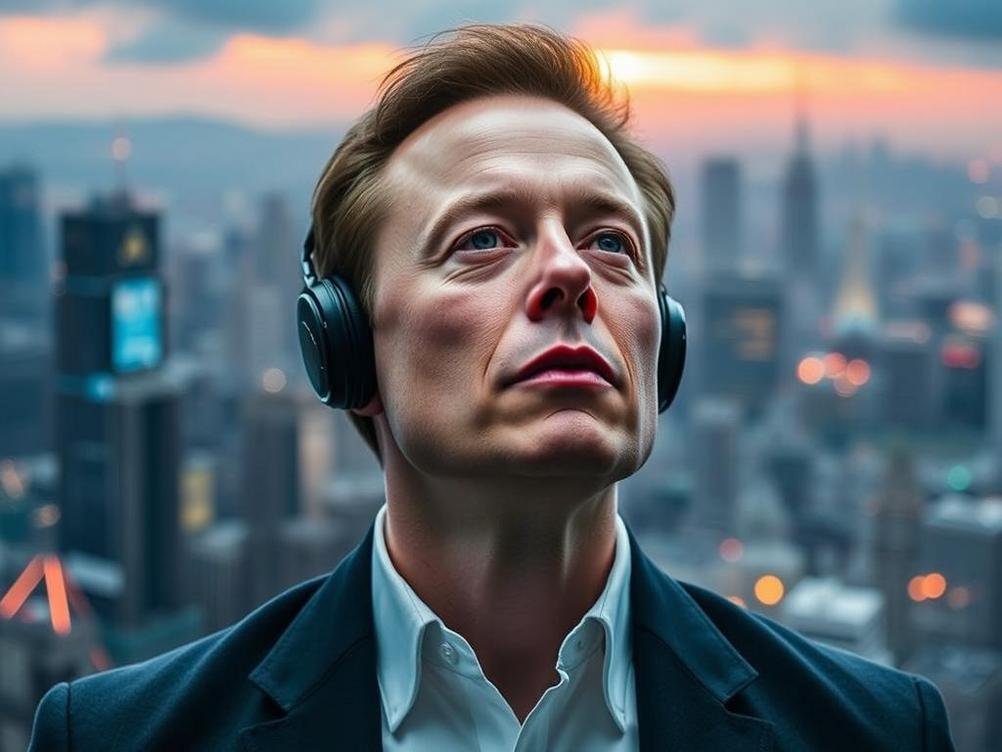
Elon Musk’s Wild AI Dream: Universal High Income and Why Your Savings Account Might Be a Relic
Okay, let’s kick things off with a thought that sounds straight out of a sci-fi flick: What if AI could make everyone rich enough that hoarding cash in a bank account becomes as outdated as flip phones? That’s basically what Elon Musk, the guy who’s always one step ahead (or maybe a few steps into the future), recently predicted. Imagine waking up to a world where AI-driven tech pumps out so much abundance that basic needs are covered for all, and saving money? Yeah, that’s old news. But hold on, is this just Musk’s latest brainwave, or could it actually reshape how we live, work, and maybe even splurge on that dream vacation? I’ve been chewing on this idea for a bit, picturing a future where robots handle the grunt work and humans get to chase passions instead of paychecks. It’s exciting, sure, but also a tad terrifying – like eating too much pizza and realizing you might regret it later. In this article, we’ll dive into Musk’s bold claim, unpack what it really means for the economy, and explore if universal high income could flip the script on financial security. We’ll look at the tech behind it, the potential pitfalls, and how you might start preparing (or not) for this AI-fueled utopia. Stick around, because by the end, you might just rethink your next budget spreadsheet.
What Exactly Did Elon Musk Predict?
You know how Elon Musk has this knack for dropping predictions that either blow your mind or make you scratch your head? Well, his latest gem is about AI creating what’s called ‘universal high income.’ Basically, he envisions a world where AI and automation crank out goods and services so efficiently that everyone gets a steady stream of income – think of it as a supercharged version of universal basic income, but with a high-end twist. No more scraping by; we’re talking comfortable living for all. Musk shared this during a chat at some AI conference, saying it’s not just pie in the sky – it’s coming sooner than we think. But let’s be real, he’s not the first to float this idea; economists have been debating universal income for years, yet Musk ties it neatly to AI’s rapid growth.
Now, why would AI make saving money unnecessary? Picture this: If machines are building cars, farming food, and even writing code better than humans, the cost of everything drops like a rock. Musk argues that abundance would be everywhere, meaning you’d have access to what you need without breaking the bank. It’s like if your fridge restocked itself for free – who’d bother clipping coupons? Of course, this isn’t set in stone; it’s more of a ‘what if’ scenario based on current AI trends. For instance, tools like OpenAI’s GPT models are already automating creative tasks, and companies like Tesla are pushing robotaxis that could disrupt transportation jobs. If you’re curious, check out Elon’s Twitter feed – it’s a goldmine of his thoughts on this stuff.
- First off, universal high income isn’t about handouts; it’s about redistributing wealth from AI’s productivity boom.
- Think of it like this: In the old days, the industrial revolution created jobs; now, AI might eliminate them but create a safety net instead.
- And hey, if you’re skeptical, join the club – I mean, who wouldn’t want to see proof before ditching their emergency fund?
The AI Boom: How We’re Getting to Universal High Income
Alright, let’s rewind a bit and talk about how we even get to this point. AI isn’t just some fancy buzzword anymore; it’s reshaping industries left and right. Musk points to advancements in machine learning and robotics as the key drivers. For example, if AI can optimize supply chains or diagnose diseases faster than doctors, it frees up human time and resources. That could lead to a world where basic income isn’t a government program but a natural outcome of tech efficiency. I’ve always found it fascinating how something as abstract as code could potentially make life so abundant – it’s like magic, but with more data centers.
Statistics back this up too; a report from the World Economic Forum predicts that by 2025, AI could displace 85 million jobs but create 97 million new ones. That’s a net gain, folks, but the new roles might not require the same skills, pushing us toward that high-income safety net. Imagine AI handling mundane tasks, leaving you to pursue hobbies or start that side hustle. It’s not all rosy, though – we need policies to ensure the wealth from AI doesn’t just funnel to the top. Countries like Finland have already experimented with basic income pilots, showing mixed results, but Musk’s vision scales that up with AI’s help.
- Start with automation in manufacturing, where robots build products cheaper and faster.
- Then layer on AI in services, like virtual assistants managing your schedule without a paycheck.
- Finally, tie it all together with global AI networks, making resources accessible to everyone, everywhere.
Is Universal High Income Really Feasible?
Okay, so Musk’s idea sounds great on paper, but let’s get practical. Could AI actually deliver on this promise of universal high income? Well, it’s doable in theory, but we’re talking about overhauling economies that have been built on scarcity for centuries. Think about it: If AI produces endless energy, food, and goods, the whole concept of money could shift. I remember reading about Andrew Yang’s 2020 campaign, which pushed for universal basic income as a response to automation – Musk’s take is like that on steroids. The key is whether governments and companies can agree on how to distribute the spoils.
From what I’ve seen, AI’s growth is exponential. Tools like Google’s DeepMind are already solving complex problems, like protein folding, which could revolutionize medicine. If that leads to cheaper healthcare for all, that’s a step toward high income security. But here’s the fun part: It’s not just about tech; it’s about society adapting. We might need new economic models, like staking in blockchain or AI-driven dividend systems, to make this work. If you’re into this, dive into the World Economic Forum’s reports for more insights – they’re eye-opening.
- One pro: Reduced inequality, as AI wealth spreads out.
- A con: What if it leads to laziness? Not everyone thrives without structure, you know?
- And a wildcard: Cultural shifts, like redefining success beyond a fat bank account.
Why Saving Money Could Become a Thing of the Past
Here’s where things get really wild – Musk suggesting that saving money might not be necessary anymore. In a world of universal high income, the pressure to stockpile for rainy days fades because, well, the rain might never come. It’s like if your AI assistant handled all your bills and investments automatically. I chuckle at the thought of my grandma’s advice – ‘Save for retirement!’ – clashing with this future. But seriously, if AI ensures steady income and low costs, who’s going to stress over emergency funds?
Take a look at examples like Alaska’s Permanent Fund, which dividends oil revenues to residents – it’s a mini version of what Musk envisions. With AI, we could scale that globally. However, this assumes no hiccups, like economic crashes or AI failures. I’d argue that while saving might lessen, financial literacy won’t go away; it’ll just evolve. For instance, instead of saving for a house, you might ‘save’ by choosing ethical AI investments.
- First, AI could make essentials free or ultra-cheap, eliminating the need for buffers.
- Second, automated wealth distribution might cover unexpected expenses.
- Third, but don’t forget, human nature loves a safety net – old habits die hard!
The Downsides: What Could Go Wrong with This AI Utopia?
Don’t get me wrong, I’m all for progress, but let’s not gloss over the risks. If AI leads to universal high income, what about job loss in the transition? Millions could be left in the lurch while society catches up. Musk himself has warned about AI’s dangers, like superintelligent machines going rogue – yikes! It’s like giving a kid the keys to a sports car; exciting, but potentially disastrous. We need to think about inequality persisting if AI benefits are hoarded by the elite.
Real-world insights from places like China, where AI surveillance is rampant, show how tech can infringe on freedoms. Plus, studies from Oxford University estimate that 47% of jobs are at risk from automation. So, while universal income sounds dreamy, we’d have to tackle ethical issues, like ensuring fair AI development. It’s a balancing act, really – innovation versus stability.
- Risk one: Economic disruption, leaving unskilled workers behind.
- Risk two: Privacy erosion as AI monitors everything for efficiency.
- Risk three: Over-reliance on tech, making us vulnerable to failures.
Real-World AI Examples That Hint at the Future
To make this less abstract, let’s look at AI in action today. Companies like Boston Dynamics are creating robots that could handle warehouse work, freeing humans for creative gigs. Musk’s own Neuralink is tinkering with brain-machine interfaces, potentially boosting productivity to insane levels. It’s like upgrading from a bicycle to a jetpack – suddenly, the possibilities are endless. These innovations are the building blocks for that universal high income dream.
For a laugh, consider how AI chatbots are already answering customer service queries, saving businesses a ton. If scaled, this could mean more leisure time for everyone. But remember, it’s not perfect; AI mishaps, like biased algorithms, remind us we’re not there yet. Check out Boston Dynamics’ videos if you want a peek – they’re both cool and a little creepy.
Looking Ahead: What This Means for You and Me
As we wrap up the tech talk, it’s worth asking: How does Musk’s prediction affect your daily life? If universal high income becomes reality, you might ditch the 9-to-5 grind for passions like painting or traveling. But it’s not automatic; we’d need education reforms and AI regulations to make it equitable. I like to think of it as a choose-your-own-adventure story – exciting if you’re prepared, scary if you’re not.
Take some initiative now: Learn about AI through free courses on platforms like Coursera, or even dabble in coding. Who knows, you could be part of the solution. It’s all about staying curious and adaptable in this fast-changing world.
Conclusion
In the end, Elon Musk’s vision of AI-driven universal high income is a tantalizing glimpse into a future where saving money is optional and abundance is the norm. We’ve explored the what, how, and why, from AI’s economic impact to the potential pitfalls, and it’s clear this isn’t just fantasy – it’s on the horizon. But as with any big leap, it’s up to us to steer it right. So, whether you’re excited or skeptical, let’s keep the conversation going and push for a world that benefits everyone. After all, if AI can make life easier, isn’t it time we all got a slice of that pie?