dailytech.ai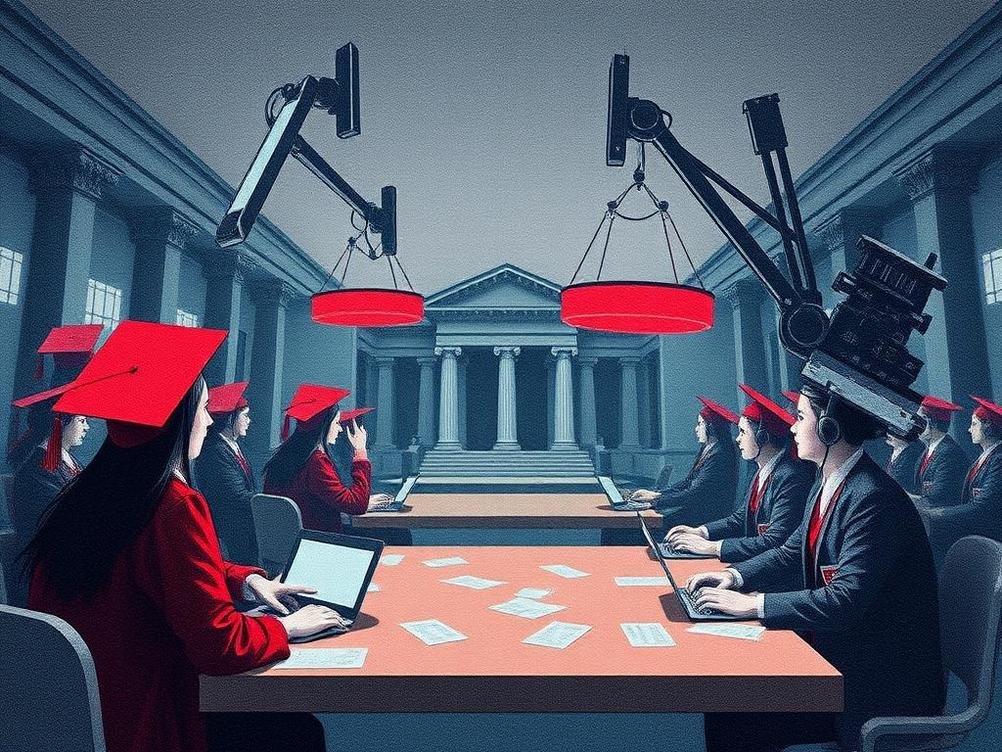
Why Even Stanford Grads Are Getting Ghosted by the Job Market Thanks to AI
Imagine this: you’ve just strutted out of Stanford with a shiny degree in hand, ready to conquer the world. But then, wham! The job market slaps you with a cold reality check. AI’s taken over, and suddenly, your dream job feels about as reachable as a cat catching a laser pointer. It’s a wild ride we’re all on, isn’t it? I mean, we’ve got these smart machines doing everything from writing code to drafting emails faster than you can say “artificial intelligence.” For folks like our hypothetical Stanford grad, it’s not just about competition anymore—it’s about survival in a world where bots are stealing the spotlight. Think about it: just a few years back, landing a gig after a top-tier school was almost a given. But now, with AI automating roles in tech, finance, and even creative fields, even the brightest minds are left scrolling through job apps with a growing sense of dread. It’s got me wondering—if AI can outpace humans this quickly, what’s the plan for the rest of us? In this article, I’ll dive into how AI is flipping the script on employment, share some real-talk stories, and toss in tips to help you dodge the unemployment bullet. Let’s unpack this mess with a mix of humor, hard facts, and a dash of hope, because hey, it’s not all doom and gloom—there’s still room for us meat-and-potatoes humans to shine.
The AI Boom: How It’s Turning the Job World Upside Down
You know, it’s like AI woke up one day and decided to play king of the hill with our careers. From 2023 to 2025, reports from sources like the World Economic Forum show that AI and automation could displace up to 85 million jobs globally by 2025—that’s not some sci-fi plot, it’s real stats hitting home. Take our Stanford grad as an example; they might’ve majored in computer science, expecting to land a cushy software engineering role, but now companies are swapping human coders for tools like GitHub Copilot. It’s hilarious in a twisted way—imagine spending thousands on tuition only to compete with a machine that doesn’t need coffee breaks or LinkedIn premium. But seriously, AI isn’t just about robots taking factory jobs; it’s infiltrating white-collar gigs too. Fields like marketing and data analysis are getting a major overhaul, with AI tools handling tasks that used to require a team of brainy grads.
Let’s break it down with a quick list of how AI is muscling in:
- Automation of routine tasks: Things like data entry or basic programming? AI does it in seconds, leaving humans to wonder what’s left on the table.
- Enhanced efficiency: Businesses are ditching pricey human errors for AI’s precision, which means fewer entry-level spots for newbies straight out of school.
- Skill shifts: As McKinsey reports highlight, by 2030, we might need more people skilled in AI oversight rather than traditional coding—a curveball for recent grads who haven’t caught up yet.
If you’re feeling the pinch, you’re not alone. I remember chatting with a friend who graduated from a solid program and couldn’t get a callback because recruiters were prioritizing AI-savvy candidates. It’s a wake-up call that the job market isn’t what it used to be, but hey, recognizing the problem is the first step to flipping it around.
What’s Up with Stanford Grads and This AI Job Blockade?
Okay, let’s get personal—if you’re a Stanford alum or know someone who is, you might be scratching your head thinking, “How is this even possible? Isn’t that degree supposed to be a golden ticket?” Well, turns out, even elite schools can’t shield you from AI’s tidal wave. Data from LinkedIn’s 2025 job trends report (which you can check out at linkedin.com) shows a 40% drop in traditional tech hiring for recent graduates, largely because companies are opting for AI integrations over human hires. It’s like AI is the new intern that never leaves and doesn’t ask for raises. For these grads, it’s not about a lack of smarts—it’s about the mismatch between what they learned and what employers now want.
Take a metaphor: Picture the job market as a party where AI’s crashed and taken all the good spots on the dance floor. Stanford folks might have the moves, but if they don’t know the latest AI playlist, they’re left twiddling thumbs in the corner. I’ve heard stories of grads applying to hundreds of jobs only to get automated rejection emails. Ouch. And it’s not just tech; AI’s creeping into healthcare and finance too, meaning even diverse majors are feeling the squeeze. The key issue? Education systems, even at top schools, are playing catch-up with AI’s rapid evolution.
- Overemphasis on theory: Many programs focus on foundational knowledge, but as per Stanford’s own AI reports (available at hai.stanford.edu), practical AI application is where the real demand lies.
- Economic factors: With recessions and AI investments booming, companies are cutting costs, and guess who’s on the chopping block? Yep, the fresh faces.
- Remote work shifts: AI enables global talent pools, so a Stanford grad in California might lose out to someone cheaper overseas who’s AI-certified.
Skills That Are Still Hot—Even in an AI-Dominated World
Alright, enough doom-scrolling; let’s talk silver linings. If AI’s stealing jobs, what’s left for us? Plenty, actually, but you’ve gotta pivot like a pro. From what I’ve seen, skills that blend human creativity with tech are still in high demand. For instance, emotional intelligence and ethical AI oversight aren’t things bots can fake yet—they’re your secret weapons. A study by Gartner predicts that by 2026, 75% of enterprises will shift to roles requiring AI-human collaboration, so think of it as AI being your sidekick, not your rival.
Here’s a fun analogy: If AI is the engine of a car, you’re the driver who decides where to go. Skills like critical thinking and adaptability mean you’re not just surviving—you’re steering the ride. For our Stanford grad, picking up certifications in machine learning or data ethics could turn things around. And don’t forget soft skills; employers still crave people who can communicate ideas without sounding like a robot. It’s all about that human touch that AI can’t replicate, like brainstorming sessions that spark real innovation.
- AI literacy: Platforms like Coursera offer courses on AI basics—jump on coursera.org to get started without breaking the bank.
- Creative problem-solving: Jobs in design and strategy still need that human flair, as AI often lacks the nuance for complex decisions.
- Networking savvy: Building real connections can open doors AI can’t, like attending industry meetups or alumni events.
How to Adapt and Not Get Left in the Dust by AI
So, how do you fight back without waving a white flag? First off, stop thinking of AI as the enemy—treat it like that overly ambitious coworker you need to team up with. For our Stanford story, that means diving into lifelong learning. I’m talking about online courses, bootcamps, or even side projects that show you’re ahead of the curve. Remember, by 2025, the U.S. Bureau of Labor Statistics projects a 22% growth in AI-related jobs, but only if you’ve got the right mix of skills.
It’s easy to get overwhelmed, but let’s keep it light—imagine AI as a video game boss; beat it by leveling up your abilities. Start small: experiment with tools like ChatGPT for your projects, then build a portfolio that highlights how you use AI effectively. And don’t overlook the mental side—job hunting in this era can be a rollercoaster, so mix in some self-care to stay sharp. After all, even the best AI needs a human to plug it in.
- Upskill strategically: Focus on areas like prompt engineering or AI ethics, which are booming as per job listings on Indeed (indeed.com).
- Freelance first: Platforms like Upwork let you dip your toes in without committing to a full-time role.
- Mentor up: Connect with pros on LinkedIn for advice—it’s amazing how a coffee chat can lead to opportunities.
Real Stories: Grads Who Beat the AI Odds
Let’s inject some inspiration with actual tales from the trenches. I came across a story about a Stanford engineer who couldn’t snag a traditional job, so he pivoted to consulting on AI ethics for startups. Fast-forward a year, and he’s thriving because he combined his education with real-world AI application. It’s like turning lemons into AI-powered lemonade. These stories remind us that while AI might close some doors, it cracks open others if you’re willing to innovate.
Another example: A 2024 survey from Glassdoor highlighted how grads who retrained in AI specialties saw a 30% faster job placement rate. Think about it—it’s not just about what you know; it’s about how you apply it. These folks aren’t superheroes; they’re everyday people who got creative, like using AI to automate their job search and free up time for networking. If they can do it, so can you!
- Case study one: A grad used tools from Google’s AI offerings (ai.google) to build a personal project that landed them a gig.
- Lesson learned: Adaptability is key—don’t wait for the perfect job; create your own path.
Looking Ahead: What the Future Holds for Work and AI
As we wrap up this AI adventure, it’s clear we’re on the brink of a total overhaul. Experts from Oxford University predict that by 2030, AI could reshape 47% of jobs, but with the right mindset, that’s an opportunity, not a threat. For our Stanford grad, the future might involve hybrid roles where humans and AI team up, making work more efficient and, dare I say, fun. It’s all about embracing change rather than resisting it.
One thing’s for sure: the job market will keep evolving, so staying curious is your best bet. Whether it’s through community colleges or online hubs, keep learning and laughing at the absurdity of it all. After all, in a world run by machines, it’s the human spirit that’ll keep things interesting.
Conclusion
In the end, while AI might have our Stanford grad twiddling thumbs today, tomorrow could be a different story with the right tweaks and twists. We’ve covered how AI’s flipping the script, the challenges for top grads, and ways to bounce back stronger. It’s a reminder that no matter how advanced tech gets, there’s always space for human ingenuity and heart. So, if you’re feeling stuck, take a breath, grab that coffee, and start your AI adventure—who knows, you might just end up leading the charge. Here’s to adapting, thriving, and maybe even outsmarting the bots one day.