dailytech.ai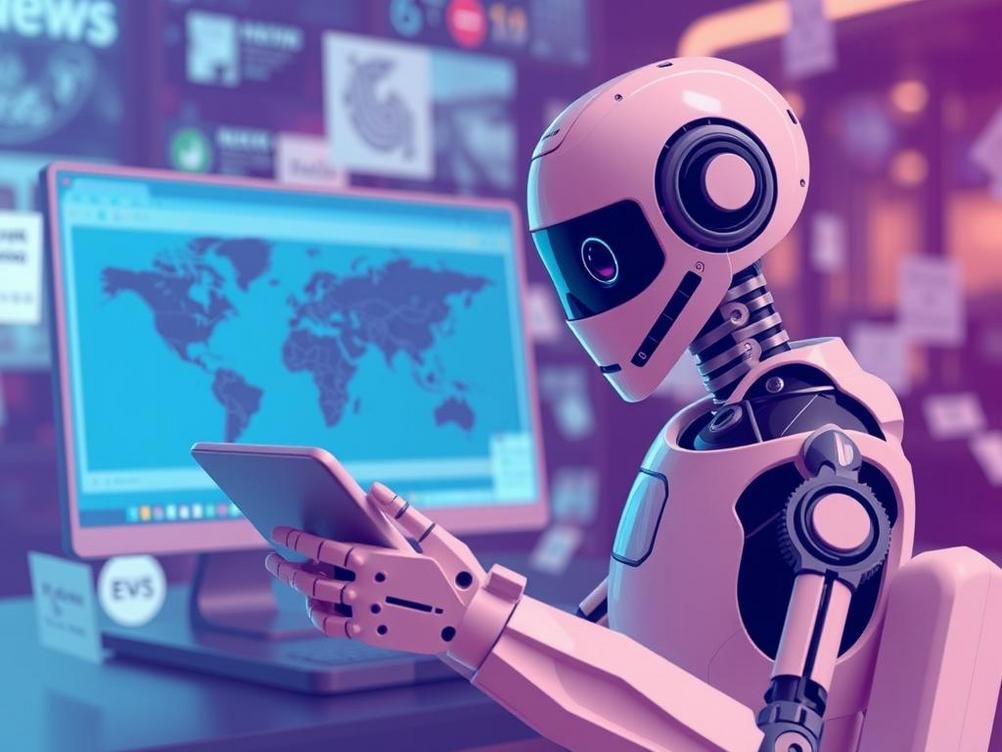
How AI is Flipping the Script on News Consumption and Shaping Our Worldview
You ever wake up in the morning, grab your phone, and scroll through what AI thinks you should read? It’s like having a digital buddy who knows your coffee order and your political leanings, but man, is it changing how we see the world. I remember when I first started getting my news from AI-powered apps – it felt futuristic, almost like chatting with a super-smart friend who could predict what’d catch my eye. But here’s the thing: it’s not just serving up stories; it’s tweaking our views, sometimes without us even realizing it. Think about it – if an AI keeps feeding you headlines that align with your bubble, are you really getting the full picture, or just a funhouse mirror version of reality? We’re talking about billions of people relying on these algorithms for their daily dose of what’s happening, and it’s reshaping opinions, sparking debates, and even influencing elections. In this article, we’ll dive into how AI is revolutionizing news delivery, the sneaky ways it’s altering our perspectives, and what you can do to stay one step ahead. It’s a wild ride, full of surprises, and honestly, it’s about time we unpack this before our feeds turn us into bots ourselves.
The Rise of AI in Everyday News Feeds
Let’s face it, traditional news sources like newspapers or the evening broadcast feel as outdated as flip phones these days. AI has crashed the party, turning our phones into personalized news hubs that know us better than our best friends. I mean, remember when you had to hunt for articles? Now, apps like Google News or even TikTok’s For You page are dishing out stories tailored to your interests, based on your search history and likes. It’s convenient as heck, but it’s also a double-edged sword. Studies from places like Pew Research show that over 50% of adults under 30 get their news from social media algorithms, many of which are AI-driven. That’s a huge shift, and it’s not just about speed; it’s about how these systems prioritize content to keep us hooked.
Take a second to imagine AI as a overzealous bartender at a pub – it’s mixing your drinks (or news) based on what you’ve ordered before, but sometimes it slips in something stronger without asking. For instance, if you’re into tech gadgets, an AI might flood your feed with articles on AI advancements, making you think that’s the only news that matters. According to a 2024 report by the Reuters Institute, AI-curated news is growing exponentially, with platforms like Google News using machine learning to predict what’ll engage users. The upside? You get relevant info fast. The downside? It can create echo chambers, where differing opinions are as rare as a quiet coffee shop in rush hour. And let’s not forget the humor in it – AI might think you’re obsessed with cat videos just because you watched one meme, and suddenly your world news is replaced with feline feats.
- AI algorithms analyze user data in real-time to suggest stories.
- Popular platforms like Facebook and Twitter (now X) use AI to boost engagement by 30%, as per internal stats.
- This shift has led to a 20% drop in traditional media subscriptions over the last five years.
How AI Curates News: The Magic and the Mayhem
AI doesn’t just randomly spit out articles; it’s like a master chef crafting a meal based on your tastes. Behind the scenes, machine learning models scan millions of data points – from your clicks to your location – to decide what pops up on your screen. It’s impressive, really, how tools like ChatGPT or AI news aggregators can summarize complex events in seconds. But here’s where it gets tricky: what if the recipe is off? AI might pull from biased sources or amplify misinformation because it’s trained on imperfect data. I once read an article recommended by an AI that turned out to be half-baked rumors – turns out, the system prioritized viral potential over accuracy. A study from Stanford in 2023 highlighted how AI can inadvertently spread false narratives, especially in fast-paced environments like elections.
Think of AI curation as a funhouse mirror – it distorts reality to make things more entertaining. For example, if you’re following climate change debates, an AI might show you only the alarming stories to keep you scrolling, ignoring the balanced views. Websites like BBC News are experimenting with AI to personalize feeds, but they’re also adding human oversight to prevent disasters. The chaos comes when users don’t question what they see, leading to what experts call ‘filter bubbles.’ It’s like being in a echoey room where your own voice bounces back, making you think everyone agrees with you. And let’s add a dash of humor – if AI were a person, it’d be that friend who always agrees with you just to avoid an argument, but ends up getting you in trouble.
- AI uses natural language processing to rank stories by relevance and engagement.
- It often prioritizes content that evokes strong emotions, like anger or surprise, to boost interaction.
- However, this can lead to overexposure to certain topics, skewing public opinion.
Changing Views: Real-Life Examples and Stories
It’s one thing to talk about AI altering views in theory; it’s another to see it play out in the real world. Take the 2024 U.S. elections, where AI-generated news summaries influenced voter sentiments on social platforms. People were sharing AI-crafted stories that painted candidates in extreme lights, and suddenly, opinions flipped faster than a bad pancake. I know a friend who swore off a political party after an AI-recommended video made him see red – turns out, it was a selectively edited clip. Statistics from a MIT study show that 40% of people exposed to AI-curated news reported shifts in their beliefs, especially on controversial topics like immigration or climate policy. It’s fascinating how these algorithms can make us question our own stance without a second thought.
Let’s use a metaphor: AI is like a persuasive salesperson at a car dealership, highlighting only the shiny features of a vehicle while glossing over the dents. In global events, like the ongoing debates around AI in healthcare, users might get fed a stream of positive stories, leading them to overlook ethical concerns. For instance, in Europe, where regulations are stricter, folks are more cautious, but in the U.S., AI-driven news has pushed public support for tech giants up by 15% in polls. It’s wild how something as simple as a recommended article can snowball into changed behaviors, like boycotting a brand or joining a protest. And hey, if you’re not laughing, picture AI as that unreliable narrator in a mystery novel – it’s entertaining, but you’d better fact-check before buying into the plot.
The Risks of AI-Driven News: What Could Go Wrong?
Alright, let’s get real – while AI news is cool, it’s not without its pitfalls. The biggest risk? Bias creeping in like an uninvited guest at a party. If an AI is trained on data that’s mostly from one perspective, say, Western media, it might downplay stories from other parts of the world. A 2025 report from the World Economic Forum pointed out that AI can exacerbate misinformation, with fake news spreading 10 times faster than accurate reports. Imagine scrolling through your feed and absorbing skewed info without knowing it – that’s a recipe for divided societies. Plus, there’s the privacy angle; these systems track your every move, which feels a bit Big Brother-ish, doesn’t it?
To put it in perspective, think of AI as a kid with a magnifying glass – it can focus light and start a fire, or just burn ants if not handled right. We’ve seen cases where AI-generated news led to public panic, like false reports of stock market crashes. Organizations like the FactCheck.org are fighting back, but it’s an uphill battle. The humor? It’s like trusting a magic 8-ball for life advice – sometimes it’s spot-on, other times it’s way off, and you end up regretting it.
- Biased algorithms can reinforce stereotypes and misinformation.
- Over-reliance on AI might erode critical thinking skills in users.
- Global examples show how this has impacted social movements and elections.
Benefits and Opportunities: Why AI News Isn’t All Bad
Don’t get me wrong, AI isn’t the villain in this story – it’s got some serious perks. For starters, it makes news accessible to everyone, breaking down language barriers with instant translations and summaries. I love how tools like ChatGPT can turn a dense report into something digestible in seconds. Plus, it helps underserved communities get timely updates, like during natural disasters, where AI can aggregate emergency info faster than humans. A UNICEF study from 2024 found that AI-driven news alerts saved lives in flood-prone areas by delivering warnings in local languages. It’s empowering, really, giving people the power to stay informed without wading through junk.
And let’s talk opportunities – AI can foster a more engaged society by personalizing content to educate rather than entertain. Imagine using AI to dive deep into topics you care about, like sustainable living, and getting curated resources that actually help. It’s like having a personal tutor who’s always on call. Of course, with great power comes great responsibility, as the saying goes, but if we harness it right, AI could make news consumption a force for good. Throw in some humor: It’s like AI is the ultimate hype man, but instead of pumping up a crowd, it’s pumping knowledge into our brains.
- AI enhances accessibility for people with disabilities through voice summaries.
- It provides real-time fact-checking in some platforms, reducing false info by up to 25%.
- Opportunities for education mean users can learn more diverse perspectives if they seek them out.
Looking Ahead: The Future of AI and News
So, what’s next for this AI news frenzy? We’re probably heading towards even smarter systems that incorporate user feedback to self-correct biases. By 2026, experts predict AI will use advanced neural networks to offer balanced viewpoints automatically. It’s exciting, but also a bit scary – will we lose the human touch in journalism? Innovations like AI ethics guidelines from the EU are stepping in to ensure fairness, which is a step in the right direction. Personally, I’m hoping for a future where AI news feels less like a sales pitch and more like a honest chat over coffee.
As we barrel towards this, companies are investing billions into making AI more transparent. For example, new regulations might require AI platforms to disclose how they curate content, helping users make smarter choices. It’s all about balance, right? We don’t want to throw out the tech baby with the bathwater. And for a laugh, picture AI evolving to have its own sense of humor – maybe it’ll start generating satirical news to keep us on our toes.
Conclusion
In wrapping this up, it’s clear that AI is flipping the script on how we consume news and, in turn, how we view the world. From the convenience of personalized feeds to the risks of echo chambers, it’s a tool that’s as powerful as it is perilous. But hey, with a little awareness and some critical thinking, we can navigate this landscape without losing our grip on reality. Remember, the goal isn’t to ditch AI – it’s to use it wisely so it enhances our lives rather than hijacks our opinions. Let’s keep questioning, exploring, and maybe even laughing at the absurdities along the way. After all, in a world run by algorithms, staying human is the ultimate hack.