 dailytech.ai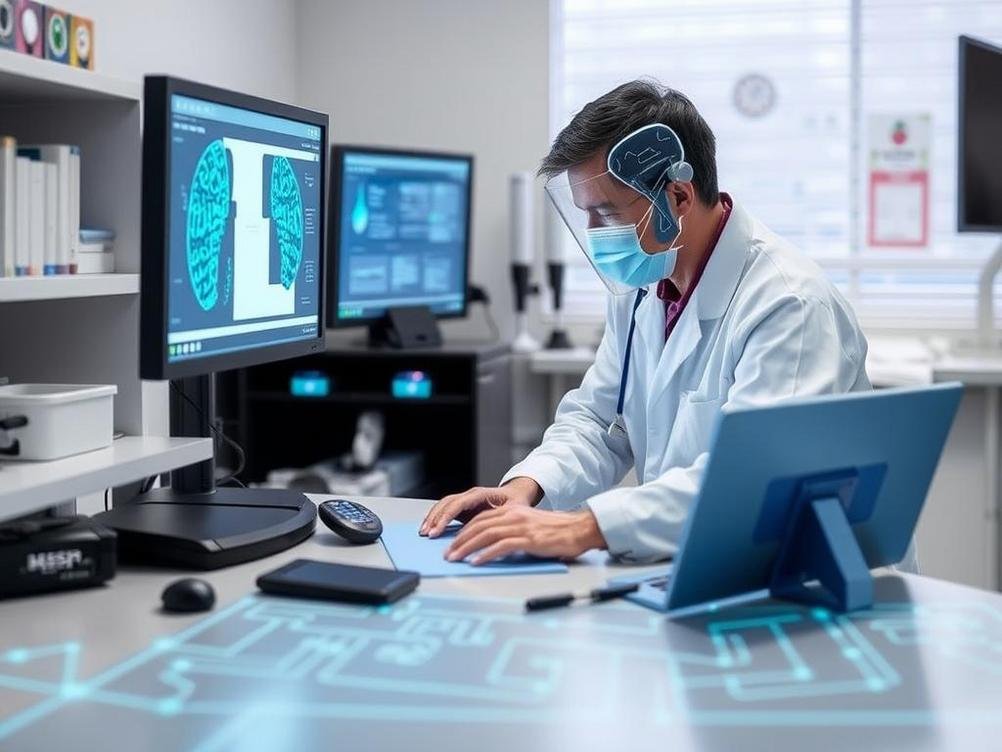
Northwestern’s Game-Changing AI: Spotting Respiratory Infections Like a Pro
Imagine this: you’re feeling under the weather, coughing up a storm, and your doctor’s office is booked solid for weeks. Wouldn’t it be awesome if there was a smart tool that could give you a quick heads-up on whether it’s just a pesky cold or something more serious like pneumonia? Well, hold onto your tissues because Northwestern University has cooked up something pretty revolutionary. They’ve developed an AI-powered program that’s all about diagnosing respiratory infections faster and more accurately than ever before. It’s like having a super-smart sidekick in the fight against those nasty bugs that make us wheeze and sneeze.
This isn’t just some fancy gadget from a sci-fi flick; it’s grounded in real science and tech that’s making waves in the medical world. Northwestern’s team dove deep into machine learning to create this diagnostic wizard, training it on heaps of data from patient records, X-rays, and symptom logs. The goal? To cut down on misdiagnoses, speed up treatments, and maybe even save lives. And let’s be real, in a world where flu seasons hit like a ton of bricks and new viruses pop up out of nowhere, this kind of innovation is a breath of fresh air—pun totally intended.
But what makes this program stand out? It’s not just about crunching numbers; it’s about understanding the nuances of how infections show up differently in people. From kids to grandparents, urban dwellers to rural folks, this AI aims to be inclusive and precise. I’ve got to say, as someone who’s battled a few bouts of bronchitis myself, the idea of getting a reliable diagnosis without playing phone tag with the doc sounds like a dream come true. Stick around as we unpack how this tech works, why it’s a big deal, and what it means for the future of healthcare. Who knows, it might just change the way we all handle our next sniffle.
What Exactly is This Northwestern AI Program?
At its core, Northwestern’s respiratory infection diagnosis program is an artificial intelligence system designed to analyze symptoms, medical images, and other data to pinpoint what’s causing that nagging cough or shortness of breath. Developed by a team of engineers, doctors, and data scientists at Northwestern University, this tool uses advanced algorithms to sift through complex patterns that humans might miss. Think of it as a detective with a photographic memory and lightning-fast deduction skills.
The program got its start in the labs of Northwestern’s McCormick School of Engineering, where researchers collaborated with the Feinberg School of Medicine. They fed the AI thousands of anonymized patient cases, teaching it to recognize everything from common colds to more severe issues like COVID-19 variants or bacterial pneumonia. It’s not replacing doctors—far from it—but it’s giving them a powerful ally to make quicker calls, especially in busy ERs or remote areas where specialists are scarce.
One cool thing? It’s built to learn and improve over time. As more data comes in, the AI gets smarter, kind of like how you get better at a video game the more you play. This adaptive nature means it’s not stuck in the past; it’s evolving with new medical discoveries.
How Does the AI Actually Diagnose Infections?
Alright, let’s geek out a bit on the tech side without getting too bogged down. The AI uses something called deep learning, a subset of machine learning, to process inputs like chest X-rays, CT scans, blood test results, and even voice recordings of coughs. Yeah, you heard that right—analyzing the sound of your cough! It’s wild how it can differentiate between a dry hack from allergies versus a wet one from an infection.
Under the hood, the program employs convolutional neural networks (that’s CNNs for the acronym lovers) to spot anomalies in images. For symptoms, it cross-references with vast databases to predict probabilities. Say you’re inputting data about fever, fatigue, and chest pain—the AI spits out likely culprits with confidence scores. It’s like asking a wise old grandpa for advice, but this grandpa has access to every medical journal ever written.
Of course, it’s not infallible. The team at Northwestern stresses that it’s a tool for augmentation, not autonomy. Doctors still make the final call, but with this AI, they’re armed with insights that could shave hours off diagnosis time. In trials, it boasted accuracy rates upwards of 90%, which is impressive considering how tricky respiratory issues can be to nail down.
Why is This a Big Deal for Public Health?
In the grand scheme of things, respiratory infections are no joke—they’re among the top causes of death worldwide, according to the World Health Organization. From the flu to tuberculosis, these bugs claim millions of lives each year. Northwestern’s AI could be a game-changer by enabling early detection, which is key to nipping problems in the bud before they spiral out of control.
Picture this: during a pandemic, hospitals are swamped, and testing labs are backed up. An AI like this could triage patients virtually, directing the sickest to care first. It’s already being piloted in some clinics, and early feedback suggests it’s reducing unnecessary antibiotic prescriptions— a huge win against antibiotic resistance, which is like the supervillain of modern medicine.
Plus, for underserved communities, this tech could bridge gaps. Not everyone has access to top-tier hospitals, but with a smartphone app version in the works, diagnosis could be as easy as snapping a pic of your symptoms. It’s democratizing healthcare, one algorithm at a time.
Real-World Examples and Success Stories
Let’s bring this down to earth with some stories. In a study published in a medical journal (check out the details on Northwestern’s site at northwestern.edu), the AI correctly identified pneumonia in 92% of cases where traditional methods faltered. That’s not just stats; that’s people getting treated faster and going home sooner.
Take Sarah, a hypothetical busy mom from Chicago. She started coughing during flu season and used a beta version of the app. The AI flagged it as possible bronchitis, prompting her to see a doc who confirmed it. Without that nudge, she might’ve toughed it out and ended up sicker. Or consider rural clinics in developing countries—partnering with Northwestern, they’re using similar tech to combat outbreaks efficiently.
These aren’t isolated wins. Hospitals integrating the program report shorter wait times and better patient outcomes. It’s like giving every doctor a crystal ball, minus the mysticism.
Potential Challenges and Ethical Considerations
Now, before we get too carried away with the hype, let’s talk hurdles. AI in medicine isn’t without its baggage. Data privacy is a biggie—who wants their cough sounds floating around the internet? Northwestern’s team is all over this, using encrypted systems and complying with HIPAA rules to keep things secure.
Then there’s the bias factor. If the training data skews towards certain demographics, the AI might miss diagnoses in others. The developers are actively diversifying datasets to make it fair for all races, ages, and backgrounds. It’s a work in progress, but they’re owning it.
Ethically, there’s the question of over-reliance. What if doctors start trusting the AI blindly? Education and guidelines are key here, ensuring it’s a tool, not a crutch. Oh, and cost—making it affordable so it’s not just for fancy hospitals is crucial.
The Future of AI in Respiratory Care
Looking ahead, this program is just the tip of the iceberg. Northwestern is already eyeing expansions, like integrating wearable data from smartwatches to monitor breathing in real-time. Imagine your Fitbit alerting you to an infection before symptoms even hit!
Collaborations with tech giants could supercharge this. Picture partnerships with companies like Google or Apple, blending AI with everyday devices. And as telemedicine booms post-COVID, tools like this will be front and center, making virtual visits more effective.
Ultimately, it’s about blending human empathy with machine precision. We’re on the cusp of a healthcare revolution where AI handles the heavy lifting, freeing doctors to focus on what they do best: caring for patients.
Conclusion
Wrapping this up, Northwestern’s respiratory infection diagnosis program is more than a tech novelty—it’s a beacon of hope in the ongoing battle against lung woes. By harnessing AI’s power, it’s poised to make diagnoses quicker, more accurate, and accessible to all. Sure, there are kinks to iron out, but the potential is enormous. Next time you’re hacking away, remember there’s cutting-edge science working to make things easier. Here’s to innovation that lets us all breathe a little easier—literally. If you’re intrigued, dive deeper into Northwestern’s research and maybe even chat with your doc about emerging AI tools. Stay healthy, folks!









Leave a Reply