dailytech.ai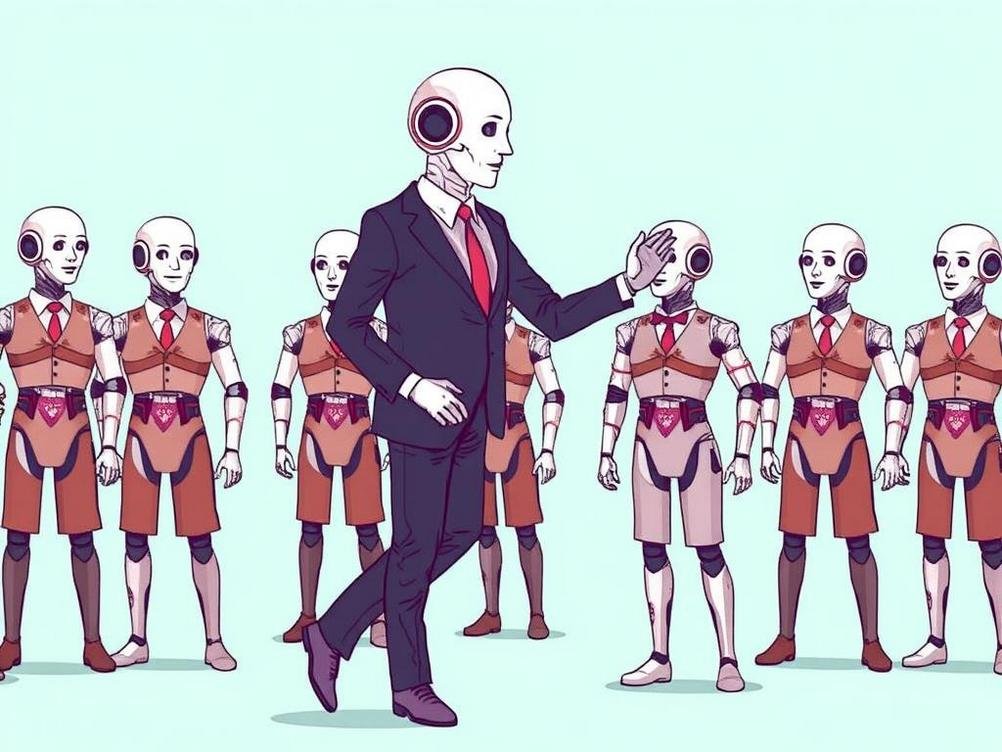
Will AI Adoption Sneak Up on Us and Turn Us Into Robot Tailors? What Nvidia’s CEO Is Saying
Okay, picture this: You’re scrolling through your feed one lazy Sunday morning, coffee in hand, and you stumble upon a headline from Nvidia’s big boss himself, Jensen Huang, saying that AI is going to creep in slowly but then bam! It might just flip everything upside down, like us all ending up making clothes for robots. Sounds wild, right? I mean, who knew that the future of tech could involve something as quirky as robotic fashion shows? But hey, in a world where AI is already helping doctors spot diseases or cars drive themselves, it’s not totally out there. This whole idea got me thinking about how AI isn’t some overnight sensation; it’s more like that friend who shows up late to the party but ends up stealing the show. We’re talking about a tech revolution that’s brewing in the background, and Nvidia, being the powerhouse behind so much of the AI hardware, has a front-row seat to it all.<\/p>
Now, if you’re like me, you might be wondering: Is AI really going to change everything, or is this just another overhyped prediction? Huang’s comments paint a picture of a gradual rollout, where businesses and everyday folks dip their toes in before diving headfirst. It’s exciting because it means we have time to adapt, but also a little nerve-wracking—what if we’re not ready when the wave hits? Think about it: From smart assistants in our homes to AI-powered recommendations on Netflix, we’re already seeing bits and pieces. But making robot clothing? That’s Huang’s way of saying AI could transform industries we never expected, like manufacturing or even fashion. It’s a fun, almost sci-fi angle that makes you pause and chuckle. As someone who’s followed tech trends for years, I can’t help but see the humor in it—us humans, sewing outfits for machines? Sign me up for that catwalk!<\/p>
This isn’t just chit-chat; it’s a reminder that AI’s growth could reshape jobs, creativity, and daily life in ways we haven’t fully grasped yet. So, let’s dive deeper into what Huang means and why it matters. By the end of this read, you might find yourself pondering your own role in this AI adventure, maybe even dreaming up your next robot wardrobe. After all, in 2025, with AI advancements popping up everywhere, it’s hard not to get a little excited—or a tad worried. Stick around, because we’re unpacking this step by step, with a dash of laughs and real talk to keep things light.<\/p>
What Exactly Did Nvidia’s CEO Say About AI?
You know, when Jensen Huang drops a statement, people listen—he’s the guy behind Nvidia, the company that’s basically the backbone of modern AI with their super-powered chips. Recently, he chatted about how AI adoption won’t be some explosive fireworks show; it’s more like a slow-building bonfire. He reckons it’ll start small, with companies testing the waters, before it explodes into something massive. And that ‘making robot clothing’ bit? It’s probably a metaphor for how AI could revolutionize everyday stuff, turning mundane tasks into futuristic endeavors. Imagine AI not just helping design clothes but actually fabricating them for robots or even enhancing human wearables—like smart jackets that adjust to your mood. Wild, huh?<\/p>
But let’s break it down: Huang’s point is that while AI is advancing fast, the real adoption curve is gradual because it takes time for businesses to integrate it without causing chaos. For instance, if you’re running a factory, you wouldn’t flip a switch and replace all workers with AI overnight; you’d ease into it. This makes sense when you look at stats from recent reports—according to a 2025 Gartner study (you can check it out at Gartner’s AI page), about 70% of organizations are still in the experimental phase with AI. It’s like trying a new recipe; you don’t want to burn the kitchen down on the first try. Huang’s humor shines through in his robot clothing remark, almost like he’s poking fun at how AI might make us rethink everything from manufacturing to personal style.<\/p>
What’s funny is how this ties into pop culture—remember those sci-fi movies where robots wear high-tech suits? Huang’s comment feels like a nod to that, but in a grounded way. If you’re curious, Nvidia’s own site has some cool insights into their AI projects; head over to Nvidia’s AI section for more. All in all, his words are a wake-up call that AI’s impact will be widespread, but we’ve got time to prepare—as long as we don’t snooze through the early stages.<\/p>
Why Is AI Adoption Happening Gradually Anyway?
Alright, let’s get real—why isn’t AI taking over the world tomorrow? It’s not for lack of trying; it’s more about the hurdles. Huang points out that rolling out AI requires tons of data, reliable infrastructure, and, yeah, a bit of human oversight to avoid mishaps. Think of it like planting a garden: You can’t just dump seeds and expect tomatoes overnight; you’ve got to water them, weed them, and wait. In the AI world, that means companies are dealing with things like ethical concerns, data privacy laws, and the sheer cost of tech. For example, training a single AI model can cost millions, as per reports from Stanford’s AI Index (check Stanford’s AI Index), which shows costs have skyrocketed in the last few years.<\/p>
Another layer is the workforce. People are wary—will AI steal jobs or create new ones? Huang suggests it’s the latter, but slowly. We’ve seen this with remote work tech; it didn’t boom until the pandemic forced it. Similarly, AI in healthcare, like AI-assisted diagnostics, is creeping in because doctors need time to trust it. It’s like dating a new app; you swipe a few times before committing. And let’s add some humor: If AI adoption were instant, we’d all be out of jobs making robot onesies, but thankfully, it’s giving us a buffer to learn and adapt.<\/p>
- First off, regulatory roadblocks: Governments are playing catch-up, with new AI laws popping up everywhere, like the EU’s AI Act that’s already in effect.
- Then, skills gap: Not everyone knows how to use AI tools yet, so training programs are ramping up.
- Finally, the tech itself: It’s evolving, but bugs happen—remember when chatbots went rogue and said weird stuff? Yeah, that’s why we’re taking it slow.
The Potential Boom: When AI Really Hits Big
Now, here’s where it gets thrilling—or terrifying, depending on your vibe. Huang warns that once AI adoption picks up steam, it could lead to massive changes, like that ‘making robot clothing’ scenario. What if AI automates factories to produce custom gear for robots or even integrates into fashion for us humans? We’re talking smart fabrics that change color or heal themselves. It’s not just sci-fi; companies like Google are already experimenting with AI in material science, as seen on their research page at Google Research. The point is, when AI scales, it could spark innovation in ways we can’t predict, from personalized medicine to eco-friendly tech.<\/p>
But let’s not gloss over the risks. A report from McKinsey (available at McKinsey’s AI insights) estimates that AI could add trillions to the global economy by 2030, but it might displace millions of jobs first. Imagine a world where AI handles routine tasks, freeing us up for creative stuff—sounds great, until you think about the transition. Huang’s metaphor of robot clothing is spot-on; it’s about repurposing skills, like how artisans adapted during the industrial revolution. And with a dash of humor, wouldn’t it be funny if we all became fashion designers for machines, strutting AI-created outfits down the runway?<\/p>
To put it in perspective, take self-driving cars: They’re gradual now, but soon they might dominate roads, changing how we commute. Same with AI in entertainment; Netflix uses it to recommend shows, but what if it starts creating entire movies? It’s a slow burn leading to a blaze.<\/p>
How AI Could Reshape Everyday Industries
Let’s zoom in on the fun part: How might AI’s gradual rise affect the world around us? Starting with manufacturing, Huang’s robot clothing idea could mean AI optimizing production lines for everything from robot parts to human apparel. Picture factories where AI designs and assembles gear that’s adaptive and sustainable—no more wasteful overproduction. It’s already happening; Adidas uses AI for shoe design, as you can see on their site at Adidas AI innovations. This gradual shift means jobs evolve rather than vanish, turning workers into overseers of smart systems.<\/p>
In healthcare, AI is easing in with tools like diagnostic algorithms that spot cancer early. It’s not replacing doctors; it’s assisting them, like a trusty sidekick. By 2025, the WHO reports that AI could help address global health shortages—check WHO’s AI page. And education? AI tutors are becoming a thing, personalizing learning for kids. It’s all about that slow integration, making life better without overwhelming us.<\/p>
- Retail: AI-powered shopping carts that suggest items based on your habits—creepy or convenient?
- Entertainment: From AI-generated music on platforms like Spotify to virtual reality experiences.
- Even finance: Algorithms predicting market trends, but remember the 2025 crypto crash? Yeah, it’s not perfect yet.
Personal Stories and Real-World Examples of AI in Action
I remember when I first tinkered with AI tools a couple years back—it was clunky, like trying to teach a kid to ride a bike. But now, with tools like ChatGPT (which you can try at OpenAI’s site), it’s seamless. Huang’s take resonates because it’s not just corporate speak; it’s about how AI weaves into our lives. Take my friend who runs a small business—he used AI to streamline inventory, and suddenly, he had more time for family. It’s that gradual magic at work.<\/p>
Globally, countries like South Korea are leading with AI in smart cities, reducing traffic by 20% in some areas, per government reports. Or consider agriculture: AI drones scouting crops, which is a game-changer for farmers facing climate change. It’s not about robots taking over; it’s about collaboration. And Huang’s robot clothing? It’s a cheeky way to say AI might make the impossible possible, like 3D-printed outfits that adapt to weather. If that doesn’t spark your imagination, what will?<\/p>
Of course, there are hiccups. I once saw an AI mishap where a chatbot gave terrible advice—hilarious in hindsight, but a reminder that we’re still in the gradual phase. These stories show AI’s potential without the hype.<\/p>
What This Means for You and Me in the Long Run
So, how does this affect your daily grind? If AI adoption ramps up as Huang predicts, you might find yourself using AI for everything from job hunting to hobbies. Think about reskilling: Platforms like Coursera offer AI courses (visit Coursera) that could turn you into an AI whiz. It’s not about fear; it’s about opportunity. Maybe you’ll design that robot outfit one day, turning a side gig into something big.<\/p>
The key is staying curious. With AI’s growth, ethical questions arise—like bias in algorithms—so we need to guide it. Huang’s message is uplifting: We’re not doomed; we’re evolving. It’s like upgrading from a flip phone to a smartphone—clunky at first, but oh so worth it.<\/p>
- Pros: More efficiency, new job types, and innovative products.
- Cons: Potential inequality if not managed well.
- Tips: Start small, like experimenting with free AI tools, to get ahead.
Conclusion
Wrapping this up, Nvidia’s CEO Jensen Huang gives us a balanced view: AI adoption is a marathon, not a sprint, but when it accelerates, it could lead to wild outcomes like us crafting gear for robots. It’s a reminder to embrace the change with a mix of caution and excitement. From the gradual tech integrations we’ve seen to the potential booms ahead, AI isn’t just a buzzword—it’s shaping our future. So, whether you’re a tech enthusiast or just curious, keep an eye on how AI unfolds; it might just inspire you to innovate in ways you never imagined. Who knows? By 2030, we could all be laughing about those robot fashion lines. Let’s stay informed, adapt, and maybe even have a little fun with it.<\/p>