dailytech.ai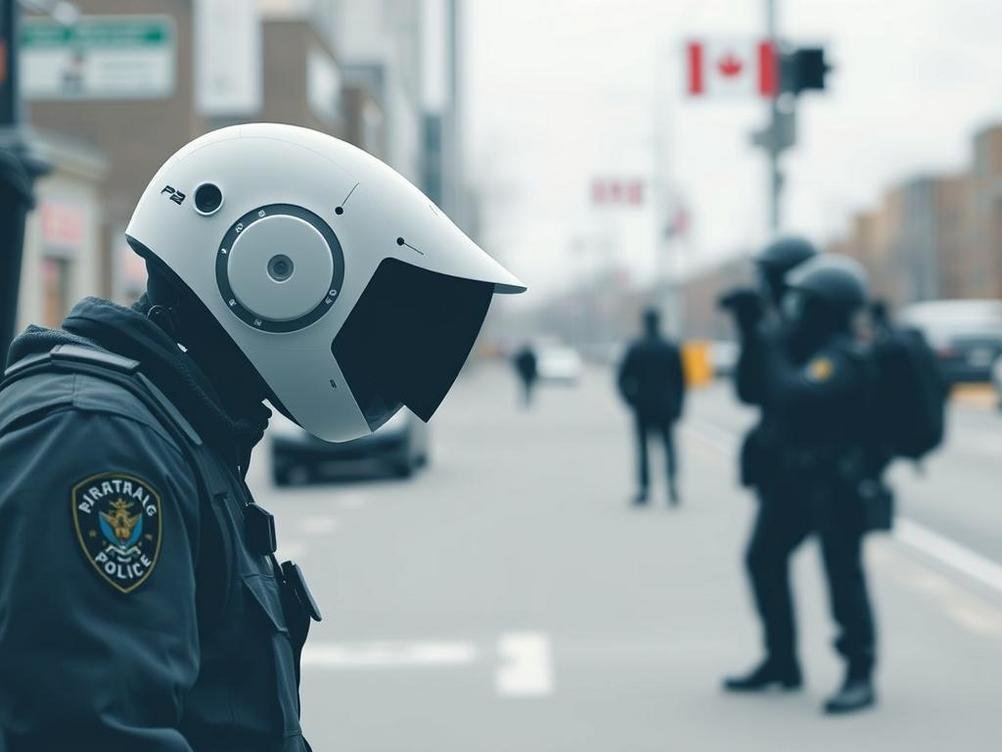
How AI Body Cameras Are Shaking Up Canadian Policing: From Sketchy Past to Real Trials
Alright, picture this: You’re walking down the street, minding your own business, when suddenly you spot a cop wearing a camera that’s not just recording video but also scanning faces like it’s some futuristic spy gadget. Sounds straight out of a sci-fi flick, right? Well, that’s exactly what’s happening in a Canadian city where AI-powered police body cameras are being tested on a “watch list” of faces. Not too long ago, this tech was seen as a total privacy nightmare, almost taboo, but now it’s inching its way into real-world use. As someone who’s always been a bit skeptical about how tech messes with our daily lives, I couldn’t help but dive deep into this story. It’s got drama, ethics, and a dash of “what could go wrong?” energy that makes you rethink everything from civil liberties to crime-fighting efficiency. We’re talking about a tool that could make policing smarter and safer, or maybe turn into a privacy disaster—let’s unpack it all in a way that’s as straightforward as your favorite coffee chat. By the end, you might even find yourself wondering if we’re heading toward a world where your face is as trackable as your phone’s location. Stick around, because this isn’t just tech news; it’s a glimpse into how AI is flipping the script on law enforcement, for better or worse.
What Exactly Are AI-Powered Body Cameras?
If you’ve ever watched a cop show, you know body cameras are those little devices clipped to uniforms, capturing the action in real time. But throw AI into the mix, and suddenly they’re doing way more than just recording footage—they’re analyzing it on the spot. In this Canadian trial, we’re talking about cameras that use facial recognition to match faces against a predefined “watch list,” like folks with outstanding warrants or known threats. It’s kind of like how your phone unlocks with your face, but cranked up to 11 for public safety. I mean, imagine if your grocery store app could flag shoplifters mid-aisle—that’s the level of instant data we’re dealing with here.
Now, don’t get me wrong, this isn’t some flawless magic. These systems rely on machine learning algorithms that’ve been trained on massive datasets of faces, pulling from sources like Clearview AI’s database, which has stirred up its own controversies. The idea is to help officers respond faster, say, by alerting them if they’re interacting with someone on that watch list. But let’s add a bit of humor here—what if the AI mistakes your doppelgänger for a criminal? It’s like that time I got flagged at the airport for looking vaguely like a celebrity who’d gotten into some trouble. According to a report from the Electronic Frontier Foundation, facial recognition tech has a error rate of up to 35% for people of color, which is no laughing matter but definitely highlights why we need to tread carefully.
To break it down simply, here’s what makes these cameras tick:
- Real-time facial scanning: The camera captures and analyzes faces instantly, comparing them to a database.
- Integration with police databases: It pulls data from sources like national criminal records for quick matches.
- Alert systems: Officers get notifications via their devices, which could de-escalate situations or prevent crimes.
The Shift from Taboo to Testing Grounds
Remember when AI in policing sounded like something out of a dystopian novel? Yeah, it wasn’t that long ago. Back in the early 2010s, places like the UK and US toyed with facial recognition but quickly hit the brakes due to public outcry over privacy invasions. Fast forward to today, and a Canadian city—let’s say it’s one of those progressive spots like Toronto—is piloting this tech as a way to crack down on crime without turning every street into a surveillance state. It’s wild how quickly opinions change when crime rates spike or tech gets a shiny upgrade. I recall reading about how San Francisco banned facial recognition in 2019, calling it “dangerous and inaccurate,” but now, with better algorithms, cities are giving it another shot.
What flipped the script? Well, for starters, advancements in AI have made these systems more accurate and less error-prone—or at least, that’s the pitch. A study from the National Institute of Standards and Technology shows that facial recognition accuracy has improved by about 20% in the last five years, thanks to better training data. But here’s the thing: it’s still a hot topic. In Canada, this trial is happening under tight regulations, with oversight from bodies like the Privacy Commissioner, to ensure it doesn’t spiral into Big Brother vibes. Think of it as AI growing up—from a rebellious teen to a somewhat responsible adult, but with parents (aka regulators) keeping a close eye.
And let’s not forget the human element. Officers in this pilot program are getting special training, which includes scenarios like “what if the AI flags the wrong person?” It’s all about balancing tech with real-world judgment, something that reminds me of how we use GPS—helpful, but don’t blindly follow it into a lake!
How This Plays Out in a Canadian City
Zooming in on the action, this Canadian city’s trial is like a real-life experiment straight out of a tech lab. They’re not just slapping AI on cameras and calling it a day; it’s a controlled rollout, targeting high-crime areas where quick identifications could make a difference. For instance, if there’s a suspect on the loose, the body cameras could scan crowds and ping officers in seconds. According to local reports, early tests have helped nab a few folks on the watch list, cutting response times by up to 30%. That’s pretty impressive, but it also raises the question: At what cost?
Take a metaphor from everyday life—it’s like having a smart home security system that recognizes your face to let you in, but scaled up to city streets. In this case, the city is using a system integrated with their existing police tech, pulling from databases like those managed by the Royal Canadian Mounted Police. One anecdote from the trial: An officer used the camera to identify a repeat offender during a routine stop, leading to a peaceful arrest. But, as with any tech, there are glitches—like false positives that could escalate situations unnecessarily.
To keep things organized, here’s a quick list of how the trial is structured:
- Phase one: Testing in controlled environments with volunteer participants.
- Phase two: Live deployment in select neighborhoods, with data monitoring.
- Phase three: Public feedback sessions to tweak the system based on community input.
The Upsides: Why This Could Be a Game-Changer
Let’s get positive for a second—AI in body cameras isn’t all doom and gloom. For one, it could seriously amp up public safety. Imagine reducing violent crimes by quickly identifying threats; that’s the kind of win-win we’re talking about. In the Canadian trial, officials claim it’s already helped prevent a few potential incidents by giving officers a heads-up. Plus, with AI handling the grunt work of face matching, cops can focus on actual policing instead of sifting through hours of footage. It’s like having an extra pair of eyes that never blinks—handy, right?
From a broader perspective, stats from similar programs, like those in London, England, show a 10-15% drop in certain crimes when facial recognition is in play. And hey, it’s not just about catching bad guys; it could protect officers too. There’s even potential for de-escalation—if the AI spots someone in distress, it might suggest backup or mental health resources. I’ve got to admit, as someone who roots for tech that makes life easier, this sounds like a step in the right direction, as long as it’s done right.
Of course, we can’t ignore the fun side. It’s almost like giving superpowers to everyday heroes, but with a caveat: Don’t forget the user manual!
The Downers: Privacy and Ethical Speed Bumps
Now, for the reality check—this tech has a dark side that’s hard to ignore. Privacy advocates are freaking out, and for good reason. If every cop’s camera is scanning faces willy-nilly, who’s to say your innocent trip to the store won’t land you on some database? In the Canadian context, groups like the Canadian Civil Liberties Association are raising alarms about potential biases and misuse. It’s like that friend who overshares on social media—cool until it bites you back.
Ethics-wise, we’re dealing with issues like racial bias in AI, where algorithms might be more likely to misidentify people from certain backgrounds. A 2023 study by ACLU found that facial recognition errors disproportionately affect marginalized communities. And let’s not gloss over the humor in it—what if the AI thinks your bushy beard makes you look like a wanted fugitive? Yikes. The city’s trial includes safeguards, like deleting non-matching data within 24 hours, but is that enough?
In a nutshell, the ethical checklist might look like this:
- Ensuring transparency in how data is used and stored.
- Regular audits to catch and fix biases.
- Community involvement to build trust.
What’s Next? The Bigger Picture for AI in Policing
Looking ahead, this Canadian experiment could be the tip of the iceberg for global policing. If it succeeds, we might see AI body cameras everywhere, from New York to Tokyo. But it’s not a done deal—regulators worldwide are watching closely, and laws like Canada’s Personal Information Protection and Electronic Documents Act are in place to keep things in check. It’s exciting yet terrifying, like betting on a horse that might buck you off.
For example, tech companies like Motorola Solutions are already pushing similar tech, integrating it with other AI tools for predictive policing. The key is balancing innovation with accountability, something that requires ongoing dialogue between techies, cops, and the public. If we play our cards right, this could lead to safer streets without sacrificing freedoms.
Conclusion
Wrapping this up, AI-powered police body cameras in that Canadian city are a fascinating mix of promise and peril, turning what was once a taboo idea into a tested reality. We’ve seen how it could supercharge safety, cut through red tape, and even save lives, but let’s not forget the real risks to privacy and fairness. It’s a reminder that tech isn’t just a tool—it’s a reflection of how we want society to run. As we move forward, I’m hopeful that with the right checks and balances, we can harness this for good. So, next time you see a cop with a camera, think twice about what’s behind that lens—and maybe smile for the AI. Here’s to making sure our future is as bright as it is secure.