
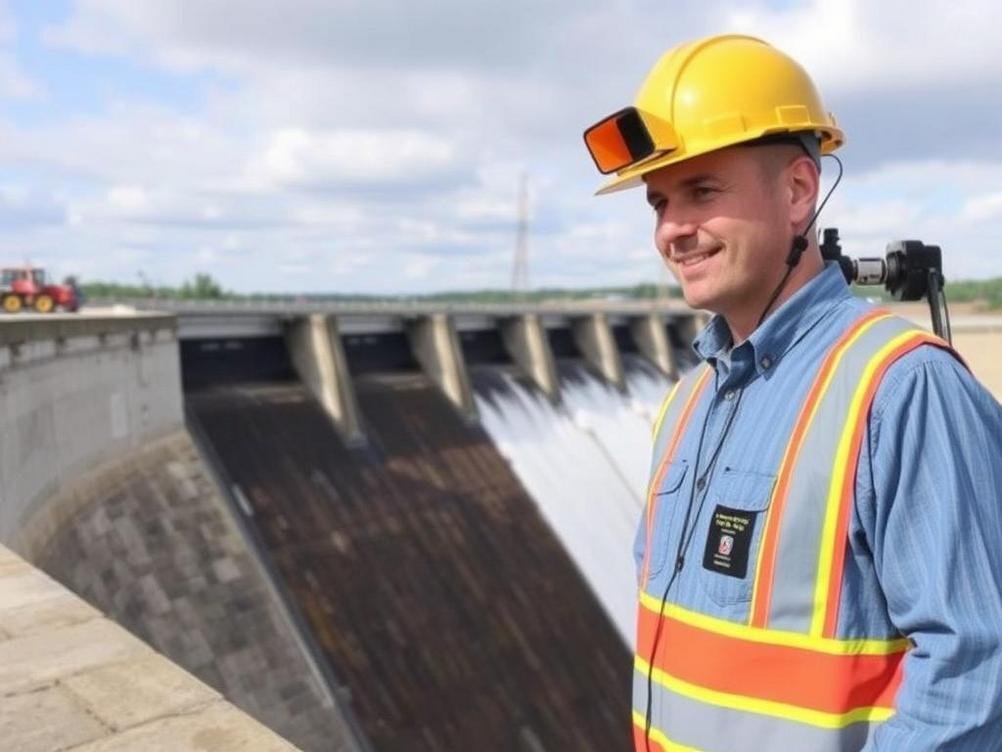
How AI Cameras Are Shaking Up Operations at McAlpine Lock and Dam – A Game-Changer for Data Collection
How AI Cameras Are Shaking Up Operations at McAlpine Lock and Dam – A Game-Changer for Data Collection
Imagine you’re standing by a massive dam, water rushing through locks like it’s got somewhere important to be, and everything’s running on old-school methods that feel straight out of the 1950s. Now picture swapping all that for some high-tech AI cameras that can spot issues faster than you can say “uh-oh.” That’s exactly what’s happening at McAlpine Lock and Dam, where they’re testing out these smart eyes to flip data collection on its head and make operations smoother than a well-oiled lock gate. I mean, who wouldn’t want tech that turns potential headaches into no-brainers? We’ve all dealt with clunky systems that leave us scratching our heads, but this is a real-world example of AI stepping in to save the day.
So, why should you care about a dam in the middle of nowhere? Well, for starters, places like McAlpine aren’t just about holding back water—they’re critical for shipping, flood control, and even powering communities. But let’s be real, traditional data collection there has been about as exciting as watching paint dry: manual checks, endless logs, and a whole lot of human error. Enter AI cameras, and suddenly we’re talking about real-time insights that could prevent disasters, cut costs, and boost efficiency. It’s like giving the dam a superpower upgrade. From what I’ve dug into, this isn’t just some flashy trial; it’s a potential revolution that could ripple out to other infrastructure projects. Think about it— if AI can make a dam run like a dream, what’s next? Bridges, ports, even your local water treatment plant? We’re living in an era where tech isn’t just a tool; it’s a trusty sidekick, and McAlpine’s experiment is proof that we’re on the brink of some serious improvements. Stick around, and I’ll break down how this all works, why it matters, and what it might mean for the future. Oh, and I’ll throw in a bit of humor along the way because, let’s face it, talking about dams doesn’t have to be a snoozefest.
What Exactly is McAlpine Lock and Dam?
You know, when I first heard about McAlpine Lock and Dam, I pictured some ancient stone structure from a history book, but it’s actually a modern beast on the Ohio River, built back in the 1960s to keep commerce flowing and floods at bay. It’s this massive setup that helps boats navigate tricky waters and manages water levels like a pro. But here’s the thing—over the years, maintaining it has been a bit of a juggle act. Workers have to manually inspect everything from water flow to structural integrity, which sounds heroic but is basically a recipe for exhaustion and mistakes.
Fast forward to today, and McAlpine is dipping its toes into the AI pool by testing cameras that use artificial intelligence to monitor everything in real-time. It’s not just about snapping pictures; these cameras analyze data on the fly, spotting anomalies like cracks or unusual water patterns before they turn into big problems. I remember reading about similar setups in other industries, like how factories use AI for quality control—it’s like having a tireless watchdog that never blinks. For McAlpine, this could mean less downtime and more reliable operations, which is a win for everyone from ship captains to local folks relying on steady river levels.
And let’s not forget the human element. These AI systems aren’t replacing jobs; they’re enhancing them. Think of it as giving your team a high-tech assistant that handles the boring stuff so they can focus on what really matters. If you’re into infrastructure, you might wonder how this compares to other dams, like the Hoover Dam, which has its own tech upgrades. From what I’ve seen, McAlpine’s approach is more about precision and efficiency, making it a solid case study for smaller-scale operations.
How AI Cameras Are Stepping into the Spotlight
Alright, let’s get to the juicy part: what makes these AI cameras such a big deal? At their core, they’re equipped with machine learning algorithms that learn from data over time, much like how your phone gets better at predicting what you want to type. For McAlpine, that means cameras mounted around the dam can detect things like debris buildup or changes in water flow without anyone having to climb around in the mud. It’s hilarious to think about—back in the day, inspectors probably used binoculars and a prayer, but now it’s all about algorithms crunching numbers faster than a caffeinated squirrel.
From what experts say, these cameras use computer vision to identify patterns and flag issues in seconds. For instance, if there’s a sudden surge in water speed, the system could alert operators before it escalates. I came across a report from the U.S. Army Corps of Engineers (usace.army.mil) that highlights how AI is transforming monitoring in waterway projects. It’s not magic; it’s smart programming that reduces false alarms and provides actionable insights. Plus, with integration into existing systems, it’s like adding a turbo boost to an old car—suddenly, everything runs smoother.
- Real-time monitoring: No more waiting for scheduled checks.
- Accuracy improvements: AI spots details humans might miss, like micro-cracks.
- Data integration: Feeds directly into dashboards for easy analysis.
The Perks of Kicking Operational Efficiency Up a Notch
Now, if you’re running a dam, efficiency isn’t just a buzzword—it’s survival. McAlpine’s tests show that AI cameras can cut down on manual labor, saving time and money. Picture this: instead of sending a team out every few hours, you get instant updates on your phone. That’s a game-changer, especially during storms when things get chaotic. I once heard a story about a dam operator who caught a problem just in time thanks to similar tech, and it prevented a potential flood—talk about a close call turned hero moment.
Statistics from recent pilots suggest that AI can reduce maintenance costs by up to 20-30%, according to industry reports. For McAlpine, that means more budget for upgrades rather than endless repairs. It’s like having a personal trainer for your infrastructure; it keeps everything in peak condition without the extra effort. And let’s not overlook safety—fewer people on-site during risky conditions equals fewer accidents, which is a relief for families and workers alike.
- Cost savings: Less manpower needed for routine checks.
- Faster response times: AI alerts mean issues are addressed pronto.
- Environmental benefits: Better monitoring leads to more sustainable water management.
Challenges and Hiccups Along the Way
Don’t get me wrong; it’s not all sunshine and rainbows with this AI stuff. For McAlpine, one big hurdle is getting the cameras to work flawlessly in tough conditions, like foggy mornings or heavy rain. It’s kind of like trying to take a clear selfie in a windstorm—frustrating and prone to errors. Plus, there’s the whole data privacy thing; you don’t want sensitive info about river levels falling into the wrong hands.
From what I’ve read, integrating AI with old systems can be a nightmare, requiring updates and training. But hey, every innovation has its teething problems, right? I recall how early smartphones were clunky, but look at them now. For McAlpine, overcoming these means better long-term results, and they’re probably learning from other projects, like those in the Netherlands where AI manages flood barriers effectively.
Still, the potential outweighs the cons. With proper tweaks, these cameras could become as reliable as your favorite coffee maker. And humorously enough, if AI starts making decisions, we might have to worry about it taking a day off—though I doubt it’ll call in sick!
Real-World Ripples: Examples Beyond McAlpine
Taking a step back, McAlpine isn’t the only one playing with AI cameras. Over in Europe, places like the Thames Barrier in London use similar tech to monitor water levels and predict floods. It’s fascinating how these tools adapt across the globe—almost like AI is the ultimate traveler, picking up tips wherever it goes. For McAlpine, drawing from these examples could mean faster implementation and fewer mistakes.
Let’s talk numbers: A study by the World Economic Forum estimates that AI in infrastructure could save billions in maintenance costs worldwide. Imagine that scale—it’s not just about one dam; it’s about creating a network of smart systems. I like to think of it as a web, where each connected point strengthens the whole. For folks at McAlpine, this means their tests could influence broader standards, making operations everywhere more efficient.
- Case study: The Panama Canal uses AI for traffic management, boosting throughput.
- Lessons learned: Early adopters report higher accuracy in predictions.
- Potential collaborations: Partnering with tech firms like IBM (ibm.com) for advanced analytics.
What’s Next? The Future of AI in Dams and Beyond
Looking ahead, if McAlpine’s tests pan out, we’re talking about a future where AI isn’t just a helper but a standard for all critical infrastructure. Could we see autonomous dams that self-adjust based on weather forecasts? It’s wild to ponder, but not impossible. I’ve got a friend in tech who swears AI will make these systems as smart as a human brain, minus the coffee breaks.
The growth in AI adoption is staggering; market reports predict a 40% increase in AI for industrial use by 2030. For McAlpine, this opens doors to expansions, like predictive maintenance that anticipates issues before they arise. It’s like having a crystal ball, but one backed by data and algorithms. Of course, we’ll need to keep an eye on ethical uses, ensuring AI enhances rather than replaces human oversight.
And on a lighter note, maybe one day these cameras will detect not just problems but also cool stuff, like fish migrations. Who knows? The point is, innovation like this keeps things exciting and pushes us forward.
Conclusion
All in all, McAlpine Lock and Dam’s dive into AI cameras is more than just a tech trial—it’s a beacon for how we can make our world a tad smarter and safer. We’ve covered the basics, from what the dam is to the real benefits and bumps along the road, and it’s clear that AI is set to revolutionize data collection in ways we haven’t fully grasped yet. Whether it’s saving time, money, or even lives, this experiment reminds us that embracing change can lead to incredible outcomes.
As we wrap up, I encourage you to think about how AI might touch your own world—maybe in your job or daily life. It’s easy to get caught up in the hype, but stories like McAlpine show that with a bit of curiosity and innovation, we’re capable of turning the ordinary into something extraordinary. So, here’s to the future: may our dams be strong, our data be smart, and our operations run like a dream. What do you think—ready to see AI in action near you?
