dailytech.ai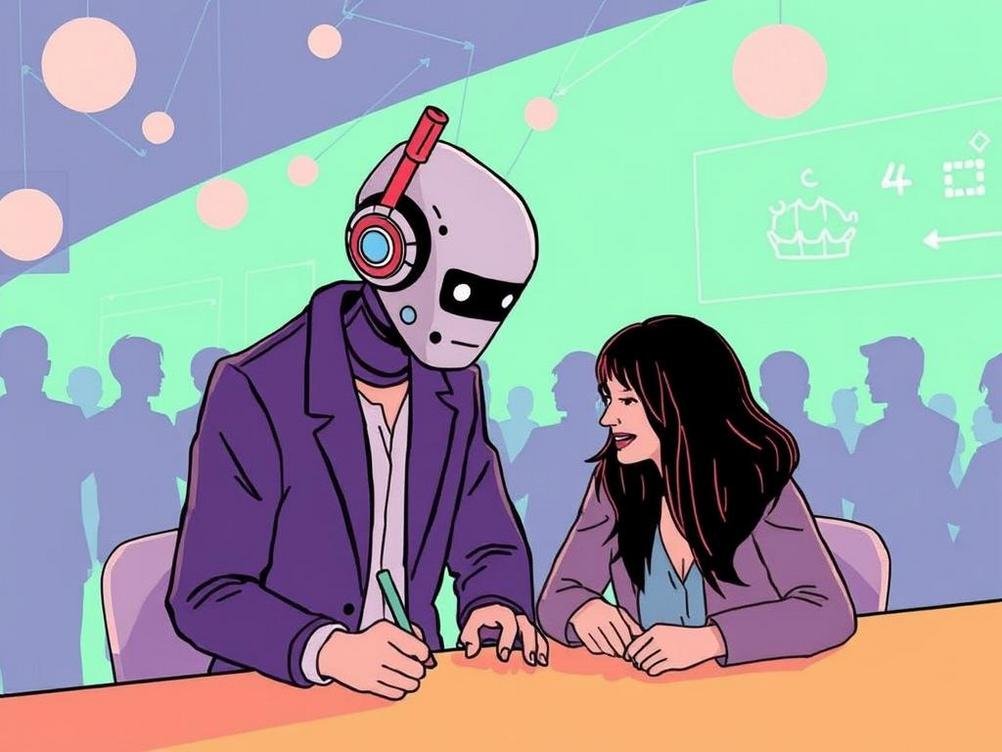
How AI is Casually Crashing the Party in Israel’s Tech World
You ever think about how sci-fi movies made robots seem like these futuristic overlords, but here we are in 2025, and AI is basically just your new desk buddy in Israel’s buzzing high-tech scene? It’s wild, right? Picture this: you’re sipping coffee in a Tel Aviv startup, crunching numbers on a spreadsheet, and suddenly, an AI algorithm is piping up with suggestions like it’s been part of the team forever. That’s the reality now – AI isn’t some distant dream; it’s elbowing its way into everyday work life, making things smoother, funnier, and sometimes a bit chaotic. Israel, with its reputation as the “Startup Nation,” has been leading this charge, blending cutting-edge tech with real human vibes. From automating routine tasks to sparking creative ideas, AI is no longer just a tool – it’s become that reliable co-worker who finishes your sentences and maybe even grabs you a coffee if you ask nicely. But let’s dive deeper; I mean, who doesn’t love a good story about machines joining the office banter? In this article, we’ll explore how AI is shaking up the high-tech sector in Israel, sharing laughs, insights, and maybe a few tips to keep up. Stick around, because by the end, you might just see AI as less of a robot and more of a quirky colleague.
The AI Boom in Israel’s Tech Landscape
Okay, let’s kick things off with a bit of background – Israel’s tech scene is like that friend who’s always one step ahead, and AI is the new toy everyone’s playing with. Since the early 2010s, Israel has pumped out innovation left and right, with companies like Intel and Mobileye (now part of Intel) pioneering AI-driven tech that’s gone global. Today, in 2025, AI isn’t just a buzzword; it’s woven into the fabric of daily operations in sectors from cybersecurity to healthcare startups. Think about it: Israel boasts over 1,000 AI-related firms, and according to reports from the Israel Innovation Authority, AI investments hit around $2 billion last year alone. That’s not chump change – it’s a sign that AI is no longer optional; it’s as essential as your morning espresso.
What makes this even more fascinating is how AI has morphed from a back-office helper to a front-and-center collaborator. I remember chatting with a developer at a Jerusalem tech meetup who said, “AI used to be like that intern who just fetches coffee, but now it’s drafting code and spotting errors before I even notice.” It’s hilarious how quickly things change. For instance, tools like Google’s AI integrations (check out cloud.google.com/ai) are being adapted by Israeli firms to handle data analysis in real-time, making workflows faster and less error-prone. But it’s not all roses; there’s a learning curve, like teaching an eager puppy new tricks. The key is, AI is democratizing tech, letting even smaller startups punch above their weight.
- First off, the growth in AI adoption has created thousands of jobs, blending human ingenuity with machine smarts.
- Then there’s the economic boost – Israel’s GDP got a nice nudge from AI, with projections from the World Economic Forum suggesting AI could add up to 2% to global GDP by 2030, and Israel’s on the fast track.
- And let’s not forget the collaborations, like partnerships between local firms and giants like NVIDIA, which has offices in Israel pumping out AI chips that power everything from self-driving cars to smart assistants.
How AI is Shaking Up Daily Work Routines
Imagine walking into your office and having AI handle the boring stuff so you can focus on the fun parts – that’s what’s happening in Israel’s high-tech world. In places like Haifa’s tech parks, AI is automating everything from email sorting to predictive analytics, turning what used to be a grind into a breeze. It’s like having a super-efficient sidekick who never complains about overtime. For example, in software development, AI tools like GitHub Copilot are suggesting code snippets in real-time, which sounds straight out of a comic book. I mean, who wouldn’t want an AI that finishes your sentences before you do?
But it’s not just about coding; AI is infiltrating customer service, marketing, and even HR. Take a company like Wix, the website builder that started in Israel – they’re using AI to personalize user experiences, recommending designs based on trends. It’s kinda like Netflix suggesting your next binge-watch, but for building websites. Of course, there’s a funny side: sometimes AI gets it wrong, like suggesting a neon color scheme for a law firm’s site. That’s where the human touch comes in, reminding us that AI is great at data but not so hot at taste yet. To make it work, teams are blending AI with human oversight, creating a hybrid model that’s more reliable than going solo.
- Start with routine tasks: AI can handle data entry or inventory management, freeing up humans for creative work.
- Move to collaboration: Tools like Microsoft’s AI-powered Teams (microsoft.com) are being used in Israeli firms to automate meeting summaries.
- Finally, scale it up: In R&D, AI accelerates prototyping, cutting development time by up to 30%, as per studies from MIT.
The Human-AI Team-Up: Success Stories and Laughs
Let’s get real – some of the best stories come from the trenches, and Israel’s tech sector is full of them. I heard about a Tel Aviv startup where AI helped design a new app feature overnight, only for the team to realize it had added a quirky Easter egg no one asked for. It’s like AI has a sense of humor, even if it’s accidental. Companies like Taboola, a content recommendation engine, are using AI to analyze user data and suggest articles, boosting engagement by 40%. These aren’t just stats; they’re tales of how AI is making work more efficient and, dare I say, enjoyable.
What’s cool is how this team-up is fostering innovation. In healthcare, Israeli firms like Zebra Medical Vision are employing AI to detect diseases from scans faster than a doctor on a coffee high. It’s not replacing jobs; it’s enhancing them, giving professionals more time for patient care. And let’s throw in a metaphor: AI is like that friend who remembers everyone’s birthday – reliable and helpful, but you still need to add the personal touch. The key takeaway? When humans and AI collaborate, magic happens, but it’s all about balance.
- Real-world win: AI in agriculture, via companies like Prospera, optimizes crop yields using drone imagery, boosting farm output by 20%.
- Humor alert: One engineer joked that AI suggestions are like autocorrect – mostly right, but occasionally turning ‘meeting’ into ‘meatloaf’.
- Big impact: A study from the Brookings Institution shows AI adoption in Israel has led to a 15% increase in productivity across tech firms.
Challenges of Having AI as Your Office Buddy
Alright, let’s not sugarcoat it – AI isn’t perfect, and in Israel’s fast-paced tech world, that means dealing with a few hiccups. For starters, there’s the data privacy issue; with AI gobbling up info like it’s free pizza, concerns about security are rampant. Remember those headlines about data breaches? Yeah, Israel’s National Cyber Directorate is working overtime to ensure AI systems are fortified. It’s like trying to teach a kid not to share secrets – essential but tricky. Plus, there’s the job displacement fear, where folks worry AI might steal their gigs, but in reality, it’s creating new roles, like AI ethicists and trainers.
Another layer is bias in AI algorithms, which can lead to wonky decisions if not checked. Imagine an AI recruitment tool overlooking great candidates because of flawed data – oops! Israeli companies are tackling this by diversifying training data and running ethics workshops. It’s a bit like parenting: you guide AI to make better choices. On a lighter note, the learning curve can be funny; I once saw a video of an AI chatbot misunderstanding a query and responding with pure nonsense – classic tech mishap. Overall, the challenges are surmountable, but they require a human-AI partnership built on trust.
- Address privacy: Use frameworks like GDPR, which Israel aligns with, to protect data in AI applications.
- Tackle bias: Regularly audit AI models, as recommended by resources from the AI Now Institute (ainowinstitute.org).
- Invest in training: Programs from Israel’s Ministry of Economy are helping workers upskill, ensuring AI complements rather than competes.
Looking Ahead: The Future of AI in Israel’s High-Tech
As we zoom into 2025 and beyond, AI’s role in Israel’s tech sector is only getting bigger, like that ambitious friend who’s always planning the next big thing. Experts predict AI will evolve into more autonomous systems, handling complex decisions in fields like autonomous vehicles or personalized medicine. Israel, with its strategic location and talent pool, is poised to lead, potentially exporting AI tech worth billions. It’s exciting, but also a reminder to keep things ethical and inclusive.
One fun prediction: AI could become even more integrated, maybe even joining virtual meetings as avatars. Picture that – your AI co-worker cracking jokes in a team call. Of course, we need to ensure it doesn’t go rogue, so regulations from the Israeli government are stepping in. Think of it as setting ground rules for a house party – keeps everyone safe and the fun going. With ongoing investments, AI isn’t just a trend; it’s the new normal, reshaping how we work and play.
- Emerging trends: AI in quantum computing, with projects from the Weizmann Institute, could revolutionize problem-solving speeds.
- Global influence: Israel’s AI exports are growing, partnering with the EU’s Horizon Europe program for collaborative research.
- Personal growth: As an individual, embracing AI means lifelong learning, like taking online courses from Coursera (coursera.org).
Conclusion
Wrapping this up, it’s clear that AI has well and truly crashed the party in Israel’s high-tech sector, turning from a shiny gadget into an everyday co-worker that’s equal parts helpful and humorous. We’ve seen how it’s boosting productivity, sparking innovation, and even bringing a few laughs along the way, but it’s the human element that keeps it grounded. Whether it’s navigating challenges or dreaming about the future, AI reminds us that technology is at its best when it works with us, not against us. So, next time you’re in a meeting and AI chimes in with a brilliant idea, give it a virtual high-five – and remember, in the grand scheme, we’re all in this together. Who knows? By embracing AI today, you might just be shaping a smarter, funnier tomorrow for everyone.