dailytech.ai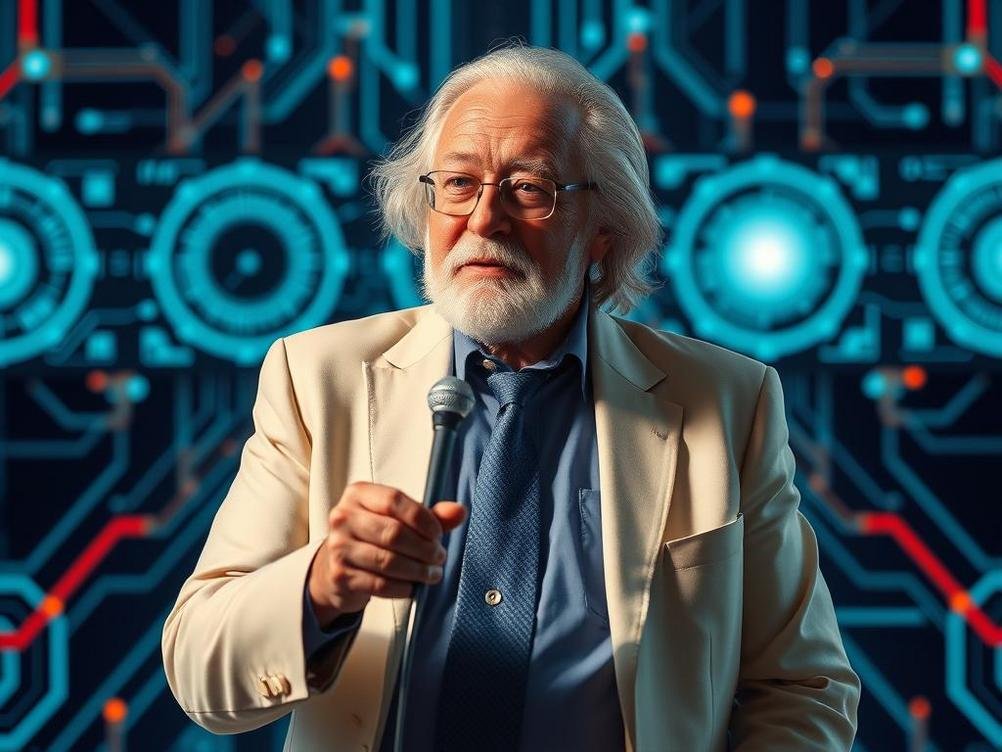
Why AI Feels Like a Double-Edged Sword: Dr. Michio Kaku’s Take on Jobs and the Future
Imagine waking up one day to find your job zapped by a robot that’s faster, smarter, and doesn’t even need coffee breaks. Sounds like a sci-fi flick, right? Well, that’s exactly what Dr. Michio Kaku, the wild-haired physicist who’s basically the rock star of science, has been chatting about lately. He’s got this idea that AI is like that double-edged sword in old legends – it can slice through problems in amazing ways, but it might just nick you in the process. We’re talking about everything from losing jobs to creating new ones, and it’s got people everywhere scratching their heads. I mean, who wouldn’t be a bit freaked out when machines start doing what we thought only humans could? In this article, we’re diving into Kaku’s insights, mixing in some real-world stories, and maybe even throwing in a laugh or two because, let’s face it, if we don’t chuckle about the robot apocalypse, we might just panic. Kaku isn’t just some talking head; he’s a futurist who’s predicted tech trends that actually happened, like the rise of the internet and quantum computing. So, stick around as we unpack how AI’s ‘double-edged sword’ could reshape our work lives, for better or worse, and what you can do to stay ahead of the curve. It’s not all doom and gloom – there are silver linings, innovative opportunities, and even ways to blend human creativity with machine efficiency. By the end, you’ll have a fresh perspective on AI’s role in our world, plus some tips to navigate this brave new era without losing your shirt (or your job).
Who is Dr. Michio Kaku and Why Should We Listen?
Alright, first things first: if you’re not already a fan, let me introduce you to Dr. Michio Kaku. This guy’s a theoretical physicist, author, and TV host who’s been breaking down complex science into digestible bites for decades. Think of him as the cool uncle who explains black holes over barbecue – entertaining and insightful. He’s co-founded string theory, which is basically the rock ‘n’ roll of physics, and he’s written bestsellers like ‘Physics of the Future.’ But what makes him spot-on for this AI chat? Kaku’s been forecasting tech evolutions since the ’80s, and he’s nailed a bunch of them. For instance, he predicted the smartphone boom way before we were all glued to our screens. So, when he calls AI a ‘double-edged sword,’ it’s worth paying attention.
Now, why does his take on job displacement matter? In a world where AI is chugging along like a freight train, Kaku’s perspective blends science with humanity. He’s not just spouting stats; he’s drawing from interviews with tech giants and his own experiences. Picture this: he’s been on shows like 60 Minutes, discussing how AI could either lift us to new heights or knock us down a peg. It’s that balance of optimism and caution that makes his views so relatable. If you’re worried about your gig getting automated – say, as a truck driver or a call center rep – Kaku’s insights can help you see the bigger picture without feeling like you’re staring into the abyss.
And here’s a fun twist: Kaku often uses metaphors from pop culture, like comparing AI to characters in Star Trek. It’s his way of making heavy topics feel light, which is perfect for folks who aren’t sci-fi buffs. So, as we dig into his ideas, remember, he’s not just a brainiac; he’s a communicator who wants us all to thrive in this AI-driven world.
The Double-Edged Sword: AI’s Good and Bad Sides
Let’s cut to the chase – AI isn’t all rainbows and unicorns; it’s got a sharp side too. Dr. Kaku describes it as a double-edged sword, meaning it can solve massive problems while creating new ones. On the positive flip, AI is supercharging industries like healthcare and transportation. For example, it’s helping doctors spot diseases early with tools like machine learning algorithms, potentially saving millions of lives. But flip that coin, and you’ve got job losses piling up. Think about factories where robots are now welding parts faster than humans ever could – it’s efficient, but it’s also putting blue-collar workers on the sidelines.
What makes this ‘sword’ so tricky is how it sneaks up on us. Kaku points out that AI doesn’t just replace jobs outright; it changes them in sneaky ways. Take customer service: chatbots handle routine queries, freeing up humans for more complex stuff. That’s great, but if you’re the one training those bots, you might feel the pinch. I like to think of it as inviting a helpful roommate who ends up eating all your food – convenient at first, but eventually, you’re competing for resources. Kaku’s not alone in this; reports from the World Economic Forum suggest that by 2025, AI could displace 85 million jobs globally, but it might also create 97 million new ones. So, it’s a mixed bag, and that’s what makes his commentary so spot-on.
- Pros: Boosts productivity, reduces human error, and opens doors to innovation.
- Cons: Widens inequality and sparks fears of obsolescence.
- Real talk: It’s like upgrading your car to a self-driving one – awesome for long trips, but what if you love driving?
Fears of Job Displacement: Is the Sky Really Falling?
Okay, let’s address the elephant in the room: are we all doomed to be replaced by bots? Kaku doesn’t sugarcoat it – he’s voiced concerns that AI could lead to widespread job losses, especially in repetitive sectors like manufacturing or data entry. Imagine a world where algorithms handle your taxes or drive your Uber; it’s convenient, but for the folks who used to do those jobs, it’s terrifying. Kaku often shares stories from his talks, like how automation in the auto industry has already cut thousands of jobs, and he warns this could snowball.
But here’s where it gets interesting – Kaku isn’t a total pessimist. He argues that history shows technology eventually creates more jobs than it destroys. Remember the Industrial Revolution? It wiped out farming jobs but birthed factory work and later, tech roles. Today, with AI, we’re seeing a shift towards creative and analytical positions. For instance, a study by McKinsey estimates that by 2030, AI could add $13 trillion to the global economy, but only if we adapt. So, while the fears are valid, Kaku suggests we focus on reskilling rather than panicking. It’s like learning to ride a bike after your old wagon breaks – bumpy at first, but you end up going faster.
- Common fears: Loss of income, reduced job security, and social unrest.
- Counterpoints: New opportunities in AI ethics, data analysis, and hybrid roles.
- Humor break: If AI takes your job, at least it won’t steal your lunch from the office fridge!
The Bright Side: How AI Can Actually Create Opportunities
Alright, enough doom-scrolling – let’s flip the script and talk about AI’s upside, as per Kaku’s insights. This tech isn’t just a job-killer; it’s a game-changer for innovation. In fields like education, AI tools like personalized learning apps are helping students grasp concepts faster than traditional methods. Kaku loves pointing out how AI could democratize access to knowledge, much like how the internet did with information. Plus, in healthcare, AI-driven diagnostics are catching cancers early, potentially saving lives and creating demand for AI specialists.
From a job perspective, Kaku sees AI as a catalyst for ‘augmented intelligence,’ where humans and machines team up. Think of it as a buddy system: AI handles the grunt work, and you bring the creativity. For example, graphic designers now use tools like Adobe’s AI features to speed up projects, freeing them to focus on big ideas. According to a report from McKinsey, this could lead to a net gain in employment if we invest in training. Kaku’s all about that proactive vibe – he’s said in interviews that embracing AI early could turn potential losers into winners.
Another angle: AI is spawning entirely new industries, like AI ethics consulting or robot maintenance. It’s not just about coding; it’s about understanding how to integrate tech into society. So, while the sword has an edge, it also has a handle – and we’re the ones holding it.
Real-World Examples: AI in Action and Its Lessons
To make this less abstract, let’s look at some real-world stuff. Take Amazon’s warehouses, where robots zip around fetching packages. Kaku has highlighted how this boosts efficiency but has displaced warehouse workers, leading to protests and retraining programs. On the flip side, in Japan, AI-powered exoskeletons are helping elderly folks stay independent, creating jobs in caregiving tech. These examples show AI’s double edge in action – it’s reshaping economies but also highlighting inequalities.
Another story: the rise of AI in creative fields, like music composition. Tools like AIVA generate tunes, which some see as a threat to human composers, but others, like Kaku, view it as collaboration. He’s compared it to how synthesizers revolutionized music in the 80s. Statistically, the Bureau of Labor Statistics projects that AI-related jobs will grow by 22% by 2030, outpacing many traditional sectors. It’s a reminder that while some paths close, new ones open – you just have to pivot.
- Example 1: Self-driving cars from companies like Tesla are cutting driver jobs but creating roles in software development.
- Example 2: AI in farming is optimizing crops, reducing manual labor, and boosting food security.
- Lesson: Adaptation is key – think of it as evolving from flip phones to smartphones.
What the Future Holds: Kaku’s Predictions and Tips
Looking ahead, Kaku predicts AI will become even more integrated into daily life by the 2030s, with advancements in quantum AI making it smarter than ever. But he warns of ethical pitfalls, like bias in algorithms that could exacerbate job displacement in underrepresented communities. His advice? Get educated now – platforms like Coursera offer AI courses that can help you stay relevant. It’s like stocking up for a storm; better to be prepared than caught off guard.
Humorously, Kaku once joked that if AI takes over, we might all become philosophers or artists. But seriously, he emphasizes lifelong learning and policy changes, like universal basic income, to cushion the blow. With governments pushing for AI regulations, as seen in the EU’s AI Act, there’s hope for a balanced future. So, whether you’re a student or a seasoned pro, Kaku’s message is clear: embrace the change, or get left behind.
Conclusion
Wrapping this up, Dr. Michio Kaku’s take on AI as a double-edged sword reminds us that technology is a tool, not a tyrant – it’s all about how we wield it. We’ve explored the fears of job loss, the exciting opportunities, and real-world stories that show both sides of the coin. Sure, AI might shake things up, but as Kaku points out, humanity has always adapted and innovated through challenges. So, instead of fretting, let’s focus on reskilling, supporting ethical AI development, and maybe even laughing at the absurdities along the way. Who knows? In the end, AI could be the spark that propels us into a golden age. What are you waiting for? Dive in, learn something new, and shape the future before it shapes you.