dailytech.ai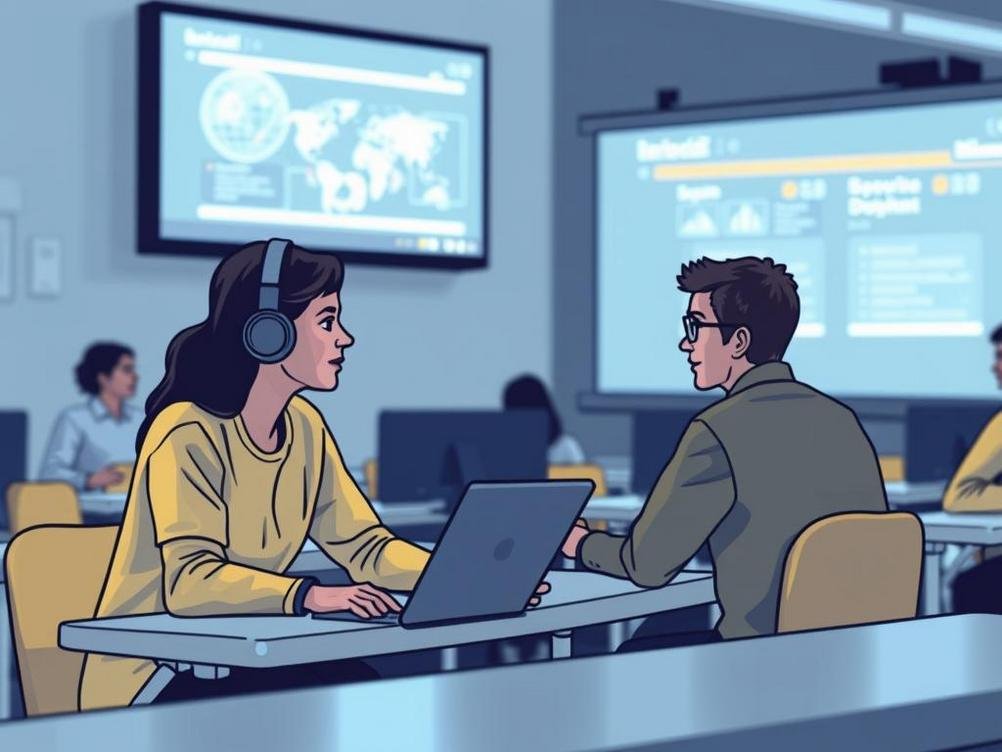
How AI is Shaking Up Classrooms: Lessons from UDel Students
Imagine walking into a college lecture hall where your laptop isn’t just for taking notes—it’s actually chatting back to you, suggesting better ways to study or even grading your essays on the spot. That’s the wild world of AI in education we’re diving into today, inspired by those clever folks at the University of Delaware (UDel) who’ve been poking around its potential. You know, it wasn’t that long ago when AI was just a sci-fi flick plot, but now it’s flipping classrooms upside down, making learning more interactive and, let’s be real, a bit more fun—or at least less of a snoozefest. So, why are UDel students buzzing about AI’s capabilities and limits? Well, think about it: In a world where everything from your Netflix recommendations to your phone’s autocorrect feels almost psychic, why wouldn’t we want that in school? These students have been experimenting with AI tools like chatbots and predictive software, uncovering how it can personalize lessons, speed up research, and even help with creative projects. But hold on, it’s not all sunshine and rainbows—there are glitches, biases, and ethical speed bumps that could trip us up. Over the next few paragraphs, we’ll unpack this like a college dorm pizza party, mixing in real insights from UDel’s explorations to show you the highs, lows, and everything in between. By the end, you might just rethink how AI could jazz up your own learning journey or even inspire you to tinker with it yourself.
What Exactly is AI Doing in Classrooms Lately?
First off, let’s not pretend AI is some new kid on the block— it’s been creeping into education for years, but UDel students are taking it to the next level by actually testing it out. They’ve been using tools like ChatGPT or Google’s AI integrations to whip up study guides or simulate debates in history classes. It’s like having a tireless tutor in your pocket, always ready to explain that tricky calculus problem without judging your blank stare. What makes this exciting is how AI adapts to individual learning styles; for instance, if you’re a visual learner, it can generate diagrams on the fly, turning abstract concepts into something you can actually picture.
From what I’ve gathered from UDel’s experiments, AI isn’t just about automation—it’s about empowerment. Take language classes, for example; students have used AI translators to practice conversations with virtual partners, making it feel less like rote memorization and more like chatting with a friend abroad. And let’s not forget the data side—AI can analyze student performance patterns, spotting weaknesses before they snowball into bad grades. But here’s a fun fact: According to a recent survey by Educause, about 70% of students say AI tools have made their workload more manageable, yet only half feel fully comfortable with them. It’s a mixed bag, right? To break it down, here’s a quick list of how AI is showing up in daily classroom antics:
- Personalized learning paths that adjust based on your progress, like a GPS for your brain.
- Automated grading systems that give instant feedback, saving teachers from mountains of paperwork.
- Virtual reality simulations for subjects like biology, where you can ‘dissect’ a frog without any mess.
- AI-powered research assistants that sift through articles faster than you can say ‘procrastination.’
It’s all about making education feel less like a chore and more like an adventure, but as UDel students point out, you’ve got to know when to hit the brakes.
The Cool Capabilities AI Unlocks for Students
Okay, let’s get to the good stuff—AI’s superpowers in the classroom are pretty mind-blowing, especially based on what UDel students have shared. Picture this: You’re cramming for an exam, and instead of flipping through dusty textbooks, AI whips up a customized quiz that adapts as you go. UDel students have raved about how tools like adaptive learning platforms can turn a one-size-fits-all lecture into something tailored just for you, boosting retention rates by up to 30% in some studies. It’s like having a personal cheerleader who knows exactly when to nudge you along.
One hilarious anecdote from a UDel forum I came across involved a student using AI to generate story ideas for a creative writing class— it spat out a plot involving time-traveling squirrels, which actually inspired a top-grade essay. Beyond creativity, AI excels in data crunching; for STEM fields, it can model complex simulations, like predicting climate patterns, making abstract theories feel tangible. And don’t overlook accessibility—AI tools with voice recognition are game-changers for students with disabilities, turning spoken words into text in real-time. As UDel’s explorations show, the capabilities are vast, but they shine brightest when integrated thoughtfully.
To put it in perspective, imagine AI as that reliable friend who’s always got your back: Here’s a simple breakdown of its classroom wins:
- Enhancing engagement through interactive elements, like gamified lessons that make learning feel like playing Fortnite.
- Streamlining research with smart search algorithms that cut through the noise of endless Google results.
- Offering multilingual support, helping international students bridge language gaps without missing a beat.
- Providing predictive analytics to flag potential dropouts early, giving schools a heads-up to intervene.
Bumping into the Limitations: Where AI Falls Short
Now, let’s pump the brakes a bit because, as UDel students quickly discovered, AI isn’t the flawless wizard we sometimes make it out to be. Sure, it can generate essays or solve equations, but it’s got some glaring blind spots that could leave you scratching your head. For starters, AI often spits out information based on biased data sets, meaning if the training data was skewed, your history lesson might gloss over important perspectives— like how UDel students found AI downplaying diverse cultural contributions in their projects. It’s like asking a robot for dating advice; it might sound logical, but it lacks that human touch.
Another snag is the reliability factor—AI can hallucinate facts, as they say in tech circles, meaning it might confidently serve up wrong info as truth. UDel’s trials highlighted how this could mislead students in critical thinking exercises, potentially harming learning outcomes. Plus, there’s the privacy angle; feeding personal data into these tools raises red flags about who’s peeking at your info. According to a 2024 report from the AI Education Alliance, about 40% of educators worry about data security in AI implementations. So, while it’s tempting to lean on AI like a crutch, over-reliance could stunt skills like original thinking or basic research—something those UDel students learned the hard way when an AI-generated source turned out to be fabricated.
If we’re keeping it real, here are a few limitations that UDel explorers encountered, straight up:
- Biases in AI algorithms that can perpetuate inequalities, like underrepresenting women in STEM narratives.
- The risk of over-dependence, where students might skip developing core skills, thinking AI will do the heavy lifting.
- Technical glitches, such as slow processing during peak times, which can disrupt a flow state faster than a fire drill.
- Ethical dilemmas, like who gets credit for AI-assisted work in assignments.
Real-Life Tales: What UDel Students Are Saying
Diving into the nitty-gritty, let’s hear from the real MVPs—UDel students who’ve been knee-deep in AI experiments. One student shared how using AI for group projects in their computer science class was a total game-changer; it helped brainstorm ideas in minutes, but they had to double-check everything because, as one put it, ‘AI can be as unreliable as my coffee machine on a Monday.’ These stories paint a vivid picture of AI’s dual nature, blending excitement with caution.
For instance, in a psychology course, students used AI to analyze survey data, uncovering patterns they hadn’t noticed, which led to some eye-opening presentations. But not all was smooth— some mentioned how AI struggled with nuanced topics, like emotional intelligence, making their essays feel a bit robotic. It’s these personal insights that make you think: Is AI really enhancing education, or just adding another layer of complexity? UDel’s student-led initiatives, like hackathons focused on AI ethics, show a growing awareness that’s both inspiring and a little humbling.
To wrap this section, here’s a rundown of key takeaways from UDel’s student feedback:
- AI as a collaborator, not a replacement, for creative tasks—like co-writing a script without losing your unique voice.
- The importance of verifying AI outputs to avoid ‘garbage in, garbage out’ scenarios.
- How it fosters collaboration, such as in study groups where AI tools help organize shared notes seamlessly.
- Lessons on balance, emphasizing that human interaction still beats a screen any day.
Tips for Making AI Your Classroom Sidekick
If you’re itching to try AI in your own studies, take a page from UDel students’ playbook and start small. They recommend beginning with simple apps like Grammarly for writing feedback or Khan Academy’s AI-driven exercises to reinforce concepts. It’s all about using AI as a sidekick, not the hero, so you don’t lose that spark of originality in your work. Think of it like seasoning food—just a dash enhances the flavor without overpowering it.
One smart tip is to set boundaries; for example, use AI for research summaries but write your conclusions yourself to build critical thinking. UDel students found that journaling their AI interactions helped them track what worked and what flopped, turning potential pitfalls into learning opportunities. And hey, don’t forget the fun factor—experiment with AI art generators for visual projects; it’s like having a digital Picasso at your fingertips. According to a 2025 edtech report, students who integrate AI thoughtfully see a 25% uptick in engagement scores.
Here’s a quick guide to get you started, UDel-style:
- Choose tools that align with your needs, like Duolingo for language practice or Wolfram Alpha for math woes.
- Always fact-check AI suggestions to keep your work credible and avoid any ‘oops’ moments.
- Collaborate with peers to discuss AI’s role, making it a group effort rather than a solo venture.
- Reflect on your experiences to refine how you use AI moving forward.
The Road Ahead: AI’s Evolving Role in Education
Looking forward, UDel’s explorations hint at a future where AI could reshape education in ways we’re only starting to grasp. Imagine AI-powered virtual classmates that adapt to your pace, or predictive systems that tailor entire curriculums. It’s exciting, but as these students point out, we need to steer this ship carefully to avoid choppy waters like job displacement for teachers or widened educational gaps.
With advancements like AI in adaptive testing, we might see more equitable learning environments, but only if we address the current limitations head-on. UDel’s work is a stepping stone, showing how student-driven innovation can push the envelope while keeping ethics in check. It’s like planting seeds for a smarter tomorrow, where tech and humanity coexist without one overshadowing the other.
Conclusion
In wrapping this up, AI in the classroom, as explored by UDel students, is a double-edged sword with incredible capabilities that can supercharge learning, alongside limitations that remind us of the irreplaceable value of human insight. From personalized tools that make studying less of a drag to the pitfalls of bias and over-reliance, it’s clear we’re at an exciting crossroads. As you reflect on this, maybe consider how AI could fit into your own educational adventures—perhaps starting with a simple tool to ease your next project. Ultimately, the key is balance: Embrace the tech, question it, and use it to enhance, not replace, the joy of learning. Who knows? Your experiments might just inspire the next big breakthrough.