
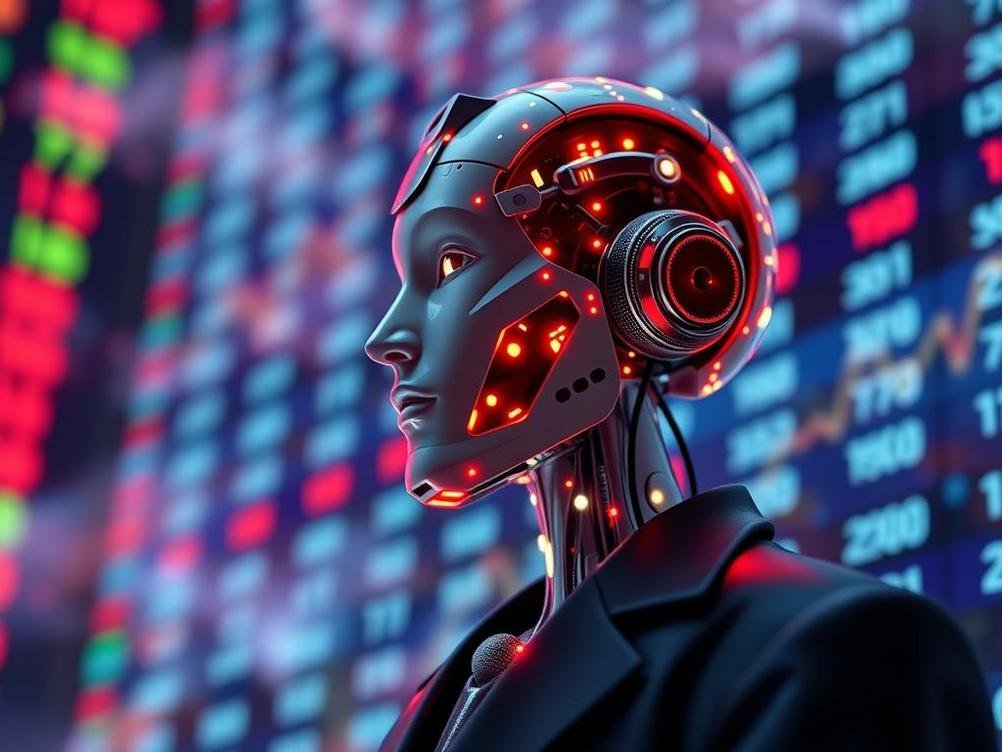
Why AI Jitters Are Sending Stocks Tumbling in the US and Asia
Why AI Jitters Are Sending Stocks Tumbling in the US and Asia
Imagine you’re on a rollercoaster that suddenly drops without warning—that’s kind of what the stock market feels like these days, especially with all this AI buzz turning into outright jitters. We’re talking about the big players in the US and Asia seeing their stocks slide faster than a kid on a slippery slide, and it’s all tied to the wild world of artificial intelligence. Just a few weeks back, headlines were screaming about AI’s potential to revolutionize everything from healthcare to your daily coffee order, but now? It’s like the party’s over, and everyone’s scrambling to figure out what’s next. Is this just a temporary hiccup, or are we looking at a real shakeup in how tech influences global finances? As someone who’s been keeping an eye on these trends, I can tell you it’s fascinating—and a little scary—how something as abstract as AI algorithms can make Wall Street and Asian exchanges wobble like Jell-O.
Let’s break it down: lately, investors are freaking out over AI’s unpredictable future. Think about it—companies like NVIDIA and those big names in China are riding high on AI hype, but now there’s chatter about regulatory crackdowns, ethical concerns, and even job losses from automation. It’s not just about the tech; it’s about how this affects everyday folks and the economy at large. From the Nasdaq’s rollercoaster rides to the drops in Tokyo’s Nikkei, we’re seeing a ripple effect that’s got everyone from day traders to retirement fund managers on edge. And here’s the thing: as of late November 2025, these jitters aren’t going away anytime soon, with experts predicting more volatility unless we get some clear signals from governments and tech giants. So, buckle up as we dive into why this is happening and what it means for your portfolio—or if you’re like me, why it’s making me second-guess my next stock pick over coffee.
This isn’t just Wall Street drama; it’s a global phenomenon that’s touching everything from innovation to job security. I’ve been following this for a while, and it’s wild how AI, which was supposed to be our futuristic buddy, is now the villain in the stock market story. We’ll explore the nitty-gritty, share some real-world examples, and maybe even throw in a bit of humor to keep things light because, let’s face it, talking markets can get as dry as old toast.
What’s Really Fueling These AI Jitters?
First off, you’ve got to wonder: what exactly is making investors so twitchy about AI? It’s like AI went from being the cool kid at school to the one everyone’s gossiping about negatively. A big part of it boils down to uncertainty—think regulations. Governments in the US and Asia are starting to clamp down on AI tech, worried about things like data privacy and deepfakes messing with elections. For instance, the US is pushing forward with proposals from the FTC to regulate AI more stringently, which has folks like me thinking, “Wait, is this going to stifle innovation or just prevent a digital apocalypse?”
Then there’s the economic side. AI promises to cut costs and boost efficiency, but it’s also threatening jobs left and right. Reports from the World Economic Forum suggest that up to 85 million jobs could be displaced by AI by 2025—wait, that’s this year! It’s no joke; we’re seeing it in sectors like manufacturing in Asia and tech services in the US. Imagine a factory in China where robots are doing what humans used to, leaving workers in the lurch. That kind of disruption makes investors nervous, leading to sell-offs because nobody wants to hold onto stocks that might tank if AI overhauls the workforce.
To put it in perspective, let’s list out some key factors driving this:
- Regulatory fears: New laws in the EU and US could limit AI development, as seen with the AI Act that’s already influencing global standards.
- Overhyped expectations: Companies promised the moon with AI, but results are mixed, leading to what’s called an “AI winter”—a term for when enthusiasm cools off.
- Market competition: Giants like Google and Baidu are battling it out, but missteps, like recent lawsuits over AI data scraping, are adding fuel to the fire.
It’s all a bit like a high-stakes game of Jenga; pull out the wrong piece, and everything comes crashing down.
How This AI Frenzy is Hammering US and Asian Stocks
Okay, so let’s get specific: how is this playing out in the markets? In the US, we’ve seen the S&P 500 take a nosedive, with tech stocks leading the charge downward. It’s almost comical how a single bad earnings report from an AI-heavy company like Microsoft can send ripples across the board. Just look at what happened last month—shares plummeted after whispers of AI integration delays, making investors bail faster than rats off a sinking ship.
Over in Asia, it’s even more intense. Places like Japan’s Nikkei and South Korea’s KOSPI are feeling the pinch because their economies are so intertwined with tech exports. For example, Samsung in South Korea has been hit hard by AI supply chain issues, and China’s markets are dealing with US trade tensions that target AI tech. It’s like a domino effect: one country sneezes, and the whole region catches a cold. According to recent data from Bloomberg, Asian stocks have dropped by an average of 15% in the past quarter alone, all thanks to AI-related jitters.
If you’re tracking this, here’s a quick breakdown of the impacts:
- US markets: Tech indices down 10-20%, with AI leaders like NVIDIA seeing double-digit losses.
- Asian exchanges: Tokyo and Shanghai composites falling due to export dependencies—for more on this, check out Bloomberg’s market insights.
- Global ripple: Even emerging markets are affected, as investors pull back from anything AI-adjacent.
It’s enough to make you chuckle nervously, wondering if your 401(k) is safe.
Real-World Examples of AI’s Wild Ride on the Economy
Let’s make this real—AI isn’t just abstract code; it’s impacting actual businesses and people. Take the ride-sharing giant Uber, for instance. They’re using AI to optimize routes and cut costs, but when AI glitches lead to PR disasters, like faulty predictions causing delays, stock prices suffer. In Asia, companies like Tencent are facing backlash for AI-driven games that some say are too addictive, leading to government scrutiny and investor pullouts.
Here’s a metaphor for you: AI is like that friend who throws the best parties but also causes the most drama. In healthcare, AI tools are diagnosing diseases faster than doctors, but errors in algorithms have led to lawsuits, as reported by sources like STAT News. This uncertainty is why stocks in health tech are sliding, even though the potential is huge.
To illustrate, consider these examples:
- Autonomous vehicles: Companies like Tesla are pushing AI for self-driving cars, but accidents have spooked investors, causing stock dips.
- Job markets: In India, AI is automating customer service, displacing thousands, which in turn affects consumer spending and stock values.
- Economic stats: The IMF predicts AI could add $13 trillion to the global economy by 2030, but short-term losses from market slides might hit 5% of GDP in affected regions.
It’s a double-edged sword, isn’t it?
Is This AI Hype Just a Flash in the Pan or the Real Deal?
Alright, time to ask: are these AI jitters overblown, or is this the new normal? Some folks think it’s all hype, like a fad diet that everyone jumps on and then abandons. But data from Gartner shows that AI investments are still soaring, even with the dips, suggesting this is more than just a trend.
On the flip side, experts warn that without proper checks, AI could lead to bubbles bursting. Remember the dot-com crash? It’s eerily similar, with overvalued AI stocks potentially correcting hard. In Asia, countries like Singapore are investing in AI ethics to avoid this, which might stabilize things long-term.
What’s funny is how quickly sentiment shifts— one day AI’s saving the world, the next it’s the enemy. Here’s a simple list of pros and cons:
- Pros: Innovation and efficiency gains that could boost stocks eventually.
- Cons: Short-term volatility and regulatory risks that keep markets shaky.
- Wild card: Public opinion, which can swing markets based on social media buzz.
Who knows? Maybe AI will turn things around sooner than we think.
What Should Investors Do in This AI-Led Chaos?
So, if you’re an investor staring at your screen right now, wondering what to do, you’re not alone. My advice? Don’t panic, but do your homework. Diversifying away from pure AI stocks into more stable sectors like renewables might be smart, especially with the current slides hitting hard.
For example, in the US, shifting towards green energy stocks could hedge against AI risks, while in Asia, focusing on domestic growth areas like e-commerce might offer relief. I’ve seen friends lose sleep over this, but remembering that markets bounce back is key— just look at how post-COVID recoveries played out.
Practical tips include:
- Stay informed: Follow resources like Investopedia for updates.
- Rebalance portfolios: Aim for a mix that includes non-AI assets.
- Long-term view: AI’s not going away, so holding steady might pay off.
It’s all about playing the long game, right?
The Bigger Picture: AI’s Long-Term Grip on the Global Economy
Zooming out, AI isn’t just a passing fad; it’s reshaping the world in ways we can’t fully grasp yet. From automating mundane tasks to sparking ethical debates, it’s got a hold on the economy that’s both exciting and terrifying. In 2025, we’re at a crossroads where AI could either propel us into a golden age or lead to unintended messes.
Take global trade: AI is optimizing supply chains, but it’s also exposing vulnerabilities, like in the recent US-China tech wars. Countries in Asia are adapting by boosting their own AI capabilities, which could lead to a more balanced world economy down the line.
Some insights to chew on:
- Economic forecasts: OECD reports suggest AI could increase productivity by 1.5% annually.
- Social impacts: It’s creating new jobs in AI development while phasing out others, so retraining is crucial.
- Humor aside: If AI takes over, maybe we’ll all just retire early and let the robots handle the stocks!
It’s a wild ride, but potentially rewarding.
Conclusion
In wrapping this up, the slide in US and Asian stocks due to AI jitters is a wake-up call that innovation comes with its fair share of bumps. We’ve seen how uncertainty can shake markets, but it’s also a chance to adapt and thrive. Whether you’re an investor, a tech enthusiast, or just curious about the future, keeping an eye on AI’s evolution is key to navigating what’s ahead. Who knows? This might just be the prelude to a bigger boom, so stay curious, stay informed, and maybe grab a coffee while you watch the markets turn. After all, in the world of finance, it’s not about avoiding the dips—it’s about enjoying the ride.
