dailytech.ai
Is AI Steering Us Toward a Giant Knowledge Black Hole? The Risks We Can’t Afford to Ignore
Imagine this: You’re chilling on your couch, scrolling through your phone, and suddenly you realize you’ve forgotten how to do basic stuff—like, say, tying your shoes without consulting an app. Okay, that might be a bit dramatic, but hear me out. We’ve all gotten a little too cozy with AI these days, letting it handle everything from writing emails to diagnosing cat illnesses. But what if all this hand-waving at algorithms is secretly eroding our own brainpower? That’s the gist of what folks like Deepak Varuvel Dennison are buzzing about—the idea that we’re on the brink of a ‘knowledge collapse,’ where humanity’s collective wisdom starts to fade because we’re outsourcing our thinking to machines. It’s not just a sci-fi plot; it’s happening right now in 2025, as AI tools grow smarter and we’re getting, well, a tad lazier. Think about it: When was the last time you memorized a phone number instead of relying on your contacts list? Exactly. This isn’t about bashing AI—after all, it’s made our lives easier in a million ways—but it’s a wake-up call to ask ourselves: Are we building a future where we’re all just puppets pulling strings dictated by code? In this article, we’ll dive into the nitty-gritty of how AI might be chipping away at our knowledge base, share some real-talk examples, and ponder ways to keep our brains from turning into mush. Stick around, because by the end, you might just rethink how you use that chatbot on your phone.
What Even Is This ‘Knowledge Collapse’ Thing?
You know, ‘knowledge collapse’ sounds like something out of a dystopian novel, but it’s basically the idea that as we lean harder on AI for answers, we’re letting our own skills atrophy. Picture this: Back in the day, people memorized poems or calculated math in their heads because they had to. Now, with AI whispering solutions in our ears, we’re skipping the mental workout. It’s like relying on a calculator for every addition—sure, it’s fast, but what happens when the battery dies? According to some experts, this over-dependence could lead to a society where critical thinking dwindles, and we end up with a generation that can’t problem-solve without tech. And let’s not forget, AI isn’t perfect; it’s trained on data from the past, so it might miss out on nuances or new ideas that humans excel at.
Here’s a fun twist: Imagine AI as that overly helpful friend who finishes your sentences for you. At first, it’s convenient, but over time, you stop bothering to express yourself fully. Studies from places like MIT show that prolonged use of AI assistants can reduce our cognitive load, which sounds great until you realize it’s like skipping leg day at the gym—your brain muscles get weak. To break it down, we’ve got lists of symptoms to watch for: first, rote memorization fades; second, creative problem-solving takes a hit; and third, we might even see a dip in innovation because we’re not challenging ourselves anymore. It’s a slippery slope, folks, and we’re already sliding.
- Over-reliance on AI for simple tasks, like spell-checking or basic research.
- Loss of traditional skills, such as manual calculations or historical knowledge.
- Increased vulnerability if AI systems fail or get hacked—what then?
How AI is Sneakily Messing with Our Everyday Smarts
Alright, let’s get real—AI isn’t some evil overlord; it’s more like that buddy who always has the answers but never lets you figure things out yourself. Take search engines powered by AI; they’re amazing for finding stuff fast, but they can spoon-feed us info so much that we forget how to dig deep on our own. I mean, who hasn’t typed a question into Google and just copy-pasted the response without a second thought? Over time, this builds a habit where we’re not questioning sources or thinking critically, which is kinda like eating fast food every day—convenient, but it leaves you nutritionally bankrupt.
Think about education, for instance. In 2025, schools are rolling out AI tutors left and right, which is cool for personalized learning, but what if students start treating them as the ultimate crutch? A report from the World Economic Forum highlights how AI in classrooms could widen the gap between tech-savvy kids and those without access, potentially leading to a knowledge divide. And humor me here: If AI can write essays better than a high schooler, does that mean we’re raising a bunch of parrots instead of original thinkers? It’s not all doom and gloom, though—AI can enhance learning if we use it right, like a tool rather than a replacement.
- Examples of AI in daily life: Voice assistants like Siri handling your reminders, or AI-driven apps that auto-complete your emails.
- Real-world impact: In workplaces, AI automation might boost efficiency, but it could deskill employees, making them dependent on software for routine decisions.
Spooky Real-World Examples That’ll Make You Think Twice
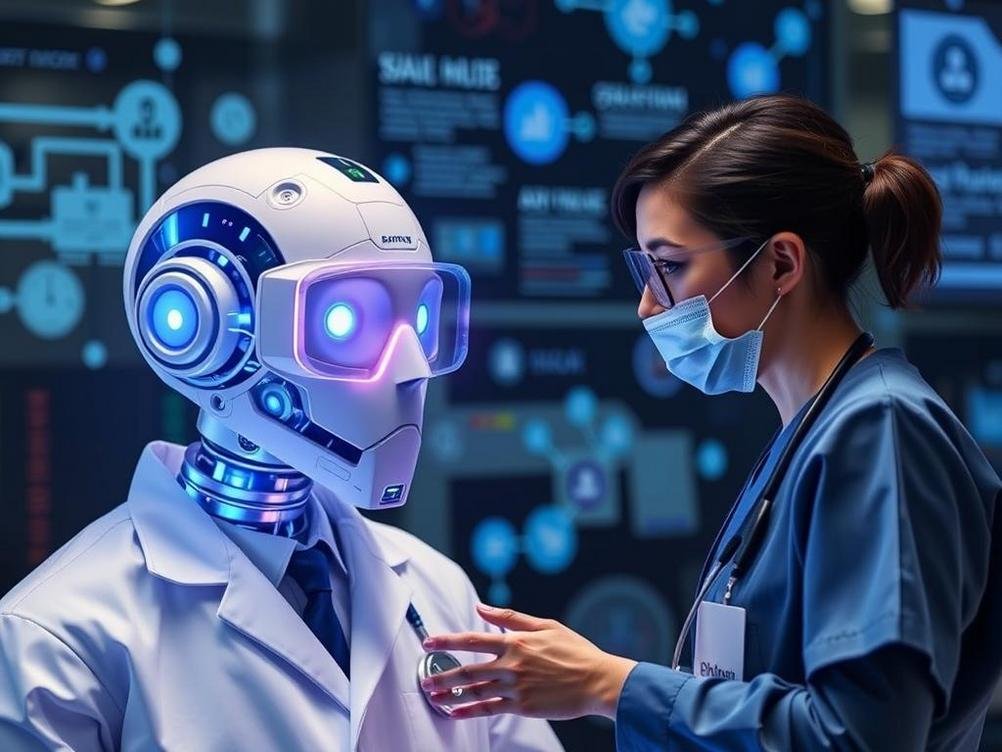
Okay, let’s lighten this up with some stories that hit close to home—because nothing says ‘fun’ like tales of tech gone sideways. Remember that time in 2023 when a major AI model spat out fictional historical facts as truth, leading to widespread misinformation? Yeah, that happened, and it’s a prime example of how AI’s ‘knowledge’ can be flawed, potentially accelerating a collapse if we don’t fact-check. In healthcare, AI diagnostic tools are lifesavers, but they’ve misdiagnosed patients before because they missed context that a human doc would catch—like that time an AI suggested treating a shadow on an X-ray as cancer when it was just a smudge.
Fast-forward to today: With AI generating news articles, we’re seeing a flood of content that’s algorithmically optimized but lacks depth. It’s like reading a summary of a book instead of the whole thing—you get the plot, but miss the soul. Statistics from a 2025 Pew Research study show that 60% of people under 30 rely on AI for information gathering, and alarmingly, 40% admit to not verifying sources. That’s a recipe for a knowledge black hole, where misinformation spreads faster than a viral cat video.
- First example: Social media algorithms prioritizing engagement over accuracy, leading to echo chambers.
- Second: AI in finance, where robo-advisors make investment calls, but a market crash could expose their limitations.
- Third: Creative fields, like art, where AI generators are stealing the show, but at what cost to human originality?
The Hilarious (and Scary) Blind Spots of AI
Let’s add some humor to this mess—AI has blind spots that are equal parts funny and frightening. For instance, ever asked an AI to explain a joke and gotten a response that falls flat? It’s because machines don’t get nuance, sarcasm, or cultural context, which makes them hilariously bad at being human. Imagine an AI trying to navigate a conversation about politics; it might spit out balanced facts, but it’d miss the eye-rolls and witty comebacks that make discussions worthwhile. This isn’t just amusing—it’s a sign that we’re risking a collapse in interpersonal skills if we let AI handle all our interactions.
On a brighter note, these blind spots can be our secret weapon. By recognizing what AI can’t do, we can focus on honing our uniquely human traits, like empathy and intuition. It’s like comparing a robot vacuum to a human cleaner—the robot does the job, but only you can spot that hidden dust bunny under the couch. Plus, with advancements in AI ethics, companies like OpenAI are working on fixes, though it’s still a work in progress—check out their latest updates for more on that (openai.com).
What Can We Do to Dodge This Knowledge Crash?
Alright, enough doom-scrolling—let’s talk solutions. If we’re barreling toward a knowledge collapse, we need to pump the brakes and reclaim some brainpower. Start simple: Make it a habit to turn off auto-correct and actually spell words yourself; it’s like flexing a muscle you forgot you had. In schools and workplaces, push for ‘AI-free zones’ where people solve problems the old-school way, fostering creativity and critical thinking. And hey, don’t forget to teach the next generation about verifying info—it’s 2025, but basic research skills are timeless.
Another angle: Governments and tech firms should collaborate on regulations that ensure AI complements human intelligence rather than replacing it. For example, the EU’s AI Act is a step in the right direction, emphasizing transparency and accountability (digital-strategy.ec.europa.eu). With a bit of effort, we can turn this potential crisis into an opportunity for growth. Remember, it’s not about ditching AI—it’s about using it as a sidekick, not the hero of the story.
- Practical tips: Set daily challenges, like learning something new without AI help.
- Broader strategies: Advocate for balanced AI education in curricula to build resilience.
Why We Shouldn’t Freak Out… Yet
Before we all panic and smash our devices, let’s keep things in perspective. AI has done wonders—like speeding up medical research or making renewable energy more efficient—so it’s not all bad. The knowledge collapse is a risk, sure, but humans have always adapted to new tech, from the printing press to the internet. Maybe this is just another bump in the road, and with a little foresight, we’ll come out smarter on the other side. After all, we’re the ones programming these machines, so we’ve got the upper hand.
That said, it’s worth keeping an eye on trends. A recent Gartner report predicts that by 2030, AI could handle 80% of routine tasks, but that leaves plenty of room for human innovation. So, relax a bit, but stay vigilant—think of it as a friendly nudge to keep your wits sharp.
Conclusion
Wrapping this up, the idea of a global knowledge collapse from AI is a wake-up call we can’t ignore, but it’s also a chance to evolve. We’ve explored how AI might be dimming our intellectual lights, shared some eye-opening examples, and laughed at its quirks along the way. The key takeaway? Balance is everything—use AI to enhance your life, not define it. As we head into the future, let’s commit to nurturing our own knowledge and creativity, ensuring that 2025 and beyond is a era of human-AI harmony, not collapse. Who knows, maybe we’ll look back and chuckle at how we overreacted, but for now, let’s keep our brains in the game. What are you waiting for? Go unplug and think for yourself today!