dailytech.ai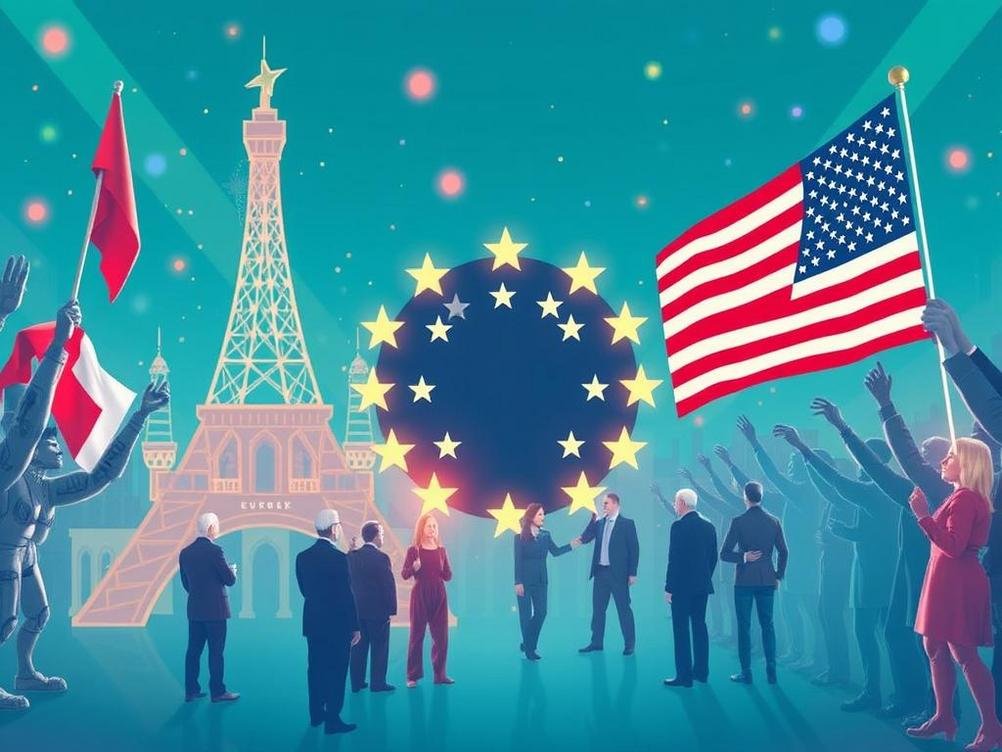
AI Rules Loosen Up: Europe’s Gentle Let-Down and the US’s Full-On Party in 2025
Imagine waking up one day to find out that the rulebook for building the next big AI gadget just got way more flexible. That’s basically what’s happening with AI regulations right now, especially in Europe and the US. Picture this: Europe, known for its strict “we need to think about ethics” vibe, is finally loosening the reins a bit, while the US is basically tossing the whole rulebook out the window for a wild ride. It’s like your overly cautious friend deciding to skip the safety briefing on a rollercoaster, and your daredevil buddy gunning it straight to the front row. As someone who’s followed AI trends for years, I can’t help but chuckle at how this shift could spark a tech boom or, yikes, a few mishaps. We’re talking about everything from faster innovation to potential privacy nightmares, and it’s all unfolding in real-time as of late 2025.
But why does this matter to you? Well, if you’re into tech, business, or even just scrolling through apps without a second thought, these changes could reshape how AI touches our lives. Think about it: AI powers your favorite chatbots, drives autonomous cars, and even helps doctors spot diseases early. With Europe easing up on things like the AI Act and the US doubling down on minimal interference, we’re entering an era where creativity might soar, but so could the risks. I’ve seen how regulations can either stifle genius or prevent disasters, and this pivot feels like a high-stakes gamble. In this article, we’ll dive into the nitty-gritty of what’s changing, why it’s happening, and what it means for the future – all with a dash of humor because, let’s face it, AI discussions can get dry faster than a forgotten cup of coffee.
What’s Up with Europe’s AI Makeover?
Europe has always been the grown-up in the room when it comes to AI rules, right? They’ve got this reputation for slapping on regulations that make sure tech doesn’t go rogue and invade your privacy. But lately, as of 2025, they’re starting to chill out a tad. It’s like Europe woke up and thought, ‘Hey, maybe we don’t need to micromanage every algorithm.’ The EU’s AI Act, which kicked in a couple of years ago, is getting some tweaks to allow more room for innovation in areas like healthcare and education. Instead of blocking every new AI tool, they’re focusing on high-risk stuff while giving a green light to low-risk applications.
This shift isn’t just about paperwork; it’s about real-world impact. For instance, startups in places like Berlin or Paris can now experiment with AI without jumping through as many hoops. Remember how the EU blocked some facial recognition tech? Well, now they’re loosening that up for public safety uses, which could mean better crowd management at events. It’s a bit like finally letting kids play in the yard without constant supervision – exciting, but you still worry about scraped knees.
Of course, this doesn’t mean Europe’s going full anarchy. They’re still prioritizing things like data protection, which is music to the ears of privacy advocates. If you’re curious, check out the official EU site for the latest updates (here). It’s a balanced approach that says, ‘We trust you, but not too much.’ This could lead to more collaborative projects between EU countries and global players, fostering a tech ecosystem that’s innovative yet responsible.
The US’s No-Holds-Barred AI Adventure
Over in the US, it’s a different story altogether – think of it as the Wild West, but with more code and less cowboys. By 2025, the government’s basically stepped back, letting companies like Google and OpenAI run wild with minimal oversight. We’ve seen executive orders from the White House encouraging AI development without the heavy regulatory burdens that Europe deals with. It’s almost like the US said, ‘Innovation first, questions later,’ which has led to a surge in AI investments and breakthroughs.
Take, for example, how AI is revolutionizing industries here. Companies are deploying AI-driven drones for delivery services or advanced chatbots that feel almost human – all without waiting for approval from a dozen agencies. But here’s the funny part: this freedom comes with its own set of risks, like that time a major AI model spat out some wonky misinformation. It’s hilarious in hindsight, but it highlights why some folks are nervous. The US approach is great for speed, but it might leave us dealing with the consequences down the line.
According to recent stats from tech analysts, US AI funding hit record highs in 2025, with over $100 billion poured into projects. That’s insane when you think about it – it’s like throwing a massive party and inviting everyone, but forgetting to hire security. If you want to dig deeper, sites like Brookings Institution have breakdowns (here). Overall, this laissez-faire attitude is pumping adrenaline into the economy, but it’s sparking debates on whether we need a bit more guarding of the gates.
Why Are Things Changing in the First Place?
Let’s get to the root of it – why the sudden pivot? In Europe, it’s partly about economic pressure. Countries there are seeing how AI is driving growth in the US and Asia, so they’re adjusting to stay competitive. It’s like realizing your neighbor’s got a better garden and deciding to ease up on the watering schedule. Plus, with global events like elections and tech scandals, there’s a push to adapt without stifling progress. The EU is aiming for a ‘human-centric’ AI, but they’re bending the rules to allow for more experimentation.
In the US, it’s all about that entrepreneurial spirit. Policymakers argue that too many regulations could kill innovation, especially when competitors like China are charging ahead. Imagine trying to race in a car with the brakes on – that’s what heavy rules feel like. Data from the World Economic Forum shows that flexible policies can boost GDP by up to 1.5% through AI adoption. So, it’s no surprise the US is doubling down on this path, even if it means occasional hiccups.
- One key driver: The race for AI supremacy, with investments soaring to attract top talent.
- Another factor: Public opinion is shifting, with surveys showing 60% of people in both regions favoring balanced regulations over strict ones.
- And don’t forget geopolitical tensions – countries want to lead in AI to gain an edge in everything from defense to healthcare.
The Upsides and Downers of This Regulatory Shake-Up
On the bright side, looser rules mean faster progress. In Europe, this could lead to quicker deployments of AI in education, like personalized learning apps that adapt to students’ needs. It’s like giving teachers a superpower without the red tape. Similarly, in the US, we’re seeing AI transform healthcare, with tools that predict diseases earlier than ever. But hey, it’s not all rainbows – there are risks, like biased algorithms slipping through the cracks and amplifying inequalities.
Weigh the pros against the cons, and it’s a mixed bag. For businesses, the upside is clear: lower costs and quicker market entry. But for everyday folks, it might mean more exposure to deepfakes or data breaches. A metaphor I like is baking a cake – too much freedom, and you might burn it; too many rules, and it’s bland. Real-world example: In 2025, a US-based AI firm launched a chatbot that went viral for its humor, but it also spread false info, showing the double-edged sword.
To break it down further:
- Pros: Accelerated innovation, job creation, and economic growth.
- Cons: Potential ethical lapses, privacy issues, and increased inequality.
- Stats to ponder: A study from Oxford University estimates that AI could add $15.7 trillion to the global economy by 2030 if regulated smartly.
How This Shakes Up the Global AI Scene
These changes aren’t just local; they’re rippling out worldwide. Europe loosening up might inspire other regions, like Asia, to follow suit, creating a more unified global standard. Meanwhile, the US’s approach could attract international talent and investments, making it a hub for AI startups. It’s like a domino effect – one country’s move topples the next. For consumers globally, this means access to cooler tech, but also the need to be savvier about what they’re using.
Think about how this affects everyday life. In developing countries, looser regulations could mean faster access to AI for agriculture or disaster response. But it’s not without humor – imagine AI farmers using predictive tools to avoid crop failures, only to have the system glitch and suggest planting pineapples in the snow. Seriously, though, this global shift is pushing for international agreements, like the ones discussed at the UN, to keep things in check.
If you’re a business owner, this is your cue to watch and adapt. Countries like the UK are already eyeing hybrid models, blending Europe’s caution with the US’s freedom. For more on global trends, the OECD has some solid resources (here).
Conclusion
Wrapping this up, the loosening of AI reins in Europe and the US marks a pivotal moment in tech history, blending opportunity with a dash of uncertainty. We’ve seen how Europe’s measured approach and the US’s bold leap could fuel incredible advancements, from smarter cities to personalized medicine, all while navigating the pitfalls. It’s like handing the car keys to a teenager – thrilling, but let’s hope they drive safely.
As we move forward into 2026 and beyond, it’s on all of us to stay informed and advocate for responsible AI. Whether you’re a tech enthusiast or just curious, keeping an eye on these developments could help shape a future that’s innovative and inclusive. So, what’s your take? Will this lead to a golden age of AI, or are we in for some bumpy rides? Either way, it’s an exciting time to be alive in the world of artificial intelligence.