dailytech.ai
Is AI’s Big Revolution Just a Bunch of Hype? Why Businesses Are Still Twiddling Their Thumbs in 2025
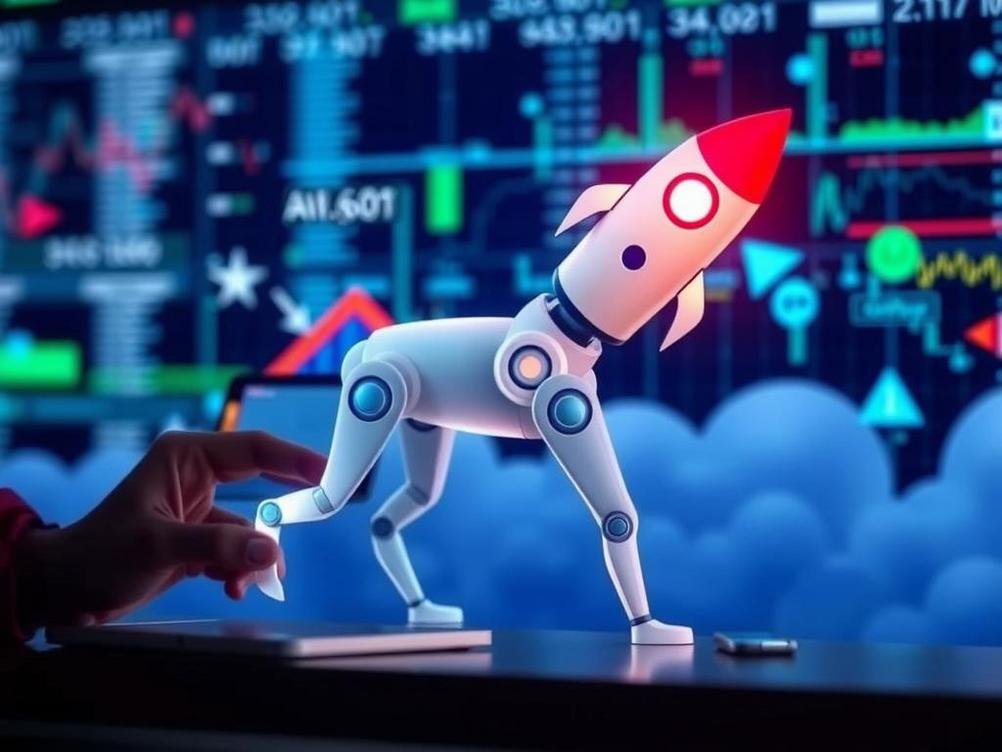
Remember when AI was pitched as the next big thing that would flip the world upside down? Picture this: it’s 2025, and we’re still seeing those glossy ads promising AI will automate everything from your coffee machine to your company’s entire supply chain. But let’s be real for a second—has it really lived up to the hype? I mean, companies have been throwing money at AI like it’s the hottest trend, yet many are still waiting for that so-called revolution to show up. It’s like ordering a pizza and getting a note saying, “It’s on the way, promise!” weeks later. This topic hits home because I’ve seen friends in tech get all excited about AI tools that were supposed to change the game, only to deal with glitches and unmet expectations. In this article, we’re diving into why AI’s promises feel more like distant dreams than daily realities, exploring the real challenges businesses face, and maybe even finding a few laughs along the way. After all, who doesn’t love a good story about overhyped tech that ends with a glimmer of hope? We’ll break it down step by step, looking at the hype, the hurdles, and what might actually get us moving forward. By the end, you might just rethink how you’re approaching AI in your own world—whether that’s at work or just fiddling with those smart home gadgets that never quite work right.
The Hype Machine: AI’s Bold Promises That Got Everyone Hooked
You know how every blockbuster movie starts with a massive buildup? That’s basically what happened with AI. Back in the early 2010s, folks like Elon Musk and the gang at OpenAI were talking about AI as if it were going to solve world hunger, predict the stock market, and maybe even fold your laundry. Companies jumped on board, investing billions because, hey, who doesn’t want a tech wizard in their corner? But fast forward to today, and it’s like that promised magic show never quite materialized. I’ve got a buddy who runs a small marketing firm, and he tells me about pouring cash into AI chatbots that were supposed to handle customer service flawlessly. Instead, they ended up spitting out nonsense replies that made customers run for the hills. It’s hilarious in hindsight, but not so much when you’re losing clients.
What’s really cooking under this hype is the way AI was sold as a cure-all. Think about it: ads everywhere screaming about “revolutionary” AI that would boost productivity by 50% or more. Stats from places like McKinsey reports show that businesses expected AI to add trillions to the global economy by now. Yet, according to a 2025 survey by Gartner, only about 30% of companies have seen substantial returns on their AI investments. That’s not exactly a roaring success, is it? It’s like buying a high-end sports car and finding out it only drives in reverse. The point is, while AI has delivered some cool tricks—like better recommendation algorithms on Netflix—it’s far from the all-out revolution that was promised. And that gap between expectation and reality? That’s where the waiting game begins.
To put it in perspective, let’s list out a few of the big promises that got dusted off the shelves:
- Seamless automation: AI was supposed to handle repetitive tasks so humans could focus on the fun stuff, but many systems still need constant human oversight.
- Hyper-accurate predictions: From forecasting sales to detecting fraud, AI was hailed as a crystal ball, yet errors in data can throw everything off kilter.
- Cost savings galore: Companies thought they’d cut expenses left and right, but integrating AI often requires expensive overhauls and training.
Why Companies Are Still Waiting: The Reality Check Nobody Wanted
Alright, let’s get down to brass tacks. If AI was supposed to be this game-changer, why are executives still staring at their screens wondering when the magic will kick in? A big part of it boils down to good old implementation woes. Picture trying to assemble IKEA furniture without the instructions—that’s what deploying AI feels like for a lot of businesses. They’ve got the pieces, but getting them to fit just right is a nightmare. I remember chatting with a CEO who spent a fortune on an AI system for inventory management, only to find it couldn’t handle the quirky variations in their supply chain. It’s frustrating, right? You’re promised a smooth ride, but instead, you’re dealing with potholes everywhere.
And don’t even get me started on the data dilemmas. AI is only as good as the info it’s fed, and let’s face it, not every company has perfect data lying around. A report from the World Economic Forum in 2024 highlighted that data quality issues are stalling AI projects in over 40% of cases. That’s a massive roadblock! It’s like trying to bake a cake with half the ingredients missing—you might end up with something edible, but it’s not going to win any awards. Companies are waiting because they’re caught in this loop of fixing data problems, retraining models, and hoping for the best. If you’re running a business, this might sound all too familiar, and it’s enough to make you chuckle (or cry) at the irony.
- Integration challenges: AI doesn’t play well with legacy systems, forcing companies to overhaul their tech stacks.
- Skill gaps: There’s a shortage of folks who know how to handle AI, so training becomes another hurdle.
- Unexpected costs: What starts as a budget-friendly tool can balloon into a money pit with ongoing maintenance.
Real-World Examples: AI Gone Wrong (And a Few Wins)
Let’s spice things up with some stories from the trenches. Take, for instance, the retail world, where AI was supposed to revolutionize personalized shopping. Brands like Walmart tried rolling out AI-driven recommendations, but users complained about getting suggestions that were way off base—like recommending winter coats in the middle of summer. It’s almost comical, but it shows how AI can miss the mark when it doesn’t account for real-time nuances. On the flip side, companies like Amazon have nailed it with their AI logistics, cutting delivery times dramatically. So, it’s not all doom and gloom, but these mixed results are why businesses are still on the fence.
Another example? Healthcare. AI was touted as the hero for diagnostics, with tools like IBM’s Watson promising to spot diseases faster than a doctor. But in practice, it stumbled with inaccurate predictions in complex cases, leading to hospitals pulling back. According to a 2025 study from the New England Journal of Medicine, AI adoption in healthcare is only at 25%, largely due to reliability concerns. It’s like having a super-smart friend who gives great advice most of the time but occasionally leads you astray. These tales remind us that while AI has potential, it’s not the invincible force it was cracked up to be, and companies are wise to proceed with caution.
For a quick breakdown, here’s how some sectors stack up:
- Retail: Wins in inventory, but losses in customer personalization.
- Finance: Great for fraud detection, but struggles with regulatory compliance.
- Manufacturing: AI robots are a hit for assembly lines, yet downtime from errors is a buzzkill.
What’s Holding AI Back? The Usual Suspects in the Shadows
If we’re playing detective, the culprits behind AI’s slow rollout are pretty easy to spot. First up, ethics and bias—AI systems trained on skewed data can perpetuate inequalities, and that’s a can of worms no company wants to open. I mean, imagine an AI hiring tool that favors certain demographics; that’s a lawsuit waiting to happen. Regulatory hurdles are another big one, with governments worldwide tightening the screws on AI usage to prevent misuse. In the EU, for example, the AI Act of 2024 has companies jumping through hoops just to deploy basic tools. It’s like trying to run a marathon with ankle weights—possible, but not pretty.
Then there’s the tech itself. Not all AI models are created equal, and many are still in their awkward teenage phase, prone to errors and inefficiencies. A 2025 report from Statista points out that computational costs for AI have skyrocketed, making it inaccessible for smaller businesses. It’s a bit like that friend who always has the latest gadget but can’t afford to fix it when it breaks. All these factors combined mean companies are holding back, waiting for the tech to mature before diving in headfirst.
Signs of Progress: Is the Revolution Finally Getting Its Act Together?
Okay, enough bashing—let’s talk about the bright spots. In 2025, we’re seeing AI make strides in areas like generative tools, with things like ChatGPT’s successors actually delivering useful content without the usual blunders. For instance, Google’s latest AI integrations are helping with creative tasks, and early adopters are reporting real efficiency gains. It’s like watching a kid learn to ride a bike; there are wobbles, but they’re staying upright more often. Companies that have tweaked their strategies are starting to see payoffs, which gives me hope that the wait won’t be forever.
One cool example is in education, where AI tutors are personalizing learning for students. Tools from Khan Academy, like their AI-powered platforms, are adapting to individual needs and boosting engagement. If you’re in business, this could translate to better employee training programs. According to UNESCO’s 2025 education report, AI is enhancing learning outcomes by 20% in pilot programs. So, while the revolution isn’t here yet, these pockets of progress show it’s inching closer, one step at a time.
- Improved accuracy in AI models through better training data.
- Collaborations between big tech and regulators to smooth out ethical issues.
- Cost reductions in AI hardware, making it more accessible.
How Companies Can Navigate the AI Landscape Without Losing Their Minds
So, what can you do if you’re a business owner staring at this AI mess? Start small, that’s my advice. Don’t go all in on some flashy AI system; test the waters with something manageable, like an AI tool for email sorting. It’s like dipping your toe in the pool before jumping in—you avoid the shock. Companies that succeed are the ones investing in training their teams, so everyone’s on the same page. I know a startup that did this and turned their AI chat support into a star player by involving employees in the tweaks.
Also, keep an eye on emerging trends, like hybrid AI-human approaches, which blend the best of both worlds. Resources like the AI website from MIT (check out ai.mit.edu) offer great insights on best practices. By being strategic, you can sidestep the hype and build something sustainable. Remember, patience is key—AI’s revolution might be late, but it’s worth the wait if you play your cards right.
Conclusion: Wrapping Up the AI Wait Game with a Dash of Optimism
In the end, AI’s promised revolution feels a bit like that friend who’s always late to the party, but when they show up, they bring the good vibes. We’ve seen the hype, the hiccups, and the hints of progress, and it’s clear that while companies are still waiting, the future isn’t as dim as it seems. By understanding the challenges and taking measured steps, businesses can position themselves to ride the wave when it finally hits. Who knows? By 2026, we might be laughing about all this waiting over a beer, toasting to AI’s triumphs. So, keep your chin up, stay informed, and remember: the best revolutions are the ones that take their time to get right.