dailytech.ai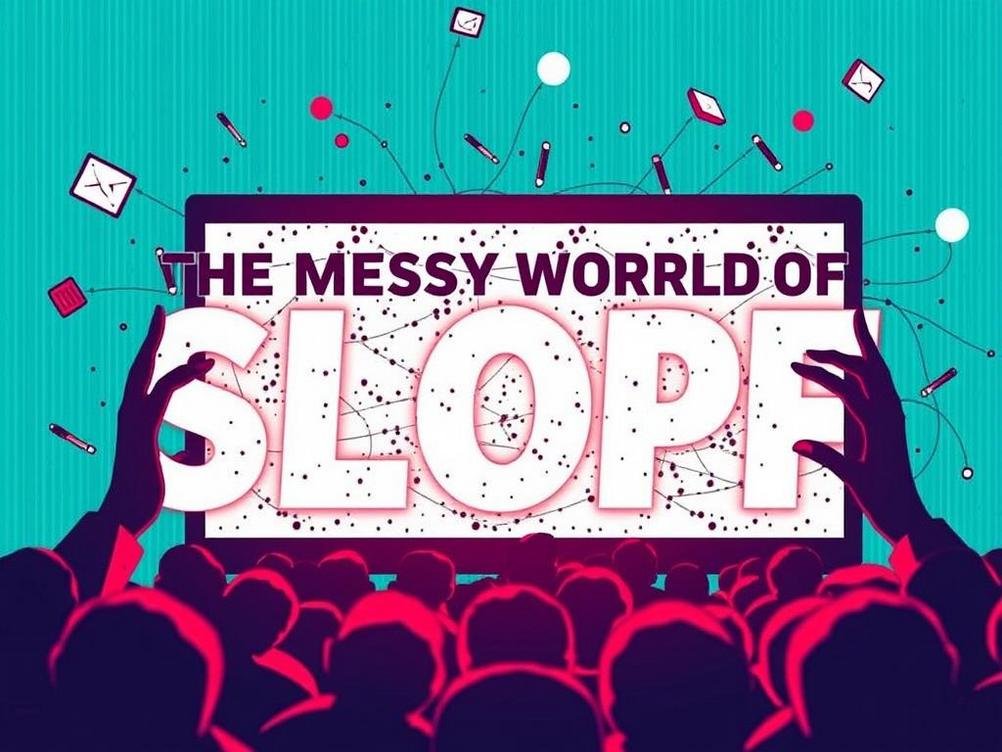
The Messy World of AI Slop: How Shoddy AI Content is Supercharging Online Propaganda
Okay, picture this: You’re scrolling through your social feed one lazy evening, and you stumble across a post that looks legit—a dramatic image of a city in ruins, with a caption screaming about some world-ending scandal. But wait, something’s off. The faces in the photo look weirdly blurred, like they got caught in a bad Photoshop filter, and the text reads like it was written by a robot with a thesaurus addiction. That’s “AI slop” for you, folks—that junky, low-quality stuff churned out by AI tools that’s now becoming the secret weapon in online propaganda wars. Researchers are sounding the alarm, saying bad actors are using this digital dreck to spread misinformation faster than ever. It’s like the Wild West of the web, where anyone with a laptop can flood the internet with fake news, memes, and outright lies, all dressed up in AI’s sloppy best. Think about it: We’re living in an age where AI can generate content at lightning speed, but not everything it spits out is golden. In fact, a lot of it is pure garbage, and that’s exactly what makes it so dangerous. It’s not just about fooling a few people anymore; it’s about manipulating entire crowds, swaying elections, or even stirring up real-world chaos. As someone who’s geeked out on tech for years, I’ve seen how this stuff evolves, and let me tell you, it’s a wake-up call for all of us. So, buckle up as we dive into the nitty-gritty of AI slop and why it’s turning the internet into a battleground of half-baked hype.
What Exactly is AI Slop, Anyway?
You know when you ask an AI to write a poem and it comes out sounding like a bad translation from another language? That’s basically AI slop—low-effort, error-ridden content generated by AI models that weren’t fed enough quality data or weren’t fine-tuned properly. It’s not the polished stuff you see in fancy ads; it’s the cheap knockoff version. Researchers, like those from organizations such as the Bellingcat investigative group, have been pointing out how AI slop includes everything from glitchy images to garbled text that’s just convincing enough to pass as real. Imagine a kid trying to forge a note from their parents—it might work for a second, but anyone with half a brain can spot the mistakes.
What makes it so sneaky is that it doesn’t take a genius to create. Tools like free versions of AI generators can pump out hundreds of posts in minutes, flooding platforms with nonsense. And here’s a fun fact: According to a 2024 report from the RAND Corporation, up to 60% of online misinformation could be linked to AI-generated content by now. It’s like AI slop is the fast food of the digital world—quick, cheap, and not great for you. But when it’s weaponized, it becomes a tool for propaganda, tricking people into believing utter baloney.
- It often features telltale signs like unnatural phrasing, repetitive patterns, or images with odd distortions.
- Examples include fake news articles or viral videos that look real but fall apart under scrutiny.
- The beauty—or horror—of it is that it’s scalable; one person can generate a storm of content without breaking a sweat.
How AI Slop is Sneaking into Propaganda Campaigns
Let’s get real—bad actors aren’t using top-tier AI for this stuff. They’re grabbing whatever’s free and easy, like open-source models, to crank out propaganda that’s just plausible enough to go viral. Think about how a simple tweet storm of AI-generated rumors can snowball into a full-blown controversy. Researchers from places like the Council on Foreign Relations have noted that groups pushing political agendas are mixing AI slop with real events to create confusion. It’s like throwing a wrench into a machine—suddenly, what’s fact and what’s fiction gets all mixed up.
Take the 2024 elections as an example; there were reports of AI slop being used to fabricate endorsements or spread fake scandals. It’s not about perfection—it’s about volume. Flood the zone with enough crap, and people start questioning everything. I remember reading about how in some online forums, AI-generated posts made up a whopping 40% of the content, as per a study by Oxford’s Internet Institute. That’s insane! It’s like trying to find a needle in a haystack, except the haystack is on fire.
- Start with a seed of truth, then layer on AI slop to exaggerate it.
- Use automated bots to share it across platforms, making it seem like a grassroots movement.
- Rinse and repeat until the narrative sticks in people’s minds.
The Real-World Dangers of This Digital Gunk
Here’s where things get scary: AI slop isn’t just annoying; it can lead to real harm. Imagine a propaganda campaign using sloppy AI to stir up hate against a community—suddenly, fake images and stories are everywhere, and people act on them. Researchers warn that this could fuel everything from online harassment to physical violence. It’s like a prank that went way too far, but without the apology at the end. In 2025, we’ve already seen cases where AI-generated deepfakes influenced public opinion, leading to protests or even market crashes.
Statistically speaking, a report from the World Economic Forum estimates that misinformation costs the global economy billions each year, and AI slop is a big chunk of that pie. It’s not just about lies; it’s about eroding trust in everything. You ever feel like you can’t believe anything online anymore? That’s the endgame here. As someone who’s followed tech trends, I’ve got to say, it’s a bit like watching a slow-motion train wreck.
- Mental health impacts: Constant exposure can make folks paranoid or anxious.
- Social division: It amplifies echo chambers, pitting groups against each other.
- Economic fallout: Fake news about companies can tank stocks overnight.
Spotted the Slop: Tips to Tell Real from Fake
If you’re tired of getting duped, don’t worry—there are ways to spot AI slop before it pulls you in. First off, look for those dead giveaways, like text that doesn’t quite make sense or images that have that uncanny valley vibe. Researchers suggest using tools like Hugging Face for detecting AI-generated content, but even without tech, your gut can be a great guide. For instance, if a story seems too outrageous and lacks credible sources, it’s probably slop. It’s like checking the ingredients on a food label—if it looks suspicious, skip it.
Here’s a metaphor for you: Think of AI slop as counterfeit money. It might fool you at first glance, but once you hold it up to the light, the flaws show. In practice, I always cross-check info with reliable sites before sharing. Oh, and stats from a 2025 survey by Pew Research show that only 30% of people regularly fact-check, which is why we’re in this mess. Let’s change that!
- Check for inconsistencies in the content, like mismatched details or poor grammar.
- Use reverse image search tools to verify photos.
- Follow trusted news outlets and cross-reference stories.
What Researchers Are Saying—And Why We Should Listen
Look, the experts aren’t just sitting around twiddling their thumbs; they’re dropping some serious knowledge on AI slop. Groups like the Stanford AI Index have been tracking how propaganda campaigns are evolving with AI, and their findings are eye-opening. They point out that while AI can be a force for good, the slop version is being exploited by state actors and trolls alike. It’s kind of like giving a toddler a chainsaw—fun until someone gets hurt.
One researcher I came across likened it to a “digital pollution problem,” where the sheer volume overwhelms our ability to filter it. Data from recent studies shows a 50% increase in AI-generated propaganda over the last year. What’s hilarious—in a dark way—is that even the AI creators are admitting the flaws. So, if the pros are worried, maybe it’s time we all paid attention.
- Key insights include the need for better regulation of AI tools.
- Researchers advocate for media literacy programs to combat the spread.
- It’s not all doom and gloom; they’re also developing AI detectors to fight back.
Steps We Can Take to Fight Back Against AI Slop
Alright, enough doom-scrolling—let’s talk solutions. If AI slop is the problem, then education and tech are our best defenses. Start by supporting platforms that crack down on fake content, like those implementing AI detection algorithms. And personally, I’ve made it a habit to question everything I see online. It’s like being a detective in your own living room. Researchers recommend simple steps, such as using browser extensions that flag suspicious content, which can cut through the noise effectively.
For bigger changes, we need policymakers to step up. Imagine if governments mandated transparency in AI-generated content, like watermarking it so you know it’s fake. A 2025 initiative by the EU is already pushing for this, and it’s a step in the right direction. At the end of the day, it’s about not letting the tech tail wag the dog.
- Educate yourself and others on spotting fakes.
- Support ethical AI development through organizations like Partnership on AI.
- Get involved in community efforts to report misinformation.
Conclusion
Wrapping this up, the rise of AI slop in online propaganda is a reminder that our digital world isn’t as shiny as it seems, but it’s not game over yet. We’ve explored how this messy AI output is being weaponized, the risks it poses, and ways to push back. It’s easy to feel overwhelmed, but think of it as a challenge that keeps us sharp—after all, who doesn’t love a good plot twist in the story of tech? By staying vigilant, supporting research, and demanding better from our tools, we can turn the tide. Let’s make sure the future of AI is one we shape, not one that shapes us. So, next time you see something sketchy online, don’t just like and share—dig deeper and make a difference.