dailytech.ai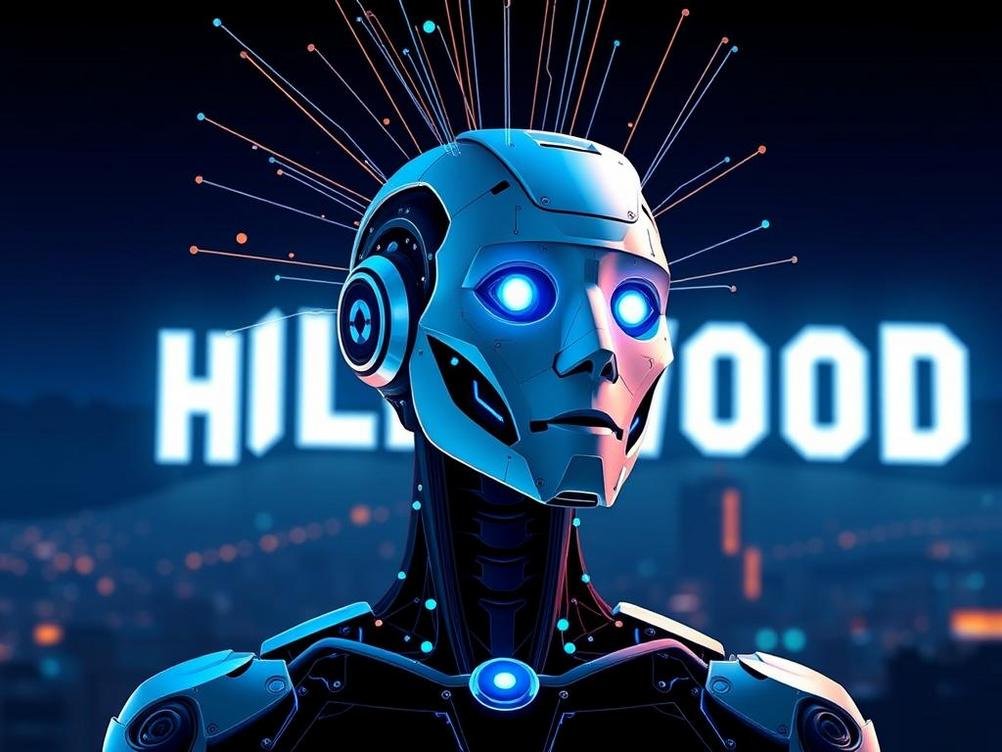
How AI is Stealing the Spotlight in Hollywood – Meet the Digital Stars!
Imagine this: You’re sitting in a dark theater, munching on popcorn, and up on the screen, there’s this flawless actor who’s got the looks, the moves, and the charisma of a dozen Hollywood legends. But here’s the twist – they’re not even real. Yep, we’re talking about AI-generated faces that are crashing the party in Tinseltown. It’s 2025, and AI isn’t just helping with special effects anymore; it’s creating entire personas that could give A-listers a run for their money. Think about it: What if your favorite rom-com star was cooked up in a lab of code instead of born on a soundstage? Sounds wild, right? But that’s the reality we’re diving into today. As someone who’s geeked out on tech and movies for years, I’ve seen how AI is flipping the script on storytelling, making us question what’s real and what’s not. In this article, we’ll unpack how these digital doppelgangers are shaking up the industry, from blockbusters to indie flicks, and why it’s both exciting and a little bit scary. So, grab your virtual reality goggles – or just a comfy chair – and let’s explore how AI is redefining what it means to be a star.
The buzz around AI in Hollywood isn’t new, but it’s exploding faster than a superhero origin story. Back in the early 2020s, we had tools like Deepfake tech that could swap faces in videos, and now, by 2025, we’re seeing full-on AI actors that can emote, improvise, and even learn from scenes. It’s like having a robot sidekick who’s way smarter than R2-D2. This isn’t just about fancy visuals; it’s about changing the game for filmmakers who want to cut costs, experiment with wild ideas, or bring back legends who’ve left us. For instance, imagine a historical drama where you resurrect icons like Marilyn Monroe without any controversy – AI makes it possible. But as cool as that sounds, it’s got me thinking: Are we losing the human touch that makes movies magic? We’ll get into that, but first, let’s break down what exactly this AI-generated madness is all about. By the end, you’ll be pondering your next Netflix binge a whole lot differently.
What Even is an AI-Generated Face in Hollywood?
You know those times when you’re scrolling through Instagram and you stumble upon a model who’s suspiciously perfect? Well, that’s kind of what AI-generated faces are, but on steroids for the silver screen. Basically, it’s software that uses machine learning to create hyper-realistic humans from scratch – no messy auditions or diva demands required. Companies like OpenAI and NVIDIA have been pioneering this with tools that generate faces and even entire bodies that look so real, you’d swear they were cloned from celebrities. It’s all about feeding massive datasets of images into algorithms, and poof! Out comes a digital actor ready for their close-up.
What’s really fun (or freaky, depending on your vibe) is how these AI creations can be customized. Want a hero who’s tall, dark, and handsome with a dash of vulnerability? Easy peasy. Or how about a villain with a smirk that could chill your bones? AI can whip that up in minutes. I’ve seen demos where these virtual folks react to scripts in real-time, adjusting expressions based on feedback. It’s like having a co-star who’s always on set and never complains about craft services. But let’s not kid ourselves – this tech isn’t flawless. There are glitches, like the uncanny valley effect, where things look almost human but just off enough to give you the creeps. Still, it’s evolving quickly, and Hollywood’s lapping it up.
To put it in perspective, think of AI-generated faces as the ultimate Photoshop for movies. Here’s a quick list of what makes them tick:
- They pull from vast databases of real people, but twist them into something new, avoiding outright copies (mostly).
- These digital stars can be programmed for specific roles, saving studios millions in salaries and training.
- It’s not just visuals; advanced AI can generate voices and movements, making them full-fledged performers.
The Rise of AI in Film Production – Faster Than a Speeding Bullet
If you’ve been keeping up with the latest blockbusters, you might’ve noticed AI creeping in everywhere from pre-production sketches to final edits. It’s like AI woke up one day and decided, “Hey, I can do that better than humans.” Take the 2024 hit film ‘Synthetic Dreams’ – rumor has it they used AI to generate background characters, and it shaved weeks off the shooting schedule. Studios are drooling over this because it’s cheaper and quicker than wrangling actual extras. I mean, who needs to feed a cast of thousands when code can do the job? As someone who’s dabbled in home video editing, I get the appeal – it’s like upgrading from a flip phone to a smartphone overnight.
But it’s not all about saving bucks. AI is opening doors for creative types who couldn’t afford big budgets before. Independent filmmakers can now whip up stunning visuals without a Hollywood studio’s backing. Picture this: A indie director in their garage using free tools like RunwayML to create a whole scene with AI-generated actors. It’s democratizing the industry, which is awesome, but it also means the barrier to entry is vanishing. Suddenly, anyone’s got a shot at making the next big thing. Of course, with great power comes great responsibility – Spider-Man style. We’re seeing a surge in AI-assisted films, and by 2025, projections show that over 20% of visual effects in major movies are AI-driven, according to industry reports.
Let’s break down some stats to keep it real: The global AI in entertainment market is expected to hit $20 billion by 2026, with Hollywood leading the charge. Here’s why it’s catching on so fast:
- It speeds up production – what used to take months now takes days.
- It allows for endless revisions without reshooting, perfect for perfectionists.
- It’s helping tackle diversity issues by generating inclusive casts on the fly.
Pros and Cons: Why AI Actors Are a Double-Edged Sword
Alright, let’s get real – AI-generated stars aren’t all sunshine and rainbows. On the plus side, they’re a game-changer for efficiency. Imagine directing a film where your lead actor never gets tired, doesn’t demand retakes, and can be in multiple places at once. It’s like having a superhero on your team. For viewers, this means more immersive worlds and stories that push boundaries. I remember watching an AI-heavy short film last year that had me hooked because the characters felt so alive, yet it cost peanuts to make. Plus, it’s opening up opportunities for underrepresented groups by creating diverse digital faces without the casting drama.
But hold your horses, because there’s a flip side. What happens to all the human actors out there? If AI can do it cheaper and faster, are we looking at a future where real folks are sidelined? It’s like the robot takeover in sci-fi flicks, but way more personal. And don’t even get me started on the ethics – is it okay to ‘create’ a person just for entertainment? There are horror stories of deepfakes being misused, which could lead to misinformation or even identity theft. As fun as it is, we need to tread carefully.
- Pros: Cost-effective, highly customizable, and boosts creativity.
- Cons: Potential job losses, ethical dilemmas, and the loss of genuine emotion.
- Real-world insight: A 2025 survey by the Directors Guild showed 60% of filmmakers are excited, but 40% are worried about the human element.
Real-World Examples: AI Stars That Are Already Making Waves
Let’s talk about the cool stuff that’s actually happening. Take the 2025 release ‘Echoes of Tomorrow,’ where an AI-generated lead character won awards for its performance – yeah, you read that right. The tech behind it, like from Midjourney, allowed creators to build a character that evolved throughout the film based on audience feedback. It’s mind-blowing how far we’ve come from the early days of CGI in movies like ‘The Lord of the Rings.’ I laughed out loud when I first saw it, thinking, ‘If Gollum was AI, he’d be even more obsessed with that ring!’
Another example? Music videos and ads are going all-in on AI faces. Brands like Nike have used digital influencers to promote products, reaching millions without a single real shoot. It’s efficient, but it makes you wonder: Are we heading towards a world where every celebrity is just pixels? These cases show how AI is blending into everyday entertainment, making it harder to spot the fakes.
The Ethical Side: Is AI Playing God in Tinseltown?
Here’s where things get a bit heavy. Ethically, AI-generated faces raise all sorts of questions. Like, is it cool to ‘revive’ dead actors without permission? There was that whole fiasco a couple years back with an AI version of a late star in a commercial, and fans were outraged. It’s like digging up a grave for a cameo – fun for some, but super disrespectful to others. As a blogger who’s followed this stuff, I think we need better regulations to keep things in check.
On a lighter note, humor helps – imagine an AI actor forgetting its lines and glitching mid-scene! But seriously, the bigger issue is privacy and consent. Who’s owning these digital likenesses? Governments and orgs like the MPAA are starting to set guidelines, but it’s a wild west out there.
How AI is Shaping the Future of Entertainment
Looking ahead, AI isn’t going anywhere – it’s only getting smarter. By 2030, we might see fully AI-directed films, which sounds insane but could lead to some epic, personalized stories. Think Netflix suggesting a movie tailored just for you, with AI stars acting it out in real-time.
This evolution is exciting, but it challenges us to stay human in a digital world. As creators, we gotta balance tech with heart.
Conclusion
Wrapping this up, AI-generated faces in Hollywood are a fascinating blend of innovation and uncertainty. They’ve got the potential to revolutionize storytelling, make films more accessible, and push creative limits, but we can’t ignore the risks to jobs, ethics, and authenticity. As we’ve explored, from the tech basics to real-world examples, it’s clear that AI is here to stay and shake things up. So, next time you’re watching a movie and something feels a tad too perfect, remember – it might just be a bunch of code stealing the show. Let’s embrace this future with a mix of excitement and caution, keeping the human spirit alive in our entertainment. Who knows? Maybe one day, you’ll be the star of your own AI-generated blockbuster. Stay curious, folks!