
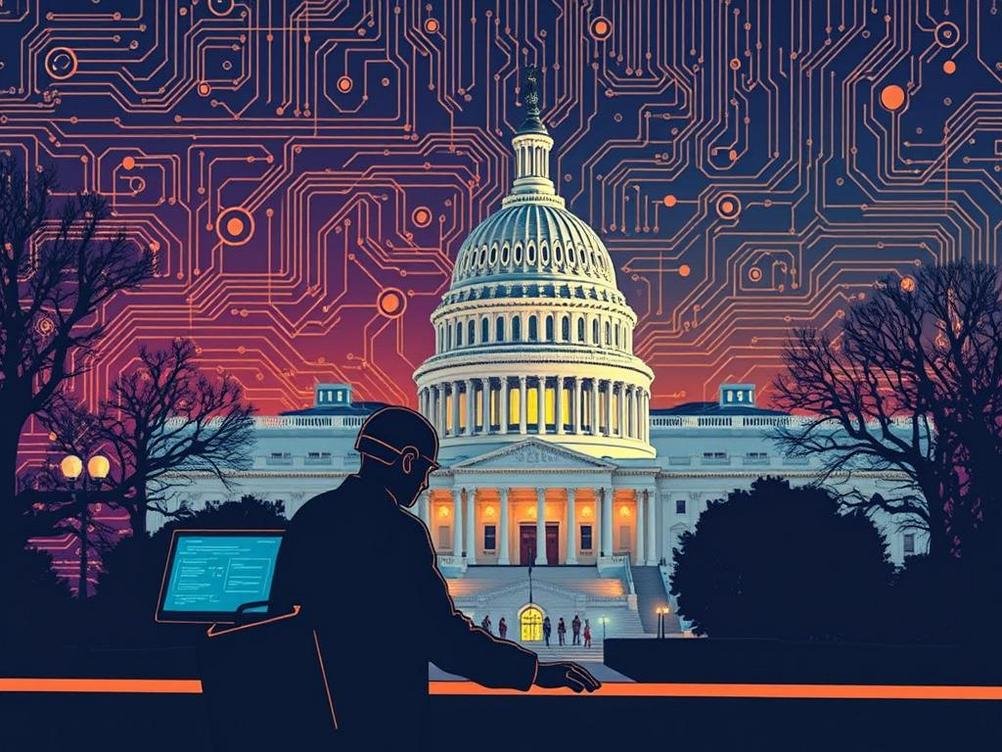
AI’s Taking Over the Boring Stuff: What’s Next for Federal Workers?
AI’s Taking Over the Boring Stuff: What’s Next for Federal Workers?
Imagine this: You’re a federal worker, knee-deep in stacks of paperwork that make your eyes glaze over, when suddenly, a sleek AI bot swoops in like a caffeinated superhero and handles all the tedious data entry for you. Sounds like a dream, right? Well, with AI increasingly muscling in on those mind-numbing tasks, it’s not just a sci-fi flick anymore—it’s happening right now in government offices across the country. But here’s the big question: What does this mean for you, the human in the mix? Are we all doomed to be replaced, or is this a golden opportunity to level up your career? As someone who’s been following AI’s wild ride through the workforce, I can tell you it’s a mix of excitement and a few speed bumps. Think about it—AI isn’t just about robots stealing jobs; it’s about freeing us up to do the stuff we’re actually good at, like creative problem-solving and making decisions that matter. In this article, we’ll dive into how AI is reshaping federal jobs, what skills you might need to brush up on, and how to turn this tech takeover into your personal win. By the end, you’ll see that while AI might be taking over the mundane, it’s humans who’ll still call the shots—or at least, that’s the hope. So, grab a coffee, settle in, and let’s explore what the future holds for our hardworking federal folks. It’s going to be a fun, bumpy road ahead.
The Rise of AI in Government Offices
AI isn’t exactly new, but it’s finally crashing the party in federal agencies like the IRS or the Department of Defense, where it’s chomping through routine tasks that used to eat up hours of your day. Picture this: Instead of manually sorting through mountains of forms, AI algorithms are now doing the heavy lifting, spotting patterns and errors faster than you can say ” bureaucracy blues.” It’s like having a tireless intern who never complains—or takes coffee breaks. This shift started picking up steam a few years back, especially after the pandemic forced everyone online, and now, with tools like machine learning models from companies such as OpenAI, it’s becoming standard. But don’t get me wrong, this isn’t about AI taking over the world; it’s about making government work smarter, not harder.
What’s driving this? Well, for one, taxpayers are demanding efficiency, and AI delivers. Take the Social Security Administration, for example—they’ve been experimenting with chatbots to handle basic inquiries, freeing up human reps for more complex cases. It’s a win-win, really. But as cool as it sounds, not everyone’s on board. Some folks worry about job security, and honestly, who can blame them? If AI’s handling the grunt work, what’s left for the average federal employee? That’s where the real conversation starts, and it’s not all doom and gloom. In fact, this could be the nudge we need to rethink how government jobs are structured. After all, if AI’s got the boring bits covered, imagine what we could achieve with our freed-up time—like actually innovating instead of just pushing papers.
- First off, AI tools are cutting down on errors in data processing, which means less time fixing mistakes and more time on meaningful projects.
- Secondly, it’s boosting productivity—studies from the Brookings Institution show that AI could automate up to 30% of federal tasks, giving workers a breather.
- And let’s not forget, this tech is scalable, so smaller agencies can level up without hiring armies of new staff.
How AI is Automating the Mundane Tasks
Let’s get real—nobody signed up for a federal job to spend their days on repetitive crap like filing reports or data entry. That’s where AI shines, stepping in to handle the stuff that makes you want to pull your hair out. Think of it as your new robotic sidekick, tirelessly processing claims or analyzing emails without a single yawn. For instance, the GSA (General Services Administration) has been using AI-powered software to streamline procurement processes, which used to be about as fun as watching paint dry. Now, with tools like IBM Watson, it’s all automated, leaving you to focus on the big-picture stuff. But here’s the twist: While AI’s great at the grunt work, it’s not perfect. It can miss nuances or make odd decisions, so humans still need to be in the loop.
From my perspective, this automation is like upgrading from a flip phone to a smartphone—suddenly, everything’s easier, but you still need to know how to use it. AI isn’t just replacing tasks; it’s transforming them. For federal workers, that might mean shifting from manual data crunching to overseeing AI systems. Take the VA (Veterans Affairs), where AI is helping schedule appointments more efficiently. It’s saved time, but it also means employees have to learn how to interpret AI outputs. And let’s add a dash of humor here—who knew that in 2025, your biggest rival at work would be a algorithm that never takes a sick day? The key is adapting, not resisting.
- AI handles routine data analysis, like in the Census Bureau, where it processes survey responses in record time.
- It automates customer service, as seen with the EPA’s chatbots answering environmental queries.
- Finally, it’s optimizing logistics, such as in the Department of Transportation, where predictive algorithms forecast traffic patterns.
Opportunities Knocking for Federal Workers
Alright, so AI’s taking over the boring jobs—big deal. The real excitement lies in the doors it opens for federal workers to step into more rewarding roles. Instead of being stuck in a rut, you could be the one guiding AI strategies or innovating new policies. It’s like going from being a line cook to head chef; sure, the kitchen’s changed, but now you’re calling the shots. Organizations like the Office of Personnel Management are already pushing for reskilling programs, helping employees pivot to areas like AI ethics or data oversight. If you’re in IT or analytics, this is your moment to shine—demand for folks who can bridge the gap between tech and government is skyrocketing.
What’s even better is that this shift could lead to better work-life balance. With AI handling the drudge work, you might finally leave the office on time. I remember chatting with a friend in the FBI who said AI tools have cut his report-writing time in half, giving him more evenings with the family. It’s not all rosy, though; you’ll need to stay curious and proactive. Enroll in online courses from platforms like Coursera, which offer AI certifications tailored for government pros. The point is, AI isn’t the enemy—it’s a partner, and seizing these opportunities could make your career more fulfilling than ever.
- Explore roles in AI supervision, where you ensure tools are used ethically and effectively.
- Dive into project management for AI initiatives, turning you into a key player in digital transformation.
- Or, get into consulting within your agency, advising on how AI can improve operations.
Skills You’ll Need to Thrive in an AI World
So, if AI’s flipping the script, what’s on your must-learn list? Gone are the days when basic computer skills cut it—you’ll want to bulk up on tech know-how to stay relevant. Think of it as leveling up in a video game; you need new abilities to beat the boss. For federal workers, that means picking up skills like machine learning basics or data visualization. Sites like Khan Academy have free resources that make this approachable, even if you’re not a tech whiz. The great news? You don’t have to become a coding genius overnight; it’s about understanding how AI works so you can collaborate with it.
From what I’ve seen, soft skills are just as crucial. Things like critical thinking and communication will set you apart, because AI can’t chat with colleagues or negotiate budgets. A report from McKinsey suggests that workers who blend technical and human skills will be in high demand, especially in government. So, pair that AI course with some leadership training. It’s funny how, in our rush to embrace tech, we forget that empathy and creativity are what make us irreplaceable. Start small—maybe experiment with AI tools like Google Bard for your daily tasks and see how it sparks ideas.
- Master data literacy to interpret AI-generated insights accurately.
- Learn ethical AI practices to ensure fairness in government applications.
- Build problem-solving skills to handle AI’s limitations and errors.
Challenges and How to Tackle Them
Let’s not sugarcoat it—there are hurdles when AI starts elbowing into your workday. For federal workers, concerns like job displacement or data privacy loom large, and it’s easy to feel like you’re on a sinking ship. I mean, who wants to compete with a machine that doesn’t need vacation days? But here’s the thing: Every tech revolution has growing pains, and this one’s no different. Agencies are dealing with issues like bias in AI algorithms, which could affect decision-making in places like the Justice Department. The key is to address these head-on, through training and policy updates.
One way to fight back is by advocating for better support systems, like the federal government’s own AI training initiatives. If you’re feeling the squeeze, join communities or forums on LinkedIn where peers share tips on navigating these changes. And remember, humor helps—think of AI as that overeager colleague who needs guidance. By staying informed and vocal, you can turn challenges into stepping stones. For example, pushing for audits on AI tools, as recommended by the GAO (Government Accountability Office), ensures they’re used responsibly.
- Overcome resistance by educating yourself and others on AI’s benefits.
- Address privacy woes by learning about regulations like GDPR, even if they’re not directly applicable.
- Build resilience through networking with AI experts in your field.
Real-World Examples and Success Stories
Talking theory is one thing, but seeing AI in action is where it gets inspiring. Take the CDC, for instance—they’re using AI to track disease outbreaks faster than ever, which has been a game-changer since the last big health crisis. Federal workers there aren’t twiddling their thumbs; they’re analyzing AI findings to make real impacts. Another example? The FBI’s use of facial recognition tech, which, despite the controversies, has helped in investigations. It’s not perfect, but it’s a reminder that AI amplifies what humans do best. These stories show that when we blend AI with human insight, magic happens.
Personally, I love hearing about folks who pivoted successfully. A buddy of mine in the Department of Energy went from routine admin work to leading an AI project after some self-training. It’s proof that with a bit of effort, you can turn the tables. Resources like the AI.gov website offer case studies that are worth checking out—they’re full of practical examples from various agencies. So, if you’re skeptical, dive into these stories; they’ll show you that AI isn’t the end, but a new beginning.
- The NASA’s use of AI for satellite data analysis, speeding up research.
- How the USDA employs predictive AI for crop monitoring and resource allocation.
- Success at the FTC with AI detecting fraudulent activities online.
Conclusion
As we wrap this up, it’s clear that AI’s takeover of mundane tasks in federal jobs is more of an evolution than a revolution—one that’s full of potential if we play our cards right. We’ve covered how AI is automating the boring bits, opening doors to exciting opportunities, and even the bumps along the way. The truth is, while machines might handle the routine, it’s our creativity, empathy, and smarts that will keep us at the helm. So, whether you’re a seasoned pro or just starting out, embrace this change as a chance to grow. Who knows? In a few years, you might be the one teaching AI a thing or two. Let’s raise a glass to the future of federal work—it’s brighter than we think, and hey, at least we won’t be buried in paperwork anymore.
Remember, the world of AI is moving fast, so stay curious, keep learning, and don’t forget to laugh at the absurdities along the way. If you’re a federal worker, your next chapter could be your best one yet—just don’t let the robots have all the fun.
