dailytech.ai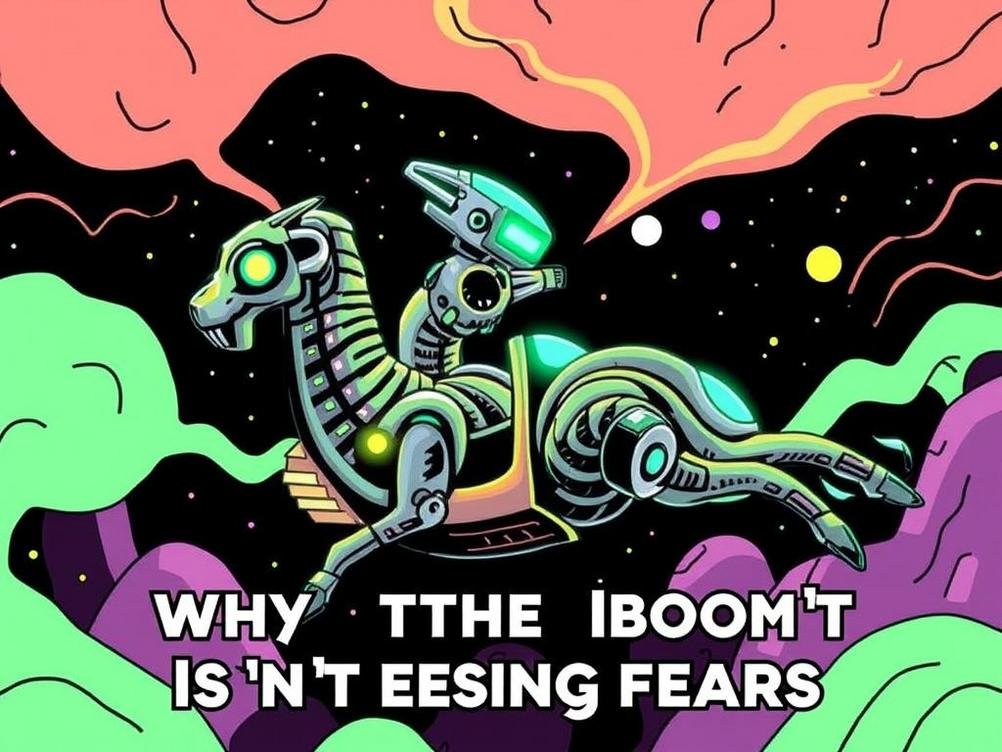
AI’s Wild Ride: Why the Boom Isn’t Easing Fears
Imagine you’re on a rollercoaster that’s suddenly picked up speed, twisting through loops faster than you expected. That’s kinda what AI feels like these days—it’s everywhere, from your phone suggesting what to watch next to robots helping doctors spot diseases. But here’s the thing: even as AI charges ahead like a kid with a new toy, a lot of us can’t shake that nagging worry in the pit of our stomach. Why is that? Well, we’re talking about rapid changes that could flip our world upside down, and it’s only natural to feel a bit uneasy. Think about it—AI’s boom is accelerating innovation, but it’s also stirring up fears about jobs vanishing, privacy getting trampled, and even existential risks like machines outsmarting us. As someone who’s followed tech trends for years, I’ve seen how hype can turn to hype plus headaches, and it’s fascinating (and a little funny) how we humans cling to our doubts even when the future looks bright. In this article, we’ll dive into why AI’s explosive growth isn’t just exciting—it’s got us all second-guessing everything, from our daily routines to the bigger questions about society. By the end, you might find yourself nodding along or even chuckling at how we’ve been here before with other tech revolutions. So, buckle up; let’s unpack this wild ride and see if we can ease some of those worries without losing the thrill.
The AI Boom: What’s Revving It Up?
Okay, let’s start with the good stuff—AI isn’t just booming; it’s like it’s hit the nitrous button. Over the past few years, advancements in machine learning, big data, and computing power have turned AI from a sci-fi dream into an everyday reality. I mean, remember when we thought self-driving cars were decades away? Now, companies like Tesla and Waymo are rolling them out, and it’s mind-blowing. This surge is fueled by massive investments—global spending on AI hit over $200 billion in 2024, according to reports from firms like McKinsey—and it’s creating jobs in new sectors while making old ones obsolete. It’s exciting, right? But here’s where it gets human: we’re not just cheering; we’re scratching our heads, wondering if this train is going too fast.
Take generative AI, for instance—tools like ChatGPT from OpenAI have exploded onto the scene, helping writers, artists, and even teachers whip up content in seconds. It’s like having a super-smart assistant in your pocket, but not everyone’s thrilled. Why? Because underneath the wow factor, there’s a fear that AI is gobbling up creative gigs. I’ve chatted with freelancers who say, “It’s great for brainstorming, but what if it replaces me?” That’s a valid point, and it’s tied to how AI’s growth is exponential. Moore’s Law, which predicted tech doubling in power every couple of years, seems almost quaint now with AI’s pace. So, while the boom is driven by tech giants pushing boundaries, it’s leaving a trail of uncertainty that no one can ignore.
To break it down, let’s list a few key drivers of this AI explosion:
- Huge datasets from social media and the internet, feeding AI like fuel to a fire.
- Breakthroughs in algorithms, making AI smarter without needing a PhD to understand.
- Government and corporate backing, with initiatives like the EU’s AI Act trying to keep it in check—though that’s a whole other can of worms.
Common Worries: Why AI Still Keeps Us Up at Night
You know that feeling when something amazing is happening, but you’re still waiting for the other shoe to drop? That’s exactly how a lot of folks feel about AI. Job loss is the big one—automation has already cut into manufacturing and customer service, and with AI getting better at tasks like coding or writing, it’s easy to imagine more people getting sidelined. Studies from the World Economic Forum suggest that up to 85 million jobs could be displaced by 2025, which is, yikes, right around now. It’s not just blue-collar work; white-collar roles are in the crosshairs too. I remember talking to a friend in marketing who said, “AI tools are making my job easier, but they’re also making me redundant.” It’s a tough spot, and it’s why worries linger even as AI promises efficiency.
Then there’s the privacy nightmare. AI thrives on data, hoovering up our online habits, photos, and even voice patterns to train its models. Ever heard of Cambridge Analytica? That scandal with Facebook data showed how misuse can swing elections and invade personal lives. With AI, it’s amplified—think facial recognition tech from companies like Clearview AI, which has stirred up debates about surveillance. It’s ironic, isn’t it? We’re handing over our data for ‘free’ services, but in return, we’re feeding the beast that might one day know us better than we know ourselves. And don’t get me started on deepfakes; they’ve turned into a playground for misinformation, making it harder to trust what we see online.
- Job displacement: AI automating routine tasks, leaving humans to wonder, “What’s left for me?”
- Privacy breaches: From data leaks to targeted ads that feel a bit too personal.
- Bias in AI: Algorithms trained on flawed data can perpetuate racism or sexism, as seen in hiring tools that favor certain demographics.
Historical Parallels: We’ve Been Here Before, Folks
If you think AI worries are new, think again—history’s full of tech flip-flops that had people freaking out. Remember the Industrial Revolution? Machines took over farming and factories, and suddenly folks were rioting over lost livelihoods. It’s almost comical how we repeat the same patterns; AI is just the latest chapter in that story. Back then, people worried about steam engines stealing jobs, and now it’s algorithms doing the same. From my reads on history, like Carl Frey’s work on the impact of automation, we see that tech often creates more jobs than it destroys in the long run. But waiting for that ‘long run’ can feel like an eternity when you’re the one affected.
Take the internet boom of the 90s as another metaphor—everyone was hyped about e-commerce and connectivity, but then came the dot-com bust and fears of digital divide. Sound familiar? AI’s got that same vibe, with booms in startups and investments, but underlying anxieties about inequality. It’s like we’re on a hamster wheel, racing forward without pausing to catch our breath. And let’s not forget the Y2K panic; people thought computers would crash the world at the millennium turn. Spoiler: They didn’t, but it shows how our imaginations run wild with new tech. So, while AI’s worries might feel unique, they’re really just echoes of the past.
- The printing press in the 15th century sparked fears of spreading ‘dangerous’ ideas.
- Electricity in the 19th century had people worried about health risks from wires—talk about overreacting!
- Today, AI’s ethical dilemmas, like those discussed in books by authors like Kate Crawford, highlight ongoing tensions.
The Bright Side: AI’s Wins That We Can’t Ignore
Alright, let’s flip the script a bit—AI isn’t all doom and gloom; it’s got some seriously cool perks that make you wonder why we’re so worried. For starters, in healthcare, AI’s like a diagnostic wizard. Tools from companies like IBM’s Watson have helped detect cancers earlier than traditional methods, potentially saving millions of lives. It’s not just about medicine; AI’s optimizing energy use, reducing waste in manufacturing, and even fighting climate change by predicting weather patterns more accurately. From my perspective, it’s like having a trusty sidekick that handles the boring stuff so we can focus on what makes us human—creativity, relationships, and maybe a good laugh.
But here’s the humorous part: AI’s making everyday life easier in ways we didn’t know we needed. Ever use a smart assistant like Siri or Google Assistant to find your keys? It’s borderline magical, and it’s helping bridge gaps for people with disabilities, like voice-controlled devices for those with mobility issues. Statistics from the UN show that AI could add $15.7 trillion to the global economy by 2030, which is a hefty carrot to dangle. Still, it’s easy to overlook these benefits when the media hypes up the risks. Maybe we need to channel that worry into excitement, like turning a lemon into lemonade.
- AI in education: Personalized learning apps adapting to students’ needs, making school less of a chore.
- Environmental gains: AI optimizing renewable energy, as seen in projects by Google DeepMind.
- Economic growth: Creating new industries, like AI ethics consulting, which is ironically born from the worries themselves.
Debunking Myths: Separating Fact from Fiction
Let’s get real for a second—some of the AI fears floating around are straight-up myths that need busting. Like the idea that AI will become self-aware and take over the world, a la Terminator. Come on, we’re not there yet, and experts say it’s more science fiction than fact. Organizations like the Future of Life Institute are working on safeguards, and while AI can make mistakes, it’s not plotting world domination. It’s funny how movies shape our perceptions; I bet if we saw more films about AI helping us vacation better, we’d chill out a bit.
Another myth? That AI will wipe out all jobs. Sure, some will go, but history shows new ones emerge. For example, the rise of AI has sparked demand for data scientists and AI trainers—roles that didn’t exist a decade ago. I’ve read reports from sources like the Brookings Institution that highlight how workers can adapt with retraining. It’s not about fighting the machine; it’s about learning to dance with it. So, next time you hear someone say AI is the end, remind them it’s more like a helpful coworker who’s still figuring things out.
- Myth: AI is unbiased—Fact: It reflects the data it’s fed, so we need diverse inputs.
- Myth: AI will replace creativity—Fact: It enhances it, as seen in tools like Adobe’s AI for designers.
- Myth: We’re powerless—Fact: Regulations like the AI Act from the EU are giving us more control.
How to Cope: Tips for Shaking Off AI Anxiety
If you’re reading this and thinking, ‘Yeah, but how do I stop worrying?’ you’re not alone. The key is to take proactive steps rather than hiding under the covers. Start by educating yourself—dive into resources like the AI Index from Stanford, which breaks down trends in simple terms. It’s empowering to understand what’s really happening instead of relying on headlines. Me? I make it a habit to experiment with AI tools, like using Midjourney for fun art projects, and it demystifies the tech. Plus, getting involved in communities, whether online forums or local meetups, can turn anxiety into excitement through shared stories.
And let’s not forget the role of policymakers; advocating for ethical AI can make a difference. Imagine if we all pushed for better regulations—it’s like voting for a safer ride on that rollercoaster. Humor helps too; laugh at the absurdity of it all, like how AI once generated a recipe for ‘chocolate-flavored spaghetti’ when I asked for dinner ideas. At the end of the day, coping is about balance—embrace the benefits while staying vigilant.
- Learn a new skill: Online courses from platforms like Coursera can prepare you for an AI-driven world.
- Engage in discussions: Join Reddit threads or Twitter chats to share and alleviate fears.
- Practice digital hygiene: Limit data sharing and use tools like DuckDuckGo for more private browsing.
Conclusion: Embracing the AI Journey
As we wrap this up, it’s clear that the AI boom isn’t going anywhere—it’s accelerating, worries and all. We’ve explored how it’s driven by innovation, stirred up valid concerns, and mirrored past tech revolutions, all while offering incredible benefits. The truth is, our fears stem from the unknown, but they also push us to innovate and protect what’s important. From job shifts to privacy wins, AI’s impact is a mixed bag, yet it’s ultimately a tool shaped by us humans. So, instead of shaking in our boots, let’s lean into it with a sense of adventure. Who knows? The next big AI breakthrough might just make life a whole lot easier—and maybe even funnier. Here’s to navigating this wild ride with eyes wide open; after all, worrying won’t slow it down, but understanding might just make it enjoyable.