dailytech.ai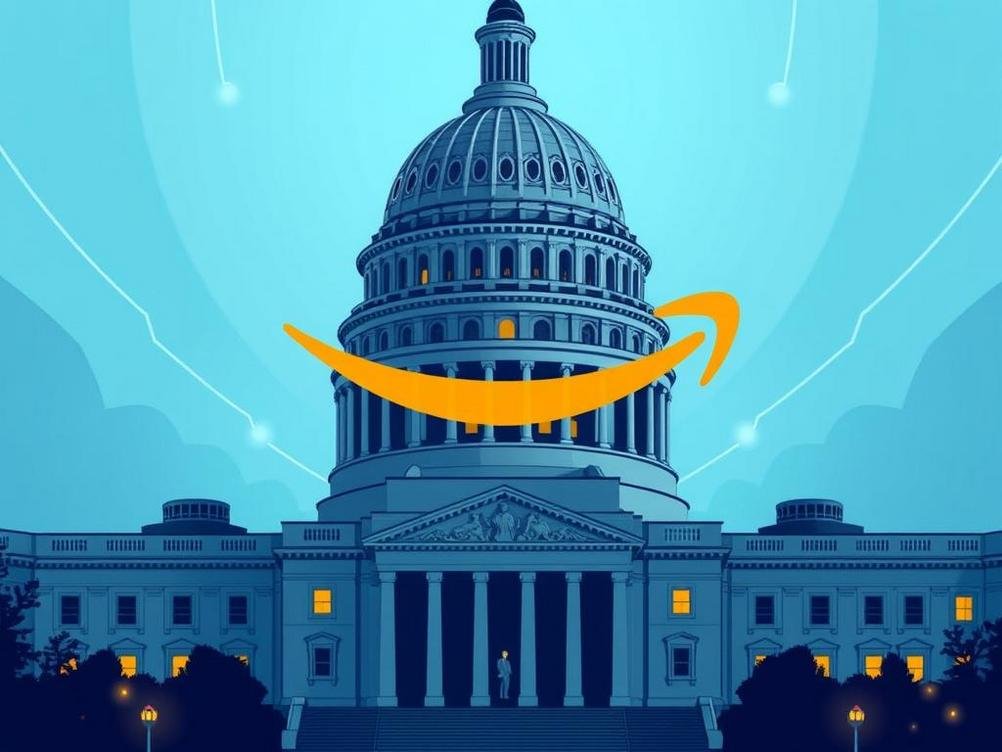
Amazon’s Epic $50 Billion Splash into AI for US Government: What’s the Hype All About?
Imagine if your government suddenly got a massive upgrade, like swapping out an old flip phone for the latest smartphone that can predict weather disasters or streamline traffic faster than a New York cabbie. That’s basically what’s going down with Amazon’s whopping $50 billion investment in AI and supercomputing for US agencies. We’re talking about beefing up everything from national security to public services, all powered by cutting-edge tech that could make sci-fi movies look outdated. But hold on, why should you care? Well, if you’re an American taxpayer, this could mean quicker responses to emergencies, smarter data handling, and even better online services that don’t crash during peak hours. I’ve been following AI news for years, and this feels like a game-changer – it’s not just about throwing money at problems; it’s about building a smarter future where AI does the heavy lifting. Think about it: in a world where AI already helps doctors spot diseases early or businesses predict market trends, why shouldn’t our government get in on the action? This announcement from Amazon, made back in late 2025, isn’t just big business; it’s a potential revolution that could touch every corner of daily life, from faster disaster relief to more efficient bureaucracies. And let’s be real, with all the chatter about tech giants influencing policy, this raises some fun questions – like, will AI finally make paperwork as obsolete as dial-up internet? Stick around as we dive deeper into what this means, mixing in some laughs, real-world examples, and a bit of my own take on why this could be the shot in the arm the US needs.
What’s the Buzz About Amazon’s $50 Billion Bet?
You know, when I first heard about Amazon pledging up to $50 billion for AI and supercomputing infrastructure, I thought, ‘Is Jeff Bezos just trying to buy the government a new toy chest?’ But seriously, this isn’t some whimsical spend; it’s a strategic move to expand cloud services like AWS for agencies such as the Department of Defense and NASA. The deal, which hit the headlines around November 2025, aims to supercharge data processing capabilities, making everything from simulations to intelligence analysis lightning-fast. It’s like giving the government a turbo boost in a world where data is king.
What’s really cool is how this investment ties into Amazon’s existing expertise. They’ve been cranking out AI tools for years, and now they’re adapting that for public sector needs. For instance, if you’ve ever used Alexa to answer random questions, imagine that scale ramped up for national security – spotting threats before they escalate. But let’s not gloss over the humor here; it’s ironic that a company known for one-click shopping is now one-clicking its way into federal contracts. This could lead to more efficient operations, but I wonder if it’ll also mean more targeted ads from Uncle Sam – kidding, sort of.
One thing that’s clear is the scale. We’re talking about building out data centers and supercomputers that could handle petabytes of information. To put it in perspective, that’s enough storage to hold every movie ever made, multiple times over. If you’re into tech, this is Amazon flexing its muscles, potentially outpacing competitors like Google or Microsoft in the gov-tech space.
How AI and Supercomputing Will Supercharge Government Work
Alright, let’s get down to brass tacks – why does the government need this AI magic? Well, imagine trying to run a country with outdated tech; it’s like using a horse and buggy in a Formula 1 race. This investment will turbocharge areas like weather forecasting, where AI can analyze vast datasets to predict hurricanes with pinpoint accuracy, potentially saving lives and billions in damages. For the average Joe, that means fewer surprise evacuations and more time to grab the essentials, like coffee and snacks.
Take healthcare, for example – AI could help the FDA process drug approvals faster by sifting through research data in seconds. Or in education, it might aid the Department of Education in tailoring programs based on real-time student data. I’ve seen stats from sources like the Brookings Institution that suggest AI could boost government efficiency by up to 30%, cutting red tape and freeing up resources. It’s not just about speed; it’s about smarter decisions. For instance, the Pentagon could use supercomputing to run complex simulations for military strategies, reducing risks in real operations.
- Enhanced disaster response: AI models could predict and mitigate events like wildfires, drawing from historical data.
- Improved public safety: Facial recognition and predictive policing tools, though controversial, might help law enforcement stay one step ahead.
- Efficient resource allocation: Think about how AI optimizes traffic flow in cities, potentially reducing congestion by 20% according to urban studies from Smart Cities Dive.
Demystifying the Tech: What’s Supercomputing Anyway?
Okay, let’s peel back the layers on supercomputing because not everyone has a PhD in geek speak. Picture this: a supercomputer is basically a beast of a machine that crunches numbers at speeds your laptop could only dream of – we’re talking trillions of calculations per second. Amazon’s investment will likely involve expanding their AWS infrastructure with these giants, making it easier for government agencies to access high-performance computing without building their own from scratch. It’s like renting a sports car instead of buying one; practical and way less maintenance.
Why does this matter for AI? Well, AI thrives on data, and supercomputing provides the horsepower to train models quickly. For example, if you’re trying to develop an AI that can forecast climate change, you need to process massive datasets from satellites and sensors. Amazon’s setup could make that feasible, drawing from their experience with projects like the AWS GovCloud. And here’s a fun fact: these machines can simulate nuclear reactions or protein folding, which is crucial for medical research. But let’s add some humor – if supercomputers were people, they’d be the ones who finish crossword puzzles in under a minute while the rest of us are still on the first clue.
In real terms, this could mean agencies like NOAA get to run more accurate models, helping farmers plan crops better. According to a report from the National Academy of Sciences, supercomputing has already accelerated scientific discoveries by years. So, yeah, it’s not just tech jargon; it’s the engine driving AI forward.
The Perks: Real-World Wins from This AI Boost
Let’s talk about the wins here – because who doesn’t love a good payoff? With Amazon’s investment, we could see AI making government services feel less like pulling teeth and more like a seamless app experience. For instance, the IRS might use AI to simplify tax filing, spotting errors before you even submit. That’s a far cry from the frustration of waiting on hold for hours, right? And in environmental protection, AI could monitor pollution in real-time, helping the EPA enforce regulations without the endless paperwork.
Take a metaphor: It’s like upgrading from a basic calculator to a full-on financial advisor app. Real-world examples abound, like how AI-powered tools helped during the COVID-19 pandemic to track outbreaks. A study from the World Health Organization shows that predictive AI reduced response times by 40%. For the US government, this could mean better economic forecasting, aiding the Treasury in managing budgets. Plus, with supercomputing, research institutions could collaborate more easily, fostering innovation that trickles down to everyday folks.
- Economic growth: By streamlining operations, agencies could save taxpayers money, potentially redirecting funds to schools or infrastructure.
- Innovation in defense: AI simulations could cut testing costs, as seen in projects by the Defense Advanced Research Projects Agency (DARPA).
- Public engagement: Imagine AI chatbots handling routine inquiries, freeing up human workers for more complex tasks.
Potential Speed Bumps: What Could Go Wrong?
Hold your horses – no investment is without its potholes. Amazon pouring $50 billion into AI sounds great, but what about privacy concerns? We’re in an era where data breaches are as common as coffee spills, and handing over sensitive government info to a tech giant raises eyebrows. Think about it: if AI systems get hacked, could that expose classified data? It’s like giving the keys to the castle to a well-meaning friend who might accidentally leave the door unlocked.
Then there’s the regulatory side – the US government has to navigate antitrust laws and ensure this doesn’t create a monopoly. Plus, not everyone trusts AI decisions; biases in algorithms could lead to unfair outcomes, like in hiring or law enforcement. A report from the AI Now Institute highlights how AI can perpetuate inequalities if not handled carefully. And let’s not forget the environmental impact; these supercomputers guzzle energy, contributing to carbon emissions. But on a lighter note, maybe Amazon will offset that with some eco-friendly initiatives – fingers crossed they don’t just plant a few trees and call it a day.
To keep things balanced, agencies will need strong oversight. For example, implementing ethical AI guidelines from organizations like the Partnership on AI could help mitigate risks. In the end, it’s about weighing the pros against the cons, like any good gamble.
Looking Ahead: The Future of AI in Our World
As we wrap up this dive, it’s exciting to think about where this leads. Amazon’s investment isn’t just a one-off; it’s a catalyst for a broader AI revolution in governance. In the next few years, we might see AI integrated into everything from smart cities to personalized education, making life easier and more efficient. It’s like planting seeds for a tech-savvy tomorrow, where governments aren’t lagging behind but leading the charge.
Globally, this could inspire other countries to up their AI game, fostering international collaboration. Stats from Gartner predict that by 2030, AI could contribute over $15 trillion to the global economy. For us in the US, that means jobs in tech, better services, and maybe even some sci-fi-level advancements. But remember, with great power comes great responsibility – we need to ensure AI benefits everyone, not just the big players.
- Job creation: This could spark thousands of roles in AI development and maintenance.
- Global competitiveness: The US might stay ahead in the AI arms race against China and the EU.
- Evolving ethics: Pushing for transparent AI could set a standard worldwide.
Conclusion
All in all, Amazon’s $50 billion dive into AI for US government agencies is a bold move that could reshape how we live and govern. It’s not just about the tech; it’s about building a future that’s smarter, faster, and a heck of a lot more efficient. As someone who’s geeked out on AI for ages, I’m optimistic – but let’s keep an eye on the pitfalls and push for responsible innovation. Who knows, this might be the spark that turns government from a slow giant into a nimble innovator. So, here’s to hoping this investment pays off big time, making our world a better place one algorithm at a time.