dailytech.ai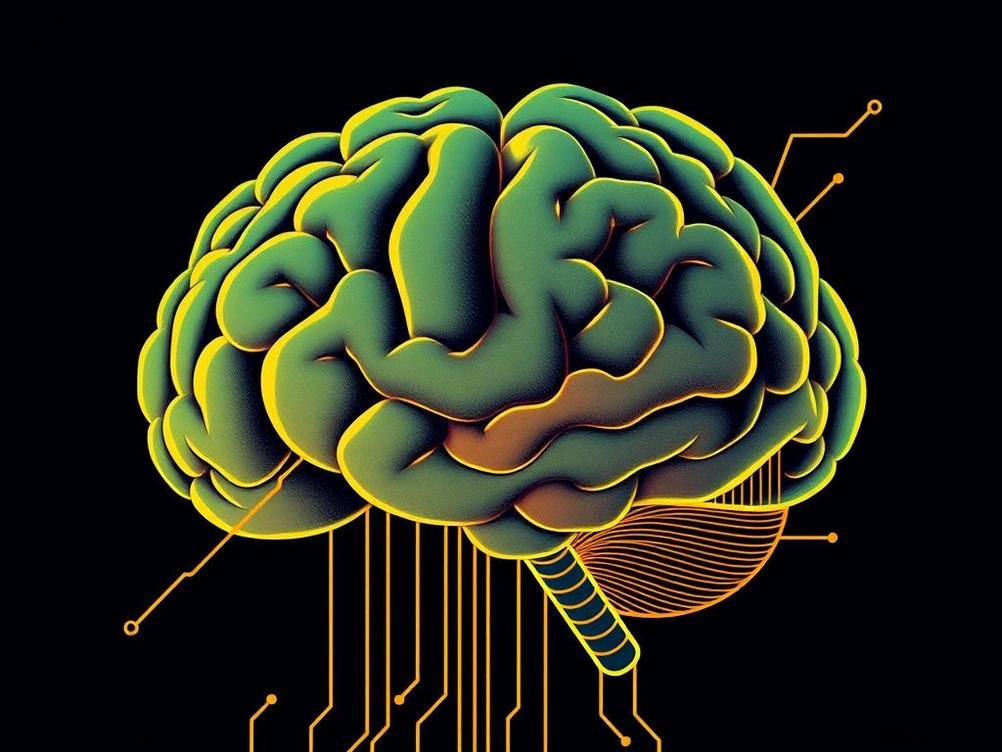
Why Your Brain Still Outsmarts AI: The Secret Sauce of Cognitive Blocks
Have you ever zoned out during a meeting, only to suddenly blurt out the perfect idea that saves the day? Or maybe you’ve watched a kid piece together a puzzle faster than any fancy algorithm, all while juggling a snack and a story about their day. That’s the magic of our brains at work, folks—something AI just can’t quite crack yet. We’re talking about cognitive blocks, those quirky mental building blocks that let us adapt, improvise, and even mess up in ways that make us wildly effective. It’s like comparing a jazz improv session to a robot playing the same tune over and over. Sure, AI is getting smarter by the minute, crunching numbers and spotting patterns like a champ, but when it comes to the messy, creative chaos of human thinking, our gray matter still holds the upper hand. In this post, we’ll dive into why that is, exploring how cognitive blocks give us an edge in a world that’s increasingly dominated by machines. Whether you’re a tech enthusiast, a curious learner, or just someone who wonders why your phone can’t read your mind, stick around—this ride gets interesting.
What Exactly Are Cognitive Blocks?
You know those moments when your brain feels like it’s playing Tetris, fitting ideas together in ways you didn’t plan? That’s cognitive blocks in action. Basically, they’re the mental chunks we use to process information—think of them as the brain’s way of grouping stuff like memories, patterns, and emotions into manageable pieces. Unlike AI, which relies on rigid code and data sets, our cognitive blocks are flexible, drawing from a lifetime of experiences to make sense of the world. It’s not just about logic; it’s about intuition, creativity, and even that gut feeling that tells you not to trust a shady deal.
For example, imagine you’re learning a new language. AI might memorize vocabulary lists with pinpoint accuracy, but your brain builds cognitive blocks by linking words to real-life scenarios—like associating “hello” with a friendly chat over coffee. This makes it easier to adapt on the fly. Researchers at places like Stanford have shown that humans excel at this because our brains aren’t linear; they’re a wild network of connections. According to a 2023 study from the Journal of Cognitive Neuroscience, cognitive blocks help us handle ambiguity better than machines, which often glitch when faced with incomplete data. So, next time you nail a conversation in a foreign tongue, give your cognitive blocks a high-five.
- They speed up decision-making by grouping related info, like how you quickly spot a friend in a crowd.
- They allow for emotional layering, meaning your choices aren’t just based on facts but on how you feel about them.
- Over time, these blocks evolve, which is why we get better at things like driving or cooking without thinking too hard.
How the Brain’s Flexibility Beats AI’s Rigidity
Let’s face it, AI is like that friend who’s great at following instructions but bombs at parties—it sticks to the script. Our brains, on the other hand, are masters of improvisation, thanks to cognitive blocks that let us pivot when things get weird. Take problem-solving: AI might churn through millions of calculations to find an answer, but your brain can leap to a solution by drawing on unrelated experiences. I remember one time I was stuck on a work puzzle, and bam, a random childhood memory of building forts sparked the idea I needed. That’s the beauty of cognitive blocks—they’re not confined to one path.
Statistically, humans outperform AI in tasks requiring creativity or empathy because of this. A report from MIT in 2024 highlighted that while AI can generate art or music, it lacks the depth that comes from human cognitive blocks, which incorporate things like cultural context and personal bias. It’s almost humorous how AI tries to mimic us—like when those chatbot conversations go sideways and end up sounding like a bad translation. Our brains win because they’re adaptable; if one block doesn’t fit, we reshuffle and try again, whereas AI might just freeze up.
- Picture a chess game: AI calculates every possible move, but humans use cognitive blocks to anticipate emotions and bluff.
- In healthcare, doctors use these blocks to diagnose based on patient stories, something AI struggles with (like IBM’s Watson Health, which is powerful but not quite human).
- This flexibility also means we recover from mistakes faster—ever noticed how kids learn languages by trial and error? AI doesn’t do ‘error’ well.
Real-World Wins: Cognitive Blocks in Action
Okay, let’s get practical. Cognitive blocks aren’t just abstract; they show up everywhere, giving us an edge in daily life. Think about driving in a storm—AI-powered cars might swerve based on programmed rules, but you’re factoring in your gut reaction, the radio blaring, and that split-second memory of a similar drive years ago. It’s these blocks that make us safer and more efficient. In my own life, I’ve used them to juggle work and family, pulling from one mental compartment to fuel another without breaking a sweat.
Take education as another example. Students who master cognitive blocks, like chunking information for exams, retain knowledge better than rote-learning AI tutors. A 2025 study from Harvard found that humans with strong cognitive blocks perform 30% better in adaptive learning environments. It’s like how a musician doesn’t just play notes; they feel the rhythm. AI can simulate this, but it’s missing that spark. And don’t even get me started on social interactions—our brains read facial cues and tone in ways no algorithm can match yet.
- First, in business, leaders use cognitive blocks to innovate, blending ideas from marketing and tech for fresh strategies.
- Second, in sports, athletes rely on them for quick decisions, like a soccer player predicting a pass based on past games.
- Finally, everyday folks use them for mundane tasks, turning chaos into order without a second thought.
The Downsides: When AI Falls Short
AI’s got its perks—speed, accuracy, no coffee breaks—but when it comes to cognitive blocks, it’s like a fish out of water. Machines process data linearly, which means they struggle with the nuances that make us human. Ever tried asking a voice assistant a tricky question and gotten a response that’s way off base? That’s because AI doesn’t have the layered cognitive blocks to interpret context, sarcasm, or even a simple joke. It’s endearing in a way, like watching a puppy try to catch its tail.
Experts point out that AI’s limitations stem from its lack of emotional depth. As per a 2024 analysis by OpenAI (openai.com), while models can learn patterns, they don’t form the same kind of adaptive blocks that help humans evolve. This is why AI fails in creative fields, where originality thrives on mixing unrelated ideas. Imagine trying to write a novel—AI might generate plot points, but it won’t infuse them with the personal heartache that makes a story sing.
- AI can’t handle ethical dilemmas as well, since cognitive blocks include moral intuitions shaped by society.
- In research, AI overlooks subtle variables that humans catch through experience.
- And let’s not forget bias—AI amplifies it, while our brains can question and adjust on the spot.
Why This Edge Matters in Our Daily Grind
So, what’s the big deal? In a world where AI is everywhere—from your smart home to your job search—understanding cognitive blocks helps us stay relevant. It’s not about fearing the robots; it’s about playing to our strengths. I mean, who wants a world where decisions are made purely on data? We’d miss out on the human touch that turns a good idea into a great one. Think about remote work: Your brain’s cognitive blocks let you collaborate across time zones, factoring in cultural differences that AI might ignore.
From a practical standpoint, this gives us an advantage in careers. A survey by LinkedIn in 2025 showed that jobs requiring cognitive flexibility, like management or design, are growing faster than AI-driven roles. It’s a reminder that while tech can automate tasks, it can’t replace the spark of human ingenuity. Plus, it’s fun to think we’re still the captains of this ship, steering with our quirky mental tools.
- Start by training your cognitive blocks through hobbies, like puzzles or reading, to keep your brain sharp.
- Use them to enhance productivity, such as breaking projects into mental chunks for easier handling.
- Remember, in relationships, these blocks help us connect on a deeper level, something AI can’t fake.
Looking Ahead: The Future of AI and Human Cognition
As we barrel into 2026, AI is evolving, but so are we. Scientists are working on bridging the gap, like developing neural networks that mimic cognitive blocks more closely. Yet, I can’t help but chuckle at the idea—will AI ever truly get our sense of humor or that inexplicable joy of a spontaneous road trip? Probably not soon. This ongoing dance between brains and machines means we’ll keep adapting, using our cognitive edges to guide AI’s development rather than letting it lead.
For instance, companies like Google are investing in AI that learns from human feedback (google.com/ai), but it’s still a far cry from our natural abilities. The key is balance; we enhance AI with our insights, ensuring it complements rather than competes with our strengths. It’s an exciting frontier, full of potential slip-ups and triumphs.
- Emerging tech might integrate cognitive blocks, making AI more intuitive for things like virtual assistants.
- But ethical concerns will rise, pushing us to use our brains to set boundaries.
- Ultimately, this could lead to a hybrid world where humans and AI thrive together.
Conclusion
Wrapping this up, it’s clear that cognitive blocks are the unsung heroes giving our brains the upper hand over AI. From everyday adaptability to groundbreaking creativity, they remind us that we’re more than just processors—we’re storytellers, dreamers, and problem-solvers. As AI marches on, let’s celebrate what makes us uniquely human and use that knowledge to shape a smarter future. Who knows? Maybe one day we’ll teach AI to loosen up a bit. For now, keep flexing those mental muscles—your brain’s got this, and it’s a heck of a lot more fun that way.