dailytech.ai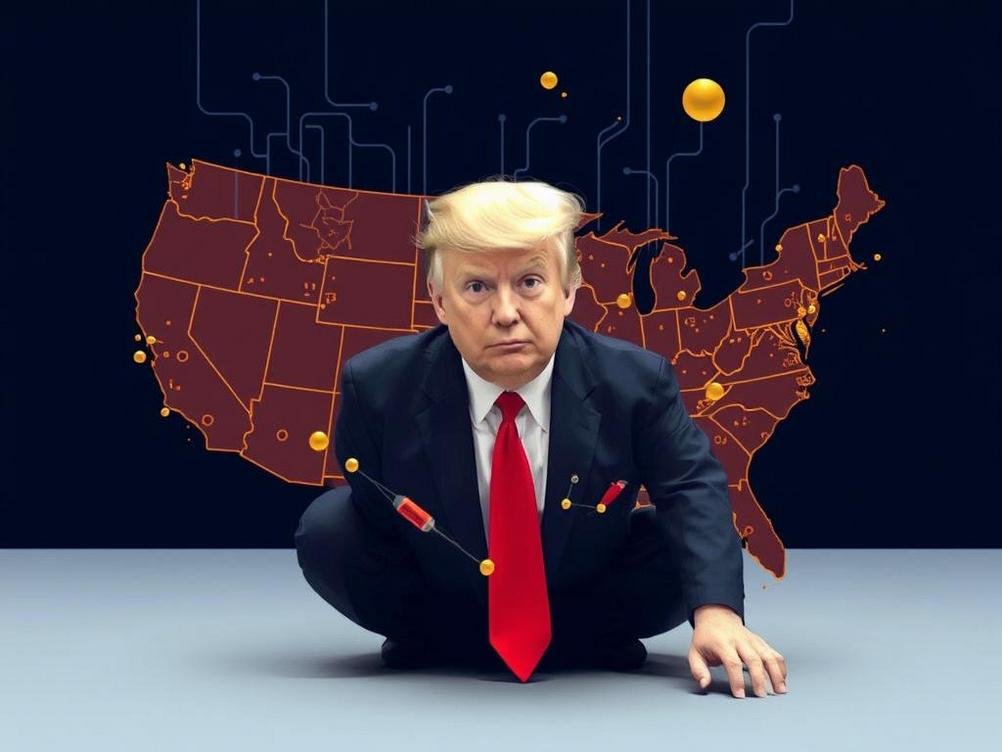
Can Trump Really Derail California’s Ambitious AI Regulations?
Picture this: You’re scrolling through your feed one evening, and you stumble upon a headline about California’s latest AI laws. It’s got everyone buzzing – from tech bros in Silicon Valley to policymakers in D.C. But then, whispers start circulating that President Trump might swoop in and throw a wrench into the works. Wait, is that even possible? As someone who’s been knee-deep in AI chatter for years, I couldn’t help but chuckle at the drama. I mean, California’s always been the wild card in the tech world, pushing boundaries with rules on AI safety, data privacy, and ethical use. Think about it: We’re talking laws that could force big companies to disclose how their algorithms make decisions, potentially curbing biases in hiring tools or even facial recognition software. It’s exciting, scary, and totally relevant in our AI-driven lives. But with Trump eyeing another term and his history of deregulation, is this just a political tug-of-war or something that could reshape the future of tech? Let’s dive in, because if you’re like me, you’re probably wondering how this all plays out and what it means for your daily life. After all, AI isn’t just about robots taking over; it’s about how it affects jobs, privacy, and even your favorite apps. By the end of this, you’ll have a clearer picture of the stakes, some real-world examples, and maybe even a laugh or two at the absurdity of it all.
What’s the Deal with California’s AI Laws Anyway?
You know, California’s AI regulations aren’t some overnight sensation; they’ve been brewing for a while now. The state rolled out a bunch of bills in the last couple of years, focusing on things like transparency in AI systems and protecting consumers from sketchy practices. For instance, there’s talk of requiring companies to audit their AI for biases, which sounds straightforward but is a headache for tech giants. I remember reading about how these laws could impact everything from self-driving cars to social media algorithms that might unfairly target certain groups. It’s like California is playing big brother, saying, “Hey, if you’re using AI in a way that affects people, you better be accountable.”
But let’s not gloss over the specifics. One key law aims to ban AI-generated deepfakes in elections, which is super timely given how misinformation spreads like wildfire online. Another pushes for data privacy enhancements, building on existing stuff like the CCPA (that’s the California Consumer Privacy Act, for those not in the loop). Honestly, it’s a mixed bag – some folks love it for promoting ethical AI, while others see it as overkill that could stifle innovation. I’ve got friends in the industry who joke that these rules might make coding feel like filling out endless paperwork. Still, in a world where AI can decide loan approvals or job interviews, isn’t a little oversight a good thing? It reminds me of that time my phone’s AI assistant misunderstood a simple command and ordered the wrong pizza – multiply that by a million, and you see why regulations matter.
- Key components include mandatory risk assessments for high-stakes AI applications.
- Penalties for non-compliance could reach into the millions, pushing companies to clean up their acts.
- These laws also encourage diversity in AI development teams, which is a step toward reducing biases – something we’ve seen go wrong in real cases, like biased facial recognition tech that struggles with darker skin tones.
Trump’s Track Record: Is He Really Out to Deregulate Everything?
Okay, let’s get real – Donald Trump’s approach to regulation has always been, well, let’s say enthusiastic about cutting red tape. During his previous term, he pushed for less government interference in business, which extended to tech sectors. Now, with rumors of another run, people are speculating if he’d target California’s AI laws as part of a broader federal overhaul. It’s like he’s got this anti-regulation mantra, viewing state-level rules as obstacles to America’s economic powerhouse. I mean, who can forget his executive orders rolling back environmental and tech oversight? If history’s any guide, Trump might see California’s AI regs as overreach, especially if they clash with national interests.
From what I’ve dug up, Trump’s administration has flirted with AI policies before, like promoting innovation through initiatives that favored big tech over strict rules. Imagine if he decides to use federal preemption – that’s basically the government stepping in to override state laws. It’s not as far-fetched as it sounds; we’ve seen it with other issues, like cannabis regulations or emissions standards. But here’s the twist: AI is a hot-button topic now, with experts warning about risks like job displacement or security threats. So, while Trump might crack jokes about ‘overzealous’ California, the reality is that ignoring these laws could lead to a free-for-all that harms everyday folks. Think about it – without checks, AI could run amok, like that rogue algorithm that once messed up stock trades and cost billions.
- Trump’s past: He praised AI for economic growth but criticized ‘burdensome’ regulations in speeches.
- Potential moves: He could push for federal AI guidelines that water down state efforts, perhaps via the White House Office of Science and Technology Policy.
- The humor in it: It’s almost like a comedy sketch – California’s progressive vibes versus Trump’s business-first attitude, clashing in a tech arena.
The Political Chess Game: States vs. Federal Power
Ah, politics – it’s like a never-ending game of chess, and AI laws are the latest piece on the board. California isn’t alone in this; other states like New York and Illinois have their own AI-related bills, but California’s got the spotlight because of its tech hub status. The big question is whether Trump can legally stomp on these state efforts. Under the Constitution, states have a ton of leeway on issues not exclusively federal, but AI is murky territory. If Trump plays his cards right, he might use agencies like the FTC or DOJ to challenge California’s rules, arguing they hinder interstate commerce.
What’s funny is how this mirrors past battles, like when states fought over net neutrality. Back then, California tried to enforce its own rules after federal rollback, and it got messy. Fast-forward to today, and we’re seeing similar tensions with AI. I’ve read reports from sources like the Brookings Institution (brookings.edu) that highlight how fragmented regulations could confuse businesses. On the flip side, supporters argue that without state innovation, we’d be stuck with sluggish federal progress. It’s a real pickle – do we want uniformity or the freedom for states to experiment? Either way, it’s got me thinking about how my own state might handle AI if this escalates.
- First, California’s laws could face legal challenges in court if Trump mobilizes federal resources.
- Second, public opinion might sway things; polls show many Americans support AI safeguards, which could pressure politicians.
- Finally, international angles: With the EU’s AI Act already in play, U.S. disarray might make us look like laggards on the global stage.
How This Could Shake Up AI Innovation for Better or Worse
Let’s cut to the chase: If Trump does manage to halt California’s AI laws, what happens next? On one hand, it might spark a boom in innovation, letting companies experiment without bureaucratic hurdles. Imagine startups racing to launch AI products without endless compliance checks – that could lead to breakthroughs in healthcare or education. But, and this is a big but, it might also open the door to risks like unregulated facial recognition leading to privacy breaches. I’ve heard stories from friends in tech about how over-regulation can stifle creativity, yet under-regulation can cause disasters, like the Cambridge Analytica scandal that rocked social media.
Statistically, a study from Stanford (aiindex.stanford.edu) suggests AI adoption is growing rapidly, with U.S. investments hitting trillions. If Trump’s interference leads to a lax environment, we could see faster growth, but at what cost? Think about metaphors – it’s like driving a sports car without speed limits; thrilling until you crash. California’s laws aim to put some guardrails in place, ensuring AI benefits society without causing harm. Personally, I find it amusing how tech leaders flip-flop on this; one day they’re crying for freedom, the next they’re begging for ethical guidelines after a PR nightmare.
- Innovation pros: Faster development cycles and more competition.
- Potential cons: Increased inequality if AI exacerbates job losses without safeguards.
- Real-world insight: Companies like Google have already adjusted operations in response to similar laws elsewhere.
The Human Side: What This Means for You and Me
At the end of the day, AI laws aren’t just abstract policy; they’re about real people. If Trump’s moves weaken California’s protections, it could affect how AI handles your personal data or even influences job markets. For example, AI-driven hiring tools might discriminate if not regulated, leaving folks like you and me out in the cold. I remember chatting with a buddy who got passed over for a job because an algorithm flagged his resume as ‘not a fit’ – turns out, it was biased toward certain keywords. California’s laws could prevent that kind of nonsense, making tech more equitable.
But let’s add some humor: Imagine Trump as the ultimate AI disruptor, like a character in a sci-fi flick, battling state regulations with tweets and executive orders. In all seriousness, the future of AI is about balancing progress with protection. With the date being late 2025, we’re already seeing AI in everything from smart homes to autonomous vehicles, so getting this right is crucial. If you’re into AI, keep an eye on how this unfolds – it might just shape the tools you use every day.
Conclusion: Navigating the AI Wild West
As we wrap this up, it’s clear that California’s AI laws and Trump’s potential interference are more than just political fodder; they’re a crossroads for technology and society. We’ve explored the laws themselves, Trump’s stance, the political dynamics, and the broader impacts, and it’s evident that the outcome could either foster innovation or invite chaos. Whether Trump puts a stop to these regulations or not, one thing’s for sure: We need thoughtful oversight to ensure AI enhances our lives without running roughshod over our rights. So, let’s stay engaged, question the status quo, and push for a future where AI is a force for good. Who knows, maybe this will inspire you to dive deeper into the topic or even chat about it with friends – after all, in the ever-evolving world of tech, we’re all in this together.