dailytech.ai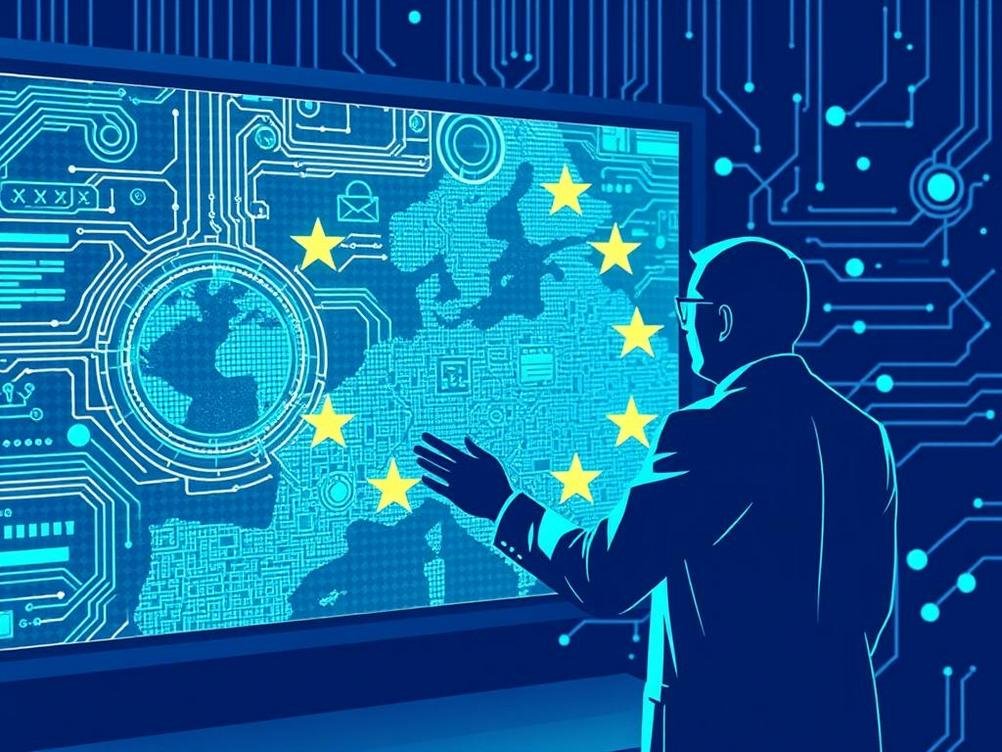
How Europe’s AI Crackdown Could Burst Trump’s Big Tech Dreams
Imagine this: you’ve got a big, shiny bubble floating around, full of promises about AI taking over the world and making everything better. But then, out of nowhere, Europe swoops in with its regulatory sword, ready to pop that thing wide open. That’s basically the storyline we’re dealing with here, especially when you throw in the wildcard that is Donald Trump and his love for all things tech and disruptive. Johnny Ryan, that sharp-tongued privacy expert from the Irish Council for Civil Liberties, has been banging the drum on this for years, warning that Europe’s tough stance on data privacy and AI could throw a massive wrench into the plans of big players across the pond. It’s not just about politics; it’s about how regulations like the GDPR and the upcoming AI Act might finally rein in the wild west of American tech innovation.
Now, before you roll your eyes and think this is just another dry debate on international law, let me tell you why it matters to you and me. We’re all knee-deep in AI these days, whether it’s that smart assistant on your phone guessing what you want for dinner or algorithms deciding what news you see. Trump’s administration has always pushed for less red tape, letting tech giants run free to innovate (and profit, obviously). But Europe? They’re all about protecting people first, which could mean stricter rules on how AI handles our data, spots bias in algorithms, and even halts projects that skirt ethical lines. It’s like the EU is saying, ‘Hey, not so fast, America—let’s make sure this AI revolution doesn’t leave a trail of privacy disasters.’ As someone who’s followed this stuff for a while, I can’t help but chuckle at the irony: the same bubble Trump might be inflating could get burst by Europe’s no-nonsense approach. Stick around, because we’re diving into how this could reshape the global AI landscape, and trust me, it’s got some juicy twists you’ll want to know about.
In this article, we’ll unpack Europe’s so-called ‘secret weapon’—mostly their airtight privacy laws—and explore if they really have what it takes to challenge Trump’s AI ambitions. We’ll look at the history, the players, and what it all means for everyday folks like us. By the end, you might just see why keeping AI in check isn’t just smart policy; it’s essential for a balanced future. Oh, and I’ll throw in some real-world examples to keep things lively—no boring lectures here!
What Exactly is Europe’s Secret Weapon?
Okay, let’s cut to the chase: Europe’s secret weapon isn’t some high-tech gadget or a spy network; it’s their rock-solid commitment to privacy laws like the General Data Protection Regulation (GDPR). Enforced since 2018, GDPR basically says companies have to handle your data with kid gloves or face hefty fines. It’s like the EU telling big tech, ‘You can’t just hoover up everyone’s info without asking nicely.’ Johnny Ryan, who’s been a vocal critic of surveillance capitalism, points out that this could be the thorn in the side of Trump’s vision for AI dominance. Trump has always been about deregulation, pushing for faster innovation without all the bureaucratic hurdles, but Europe? They’re playing the long game, prioritizing user rights over unchecked growth.
Think of it this way: imagine you’re at a party, and someone’s blasting music so loud you can’t hear yourself think. Europe’s like that friend who steps in and turns it down, saying, ‘Hey, let’s not ruin the vibe for everyone.’ In the AI world, that means cracking down on how companies use personal data to train their models. For instance, if an AI system is scarfing up data from social media without clear consent, GDPR steps in and says no dice. It’s not just about fines—up to 4% of a company’s global revenue for violations—it’s about forcing a rethink. And here’s a fun fact: since GDPR kicked in, we’ve seen giants like Google and Meta adjust their practices, which could make it tougher for U.S.-led AI projects to scale globally.
To break it down further, here’s a quick list of key elements in Europe’s arsenal:
- GDPR Enforcement: Mandates strict data handling, giving users more control over their info.
- AI Act: The EU’s new rules that classify AI systems by risk, banning stuff like social scoring or manipulative ads.
- Privacy by Design: Companies must build AI with privacy in mind from the get-go, not as an afterthought.
The AI Bubble: What’s All the Hype About?
Alright, let’s talk about this so-called AI bubble that Trump’s been championing. Under his watch, the U.S. has poured billions into AI research, from funding startups to cozying up with Silicon Valley bigwigs. It’s like he’s betting the farm on AI being the next big thing, promising everything from autonomous cars to personalized medicine. But bubbles, as we all know from past tech crashes, have a nasty habit of bursting when reality sets in. Europe’s approach could be the pin that does it, by exposing flaws like biased algorithms or data privacy nightmares that U.S. companies have glossed over.
Here’s where it gets interesting: Trump’s AI push has been all about speed and dominance, but at what cost? Take facial recognition tech, for example—it’s everywhere in the U.S., from airports to your phone, but Europe has put the brakes on it due to concerns about misuse and discrimination. It’s almost comical how one side sees AI as a golden ticket, while the other treats it like a wild horse that needs taming. If Europe’s regulations force U.S. firms to clean up their act, it might pop that bubble faster than you can say ‘overhyped startup.’
And don’t just take my word for it; look at the numbers. A report from the European Commission shows that AI-related complaints have skyrocketed, with over 70,000 GDPR violations reported in the last year alone. That kind of scrutiny could make investors think twice about pouring money into unregulated AI ventures, potentially slowing down Trump’s momentum.
How EU Rules Might Trip Up Trump’s AI Plans
So, how exactly could Europe’s rules throw a spanner in the works for Trump’s AI agenda? Well, for starters, the EU’s AI Act, which is set to roll out fully by next year, categorizes AI applications into risk levels—high-risk ones, like those used in hiring or law enforcement, face intense scrutiny. Trump’s vision often involves AI in government and military applications, but if these don’t meet EU standards, U.S. companies might find themselves locked out of the European market. It’s like trying to sell a car without brakes; sure, it goes fast, but who’s going to buy it?
Let me paint a picture: picture a U.S. AI firm wanting to expand into Europe. They have to comply with rules that ensure their tech isn’t discriminatory or invasive. Trump’s administration has historically resisted such measures, calling them barriers to innovation, but Europe’s stance is firm. This could lead to a domino effect, where global standards shift towards more regulation, making it harder for American tech to dominate. It’s not just about Europe; countries like Japan and Brazil are watching closely, potentially adopting similar policies.
- Economic Impact: Fines and compliance costs could eat into profits, forcing reallocations.
- Market Access: Non-compliant AI might be banned, limiting global reach.
- Innovation Shifts: Companies might pivot to ethical AI, which could benefit everyone in the long run.
Trump’s AI Ambitions: A Reality Check
Trump’s take on AI has always been larger-than-life, pushing for America-first policies that prioritize domestic tech growth. He’s talked about AI as a tool for economic supremacy, from boosting manufacturing to enhancing national security. But let’s be real—without addressing the ethical side, this bubble might not last. Europe’s interventions could force a reality check, making Trump-era projects more accountable. It’s like that friend who throws cold water on your wild ideas; sometimes, you need it to avoid a mess.
For instance, remember when Cambridge Analytica used AI to influence elections? That scandal highlighted how data misuse can swing politics, and Europe’s laws helped expose it. If Trump pushes for more AI in elections or border control, Europe’s playbook could demand transparency, potentially derailing those plans. Humorously, it might be Europe’s way of saying, ‘We’ve got your number, and it’s not as impressive as you think.’
Statistics back this up too: A study by the Brookings Institution found that AI-related regulatory gaps in the U.S. could cost billions if global standards tighten. That’s a wake-up call for anyone betting on unchecked AI growth.
Real-World Examples of AI Clashes
Let’s get practical with some real-world examples. Take the case of Clearview AI, a U.S. company that scraped billions of facial images for its database. Europe slammed them hard under GDPR, leading to bans and lawsuits. This kind of pushback could directly affect Trump’s vision of AI in surveillance, making it clear that ethical lines can’t be crossed willy-nilly.
Another one: Apple’s recent tussles with EU regulators over App Store policies show how data practices are under the microscope. If Trump’s AI initiatives involve similar ecosystems, they might face the same fate. It’s like a game of whack-a-mole; every time tech overreaches, Europe whacks it back.
- Case Study: GDPR vs. Big Tech: Companies like Meta have had to overhaul their AI tools to comply, costing millions.
- Global Ripple: Even in the U.S., states like California are adopting EU-inspired laws, showing the influence.
Why This Matters for Our Future
At the end of the day, this isn’t just about Trump or Europe—it’s about shaping a future where AI serves us, not the other way around. If Europe’s approach wins out, we might see a more balanced AI world, with safeguards that prevent disasters like job losses from automation or biased decision-making. Trump’s bubble might burst, but that could lead to something better.
Imagine a world where AI helps farmers predict weather without selling their data to the highest bidder. That’s the kind of innovation we need, and Europe’s leading the charge. It’s a reminder that technology should enhance lives, not exploit them.
Conclusion
Wrapping this up, Europe’s secret weapon against Trump’s AI bubble is really about putting people first through smart, enforceable regulations. While it might slow down the breakneck pace of innovation, it could ultimately make AI safer and more equitable for everyone. As we’ve seen, from GDPR’s impact to potential clashes over global standards, the EU’s stance is a game-changer. So, next time you hear about AI advancements, remember that a little oversight goes a long way. Let’s hope this leads to a future where tech serves humanity, not just the powerful—after all, who’s ready for a world without surprises?