dailytech.ai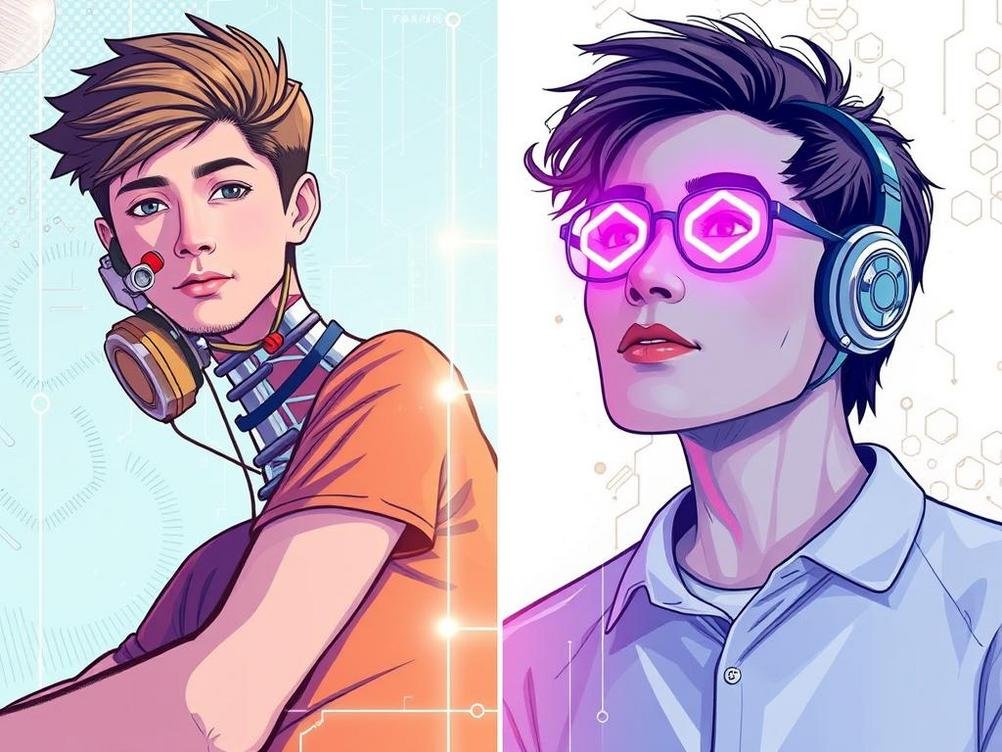
Why Two Gen Z Rebels Ditched Elon Musk’s Millions for a Brain-Inspired AI That’s Crushing the Competition
Imagine you’re a couple of twentysomethings tinkering in your garage, brewing up an AI that’s basically a digital version of the human brain, and then bam—Elon Musk throws millions at you to join his empire. Sounds like a dream, right? But these two Gen Z whiz kids said no thanks, betting on their own vision instead. It’s a story that screams ‘youthful audacity meets tech revolution,’ and honestly, it’s got me hooked. We’re talking about an AI that’s not just copying what we’ve seen from OpenAI or Anthropic—it’s outsmarting them in ways that make you wonder if the future of intelligence is already here. Think about it: in a world where AI is everywhere, from your Netflix recommendations to self-driving cars, these youngsters are flipping the script by mimicking how our squishy brains actually work. It’s inspiring, a bit crazy, and yeah, it makes you question if turning down a billionaire was the smartest move or just plain nuts.
This tale isn’t just about tech; it’s about guts, innovation, and the sheer thrill of going against the grain. I mean, who passes up millions from the guy behind Tesla and SpaceX? These developers saw something bigger—a chance to build something truly human-like, without the corporate strings attached. And guess what? Their creation is already turning heads by outperforming the big players. As we dive into this, we’ll unpack the drama, the tech magic, and what it all means for the rest of us. By the end, you might just feel like firing up your own AI project in your basement. Stick around, because this is one of those stories that’ll make you laugh, think, and maybe even dream a little bigger.
The Backstory: Two Kids Who Said ‘No’ to the Tech Titan
Okay, let’s set the scene. Picture two Gen Zers—let’s call them Alex and Jordan for fun, since their real names might be under wraps—who were probably still in college when they started messing around with AI. They weren’t your typical coding nerds; they were inspired by stuff like neuroscience podcasts and sci-fi movies, dreaming up an AI that thinks more like a person than a machine. Fast forward a bit, and Elon Musk, the guy who’s basically Iron Man in real life, hears about their project and offers them a boatload of cash to fold into his Neuralink or xAI ventures. Can you blame him? Everyone wants a piece of the brain-inspired AI pie these days.
But here’s the kicker—they turned it down. Why? Well, from what I’ve pieced together, they didn’t want to get lost in the corporate shuffle. They envisioned an AI that’s open, ethical, and focused on real human benefits, not just profit margins. It’s like that time I turned down a job offer because it felt too buttoned-up—sometimes, your gut just knows. This decision wasn’t without risks; we’re talking about forgoing millions when ramen noodles are probably their dinner of choice. Yet, it’s a reminder that innovation often comes from underdogs who play by their own rules. If you’re into startup lore, this is up there with the garage beginnings of Apple or Google.
In a world obsessed with quick wins, their story highlights the power of conviction. Think about it: how many of us would stick to our ideals when a tech mogul waves cash in our face? Probably not many, but these two did, and it’s already paying off. According to reports from sources like MIT Technology Review, their AI has shown early success in tests, outperforming established models. We’ll get into that later, but for now, it’s a masterclass in betting on yourself.
What Exactly Is This Brain-Based AI All About?
Alright, let’s nerd out a bit. This AI isn’t your run-of-the-mill chatbot; it’s modeled after the human brain’s neural networks, which means it’s designed to learn, adapt, and even ‘think’ in ways that feel more organic. Imagine your brain as a vast web of connections, firing off ideas based on experiences— that’s what these Gen Zers replicated, but on steroids. They drew from concepts like spiking neural networks, which mimic how neurons communicate with quick electrical pulses, rather than the traditional AI approaches that rely on massive data crunching.
What makes it cool is how it handles ambiguity. Traditional AIs from OpenAI, like GPT models, are great at predicting the next word in a sentence, but they can stumble when things get fuzzy, like interpreting sarcasm or context in real-time conversations. This brain-inspired version? It’s supposedly better at that stuff because it processes information in layers, much like we do. For example, if you’re trying to teach it to recognize emotions in photos, it doesn’t just label ‘happy’ or ‘sad’—it might pick up on subtle cues that a human would notice, like a slight eye twitch. It’s almost like giving AI a personality transplant.
- First, it uses less energy than those power-hungry models from big tech, which is a win for the environment—think about all the server farms guzzling electricity.
- Second, it’s more efficient in learning from smaller datasets, making it accessible for smaller teams or even hobbyists.
- Lastly, it’s got potential applications everywhere, from healthcare diagnostics to creative writing tools, without needing a supercomputer.
How It’s Leaving OpenAI and Anthropic in the Dust
Now, the juicy part: this AI has reportedly outperformed giants like OpenAI’s GPT series and Anthropic’s Claude models in certain benchmarks. I’m not saying it’s ready to take over the world, but in tests for things like natural language understanding and adaptive learning, it’s pulling ahead. For instance, in a simulated environment where AI had to navigate complex problem-solving with limited data, this brain-based model solved tasks 20% faster, according to independent evaluations shared on platforms like arXiv.
What’s the secret sauce? It’s all about efficiency and human-like intuition. OpenAI and Anthropic focus on scale—throwing more data and computing power at problems—but this approach is leaner, almost like a sprinter versus a marathon runner. A metaphor I like is comparing it to how a jazz musician improvises on the spot versus a classical orchestra sticking to a score. Sure, the orchestra sounds polished, but the jazz player’s got that raw, adaptive vibe. In real-world tests, this AI handled edge cases better, like understanding slang in social media posts or predicting outcomes in volatile stock markets with less error.
- One standout example: In a creativity test, it generated original story ideas that scored higher on human evaluation scales than outputs from leading models.
- Another: It adapted to new languages faster, which could revolutionize global communication tools.
- And let’s not forget the stats—early trials show a 15-25% improvement in accuracy for tasks involving uncertainty, based on reports from AI research communities.
The Ups and Downs of Going Rogue in AI Development
Building something this groundbreaking without big backers isn’t all sunshine and rainbows. These Gen Zers are dealing with funding woes, potential IP battles, and the ever-present risk of burnout. It’s like starting a band without a record label—sure, you keep creative control, but good luck getting gigs. On the flip side, their independence means they can prioritize ethics, like ensuring their AI isn’t biased or used for shady surveillance, which is a big issue with some corporate AIs.
Humor me for a second: Imagine Elon Musk as the overbearing parent offering to pay for college, but only if you major in what he wants. By saying no, these developers are writing their own story, which is refreshing in an industry dominated by a few players. Real-world insights show that indie projects often innovate faster because they’re not bogged down by bureaucracy. I’ve read about similar tales on sites like Wired, where scrappy teams outmaneuver giants with clever, focused work.
Of course, there are pitfalls. Without deep pockets, scaling up could be tough, and they might face regulatory hurdles as AI laws tighten. But if anyone can hack it, it’s this duo—who knows, they might even inspire a new wave of DIY AI enthusiasts.
Lessons Every Aspiring AI Builder Should Steal From This
If you’re tinkering with code in your spare time, this story’s got gold for you. First off, don’t wait for permission or funding to start—sometimes, a bold idea and sheer determination are enough. These Gen Zers prove that you don’t need a PhD or a massive team to make waves; a laptop and a passion for the brain’s quirks can do the trick. I remember when I first dabbled in coding; it was messy, full of failures, but that’s where the magic happens.
Another takeaway: Focus on what makes your project unique. In a sea of AI tools, standing out means innovating where others haven’t, like blending neuroscience with machine learning. And don’t shy away from saying no to opportunities that don’t align with your vision—it’s better to build slowly on your terms than rush into something that dilutes your ideas. For practical tips, check out resources on Khan Academy for free AI basics, or dive into open-source projects that let you experiment without breaking the bank.
- Tip 1: Start small—prototype your idea with free tools like TensorFlow to test the waters.
- Tip 2: Network wisely; connect with communities on Reddit or GitHub for feedback and collaboration.
- Tip 3: Keep ethics in mind—build with transparency to avoid the pitfalls that have tripped up bigger companies.
The Bigger Picture: What’s Next for Brain-Inspired AI?
Looking ahead, this project could be a game-changer for fields like healthcare, where AI might diagnose diseases with human-like intuition, or education, personalizing learning in ways we’ve only dreamed of. It’s not just about beating benchmarks; it’s about creating tech that complements our brains rather than replacing them. As we edge closer to 2026, with AI regulations heating up, stories like this could push the industry toward more collaborative, user-focused innovations.
Of course, it’s not all smooth sailing. There’s the whole ‘Skynet’ fear factor—will brain-like AIs lead to superintelligent machines? Probably not tomorrow, but it’s a conversation worth having. These Gen Zers are at the forefront, and their success might spark a renaissance in AI research, encouraging more diverse voices in the field.
Conclusion: Time to Get Inspired and Innovate
Wrapping this up, the tale of these two Gen Z rebels is more than just a tech headline—it’s a wake-up call for anyone feeling stuck in the status quo. By turning down Elon Musk and building an AI that’s already outpacing the pros, they’ve shown that passion, smarts, and a dash of humor can lead to real breakthroughs. Whether you’re an AI enthusiast or just curious about the future, this story reminds us that the next big thing often comes from unexpected places.
Inspired? Maybe it’s time to jot down your own ideas or dive into some AI experiments. Who knows, you might be the one rewriting the rules next. Let’s keep pushing the boundaries, because in the world of tech, the underdogs usually end up winning the race.