dailytech.ai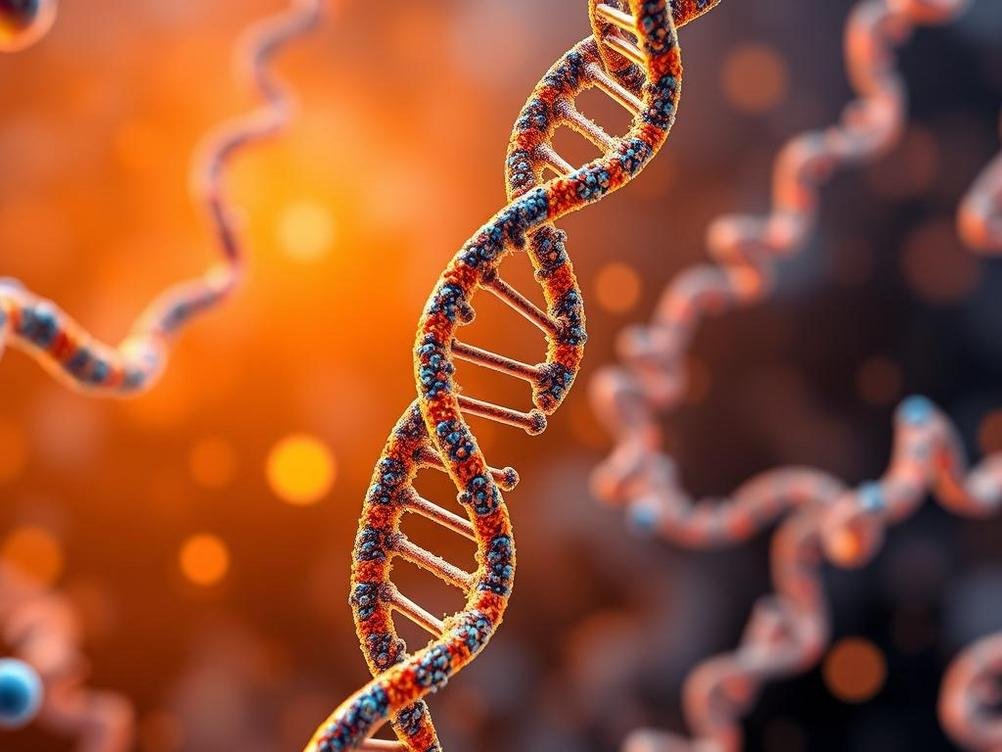
How a Groundbreaking AI is Decoding Genetic Mysteries and Fighting Diseases
Imagine scrolling through your family photo album and suddenly realizing that a quirky trait, like your aunt’s wild hair or your grandpa’s knack for forgetting names, might actually be tied to something deeper—like a genetic twist that could lead to a health issue. That’s the kind of wild ride we’re on with this new AI model that’s linking genetic mutations to specific diseases. It’s not every day you hear about tech that could potentially swap out guesswork in medicine for some solid detective work, but here we are in 2025, and AI is stepping up to the plate like a superhero in a lab coat. This isn’t just another gadget; it’s a game-changer that could make personalized healthcare feel less like science fiction and more like your next doctor’s visit.
Think about it: we’ve all got these tiny blueprints in our DNA that can sometimes go rogue, causing everything from common colds to serious conditions like cancer or heart disease. But pinpointing exactly which mutation is the culprit? That’s been a headache for scientists for years. Enter this fresh AI model, which is basically like having a super-smart sidekick that sifts through mountains of genetic data faster than you can say ‘double helix.’ It’s exciting, sure, but also a bit mind-bending—how does a machine learn to connect the dots between, say, a random gene glitch and a disease like Alzheimer’s? In this article, we’re diving into the nitty-gritty of how this tech works, why it’s a big deal, and what it means for everyday folks like you and me. We’ll explore the upsides, the potential bumps in the road, and even peek into the future. Stick around; you might just walk away feeling like you’ve got a front-row seat to the next big leap in health tech.
The Basics of This AI Breakthrough
Okay, let’s kick things off with the fundamentals—who knew genetics could be this intriguing? This new AI model is essentially a smart algorithm designed to scan and analyze genetic data, linking mutations to diseases with pinpoint accuracy. It’s like playing matchmaker, but instead of swiping on a dating app, it’s pairing up DNA quirks with health risks. Developed by a team of researchers—think brilliant minds from places like the Broad Institute or similar outfits—it’s trained on massive datasets from genetic studies. We’re talking billions of data points here, all crunched by machine learning to spot patterns that humans might miss.
What makes this AI stand out is its use of advanced neural networks, which are basically the brainy part of the AI that learns from examples. Imagine teaching a kid to recognize animals by showing them pictures over and over; that’s what this model does with genetic code. For instance, if a certain mutation shows up in people with cystic fibrosis, the AI notes it and starts predicting similar links elsewhere. It’s not magic, but it sure feels like it when you consider how quickly it processes info compared to traditional methods. And here’s a fun fact: according to recent health reports, genetic diseases affect about 1 in 25 people worldwide, so this could be a real lifeline for millions.
To break it down further, let’s list out the key components of this AI:
- Data Input: It pulls from sources like genome databases (e.g., the one at NCBI), feeding in sequences of DNA to train itself.
- Learning Algorithms: These are the engines that analyze patterns, using techniques like deep learning to predict outcomes.
- Output Insights: The AI doesn’t just spit out data; it provides actionable links, like ‘This mutation might increase your risk of diabetes by 30%.’
How the AI Model Actually Works
Diving deeper, let’s talk about the mechanics—because who doesn’t love a good behind-the-scenes look? This AI isn’t just randomly guessing; it’s built on layers of machine learning that mimic how our brains process information. Picture it like a detective novel where every clue leads to a bigger reveal. The model takes genetic sequences—those long strings of A’s, T’s, C’s, and G’s—and compares them against known disease databases. It’s all about finding correlations, like noticing that a specific mutation in the BRCA1 gene often pops up in breast cancer cases.
What’s cool is how it handles the complexity. Human genomes are messy, full of variations that aren’t always straightforward. This AI uses something called predictive modeling to weigh factors, such as environmental influences or family history, to make educated guesses. For example, if you’re dealing with a mutation linked to heart disease, the AI might factor in lifestyle data to say, ‘Hey, cutting down on junk food could mitigate this.’ It’s not perfect, but it’s a step up from the old days of trial and error. I mean, think about it: back in the 90s, mapping a genome took years; now, this AI can do in minutes what used to take a team of experts weeks.
- One real-world insight: In clinical trials, similar AI models have already helped identify rare diseases in kids, cutting diagnosis times from months to days. That’s like going from waiting for a pizza to having it delivered instantly!
- Another angle: It’s trained on diverse populations, which is crucial because not all genetic risks are the same everywhere—think about how certain mutations are more common in specific ethnic groups.
The Real-Life Impacts on Healthcare
Now, let’s get to the good stuff: how this AI is shaking up healthcare for the better. Imagine going to your doctor and getting a personalized plan based on your exact genetic makeup—that’s the promise here. This model could revolutionize preventative medicine by flagging potential issues early. For instance, if it links a mutation to a higher risk of Alzheimer’s, you could start lifestyle changes or even explore targeted treatments before symptoms show up. It’s like having a crystal ball, but one backed by science.
From a broader perspective, this could ease the burden on healthcare systems. Hospitals are overwhelmed, and misdiagnoses cost billions annually. Statistics from the World Health Organization suggest that genetic disorders account for up to 7% of all hospital admissions. With this AI, we’re talking faster, more accurate diagnoses, which means less money wasted and more lives saved. A metaphor to chew on: It’s like upgrading from a basic calculator to a supercomputer for your health—suddenly, complex problems become solvable.
- First, it empowers patients with knowledge, turning ‘What if?’ into ‘What now?’
- Second, it aids researchers by speeding up drug development; for example, pharma companies like Roche are already integrating AI to test new therapies.
- Lastly, it could make healthcare more equitable, reaching underserved areas where genetic testing was once out of reach.
Potential Drawbacks and Hiccups
Alright, let’s not sugarcoat it—every superhero has a weakness, and this AI is no exception. One big hiccup is the risk of false positives or negatives; if the model mislinks a mutation, it could lead to unnecessary panic or missed diagnoses. It’s like that time you thought a weird mole was cancer, but it turned out to be nothing—scary, right? Plus, training these models requires huge amounts of data, and biases in that data could skew results, especially if it’s not diverse enough.
Another thing to consider is privacy. We’re dealing with sensitive genetic info here, so who’s protecting it? Regulations like GDPR in Europe are a start, but with AI, there’s always the chance of data breaches. And humorously speaking, I wouldn’t want some hacker turning my DNA into a meme! On a serious note, ethical concerns abound, like who decides how this tech is used—insurance companies? Employers? We need to tread carefully to avoid a dystopian scenario.
- Key challenge: Accuracy rates aren’t 100%; studies show AI models can have error margins of 5-10%, which is better than humans but still not foolproof.
- What’s being done: Organizations are working on standards, like those from the National Human Genome Research Institute, to ensure fairness and reliability.
What’s Next for AI in Genetics?
Looking ahead, the future is buzzing with possibilities. This AI model is just the tip of the iceberg; we’re on the cusp of integrating it with other tech, like wearable devices that track your health in real-time and feed data back to the AI. Imagine your smartwatch detecting a genetic risk and suggesting a doctor’s visit before you even feel off. By 2030, we might see routine genetic screening become as common as a yearly check-up, all thanks to advancements like this.
Researchers are already experimenting with combining this with quantum computing for even faster analysis—think processing entire genomes in seconds. It’s exhilarating, but also a reminder that we need to keep innovating responsibly. A fun analogy: It’s like evolving from flip phones to smartphones; genetics is getting an upgrade, and the apps (or in this case, health insights) are endless.
- Potential integrations: Pairing with apps for personalized nutrition plans based on your genes.
- Global impact: In developing countries, this could help tackle hereditary diseases more effectively.
- Ethical evolutions: Expect more discussions on AI governance to prevent misuse.
Why This Matters to You and Me
In wrapping up, it’s clear this AI isn’t just for the lab coats—it’s for all of us. Whether you’re young and healthy or dealing with family health histories, understanding genetic links could change how you approach life. It’s a tool that empowers, educates, and potentially saves lives, making the abstract world of DNA feel a lot more personal.
So, next time you hear about AI in the news, remember it’s not all about robots taking jobs; it’s about tools like this one stepping in to make our world a healthier place. Who knows, maybe in a few years, we’ll look back and laugh at how we ever managed without it. Keep an eye on the developments—your future self might thank you.
Conclusion
To sum it up, this new AI model linking genetic mutations to diseases is a beacon of hope in the messy world of healthcare. It’s shown us that technology can be a force for good, offering insights that were once out of reach and paving the way for a healthier tomorrow. As we move forward, let’s embrace these innovations with a mix of excitement and caution, ensuring they benefit everyone equally. After all, in the grand story of human health, AI might just be the plot twist we needed.