
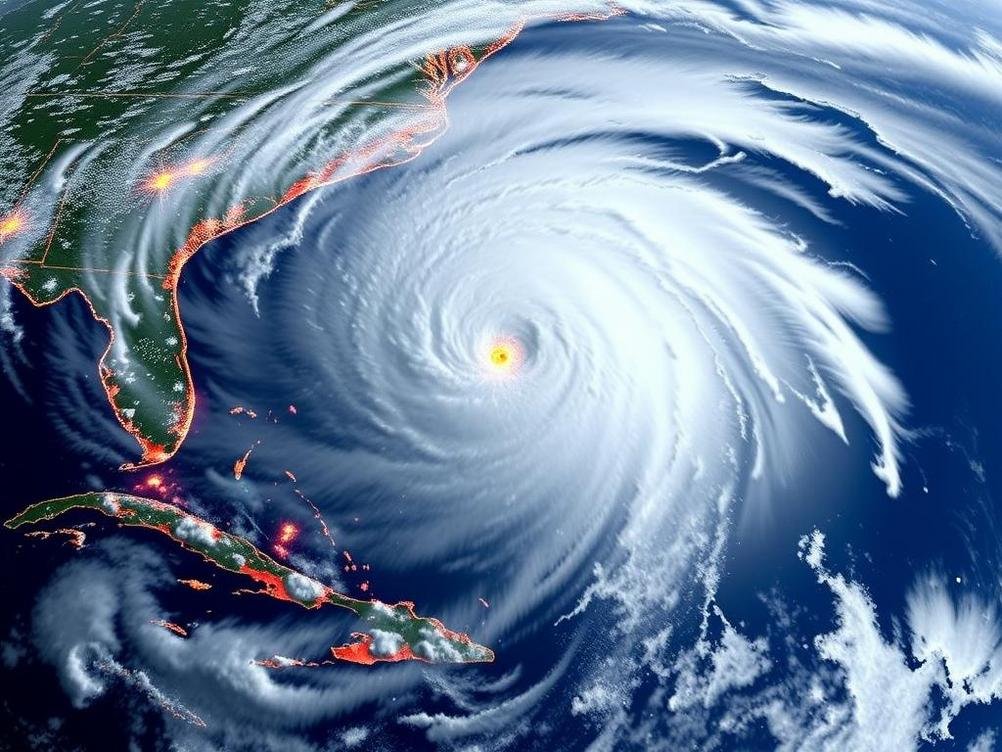
How AI is Supercharging Hurricane Predictions and Saving Lives
How AI is Supercharging Hurricane Predictions and Saving Lives
Picture this: You’re sitting on your porch, sipping a cold drink, when the sky suddenly turns an ominous gray, and the wind starts whipping around like it’s auditioning for a blockbuster disaster movie. That’s the kind of chaos hurricanes bring, and let’s face it, no one wants to be caught off guard by a monster storm that could turn your backyard into a swimming pool. But here’s the good news: AI is stepping in like the ultimate sidekick, helping forecasters peek into the future of these destructive whirlwinds. We’ve all seen the headlines about AI doing everything from writing poems to driving cars, but can it really make a dent in something as unpredictable as Mother Nature? Well, stick around, because we’re diving into how artificial intelligence is transforming hurricane predictions from guesswork into something a lot more reliable—and yeah, it might just save a few lives in the process.
Think about the last big hurricane that hit—maybe Katrina or Harvey—and how it left folks scrambling for higher ground. Back in the day, predictions were basically meteorologists squinting at radar screens and crossing their fingers. But now, with AI crunching massive amounts of data in seconds, we’re talking about pinpointing storm paths, intensities, and even potential flooding with way more accuracy. It’s like upgrading from a rusty old compass to a high-tech GPS that knows every twist and turn. I mean, who wouldn’t want that kind of edge when a category 5 behemoth is barreling toward the coast? In this article, we’ll break it all down, from the wild science behind AI’s weather wizardry to real stories that show it’s not just hype. By the end, you might just feel a bit more prepared for whatever the skies throw at us next. And hey, if AI can help us outrun storms, maybe it can handle my terrible gardening skills too—but that’s a story for another day.
What Makes Hurricanes So Tricky to Predict Anyway?
You know how life throws curveballs when you least expect them? Hurricanes are the ultimate curveball, swirling masses of wind and rain that can change direction on a dime. The main issue is that these storms are influenced by a ton of factors—ocean temperatures, atmospheric pressure, even tiny shifts in wind patterns—and trying to track them all manually is like herding cats. Forecasters have been using models for years, but they’re only as good as the data fed into them, and let’s be real, human error creeps in. That’s why storms can surprise us, leading to devastating impacts like the flooding we saw in Houston during Hurricane Harvey in 2017, which caught many off guard despite warnings.
Then there’s the sheer volume of data involved. Satellites beam down terabytes of information every hour, from temperature readings to humidity levels, and analyzing it all in real-time is a headache. It’s not just about predicting where the eye of the storm will hit; it’s about forecasting secondary effects like storm surges or torrential rains that can wreak havoc inland. Imagine trying to solve a puzzle with a million pieces scattered everywhere—that’s the forecaster’s world. But here’s where it gets interesting: AI steps in to sort through that chaos, spotting patterns that even the sharpest human eye might miss. For example, tools like those from the National Oceanic and Atmospheric Administration (NOAA) noaa.gov are starting to incorporate AI to make sense of this data soup.
- First off, hurricanes don’t follow a straight path; they meander like a kid in a candy store, making long-term predictions a guessing game.
- Secondly, climate change is throwing more fuel into the mix, with warmer oceans brewing stronger storms, which means old prediction models are playing catch-up.
- And don’t forget the butterfly effect—a small change in one area can snowball into a massive storm elsewhere, which is straight out of a sci-fi flick.
AI: The Unexpected Hero in the Storm-Fighting Arsenal
Okay, so AI isn’t exactly new—it’s been around since the days of sci-fi novels—but applying it to weather prediction? That’s like discovering your coffee maker can also brew beer. Machine learning algorithms can scarf down historical data from past hurricanes and learn from it, spotting trends that help predict future ones with scary accuracy. Think of it as teaching a computer to play chess, but instead of pawns, it’s dealing with atmospheric variables. For instance, AI models can simulate thousands of storm scenarios in minutes, something that would take humans weeks to crunch through.
What makes AI so cool here is its ability to adapt. Unlike rigid old-school models, AI gets smarter over time as it processes more data. If a hurricane takes an unexpected turn, the system can recalibrate on the fly. I remember reading about how during Hurricane Dorian in 2019, AI-powered forecasts from organizations like Google’s AI for Weather helped narrow down the storm’s path, potentially saving lives in the Bahamas. It’s not magic, but it sure feels like it when you see predictions improve from “maybe it’ll hit here” to “it’s heading straight for that coastline.” And let’s not gloss over the humor—AI might not have emotions, but it’s got us humans beat at staying cool under pressure.
- AI uses neural networks to mimic the human brain, processing complex data layers to forecast storm intensity.
- It integrates real-time inputs from drones, satellites, and even ocean buoys for a fuller picture.
- Plus, it’s scalable—no more relying on supercomputers that cost a fortune; cloud-based AI can run on everyday servers.
Real-World Wins: AI Turning Predictions into Lifesavers
Let’s get to the fun part—actual examples where AI has flexed its muscles. Take Hurricane Ian in 2022, which barreled into Florida with a vengeance. Thanks to AI-enhanced models from the European Centre for Medium-Range Weather Forecasts (ECMWF) ecmwf.int, officials had more precise warnings, allowing evacuations that might’ve prevented thousands of injuries. It’s like having a crystal ball that actually works. These tools analyzed satellite imagery and predicted the storm’s rapid intensification, something traditional methods often miss until it’s too late.
And it’s not just big agencies; startups are jumping in too. Companies like IBM’s Weather Company are using AI to deliver hyper-local forecasts, right down to your neighborhood. Imagine getting a notification that says, “Hey, that hurricane might flood your street in two hours”—that’s the kind of heads-up that could turn a disaster into a manageable inconvenience. Statistics from the World Meteorological Organization show that AI-assisted forecasts have reduced error rates by up to 20% in recent years, which might not sound huge, but in storm terms, that’s the difference between a safe evacuation and a tragic loss.
The Brainy Bits: How AI Crunches the Numbers
Dive a little deeper, and you’ll find AI isn’t just throwing darts at a board; it’s using fancy tech like machine learning and deep learning to make sense of weather data. Picture a massive library of storm info from the past 50 years—AI sifts through it, finding hidden patterns, like how warmer sea surfaces correlate with fiercer winds. It’s like being a detective, but instead of clues, you’ve got algorithms piecing together the puzzle. Tools from Google Cloud or Microsoft Azure are making this easier, allowing forecasters to run simulations that predict storm behavior with metaphors I can barely wrap my head around.
One cool metaphor? Think of AI as a weather-savvy chef, blending ingredients (data points) into a perfect recipe for prediction. For example, it can use computer vision to analyze satellite images and spot early signs of a forming hurricane, sometimes days ahead. And with advancements in big data, we’re seeing integrations that pull in everything from social media chatter to IoT sensors, giving a more rounded view. It’s not flawless, but hey, even the best cooks have off days.
- Machine learning models train on historical data to improve accuracy over time.
- Deep learning processes vast datasets, identifying subtle changes that signal a storm’s growth.
- Integration with APIs from services like OpenWeatherMap openweathermap.org adds real-time data for on-the-spot adjustments.
Bumps in the Road: Why AI Isn’t the Perfect Storm Buster Yet
Don’t get me wrong—AI is amazing, but it’s not like we’ve got a force field against hurricanes. There are still kinks, like how AI needs heaps of quality data to work its magic, and not every region has that. In places with spotty satellite coverage, predictions can go sideways, leading to false alarms or missed warnings. It’s a bit like relying on a GPS in the mountains—great when the signal’s strong, but frustrating when it drops. Plus, there’s the ethical side; who’s accountable if an AI forecast goes wrong and people get hurt?
Then there’s the computational cost—running these models requires serious horsepower, and not every weather service can afford it. Humor me for a second: It’s like trying to run a marathon on a pair of worn-out sneakers; you might make it, but it’ll be a struggle. Despite these hurdles, experts are working on fixes, like making AI more accessible through open-source platforms, so even smaller teams can benefit.
Looking Ahead: What’s Next for AI and Storms?
As we barrel toward 2026, AI’s role in hurricane prediction is only going to grow, with advancements like quantum computing potentially making forecasts even sharper. Imagine AI not just predicting storms but also suggesting personalized evacuation plans based on your location. It’s exciting, but we’ve got to keep innovating to handle the increasing frequency of extreme weather due to climate change. According to a report from the Intergovernmental Panel on Climate Change, we might see 20% more intense hurricanes by mid-century, so AI could be our best bet for staying ahead.
Researchers are experimenting with hybrid systems that combine AI with human expertise, ensuring we don’t lose the personal touch. It’s all about balance—letting machines handle the heavy lifting while forecasters add their intuition. Who knows, maybe in a few years, we’ll have AI apps that warn you about storms before they even form, turning what was once a nightmare into a minor inconvenience.
Conclusion: Staying Storm-Ready in an AI-Powered World
Wrapping this up, it’s clear that AI is flipping the script on hurricane predictions, turning uncertainty into actionable insights and potentially saving countless lives along the way. From crunching data mountains to delivering spot-on forecasts, it’s a game-changer that makes you wonder what else this tech can tackle. But remember, while AI is a powerful tool, it’s up to us to use it wisely and keep preparing for the worst. So, next time you hear about a brewing storm, take a moment to appreciate the tech behind the warnings—and maybe double-check your emergency kit. Here’s to safer skies ahead; let’s harness AI’s potential and face whatever comes our way with a bit more confidence and a lot less panic.
