 dailytech.ai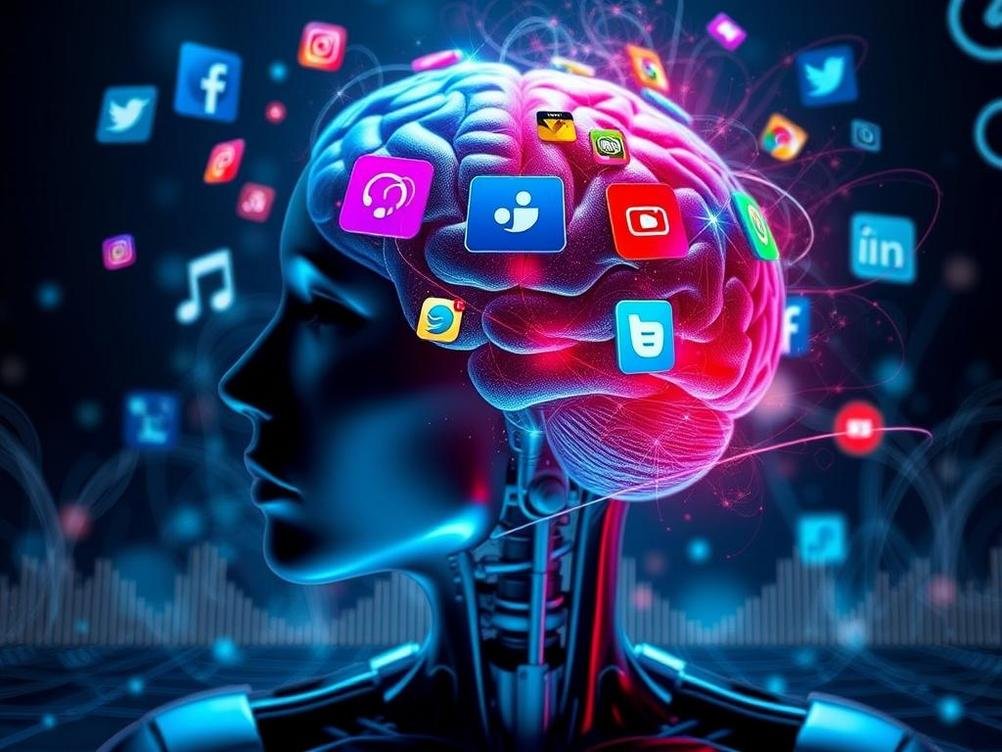
Is AI and Social Media Really Rotting Your Brain? Let’s Dive In and Find Out
Okay, picture this: It’s 2 a.m., you’re sprawled on your couch, thumb flicking through an endless stream of TikToks, Reels, and whatever algorithm-pushed nonsense your phone decides to serve up. One minute you’re laughing at a cat video, the next you’re down a rabbit hole of conspiracy theories or those oddly satisfying slime-squishing clips. Before you know it, hours have vanished, and your brain feels like it’s been through a blender. Sound familiar? That’s what folks are calling ‘brain rot’ these days – that fuzzy, distracted feeling where your attention span is shot, and deep thinking feels like a distant memory. But here’s the kicker: It’s not just mindless scrolling; AI and social media are teaming up like some unholy alliance to make it worse. In this post, we’re gonna unpack how these digital culprits are contributing to this mental mush, throw in some laughs along the way because hey, if we’re talking brain decay, might as well keep it light, and even share tips to claw your way back to clarity. Stick around; your noggin might thank you.
What Exactly Is ‘Brain Rot’ and Why Should You Care?
Alright, let’s break it down without getting all sciency and stuff. ‘Brain rot’ isn’t a real medical term – it’s more like internet slang for when your mind starts feeling sluggish from too much low-effort content consumption. Think of it as mental junk food: Sure, it’s tasty in the moment, but over time, it leaves you bloated and regretting your life choices. It’s that sensation where you can’t focus on a book for more than five minutes without checking your phone, or when conversations feel surface-level because your brain’s wired for quick hits.
Why care? Well, in a world where we’re bombarded with info 24/7, this rot can sneak up on you. Studies from places like the Pew Research Center show that heavy social media users report higher levels of anxiety and shorter attention spans. It’s not just about feeling foggy; it could affect your productivity, relationships, and even your creativity. I’ve caught myself zoning out during important meetings because my brain was still buzzing from a morning scroll session. If that’s not a wake-up call, I don’t know what is.
And get this – it’s not all in your head (pun intended). Neuroscientists talk about how constant digital stimulation rewires our brains, making us crave novelty over depth. So yeah, brain rot is real, and it’s worth paying attention to before it turns your gray matter into Swiss cheese.
How Social Media Sets the Stage for Mental Mush
Social media platforms are like that friend who always brings junk food to the party – tempting, addictive, and ultimately not great for you. They thrive on keeping you hooked with infinite scrolls, notifications that ping like a needy ex, and content designed to trigger emotional responses. Remember when Facebook started? It was about connecting with friends. Now, it’s a vortex of ads, arguments, and adorable animal videos that suck you in for hours.
One big way it contributes to brain rot is through fragmented attention. You’re jumping from a political rant to a makeup tutorial to a meme in seconds. This constant switching trains your brain to expect instant gratification, making it harder to stick with longer tasks. A study by Microsoft found that the average attention span has dropped from 12 seconds in 2000 to just 8 seconds now – that’s shorter than a goldfish! No wonder we feel scattered.
Plus, there’s the comparison game. Scrolling through perfect lives can make you feel inadequate, leading to stress and a loop of more scrolling to escape. It’s a vicious cycle, my friends, and social media knows exactly how to keep you in it.
AI’s Sneaky Role in Accelerating the Rot
Now, enter AI, the behind-the-scenes wizard making social media even more addictive. Algorithms powered by AI curate your feed to show exactly what keeps you engaged longest. It’s like having a personal chef who knows you love pizza and serves it non-stop – great at first, but soon you’re regretting it.
Take recommendation systems on platforms like YouTube or Instagram. They use machine learning to predict what you’ll click on next, often pushing sensational or polarizing content because that’s what gets the views. Ever started watching a harmless video and ended up in extreme territory? That’s AI at work, feeding the rot by prioritizing engagement over quality.
And don’t get me started on AI-generated content. With tools like ChatGPT churning out endless posts, the internet’s flooded with mediocre stuff that’s just good enough to skim but not enriching. It’s like eating fast food every day; it fills you up but leaves you nutritionally starved. I’ve seen friends get lost in AI-suggested rabbit holes, emerging hours later with nothing but trivia and tiredness.
The Dopamine Trap: Why It’s So Hard to Stop
Ah, dopamine – the brain’s feel-good chemical that’s basically the candy of neurotransmitters. Social media and AI exploit this like pros. Every like, share, or notification gives you a little hit, making you come back for more. It’s no accident; designers call it the ‘slot machine effect,’ where unpredictable rewards keep you pulling the lever (or refreshing the feed).
AI amps this up by personalizing the experience. It learns your habits and serves content that maximizes those dopamine spikes. Wonder why you can’t put your phone down? It’s because AI has fine-tuned the addiction. A report from the American Psychological Association links this to increased rates of depression and anxiety, especially among young folks.
I’ve tried going cold turkey, and let me tell you, the withdrawal is real. Headaches, irritability – it’s like your brain’s throwing a tantrum for its fix. But understanding this trap is the first step to breaking free.
Real-World Impacts: From Foggy Minds to Bigger Problems
Beyond the daily fog, brain rot has some serious ripple effects. In the workplace, it’s killing productivity. Imagine trying to write a report when your mind keeps wandering to that viral tweet. Companies are noticing; some are even implementing ‘focus hours’ to combat it.
On a personal level, relationships suffer too. Ever been on a date where both of you are half-present, sneaking peeks at your phones? It’s eroding real connections. And health-wise, chronic screen time is linked to sleep issues, eye strain, and even cognitive decline over time. A study in the Journal of Medical Internet Research found that excessive social media use correlates with poorer memory and decision-making skills.
Globally, it’s a societal thing. With AI pushing echo chambers, we’re seeing more division and less critical thinking. It’s like the whole world’s brain is rotting a bit, leading to misinformation and knee-jerk reactions. Scary stuff, right?
Ways to Combat Brain Rot and Reclaim Your Mind
Good news: You’re not doomed. First off, set boundaries. Use apps like Freedom or Screen Time to limit your scrolling. I swear by the 20-minute rule – check socials for 20 minutes, then put it away.
Next, curate your feed mindfully. Follow accounts that inspire or educate, not just entertain. And try analog activities: Read a physical book, go for a walk without your phone, or pick up a hobby like painting. It retrains your brain for deeper focus.
- Practice mindfulness: Apps like Headspace (headspace.com) can help rebuild attention.
- Digital detox weekends: Unplug and see how refreshed you feel.
- Engage in long-form content: Podcasts or articles that make you think.
Remember, it’s about balance. AI and social media aren’t evil; they’re tools. Use them wisely, and you can avoid the rot altogether.
Conclusion
So, there you have it – AI and social media are indeed contributing to this thing we call brain rot, turning our minds into mush through addictive algorithms, endless content, and dopamine overload. But hey, awareness is half the battle. By understanding how these forces work, we can take steps to protect our mental sharpness and maybe even enjoy the digital world without letting it consume us. Next time you’re about to doom-scroll, pause and ask: Is this feeding my brain or rotting it? A little mindfulness goes a long way. Here’s to clearer heads and happier lives – now go out there and think deeply!








Leave a Reply