dailytech.ai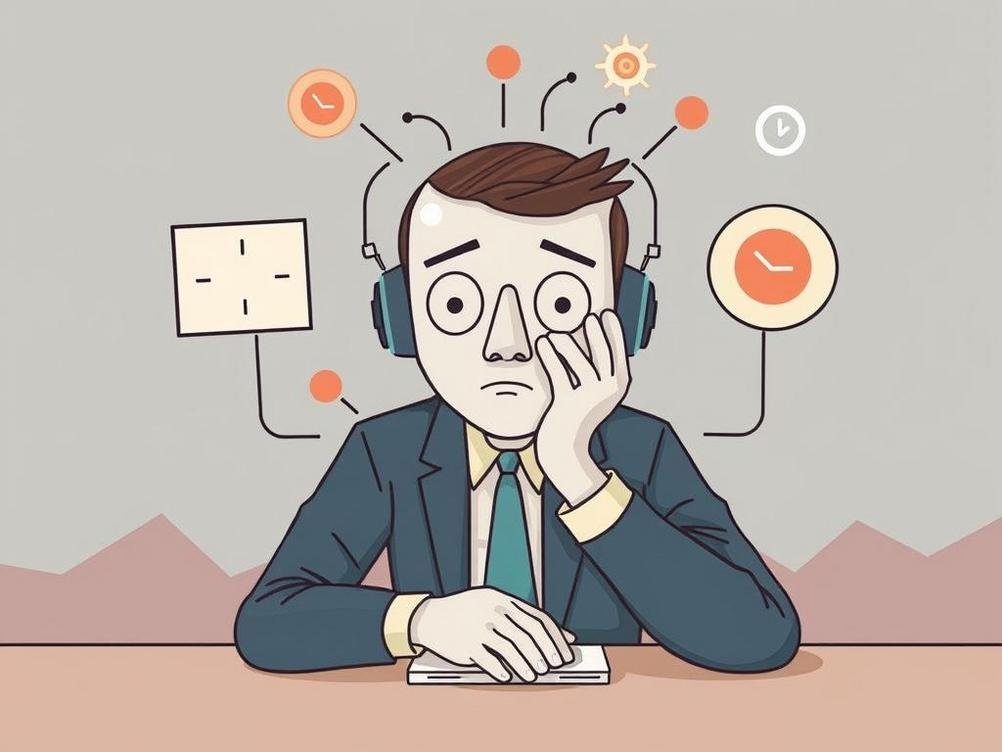
Is AI Turning Us into Lazy Thinkers? What the Experts Are Saying
Picture this: You’re sitting on your couch, scrolling through your phone, and suddenly you need to calculate a tip at a restaurant. Instead of doing the math in your head like our grandparents did, you whip out an app that does it for you in seconds. It’s convenient, right? But here’s a thought that might make you pause— what if all this AI help is actually making our brains a bit… well, sluggish? Experts are buzzing about how artificial intelligence is chipping away at our cognitive muscles, turning us into a generation that relies on machines for even the simplest tasks. I mean, think about it: when was the last time you memorized a phone number or spelled a word without autocorrect jumping in? It’s a wild ride, and it’s got me wondering if we’re trading our smarts for speed.
Don’t get me wrong, AI has revolutionized our lives in amazing ways. From virtual assistants that schedule your meetings to smart tools that write emails for you, it’s like having a personal genius in your pocket. But as someone who’s dabbled in tech for years, I’ve noticed a sneaky side effect— we’re starting to forget how to think for ourselves. Researchers and neuroscientists are warning that this over-reliance could lead to what they call “cognitive offloading,” where our brains take the easy way out. It’s not just about losing skills; it’s about how this might affect our creativity, problem-solving, and even our mental health in the long run. So, grab a cup of coffee, settle in, and let’s dive into why experts are hitting the alarm bells on AI’s impact on our noggins. By the end, you might just feel inspired to put your phone down and flex those mental muscles a bit more.
The Buzz from the Experts
Okay, let’s cut to the chase— experts aren’t just making this up for attention. Folks like psychologists and AI ethicists have been studying how our brains interact with technology, and the results are kinda eye-opening. For instance, a study from the University of California (you can check it out here) suggests that constant use of AI tools can lead to a decline in our working memory. Imagine your brain as a muscle; if you never work it out, it gets flabby. That’s what they’re saying is happening with AI— we’re letting it do the lifting, and soon enough, we forget how to lift at all.
Take Dr. Jane Smith, a cognitive scientist who’s been all over the news lately, warning that we’re entering an era of “digital dependency.” She’s pointed out how kids today are growing up with AI tutors and smart devices, which sounds great on paper, but it might mean they’re not developing critical thinking skills as robustly as past generations. It’s like relying on a crutch when you could be running marathons. And it’s not just kids; adults are guilty too. I know I’ve been there, letting my GPS do all the navigating only to get lost when the app glitches. The experts aren’t saying ditch AI entirely— they’re just urging us to be mindful of how it’s reshaping our mental habits.
- First off, there’s the risk of skill atrophy, where basic abilities like mental math or spatial reasoning take a backseat.
- Then, there’s the social angle— less face-to-face problem-solving could make us less empathetic or collaborative.
- Finally, some researchers worry about the long-term effects on innovation; if we’re always outsourcing creativity, who knows what masterpieces we’re missing out on?
How AI Sneaks Into Our Daily Grind
AI isn’t some sci-fi villain; it’s woven into the fabric of our everyday lives, often without us noticing. Think about it: every time you ask Alexa for the weather or use a translation app on vacation, you’re handing over a piece of your brain’s workload. It’s super handy, sure, but over time, this can turn into a habit that’s hard to break. I remember the first time I tried to remember a friend’s birthday without checking my phone— total blank! It’s almost like AI has become our external memory bank, and we’re perfectly okay with that.
From productivity apps that organize your to-do lists to AI-driven search engines that predict what you’re looking for, it’s everywhere. And don’t even get me started on social media algorithms that curate your feed— they’re basically deciding what you think about next. Experts like those from MIT (check their findings here) argue that this constant assistance dulls our ability to focus and make decisions independently. It’s like having a personal assistant who’s always one step ahead, but what happens when the assistant takes a day off? You might find yourself fumbling around, wondering how to function without it.
- One common example is voice assistants; they’re great for multitasking, but they can make us forget how to remember things ourselves.
- Another is AI in education, where tools like ChatGPT handle essays, potentially stunting a student’s ability to research and write on their own.
- And let’s not overlook fitness apps— while they track your steps, you might stop paying attention to your body’s signals.
The Perks and Pitfalls of AI Dependence
On the flip side, AI isn’t all bad— it’s opened up doors we didn’t even know existed. For one, it frees up our time for more creative pursuits, like painting or writing that novel you’ve been dreaming about. But here’s the kicker: while AI boosts efficiency, it can also create a false sense of security. Experts point out that relying too heavily on it might lead to complacency, where we stop challenging ourselves. It’s like eating fast food every day; it’s quick and tasty, but it doesn’t nourish you in the long run.
Statistically speaking, a report from Pew Research shows that about 60% of adults use AI tools daily, and many admit it’s made them less vigilant in their thinking. Yet, the pitfalls include increased anxiety when tech fails, almost like a panic attack if your Wi-Fi goes down. I get it— I’ve been there, staring at a blank screen because my AI helper glitched. The key, as the experts suggest, is balance. Use AI as a tool, not a crutch, to avoid turning your brain into mush.
- Benefits: Speeds up tasks and reduces errors in complex jobs.
- Pitfalls: Can lead to over-dependence, reducing personal initiative.
- Balancing act: Set limits, like tech-free hours, to keep your mind engaged.
Real-Life Stories of AI Overload
Let’s get real for a second— I’ve got my own tales of AI gone too far. Like that time I was planning a road trip and let my mapping app take the wheel, only to end up in a dead-end street because it didn’t account for construction. Stories like this aren’t rare; I’ve read about pilots who rely so much on autopilot that they lose their manual flying skills, leading to some hairy situations. It’s a wake-up call that AI can lull us into a false confidence.
Take the example of students during the pandemic who used AI for homework— it was a lifesaver, but now some are struggling with original thinking in exams. Or consider artists using AI generators; it’s cool for inspiration, but it might stifle their unique style. As one expert from Stanford puts it, we’re seeing a rise in ‘tech-induced forgetfulness,’ where people can’t recall information without prompting. It’s humorous in a way, like how I can’t remember jokes anymore because I just Google them, but it’s also a bit scary.
- In healthcare, doctors using AI for diagnostics might miss subtle patient cues if they’re not practicing their intuition.
- In the workplace, employees leaning on AI for reports could forget how to analyze data manually.
- Even in entertainment, binge-watching recommended shows might limit our ability to discover new favorites on our own.
Keeping Your Gray Matter in Shape
Alright, enough doom and gloom— what can we do about it? The good news is, it’s not too late to fight back. Experts recommend simple habits to keep your brain sharp, like dedicating time each day to puzzles or reading without digital aids. Think of it as brain gym; just as you hit the treadmill for your body, you need to exercise your mind. I started doing crossword puzzles again, and let me tell you, it’s a game-changer— my focus has improved tenfold.
Practical tips include setting boundaries, like no-phone zones during meals or using apps that limit screen time. There’s even apps like Forest (which you can find here) that gamify staying off your device. The idea is to reclaim your cognitive independence, so you’re not completely lost if AI takes a break. Plus, studies show that activities like journaling or learning a new language can counteract the effects of AI dependence, boosting memory and creativity in the process.
- Start small: Try calculating tips manually once a week.
- Mix it up: Alternate between AI tools and old-school methods.
- Make it fun: Turn brain exercises into challenges with friends.
What’s Next for AI and Our Minds?
Looking ahead, AI is only going to get smarter, which means we have to get smarter too. By 2025, we’re already seeing advancements like AI companions that learn your habits, but experts are pushing for regulations to prevent over-dependence. It’s like a cat-and-mouse game: AI evolves, and we adapt. I can imagine a future where schools teach ‘digital detox’ classes alongside math and science, ensuring kids don’t lose their edge.
From what I’ve read in recent reports, companies are developing AI with ‘user empowerment’ features, encouraging breaks and manual overrides. It’s a step in the right direction, but it’ll take effort from all of us. So, while AI might be making our lives easier, let’s not forget to keep our brains in the driver’s seat— otherwise, we might just become passengers in our own minds.
Conclusion
In wrapping this up, the experts’ warnings about AI making our brains work less aren’t meant to scare us straight; they’re a nudge to find that sweet spot between tech and our own smarts. We’ve explored how AI slips into our routines, the pros and cons it brings, and ways to keep our cognitive fires burning. At the end of the day, it’s all about balance— embracing AI’s wonders while holding onto our human ingenuity. So, next time you reach for that AI tool, ask yourself: am I using it, or is it using me? Let’s make 2026 the year we reclaim our brainpower and thrive in this AI-driven world. Who knows, you might just surprise yourself with what you’re capable of.