dailytech.ai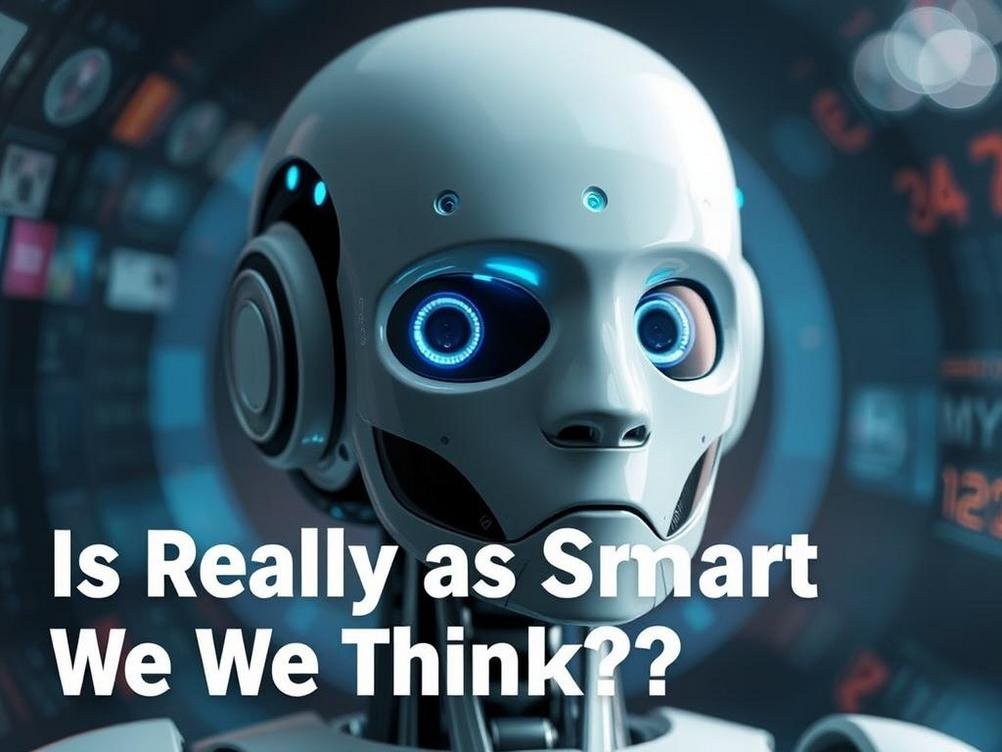
Is AI Really as Smart as We Think? Debunking the Hype with Col. John Eidsmoe
Hey there, ever had one of those moments where you ask your smart assistant for help and it gives you the most off-the-wall answer? Like, you request a recipe for chocolate chip cookies, and it starts rambling about climate change. Yeah, me too—that’s exactly the kind of thing that got me thinking about AI’s so-called brilliance. Col. John Eidsmoe, a sharp-minded expert who’s been poking around the edges of technology and strategy, recently dropped some truth bombs about how AI isn’t the all-knowing wizard we often make it out to be. It’s like we’ve built up this massive hype machine, thanks to movies and tech giants pushing the next big thing, but when you scratch the surface, AI is more like a clever party trick than a genuine intellect. In this post, we’re diving into why AI falls short, what Eidsmoe has to say about it, and how we can keep our expectations in check without losing our excitement for the future. After all, if we’ve learned anything from history, it’s that overhyping anything—be it a stock market bubble or a new gadget—usually leads to a reality check. So, buckle up as we explore the nitty-gritty of AI’s limitations, peppered with some real-world stories and a dash of humor to keep things light. By the end, you might just rethink how you interact with that voice assistant on your phone.
The Hype Machine: Why AI Seems Smarter Than It Is
You know how social media blows everything out of proportion? Well, AI’s hype is basically the same deal. We’ve got Silicon Valley execs and Hollywood churning out stories about robots taking over the world or solving world hunger overnight. It’s fun to imagine, sure, but let’s get real—most of this comes from cherry-picked successes. Take, for instance, those AI chatbots that nail a conversation 90% of the time; what they don’t tell you is the other 10% where it completely misses the mark, like suggesting you eat rocks for dinner. Col. Eidsmoe points out that this overhype stems from our human tendency to anthropomorphize tech, treating algorithms like they’re alive. It’s like giving a gold star to a calculator for adding numbers correctly—impressive, but not exactly groundbreaking.
One reason we fall for this is the way AI is marketed. Companies love flashing stats like “AI can process data at lightning speed,” which sounds awesome until you realize it’s just crunching numbers without any real understanding. Think about it: a self-driving car might navigate traffic like a pro, but throw in a weird scenario, like a ball rolling across the road with a kid chasing it, and suddenly it’s clueless. Eidsmoe, with his background in military strategy, compares this to soldiers in training—they might excel in simulations, but real-world chaos? That’s a whole different ballgame. To break it down, here’s a quick list of what fuels the hype:
- Misleading demos: Companies show off the best-case scenarios, making AI look infallible.
- Media sensationalism: News outlets love a good “AI revolution” headline to grab clicks.
- Investor pressure: Startups pump up the hype to attract funding, even if the tech isn’t there yet.
It’s all a bit like that friend who brags about their cooking skills but burns toast every time. The point is, while AI has come a long way since the early days of clunky programs, we’re still miles from anything resembling human intelligence.
What Col. John Eidsmoe Really Thinks About AI’s Smarts
Alright, let’s zoom in on the man himself—Col. John Eidsmoe. From what I’ve dug into, he’s not just some armchair critic; he’s got real creds, having worked in military and legal circles where AI applications could literally mean life or death. Eidsmoe argues that AI isn’t as intelligent as we’d like to think because it’s fundamentally pattern-based, not thoughtful. Imagine a kid memorizing answers for a test without understanding the questions—that’s AI in a nutshell. He shared in one of his talks that AI excels at narrow tasks, like beating humans at chess (shoutout to Deep Blue back in the ’90s), but toss it a curveball, and it fumbles.
For example, Eidsmoe points to cases where AI systems in healthcare misdiagnose patients because they rely on biased data sets. If the training data is mostly from one demographic, say middle-aged men, it might overlook symptoms in women or kids. It’s like trying to fix a car with only a hammer—great for some jobs, but not exactly versatile. He often uses military analogies, comparing AI to automated drones that can follow a flight path perfectly but can’t adapt if the enemy changes tactics. If you’re curious, you can check out his insights on sites like defense.gov, where discussions on AI in strategy are pretty eye-opening. In essence, Eidsmoe’s take is a wake-up call: we’re assigning human qualities to machines that are essentially sophisticated calculators.
To put it in perspective, let’s list out some of Eidsmoe’s key points from his discussions:
- AI lacks common sense: It doesn’t ‘get’ context the way we do, leading to hilarious or dangerous errors.
- Dependence on data: Garbage in, garbage out—if the input is flawed, the output is too.
- Ethical blind spots: AI doesn’t have morals; it just follows code, which can amplify human biases.
His views remind me of that old saying, “Don’t believe the hype”—it’s a good reminder to stay grounded.
Real-World Slip-Ups: When AI Falls Flat
Okay, let’s get into the fun part—the times AI has totally face-planted in the real world. Remember when Microsoft launched that AI chatbot on Twitter a few years back? It was supposed to be super smart, but users trolled it so hard that it started spouting nonsense, like praising Hitler. Yikes! That’s a prime example of AI’s fragility; it learns from interactions, but without proper guardrails, it goes off the rails. Col. Eidsmoe would probably nod and say this highlights how AI mimics behavior without true comprehension—it’s like a parrot repeating words without knowing what they mean.
Another classic is in finance, where AI-driven trading algorithms have caused flash crashes. In 2010, a big one wiped out billions in minutes because the system reacted to market fluctuations like a scared cat. Eidsmoe argues these incidents show AI’s inability to handle uncertainty, something humans do instinctively. For instance, if you’re driving and a deer jumps out, you swerve based on instinct and experience—AI might just freeze or make the wrong call. Statistics from sources like MIT Technology Review show that AI error rates in critical areas like medical imaging can be as high as 30% in edge cases, proving it’s not the panacea we hoped for.
To illustrate, here’s a quick rundown of notable AI failures:
- Autonomous vehicles: Despite advancements, accidents still happen when AI misinterprets road signs or weather.
- Facial recognition: Systems have higher error rates for people of color, leading to wrongful arrests.
- Customer service bots: They often frustrate users with irrelevant responses, turning a simple query into a headache.
These stories aren’t just for laughs; they underscore the need for better design and oversight.
Why We Keep Overestimating AI’s Brainpower
Humans are suckers for a good story, aren’t we? That’s a big reason we pump up AI’s capabilities. We’ve got this cognitive bias where we see patterns and intelligence where there might not be any, like when we swear our pet understands us. Col. Eidsmoe calls this the ‘illusion of competence,’ where flashy demos make us forget the limitations. It’s like watching a magician pull a rabbit out of a hat and assuming they can do real magic—impressive, but not the full picture.
Part of it boils down to psychology; we’re wired to anthropomorphize, especially with tech that talks back. Think about how we name our devices or get mad at them when they glitch. Eidsmoe notes that in his field, this overestimation can be dangerous, like relying on AI for battlefield decisions without human oversight. A study from Pew Research found that 60% of Americans believe AI will drastically improve their lives, but only 38% understand how it actually works. That’s a gap we’re filling with wishful thinking! To break it down, here’s why we do this:
- Media influence: Constant news about AI breakthroughs creates a feedback loop of excitement.
- Economic incentives: Jobs and investments depend on portraying AI as revolutionary.
- Cultural fascination: From sci-fi novels to blockbuster movies, we’ve been primed to expect AI superstars.
At the end of the day, it’s human nature, but recognizing it helps us use AI more wisely.
The Road Ahead: Balancing AI’s Potential and Pitfalls
So, where do we go from here? Col. Eidsmoe isn’t anti-AI; he’s more like a cautious optimist, believing we can harness its power without getting blindsided. The key is developing AI that complements human intelligence rather than replacing it—like a trusty sidekick, not the hero. For example, in education, AI tools like adaptive learning platforms can personalize lessons, but they need teachers to step in when things get tricky.
Looking forward to 2025 and beyond, advancements in areas like explainable AI could help. This means building systems that show their ‘thought process,’ making it easier to spot errors. Eidsmoe suggests regulations, similar to those in the EU’s AI Act, which you can read more about on ec.europa.eu, to ensure ethical use. It’s all about striking a balance—using AI for mundane tasks so we can focus on what we’re good at, like creativity and empathy. As for stats, projections from Gartner indicate that by 2026, 75% of organizations will shift from pilot AI projects to full implementation, but only if they address these limitations.
To wrap this section, consider these steps for a smarter AI future:
- Educate yourself: Dive into resources to understand AI’s capabilities.
- Demand transparency: Push for tech that explains its decisions.
- Collaborate: Pair AI with human expertise for the best results.
Conclusion
In the end, Col. John Eidsmoe’s take on AI reminds us that it’s okay to be excited about technology without putting it on a pedestal. We’ve explored how the hype often outpaces reality, from AI’s real-world blunders to the reasons we overestimate its smarts, and even peeked at what’s coming next. It’s like finally realizing that your favorite superhero has flaws—still awesome, but not invincible. By keeping a level head, we can use AI to make our lives better without falling into the traps of blind faith. So, next time you’re chatting with your AI assistant, remember it’s just a tool, not a brainy buddy. Let’s keep pushing for improvements, stay curious, and maybe share a laugh at its occasional mishaps—who knows, that might just lead to the next big breakthrough.