dailytech.ai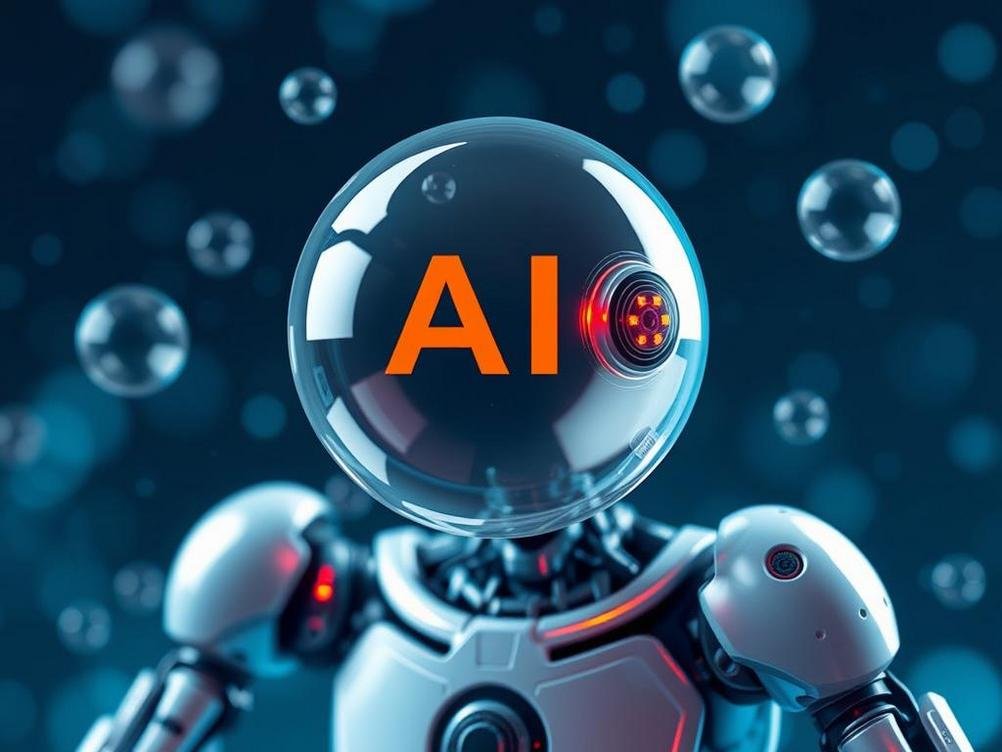
Is the AI Hype Really Just a Bubble Waiting to Pop?
Alright, let’s kick things off with a question that’s been buzzing around every tech coffee chat and late-night Twitter scroll: Is all this AI frenzy just a massive bubble about to burst? Picture this—you’re scrolling through your feed, and suddenly, every other post is about some new AI tool that promises to revolutionize your life, from writing your emails to picking your Netflix movies. But remember the dot-com boom? Yeah, that wild ride where everyone thought the internet was the next big thing, only for it to crash and burn in spectacular fashion. Fast forward to 2025, and AI is everywhere—it’s in your phone, your fridge, even helping doctors spot diseases. Yet, with all the hype, you can’t help but wonder if we’re overinflating this bubble. This daily briefing dives into the chaos, exploring whether AI’s rapid rise is genuine innovation or just a house built on hype. We’ll unpack the signs of a potential bubble, the tech world’s wild history, and what it all means for your wallet and the future. Spoiler: It’s not all doom and gloom, but let’s not kid ourselves—things might get bumpy. By the end, you’ll have a clearer picture of why AI could be the real deal or just another flash in the pan, and hey, maybe you’ll even chuckle at how we humans get swept up in the next big thing.
What Even Is an AI Bubble, Anyway?
Okay, so first things first, what do we mean when we say “AI bubble”? It’s like that time your buddy invested in Beanie Babies thinking they’d make him a millionaire—everyone’s hyped up about something, pouring money in, but is there actual value underneath? An AI bubble would mean we’re in a phase where investments in AI tech are skyrocketing based on speculation rather than solid results. Think about it: Companies are throwing billions at AI startups, stock prices for AI giants like Nvidia are through the roof, and even your grandma’s talking about ChatGPT like it’s the second coming. But bubbles burst when the hype outpaces reality, leaving folks holding the bag.
From what I’ve seen, the AI market was valued at over $500 billion in 2025, according to reports from Statista, and it’s projected to hit $1.5 trillion by 2030. That’s insane growth, but is it sustainable? Not every AI project pans out—remember all those apps that promised to replace your job but ended up being glorified autocorrect? The point is, if we’re basing investments on promises alone, we might be in for a rude awakening. On the flip side, AI has real wins, like helping farmers predict crop yields or assisting in medical diagnoses. So, is it a bubble or just the early stages of a tech revolution? Let’s break it down with a quick list of what makes something a bubble:
- Massive overvaluation: Stocks and startups getting priced way beyond their actual earnings.
- Hype over substance: Everyone’s talking about AI’s potential, but where’s the proof in the pudding?
- Speculative investing: People jumping in because their neighbor did, not because they understand the tech.
- Rapid inflation: Prices soaring without matching innovation, like that time crypto hit the moon and then crashed harder than a bad metaphor.
It’s all about balance—AI isn’t going anywhere, but if we don’t temper the excitement with some hard facts, we could see a pop that shakes the industry.
The Wild Ride of AI’s Rise: Hype or Hard Work?
Man, AI has come a long way since those clunky robots in old sci-fi movies. We’re talking about tools that can generate art, write code, and even chat like a human—it’s pretty mind-blowing. But has this rocket ship of progress turned into a hype machine? Look, I get it; back in the early 2010s, AI was this niche thing for tech geeks, and now it’s mainstream. Companies like OpenAI and Google are pumping out updates faster than a kid on a sugar rush, and investors are eating it up. The question is, is this growth backed by real innovation or just a fancy smoke screen?
Take generative AI, for instance—tools like DALL-E or Midjourney are creating images that look straight out of a dream, but they’re also raising eyebrows about originality and job displacement. According to a 2024 report from McKinsey, AI could automate up to 70% of routine tasks by 2030, which sounds great for efficiency but terrifying for workers. It’s like inviting a robot to your party—fun at first, but what if it starts eating all the snacks? The hype is real, with funding for AI startups hitting $90 billion in 2024 alone, but if these companies aren’t delivering on their promises, the bubble could deflate quickly.
To put it in perspective, think of AI like that friend who’s always talking about their big plans but never follows through. Sure, they’ve got potential, but without execution, it’s all hot air. That’s why investors need to be savvy—diversify your bets, folks, because not every AI venture is going to hit it big.
Spotting the Red Flags: Signs That AI Might Be Overheated
If you’re keeping an eye on the AI scene, you might notice some warning signs that scream “bubble alert!” For starters, valuations are nuts—a startup with a half-baked AI idea can snag millions in funding just because it has “AI” in its name. It’s reminiscent of the late ’90s dot-com era, where companies with “.com” in their domain were golden, only for most to vanish when the music stopped. In AI, we’re seeing similar overenthusiasm, with stock prices for AI-focused firms like Nvidia soaring over 300% in the past year, as per Yahoo Finance data.
Another red flag? The talent shortage. Everyone wants AI experts, but there aren’t enough to go around, leading to inflated salaries and rushed projects. It’s like trying to build a house with only hammers and no nails—things might look good at first, but it’ll fall apart. Plus, regulatory hurdles are mounting; governments are cracking down on AI ethics, with the EU’s AI Act in full swing by 2025, potentially slowing down innovation and exposing overvalued companies.
Here’s a quick list of telltale signs to watch for:
- Exaggerated promises: If an AI tool claims it can solve world hunger, take a step back and ask for proof.
- Market saturation: Too many similar products flooding the market, like every app suddenly having an AI chatbot.
- Investor frenzy: When venture capital flows like cheap beer at a party, someone’s going to wake up with regrets.
- Short-term gains: Companies focusing on quick hype rather than long-term sustainability—that’s a classic bubble move.
Keep these in mind, and you won’t get caught flat-footed when the market shifts.
But Wait, Maybe It’s Not a Bubble: The Counterarguments
Alright, let’s not throw the baby out with the bathwater—AI isn’t all hype. There are some rock-solid reasons to believe this tech is here to stay and not just another flash in the pan. For one, AI is already making tangible impacts, like improving supply chain efficiency during global disruptions or helping in climate modeling to fight global warming. I mean, who wouldn’t want a tool that can predict weather patterns better than your local weatherman? According to the World Economic Forum, AI could add $13 trillion to the global economy by 2030—that’s not chump change.
Critics might say it’s overvalued, but look at the infrastructure: Massive investments in data centers and chips are laying the groundwork for real growth. It’s like planting a garden—you don’t see fruits right away, but with time, it blooms. Plus, with advancements in quantum computing, AI’s capabilities are only going to expand. So, while there might be some froth, the foundation is strong. Compare it to the early days of the internet; sure, there was a bust, but look at us now—zoom calls and online shopping are everyday life.
And let’s add a dash of humor: If AI is a bubble, it’s at least a fun one. Imagine robots taking over and us humans just chilling with universal basic income. Not saying it’ll happen, but it’s a nice thought while we navigate this wild ride.
Lessons from History: Bubbles That Came and Went
History doesn’t repeat itself, but it sure rhymes, right? Let’s take a trip down memory lane to the tulip mania of the 1630s or the South Sea Bubble in the 1700s—people went bananas over tulips and stocks, only for it all to crash. Fast-forward to the 2008 financial crisis, where housing bubbles burst and dragged everything down. AI could be next if we’re not careful, but what can we learn?
For AI, the key is diversification and regulation. Governments and companies need to step up, like how post-2008 reforms tightened banking rules. In AI, that means focusing on ethical AI development and ensuring investments go to projects with real ROI. A study from The Brookings Institution highlights how past bubbles often stemmed from unchecked speculation, so applying lessons here could prevent a full meltdown.
Think of it this way: Every bubble has a silver lining. The dot-com crash paved the way for today’s tech giants. So, even if AI hits a snag, it might just refine the industry. Here’s a simple list of historical takeaways:
- Don’t ignore fundamentals: Base investments on solid data, not trends.
- Regulate early: Prevent excesses before they spiral.
- Innovate wisely: Balance hype with practical applications.
- Learn and adapt: Bubbles burst, but survivors come back stronger.
What’s Next for AI: Peering into the Crystal Ball
So, where does AI go from here? If we play our cards right, it could be the dawn of a new era, but only if we deflate any potential bubble before it pops. By 2030, we might see AI integrated into every aspect of life, from personalized education to autonomous vehicles, but that depends on steering clear of overhyping. Experts predict that with proper governance, AI could boost productivity by 40%, as per World Economic Forum projections—now that’s exciting.
Still, it’s not all smooth sailing. We need to address issues like bias in AI algorithms or job losses, turning potential pitfalls into opportunities. Imagine AI as a trusty sidekick rather than a disruptive force—that’s the goal. And for the everyday person, staying informed is key; don’t just follow the crowd, do your homework.
To wrap this subhead, keep an eye on emerging trends like edge AI, which processes data on devices for faster results. It’s the little evolutions that could keep AI grounded and growing.
Conclusion: Navigating the AI Wave with a Smile
In the end, whether AI is a bubble or not, one thing’s for sure—it’s reshaping our world in ways we’re only beginning to understand. We’ve unpacked the hype, the risks, and the potential, and it’s clear that while there might be some hot air, the core innovations are too valuable to dismiss. So, what’s the takeaway? Stay curious, invest wisely, and maybe laugh a little at how we humans get swept up in the excitement. AI isn’t going anywhere; it’s up to us to make sure it benefits everyone. Here’s to a future where AI helps us build, not burst, and who knows, maybe it’ll even write the next great novel. Keep watching, folks—the story’s just getting good.